There are generally two camps when looking at vintage photographic gear: those interested in using vintage lenses on digital cameras, and those interested in shooting with a vintage camera. The first have little or no interest in shooting with film, the latter likely focus on it. There is also a third category – the collector, and their needs might be distinctly different from active users of vintage gear. People choose vintage SLR cameras for a number of reasons (an SLR is just one choice amongst 35mm cameras, people also opt for rangefinder cameras, or point-and-shoot). Perhaps they want to get back to basics, and use with a system that has complete manual functionality, or perhaps they are interested in experimenting with film. It could be they just like the feel and process of using a film camera, or even for nostalgic reasons. It is in many respects a much more fundamental, slow form of photography, even though it requires much more participation from the perspective of calculating the right exposure, choosing the appropriate film etc.
There are a number of choices
Vintage SLR’s come in many different forms – fully manual to some level of automation can be accommodated in some manner. For example the cameras produced in the 1950s to the mid 1960s are all-metal, and all-mechanical (manual focusing, exposure and film advance). They are often very aesthetically pleasing and have lens options which often produce artistic renderings. After this came the first auto exposure SLRs, which meant shutter-priority followed by aperture-priority. These cameras still had a lot of mechanical parts, but some of the functionality was taken over by solid-state electronics. The introduction of electronic SLRs pushed automation ever further. From the mid-1970s until the late 1980s came the electronic SLRs became the norm mostly to cut both costs and mechanical complexity. These camera bodies contain more plastic, and the first program-auto exposure settings.
SLRs are good for many photographic genres
Of course another motive focuses on the type of photography the camera is going to be used for. This is important because it allows a set minimum requirements to be established. There are some genres of photography that are better suited to the use of vintage cameras than others. General everyday or travel photography, landscapes, street or portrait photography are ideally suited to vintage cameras. This is because these genres are suited to manual focusing, and adjustment of exposure settings on the fly. Alternatively, wildlife or sports photography are not the best genres for a vintage camera (despite the plethora of telephoto lenses on the market). Both these genres generally require telephoto lenses, which with manual focusing isn’t optimal. Some people likely chose a mechanical SLR in order to experiment with street-photography at the most basic level, or an electronic SLR for travel photography.
The tactile experience is often better than with digital
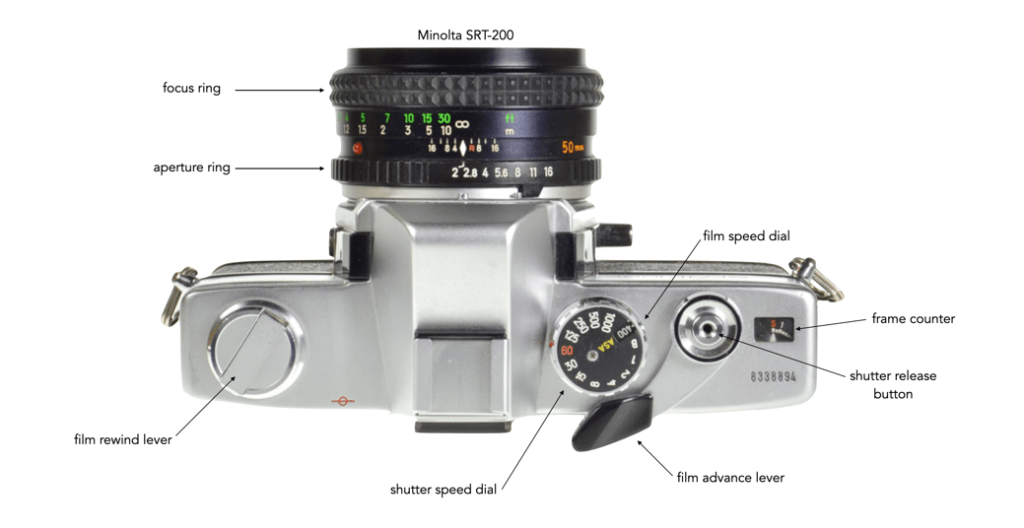
Although there are many differing forms of 35mm cameras, SLRs do stand out for their tactile experience. Early SLRs were entirely manual, meaning that there were many differing parameters which had to be manually modified in order to obtain the correct exposure. This means cameras had various lever and knobs which had to be adjusted – there is the shutter button, adjustments for film speed, shutter speed, and on the lens, aperture and focus mechanisms. There is a level of interaction which is a vastly more tactile experience than pushing a button, or setting a menu item on a digital camera.
Analog is nostalgic
Analog photography can be somewhat limiting, in that there isn’t a memory card with limitless capability to store photographs. Film will limit the number of pictures able to be taken, so every shot has to count. This amps up the level of creativity, forcing the photographer to slow down, observe the surrounding world, and think about the picture being taken. Choosing a vintage 35mm SLR, or even a rangefinder for that matter, means embarking on a more participatory experience, where the level of self expressiveness is determined by the complexity of the camera itself. The physical nature of film – loading it, winding it on, hearing the shutter open and close – combine to provide a more natural [pure] experience.

SLRs are available at a good price
Vintage SLRs are available at many different price ranges. Yes there are expensive SLRs – usually this has to do with scarceness. For example someone might be interested in a 1936 Exakta Kine 35mm SLR, the first SLR, which could be worth anywhere from C$3000-4000. Or perhaps an ALPA camera, which are generally upwards of C$1200. But there are plenty of relatively inexpensive cameras, partially because there were so many manufacturers in the 1960s, and so many cameras were produced. You can find an Olympus, Pentax, or Minolta camera (body only) for between C$300 and C$500 (certified/restored). Less well-known brands of the period are even cheaper, e.g. Konica, Petri, Ricoh, Yashica, Miranda, Fujica etc, often including a 50mm lens.
SLRs are well built
Before the more extensive use of plastics in the 1970s, metal was king. Many cameras up until this period (and even beyond) used a die-cast metal body, which means the cameras were built tough.
SLRs are educational
One of the issues with digital cameras is that so much is automated. That’s not a bad thing in a lot of situations because it allows you to concentrate on framing the shot. However because of this, the inner workings of the camera are sometimes lost to the photographer. An SLR will also help the novice learn the fundamentals of photography – the hard way. This means you have to gain a more intimate understanding of how things like shutter speeds, apertures, and exposure works. However on the flip-side you do gain better control of the photographic process.
 Crafting Pixels