A short introduction to the film slide

A “slide” in the more common use of the word refers to a translucent positive image which is held inside a cardboard sleeve, or plastic frame (or mount). A positive image is created using reversal film, whereas negative film produces an inverted or reversed image (which in turn is used to make a paper photo). When a slide is held up to the light, it is possible to see the scene as it was shot rather than the “negative” of the scene. Slides are typically viewed using a slide projector which projects the image against a white screen. Without the mount, the film would not be able to “slide” from one image to another when inside the magazine of a projector.
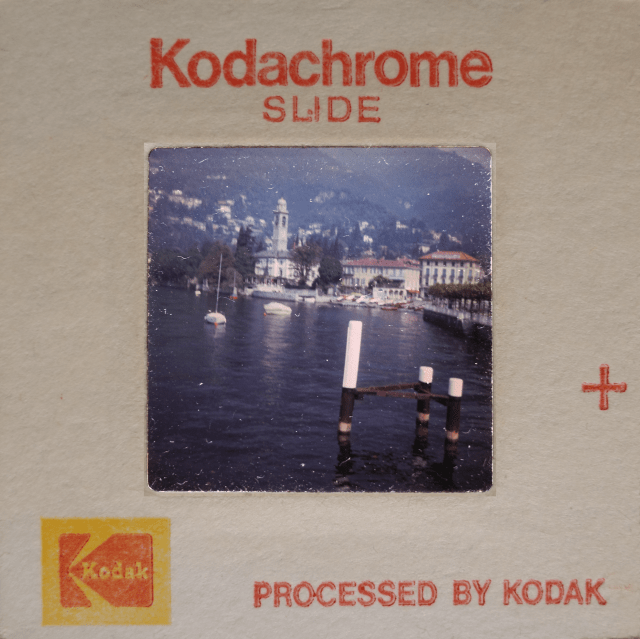
The classic Kodachrome slide

The slide is not a modern phenomena. The earliest was likely the Lantern slide, also known as the “magic lantern”. It was an early type of image projector which appeared in the 17th century which projected glass slides onto various surfaces. With the advent of photographic processes in the mid-19th century, magic lantern slides were black-and-white positive images, created with the wet collodion or a dry gelatine process on glass. Slide shows became a popular pastime in the Victorian period, but they were not the same as modern film slides.
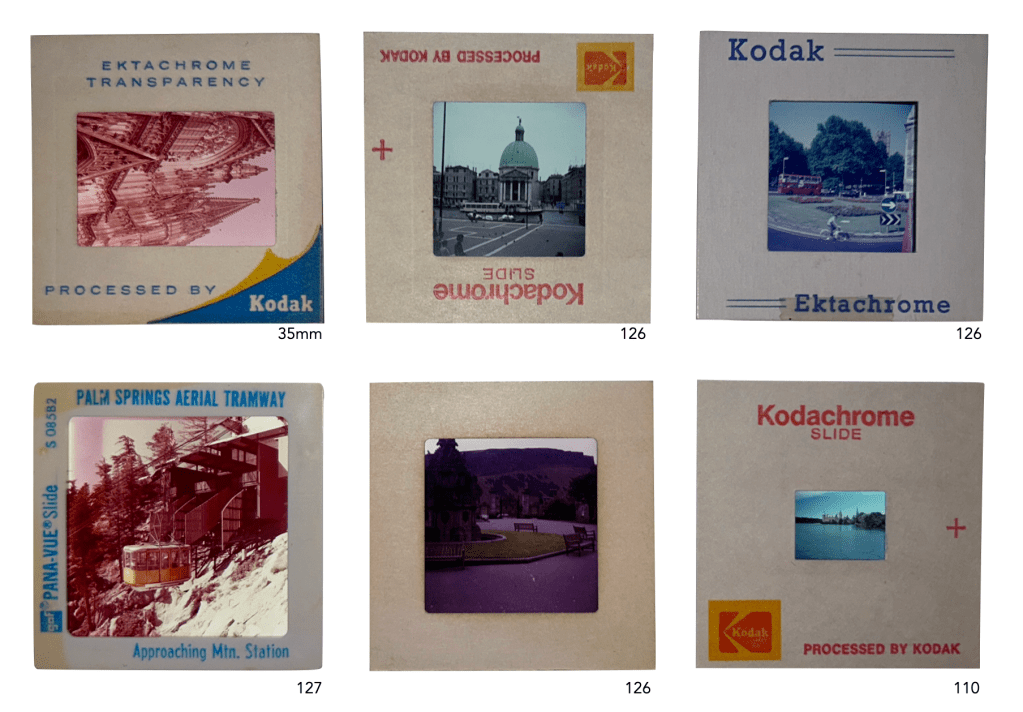
Examples of colour slides

It 1826 Nicéphore Niépce invented the first form of negative photography, but it would take nearly a century before its use in flexible celluloid film became a reality. The earliest commercially successful reversal process came into being in 1907 with the Lumière Autochrome. It was an additive screen-plate method using a panchromatic emulsion on a thin glass plate coated with a layer of dyed potato starch grains. It was Leopold Godowsky Jr., and Leopold Mannes working with Kodak Research Laboratories who in April 1935 produced the first commercially successful reversal film – Kodachrome (first as a 16mm movie film, and in May 1936 as 8mm, 135 and 828 film formats). Based on the subtractive method, the Kodachrome films contained no colour dye couplers, these were added during processing. In 1936 Agfa introduced Agfa Neu, which had the dye couplers integrated into the emulsion, making processing somewhat easier than Kodachrome.

For sparkling pictures big as life. . . . Kodak 35 mm color slides.

Kodak’s commercial slogan during the 1950s

There are different types of reversal film, based on the type of processing. The first, which includes films like Kodachrome, uses the K-14 process. Kodachrome is essentially a B&W stock film, with the colour added during the 14-step development process. That means it has no integrated colour couplers. Kodachrome was an incredible film from the perspective of the richness and vibrancy of the colours it produced – from muted greens and blues to bold reds and yellows. However developing Kodachrome was both complex and expensive, which would eventually see the rise of films like Ektachrome, which used the E-6 development process (a 6-step process). Films like Ektachome have different emulsion layers, each of which is sensitive to a different colour of light. There are also chemicals called dye couplers present in the film. After slide film is developed, the image that results from the interaction of the emulsion with the developer is positive.
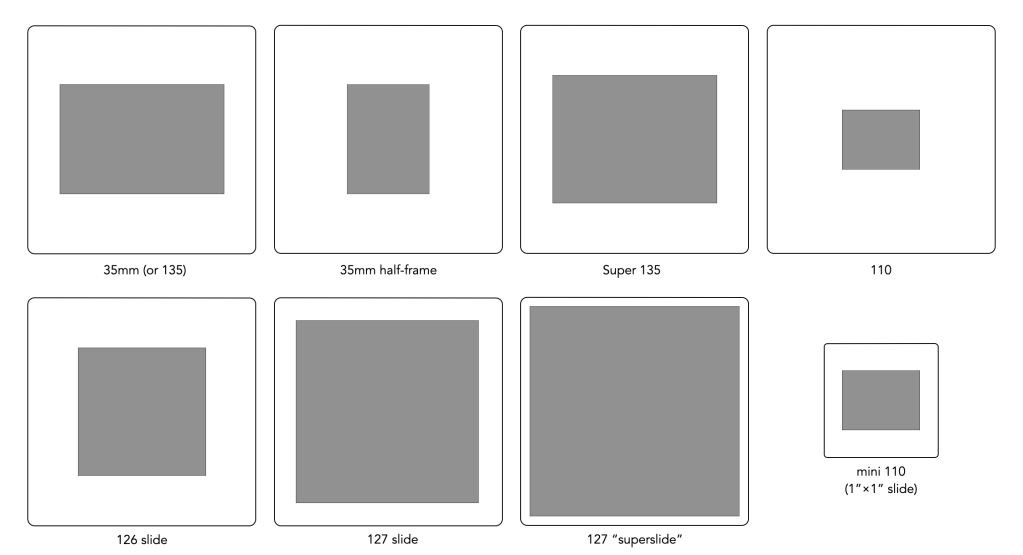
Common slide mount sizes

Many companies made reversal films, typically acknowledged through the use of the “chrome” synonym – e.g. Agfachrome (Agfa), Fujichrome (Fuji), Ektachrome (Kodak), Scotchchrome (3M, after buying Italian filmmaker Ferrania), Ilfochrome (Ilford), Peruchrome (Perutz), and Anscochrome (the US arm of Agfa). The initial Kodachrome had a very slow speed (10 ASA), this was replaced in 1961 by Kodachrome II (1961) which produced sharper images, and had a faster speed (25 ASA). In 1962 Kodak introduced Kodachrome X (ASA 64). Kodak’s other transparency film was Ektachrome, which was much faster than Kodachrome. In 1959 High Speed Ektachrome was introduced, providing a ASA 160 colour film (by 1968 this had been pushed to ASA 400).

FormatYear it appearedTransparency size (w×h)Notes
35mm /135193536mm × 24mmvery common
Super 13536mm × 28mm
110197217mm × 13mmalso on 1”×1” slides (mini 110)
Half-frame1950s24mm × 18mm
126196328mm × 28mm
1271912-199540mm × 40mm
Super 1271912-1995rare
Table 1: Characteristics of slide sizes

What about the “slide” side of things? A patent for a “Transparency Mount” was submitted by Henry C. Staehle of Eastman Kodak in October 1938, and received it in December 1939. Its was described as “a pair of overlapping flaps formed from a single strip of sheet material such, for example, as paper.”. Early slide mounts were mostly made of cardboard, but as plastic became more common, various designs appeared. Most cardboard mounts were either hinged on one side or two separate pieces, glued together after the emulsion was sandwiched between the two sides of the frame. There were also systems for the DIYer, where the emulsion could simply be inserted to the slide frame. Plastic frames were either welded together or designed in an adjustable format, i.e. the film frame could be inserted and removed. The exterior dimension of most common slide formats is 2 inches by 2 inches. There were many different sizes of slides, all on a standard 2″×2″ mount, to encompass the myriad of differing films formats during the period. Slides are usually colour – interestingly, black-and-white reversal film does exist but is relatively uncommon.
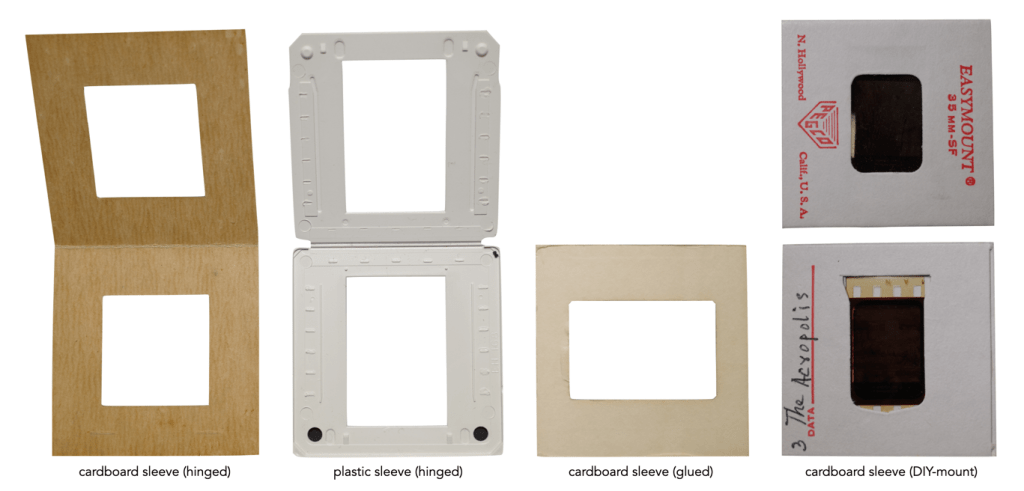
Some different types of slide frames

Slides were popular from the 1960’s probably up until the early 1990’s. It was an easy way to get a high-quality projected image in a pre-digital era. Slides were a popular medium for tourists to take pictures with, and then beguile visitors with a carousel of slides depicting tales of their travels. Slide film is still available today, all of which uses the E-6 process. E-6 slide film is a lot less forgiving as it has a lower ISO value but produces vivid colour with evidence of finer grain. Modern slide films include Kodak Ektachrome 100, Fujifilm Velvia 50, and Fujifilm Fujichrome Provia 100.

Further reading:

Who had the first 35mm SLR with a pentaprism?

Which 35mm SLR camera had the first pentaprism? Was it the Rectaflex or the Contax S? This question has turned into a bit of a conundrum over the years – many sources cite the Contax S as the first, with just as many opting for the Rectaflex. This discussion tries to provide some insight into the timeline of pentaprism use by looking at both the patents for cameras containing pentaprisms, and the cameras actually produced. Note that some original historical patents are hard to find, e.g. those from Italy.

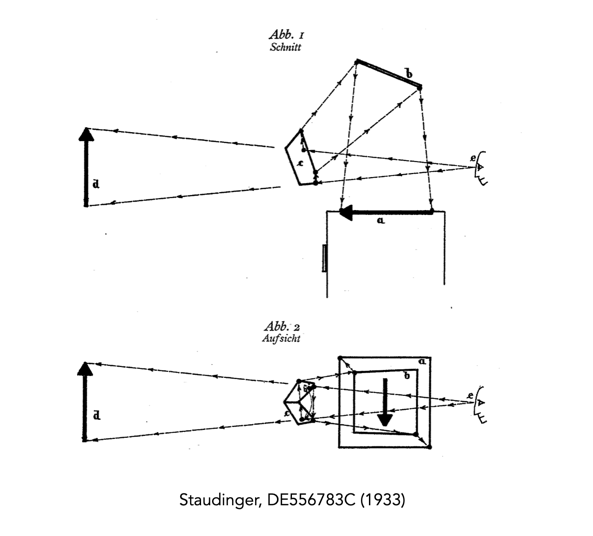
In all probability the idea of using a pentaprism in a camera had been floating around for a while. On 28 January 1933, German architect Kurt Staudinger was issued a patent for a reflex device with eye level vision, which used a pentaprism-like system (DE556783A, “Vorrichtung fuer Reflexkameras” (Device for reflex cameras). The invention related to a device which “…is intended to convert the horizontal and reversed image projected into the screen into a vertical, upright and reversed image.” However instead of using a prism, this was actually a series of mirrors, i.e. a penta-mirror. Although he tried to interest German camera makers, none were seemingly that eager. At the time there was likely was too much invested in rangefinder cameras to think that an alternative was worthwhile. The only German patent to cite this work was that of Arno Rothe (DE741844A, sub. May 5, 1939) who proposed a reflex camera using mirrors which allowed for both waist level, and eye-level viewing.

Fig.1: The concept of Kurt Staudinger

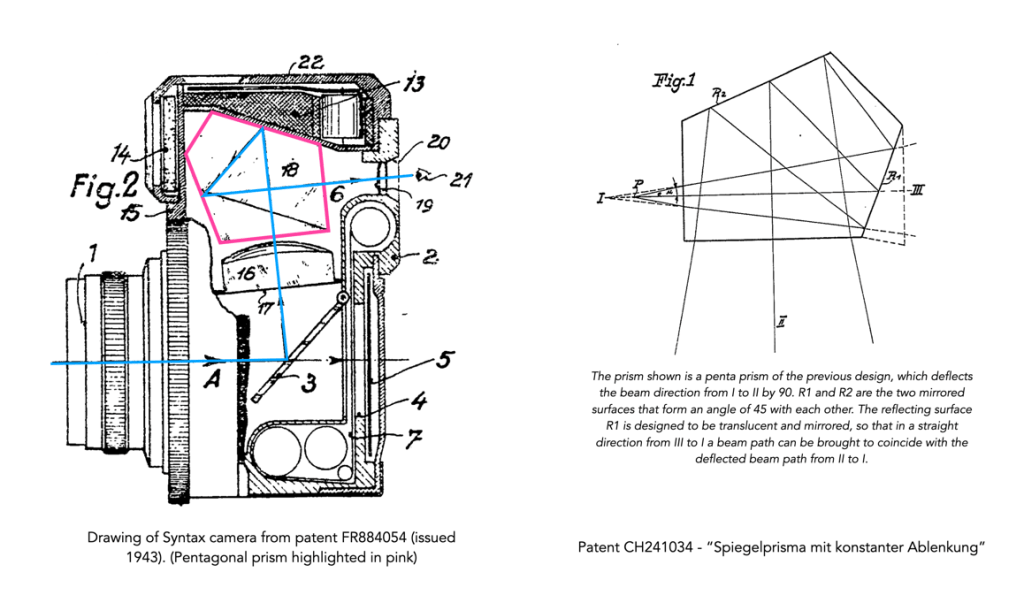
From about 1937 Zeiss Ikon began work on a 35mm reflex camera with a pentaprism eye-level viewfinder in the Camera Development Department. The camera was named the Syntax, and on September 2, 1940 Zeiss Ikon applied for a utility patent in Germany. Research has failed to find the German patent, but two patents associated with the camera were filed in France: FR884054 (sub. August 9, 1941) “Photographic apparatus constructed in particular in the form of a monocular mirror reflex camera”, and FR875596 (sub. August 9, 1941) “Mirror camera with photoelectric exposure meter forming part of the camera”. Both applications cite the filing of associated German utility patents on August 23, 1940. There is another Swiss patent submitted by Zeiss Ikon on 18 January 1943 (CH241034) – “Spiegelprisma mit konstanter Ablenkung” or “Mirror prism with constant deflection”. This gives further credence to the fact that Zeiss Ikon was working on a pentaprism for a camera.

Fig.2: Drawing of Zeiss’s Syntax camera from the French patent and a drawing of a “spiegelprisma” from the Swiss patent.

Work was slow, but it has been suggested that there was a working model by 1944, supposedly a Contax II body with its metal vertical focal-plane shutter, however having its view/rangefinder replaced by a reflex mirror, delivering an upright and right-way-round image via a roof pentaprism to the eyepiece [1]. However the viewfinder image was too dark, and required f/2 and faster lenses. A diagram of the Syntax from the French patent is shown in Figure 2. According to Siegfried Böhm, design engineer with Zeiss Ikon, there were a series of issues with the Syntax [1]. The camera was complex, and would have required 750 parts to produce, in part due to the vertical shutter, and external bayonet lens mount of the Contax II. Böhm was working on the design for a horizontal focal-plane shutter, however on February 13, 1945, everything related to the project was destroyed by Allied air raids.

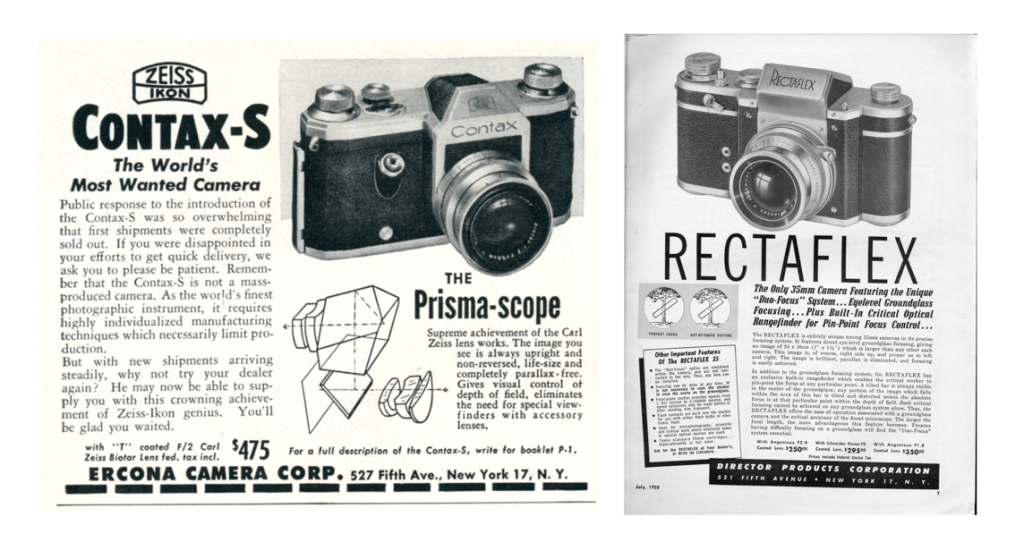
Fig.3: Advertisements for the first two pentaprism cameras

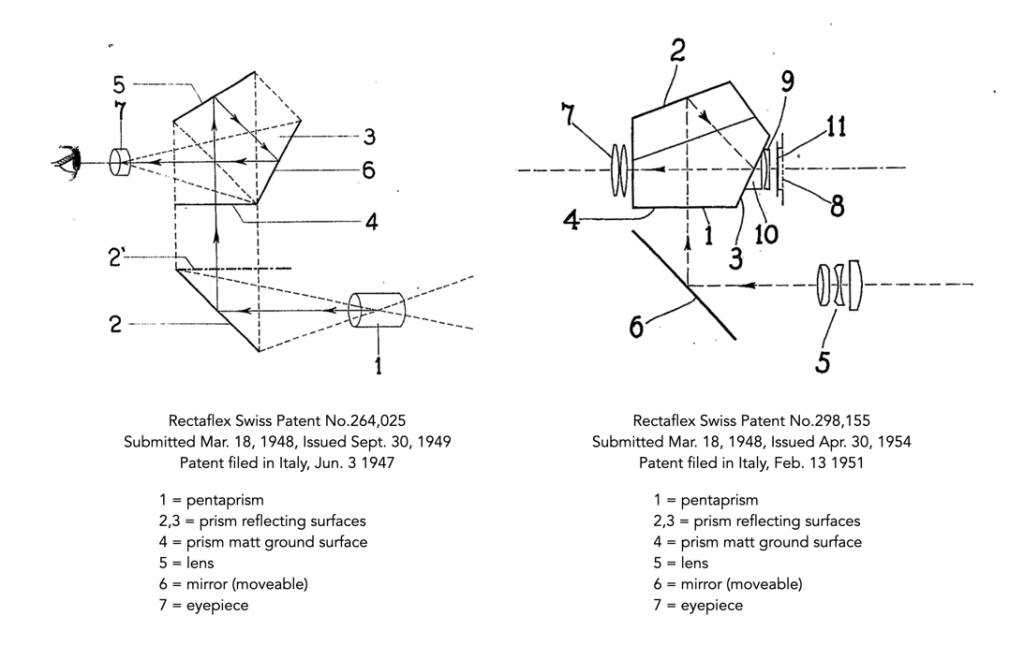
The first SLR manufactured with a pentaprism was the Rectaflex. It was the brainchild of Italian lawyer and camera enthusiast Telemaco Corsi (1899-1974), and was the only Italian SLR ever produced. Work began in 1946, and a prototype was shown at the Milan Fair in 1947 (this model used a flat pentaprism instead of a roof-pentaprism). This system seems to be described in a Swiss patent issued in 1949 (CH264025 based on an Italian patent filed in 1947). At the same fair a year later, a working prototype called the Standard 947 was introduced, with the production model A.1000 for sale in September 1948. Only 1150-odd copies were produced, with Rectaflex introducing the B.2000 in April of 1949, and the B.3000 in September. A patent for this pentaprism system is also described in a Swiss patent issued 1954 (CH298155, filed Jul.5/1951) – “Complementary sighting device in a photographic camera equipped with a reflector mirror viewfinder.”, and a West German patent (DE938764) filed the same month.

Fig.4: The Rectaflex pentaprism patents

The Wrayflex was England’s only attempt at developing a 35mm SLR. On Sept. 2, 1952 Wray (Cameras) Limited received a patent for “Reflex Camera with Curtain Shutter” (US2,608.921, filed on 21 May 1948). It matched a UK patent applied for on May 21, 1947 (GB2608921X), describing an SLR which contains a “pentagonal prism”, which appeared at the bottom of the camera, basically upside-down. However this “prototype” never seems to have been put into production.

Fig.5: The patent for the Wray Optical

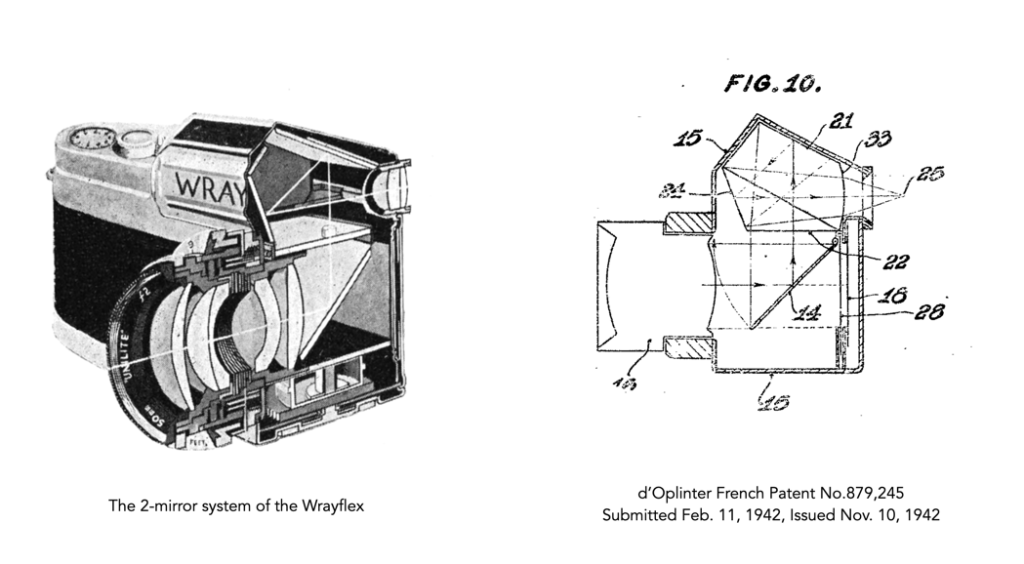
Instead the Wrayflex production model used a mirror which folds backwards and upwards when the shutter is released. This means there was no space for installing a roof prism – instead the Wrayflex used two mirrors, arranged so as to reflect the ground-glass image twice – this arrangement provides an image which is laterally reversed, but the right way up. The two mirrors must be accurately positioned so that there is no possibility of misalignment. The Wrayflex I and Ia both used mirrors, it wasn’t until the Wrayflex II in 1959 that a pentaprism was incorporated. In addition to the Wrayflex, there is also a patents by Belgian Jean de Wouters d’Oplinter (1905-1973), applied for in Belgium on February 11, and May 29, 1941. The French version of the patent, “Improvements to photographic cameras and similar devices”, was issued on November 10, 1942 (FR879245), however this camera was never produced.

Fig.5: The mirror system of the Wrayflex and the patent for the d’Oplinter camera

In September 1949, Rectaflex was to received some competition in the form of the Contax S from VEB Zeiss Ikon. The development of the Contax S (also known as the Spiegel-Contax) basically involved recycling the wartime Syntax project. The camera was introduced in 1949. The prism on the Contax S was built into the camera body. The view was life-sized, a result of three factors: the focal length of the lens, the prism itself, and the small magnifying eyepiece behind the prism. Many early prisms were bright in the centre, but susceptible to fall-off in the corners. Later SLRs used systems to overcome this problem – e.g. condensing lenses underneath the ground glass, a flat fresnel lens which spreads out the light, and increases brightness in the corners. While there were a number of patents filed for this camera, most had to do with the shutter mechanism, and shutter release [2]. There don’t seem to be any patents that relate specifically to the pentaprism mechanism (there are war-era patents but that’s another story). Zeiss Ikon certainly marketed their camera in the light that this was the most significant advance since the SLR itself.

Here is the camera being hailed as the most significant advance in camera design since the first miniature itself. The twin-image, coupled range-finder has given way to a single viewer, the Prisma-Scope which enables you to sight directly through the camera lens. You see a life-size image, always upright and non-reversed, that spins into sharp focus with a twist of the lens barrel. For the first time in a single lens reflex, all focusing and viewing takes place at direct eye level. Without sacrificing the compact qualities of the miniature, the nuisance of parallax is forever eliminated … accessory lenses require no coupling with special and costly range-finders … close-up photography requires only the addition of extension tubes. Here is the most versatile camera ever created!

The third pentaprism 35mm SLR was by Swiss company ALPA. However they went in another direction, choosing a prism derived from an Abbe prism, the Kern prism. The main difference between this and a pentaprism prism is the fact that the latter provides a 90° image, while the former is only 45°. So the early ALPA-Prisma Reflex cameras (introduced in 1949) offered an oblique view, not a perpendicular view. This feature continued until the Model 6c of 1960.

What about the Ihagee Exakta? Well the company that basically created the 35mm SLR was slower to adopt the pentaprism. It was not until 1949 that they incorporated the use of an auxiliary prism, the “Prismenaufsatz”, which provided a corrected right to left image (however it did make the camera top-heavy). Finally in 1950 Ihagee, introduced the Exakta Varex. As ALPA’s system did not produce an eye-level image, this really makes the Varex the third camera with an eye-level pentaprism. It was also the first SLR with an interchangeable viewfinder, as the waist-level viewfinder was still the most common of the period. The first Japanese pentaprism SLR did not appear until the Miranda T in 1955, followed by the Asahi Pentax, Minolta SR-2, Zunow, Nikon F and the Yashica Pentamatic.

So who was first? From a practical viewpoint of a manufactured camera, it was the Rectaflex. But I guess it depends on how you interpret history.

Notes:

  • The Gamma Duflex, designed by Hungarian Jenő Dulovits, was being sold by 1948, however despite some reports, it did not have a pentaprism. The patent for the optical viewfinder system incorporated a Porro-prism, but due to financial constraints only a Porro-mirror was implemented. It was however the first eye-level SLR, and had the first instant-return mirror. A design apparently existed for a ‘Duflex System Reflex S’ which did have a roof pentaprism, but it was never put into production.

Further reading

  1. Schulz, A., “From Syntax to Praktina”, Zeiss Historica, 30(1) pp.7-16 (2008)
  2. Contax S und Pentacon – History, patents, and design issues with the Spiegel-Contax

Rangefinder or reflex?

35mm photography evolved in rangefinder cameras. In the early pre-prism days, photographers using “minicams” had a simple choice of Leica, or Contax. Post WW2, other Leica “knock-offs” would appear, mostly from Japan, but also from countries like Italy, and the USSR. So why did rangefinders languish? To answer that we will look back at two 1956 articles in Popular Photography under the banner: “Which 35 – Reflex or Rangefinder?” [1,2].

Rangefinder versus reflex?

Bob Schwalberg, an advocate for rangefinder cameras, described two of their limitations [1]: long and short views. Rangefinder couplings it seemed had a limitation of 135mm focal length for the purposes of long views, and a limit of 3½ feet in close-up (without accessories like a mirror reflex housing). In fact Schwalberg even commented that “Rangefinders just aren’t worth a speck of dust on your negative for focusing lenses longer than 135mm”. After this he focused on their strengths:

  • Speed in focusing – “With a rangefinder camera you move straight into focus instead of having to twist the lens back and forth several times…”.
  • Ease of focusing – Rangefinder cameras can be “focused under light levels so dim as to make photography unfeasible.”
  • Accuracy of focusing – “Rangefinder focusing is inherently more accurate than ground-glass focusing because the rangefinder mechanism can distinguish much more critically than the human eye.”
  • Time lag #1 (from focusing to stop down) – does not apply because the rangefinder is stopped down before focusing begins.
  • Time lag #2 (from pressing the release button to exposing the film) – rangefinders don’t have mirrors which add 1/50 sec. Reflex cameras have mirror lag.

Schwalberg actually considered the mirror lag to be the single most serious disadvantage of the SLR in as much as “You never see the picture you make with a single-lens reflex until you, develop the film. It all happened why you weren’t looking.” (unfortunately this was before the returning mirror). He goes on to say that “The prism reflex is a useful tool which brings many advantages to a number of specific, and I think special, photographic applications.”

Barrett Gallagher meanwhile made the case for the single-lens reflex [2]. His choice of the SLR was because, in his words, “I couldn’t see clearly through the viewfinders on the rangefinder cameras.” Or in other words “… any separate rangefinder-viewfinder system requires you to shift your eye from one peephole to another at the crucial moment, and with a moving target, you’re dead.” Rangefinder accuracy also falls off with long telephoto lenses, requiring of all things the addition of a clumsy reflex housing.

  • Close-up – it is possible to focus down to 3.5” with no parallax problems. Reflex cameras focus down to 2.5 feet, versus 3.5 feet for rangefinders.
  • Ease of focusing – rangefinders are easier to focus, however in dim light the reflex lens can open wide enough to allow focusing.
  • DOF – the SLR allows the photographer to see the DOF a lens offers at different f-stops.
  • Viewfinders – SLR’s have one viewfinder for all lenses. Rangefinders require supplementary rangefinders for lenses outside 50mm.

Gallagher summed up by saying that “The single-lens reflex is the versatile camera with no parallax, no viewfinders, no mechanical rangefinder limits. It lets you see full size with any lens exactly what you get – including actual depth of field.”

Further reading:

  1. Bob Schwalberg, “Which 35 – Reflex or Rangefinder? – The coupled rangefinder is for me”, Popular Photography, 39(2), pp. 38,108,110 (1956)
  2. Barrett Gallagher, “Which 35 – Reflex or Rangefinder? – I like a single-lens reflex best”, Popular Photography, 39(2), pp. 39,112 (1956)

The origins of Asahi’s Takumar

In the days of film cameras, every company had it’s own way of “naming” cameras and lenses. This made it very easy to identify a lens. Asahi Pentax had the ubiquitous Takumar (TA-KOO-MA) name associated with its 35mm SLR and 6×7 lenses. The name would adorn the lenses from the period of the Asahiflex cameras with their M37 mount, through the M42 mount until 1975 when the switch to K-mount came with a change to the lens branding.

Asahi was founded by in 1919 by Kumao Kajiwara as Asahi Optical Joint Stock Co. Asahi began making film projection lenses in 1923, and by the early 1930s was producing camera lenses for the likes of future companies Minolta (1932), and Konica (1933). In 1937 with the installation of a military government in Japan, Asahi’s operations came under government control. By this time Kajiwara had passed away (it is not clear exactly when), and the business passed to his nephew Saburo Matsumoto (possibly 1936?). It was Matsumoto who had the vision of producing a compact reflex camera. In 1938 he bought a small factory in Tokyo and renamed it as Asahi Optical Co. Ltd.

It seems as though the lens series was named in honour of one of the founders brother, Takuma Kajiwara. There might have been the analogy that photography was a means of painting with light, and lenses were like an artists brushes. On a side note, the name Takuma in Japanese is an amalgam of “taku” meaning “expand, open, support”, and “ma” meaning “real, genuine”.

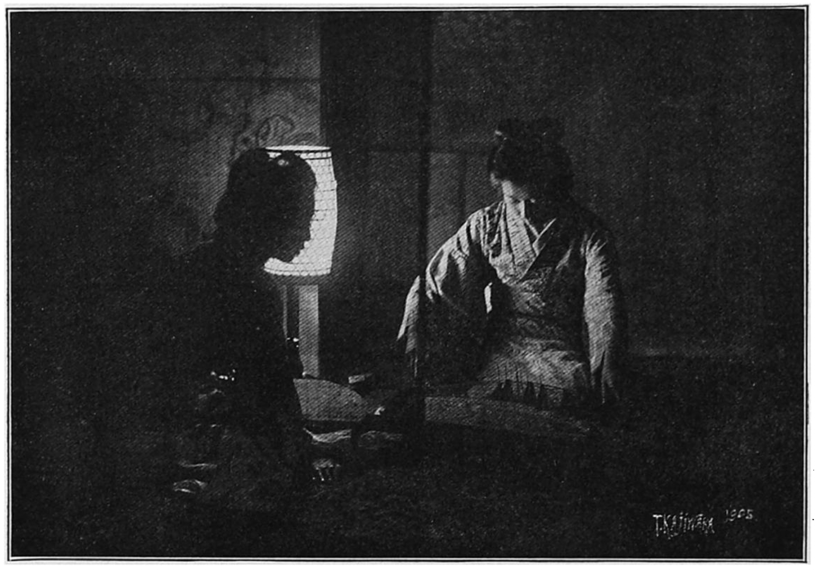
A photograph by Takuma titled “Domestic Life in Japan”, published in the September 1905 issue of Brush and Pencil (“St. Louis Art at the Portland Exposition” XVI(3), p.75).

Takuma Kajiwara (1876-1960) was a Japanese-American photographic artist and painter who specialize d in portraits. Born in Kyushi, Japan he was the third of five brothers in a Samurai family. Emigrating to America at the age of 17, he settled in Seattle, and became a photographer. He later moved to St.Louis and opened a portrait studio, turning from photography to painting. In 1935 he moved to New York. In 1951 he won the gold medal of honour for oils from the Allied Artists of America for his expressionist painting of the Garden of Eden titled “It All Happened in Six Days”. Takuma himself had an interest in cameras, patenting a camera in 1915 (Patent No. US1193392).

Note that it is really hard to determine the exact story due to the lack of accessible information.

Ultrafast lenses – the Zeiss Planar 50mm f/0.7

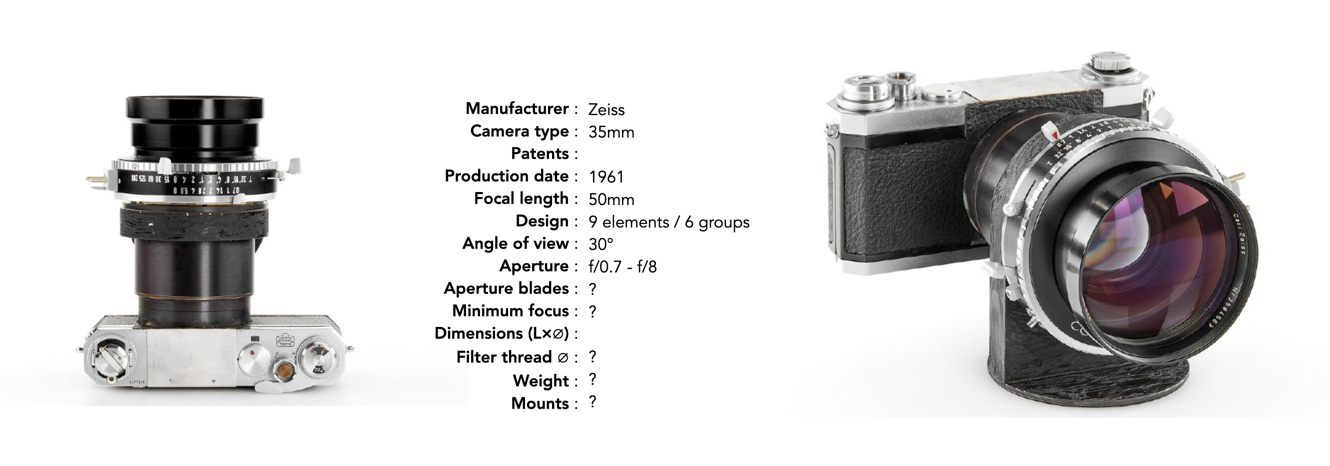
The quintessential vintage ultra-fast camera lens is the Zeiss Planar 50mm f/0.7. It was developed in 1961 for a specific purpose, namely to photograph the dark side of the moon during the NASA Apollo lunar missions. Only 10 lenses were built, one was kept by Zeiss, 6 went to NASA and 3 were sold to director Stanley Kubrick. Kubrick used the lenses to film scenes lit only by candlelight in the movie “Barry Lyndon” (1975).

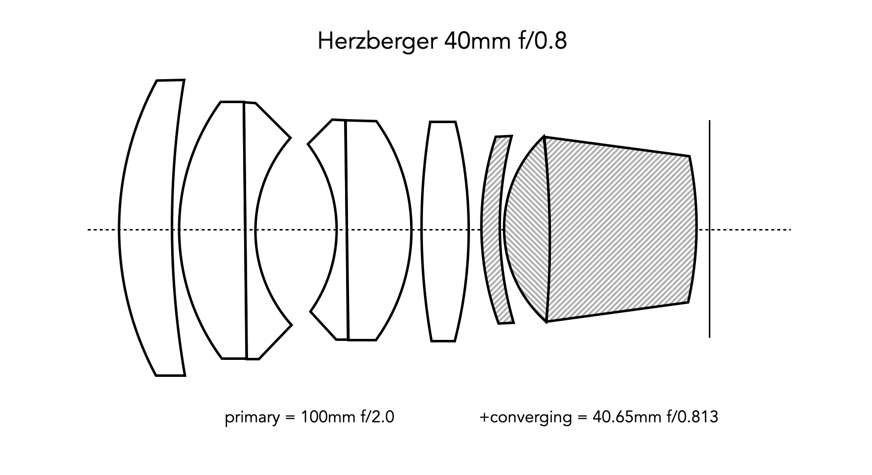
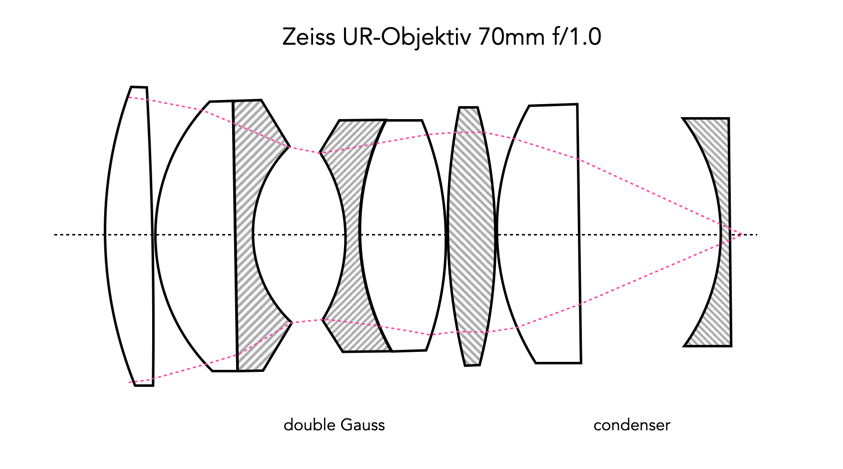
There is a similarity, at least in the double-Gauss optical design – it is essentially a Gauss front with two doublets glued together and a rear group which functioned as a condenser. (copies of optical diagram). The 50mm f/0.7 Planar was designed by Dr. Erhard Glatzel (1925-2002) and Hans Sauer. It is supposedly based on an f/0.8 lens designed by Maximilian Herzberger (1900-1982) for Kodak in 1937. Looking at the two schematics, they look quite similar. The idea is to take the 70mm f/1, and by adding a condenser, brute-force the lens into a 50mm f/0.7. The condenser actually shortens the focal length and condenses the light – in reality adding a ×0.7 teleconverter that gives 1 f-stop.

But this lens has an interesting backstory. According to Marco Cavina, who has done a lot of research into the origin of this lens (and others), the design of this lens was derived at least in part from lenses designed for the German war effort. During WW2, Zeiss Jena designed a series of lenses for infrared devices to be used for night vision in various weapons systems. One such lens was the Zeiss UR-Objektiv 70mm f/1.0. The design documents were apparently recovered during Operation Paperclip from the Zeiss Jena factory before the factory was occupied by the Soviets and then provided to the new Zeiss Oberkochen.

The design went through four prototypes before achieving the final configuration [1]. The final scheme was optimized on an IBM 7090, which had been in operation since the late 1950s. The lenses were used on a modified Hasselblad camera.

  1. Glatzel, E., “New developments in the field of photographic objectives”, British Journal of Photography, 117, pp.426-443 (1970)
  2. https://wlpa.auction2000.online/auk/w.object?inC=WLPA&inA=20200729_1055&inO=329

Further reading:

The fastest vintage 50mm lenses ever made – light gathering behemoths

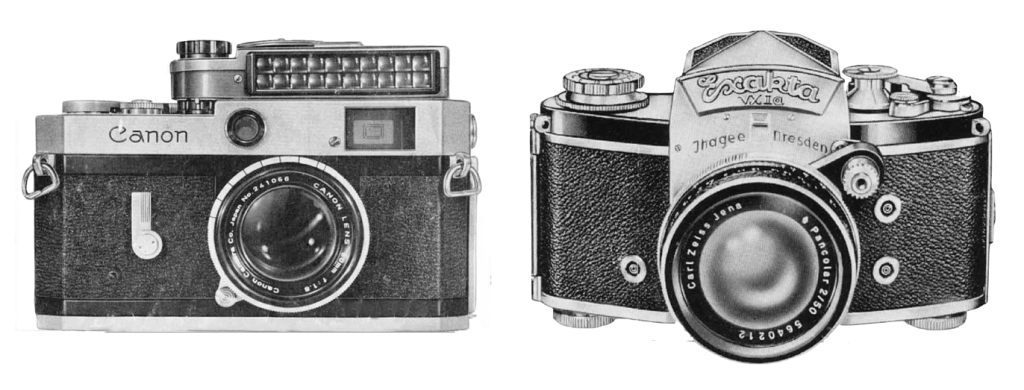
Some of the most interesting vintage lenses are the sub-f/1.2 lenses, of which there are very few. In the 1950s Japanese lens makers wanted to push the envelope, racing to construct the fastest lenses possible. There were four contenders: the Zunow 50mm f/1.1, the Nippon Kogaku’s Nikkor-N.C 50mm f/1.1, Konishiroku (Konica’s predecessor) Hexanon 60mm f/1.2 and the Fujinon 50mm f1.2 LTM. This spurned research which led to the development of the Canon 50mm f/0.95 (1961), which at the time was the largest aperture of any cameras lens in the world. The other, which did not appear until 1976 was the Leitz (Canada) Noctilux-M 50mm f/1.0.

(Note that these lenses were made for 35mm rangefinder cameras.)

Why were these lenses developed?

The most obvious reason was the race to produce fast lenses. An article in the February 1956 issue of Popular Photography sheds more light on the issue. The article, titled “Meet the Zunow f/1.1” [1], by Norman Rothschild, described the virtues of the Zunow lens (more on that below), and concluded with one of the reasons these lenses were of interest, namely that it opened up new areas for the “available-light man”, i.e. the person who wanted to use only natural light, especially with slow colour films. This makes sense, as Kodachrome had an ASA speed of 10, and Type A’s speed was ASA 16. Even Kodachrome II released in 1961 only had a speed of 25 ISO. Conversely, black and white film of the period was much faster: Kodak Super-XX was 200 ISO, and Ilford FP3 was 125 ISO. Ilford HPS, introduced in 1954 pushed the ISO to 800. The newer Ektachrome and Anscochrome colour films were rated at ASA 32. In the patent for the Zunow f/1.1 lens [3], the authors claimed that objectives with apertures wider than f/1.4 were in more demand. In reality, the race to make even faster lenses was little different to the race to get to the moon.

Zunow 50mm f/1.1

The first of the sub-5/1.2 lenses was the Zunow 50mm f/1.1. Teikoku Kōgaku Kenkyūjo was founded by Suzuki Sakuta circa 1930 and worked for other companies grinding lenses. The company started working on fast lens around 1948, with the first prototypes completed in 1950, and the 50mm f/1.1 Zunow released in 1953. It made a number of lenses for rangefinder cameras, including slower 50mm lenses in f/1.3, and f/1.9, a f/1.7 35mm, and a 100mm f/2 lenses. In 1956 it became the Zunow Kōgaku Kōgyō K.K., or Zunow Optical Industry Co., Ltd., but closed its doors in early 1961. During the last years the company designed a couple of camera’s including a prototype of a Leica copy, the Teica, and the Zunow SLR, the first 35mm SLR camera with auto diaphragm, instant-return mirror, and bayonet mount interchangeable lenses (only about 500 were ever produced).

The Zunow 50mm f/1.1 was derived from the Sonnar-type f/1.5 lens. The patent for the Zunow f/1.1 lens [3] describes the lens as “an improved photographic objective suited for use with a camera that takes 36×24mm pictures”. Many of these fast lenses were actually manufactured for the cine industry. For example the company produced Zunow-Elmo Cine f/1.1 lenses for D-mount in 38mm and 6.5mm (and these lenses are reasonably priced, circa US$500, however not very useful for 35mm). The Zunow 50mm f/1.1 is today a vary rare lens. Sales are are US$5-10K depending on condition. The price for this lens in 1956 was US$450.

  • 1953 – Zunow f/1.1 5cm, Leica M39 mount/Nikon S, 9 elements in 5 groups.
  • 1955 – Zunow f/1.1 50mm, Leica M39 mount/Nikon S, 8 elements in 5 groups.

Nikkor-N 50mm f/1.1

Hot on the heals of Zunow was the Nikkor-N 5cm f/1.1 developed by Nippon Kogaku. Introduced in 1956, it was the second sub-f/1.2 lens produced. The lens was designed by Saburo Murakami, who received a patent for it in 1958 [5]. While the Zunow was an extension of the Sonnar-type lens, the Nikkor lens was of a gaussian type. It was also made using an optical glass made using the rare earth element Lanthanum in three of its optical elements. The lens was made in three differing mounts: the original internal Nikon mount (for use on Nikon S2, SP/S3 cameras), the external Nikon mount, and the Leica M39 mount. The original lens mount was an internal mount, and the heavy weight of the lens (425g) could damage the focusing mount, so it was redesigned in 1959 with an external mount. The lens had a gigantic lens hood with cut-outs for setting the focus with the rangefinder through the viewfinder.

  • 1956 – Nikon Nikkor-N[.C] 50mm f/1.1, Leica screw mount/Nikon S, 9 elements in 6 groups (Nikon, 1200 units; M39, 300 units)
  • 1959 – Nikon Nikkor-N 50mm f/1.1, Leica screw mount/Nikon S, 9 elements in 6 groups (1800 units)

A 1959 price list shows that this lens sold for US$299.50. Today the price of this lens is anywhere in the range $5-10K. Too few were manufactured to make this lens the least bit affordable. Nippon Kogaku also supposedly developed an experimental f/1.0 lens for the Nikon S, but it never went into production.

Canon 50mm f/0.95

In August 1961, Canon released the 50mm f/0.95, designed as a standard lens for the Canon 7 rangefinder camera. It was the world’s fastest lens. The Canon f/0.95 was often advertised attached to the Model 7 camera – the Canon “dream” lens. The advertising generally touted the fact that it was “the world’s fastest lens, four times brighter than the human eye” (how this could be measured is questionable). It is Gauss type lens with 7 elements in 5 groups. The lens was so large on the Canon 7 that it obscured a good part of the view in the bottom right-hand corner of the viewfinder, and partially obscured the field-of-view.

In a 1970 Canon price list, the 50mm f/0.95 rangefinder lens sold for $320, with the f/1.2 at $220. To put this into context, $320 in 1970 is worth about $2320 today, and a Canon 7 with a f/0.95 lens in average condition sells for around this value. Lenses in mint condition are valued at around $5K.

The verdict?

So why did these lenses not catch on? Cost for one. While f/1.2 lenses were expensive, faster lenses were even more expensive. For specialist applications, the development of these lenses likely made sense, but for the average photographer likely not. There were a number of articles circa 1950 in magazines like Poplular Photography which seemed to downplay their value, which likely contributed to their decline. It is notable that by the the early 1960s, Nikon stopped advertising its 50mm f/1.1 lens, and never produced another sub-f/1.2 lens. By the late 1960s even Canon had ceased production of the f/0.95.

There were probably more sub f/1.2 lenses created for non-photographic applications, in many different focal lengths. For example x-ray machines (Leitz 50mm f/0.75), D-mount film cameras (e.g. Kern Switar 13mm f/0.9), C-mount for film, medical and scientific imaging (e.g. Angenieux 35mm f/0.95), and aerial photography lenses (e.g. Zeiss Planar 50mm f/0.7). Not until recently have super-fast lenses once again appeared, likely because they are technologically better lenses, made much cheaper than they ever could have been in the 1950s and 60s.

References:

  1. Norman Rothschild, “Meet the Zunow f/1.1”, Popular Photography, pp.126/128, February (1956)
  2. Kogoro Yamada, “Japanese photographic objectives for use with 35mm cameras”, Photographic Science and Engineering 2(1), p.6-13 (1958)
  3. U.S. Patent 2,715,354, Sakuta Suzuki et al., “Photographic Objective with Wide Relative Aperture”, August 16, (1955)
  4. Hagiya Takeshi, Zunō kamera tanjō: Sengo kokusan kamera jū monogatari (The birth of the Zunow camera: Ten stories of postwar Japanese camera makers) Japanese only (1999)
  5. U.S. Patent 2,828,671, “Wide Aperture Photographic Objectives”, April 1, 1958.

Further reading:

Why did 35mm photography become so popular?

Everything in modern digital photography seems to hark back to analogue 35mm. The concept of “full-frame” only exists because a full frame sensor is equivalent in size to the 24×36mm frame of 35mm film (which was only called 35mm because that was the width of the film). If we didn’t have this association, there would be no crop-sensor. Most early films for cameras were quite large format – introduced in 1899, 116 format film was 70mm wide. This was followed in 1901 by 120 (60mm), 127 (40mm) in 1912, and then 620 (60mm) in 1931. So there were certainly many film format options. So why did 35mm become the standard?

In all likelihood, 35mm became the gold standard because of how widely available 35mm film was in the motion picture industry – it had been around since 1889 when Thomas Edison’s assistant, William Kennedy Dickson simply split 70mm Eastman Kodak film in half. (I have discussed the origins of 35mm film in a previous post). Kodak introduced the standard 135 film in 1934, and was designed for making static pictures (rather than film) with the actual exposure frames being 36mm wide, and 24mm high, giving it a 3:2 ratio. In the 1930s, Leica brochures expounded the fact that the film used in their cameras was “…the standard 35mm cinema film stock, obtainable all over the world.

A standard Leica with a 50mm f/3.5 ELMAR lens

There was much hype in the 1930s about the cameras that were termed “minicams”, or “candid cameras”, in effect cameras that used 35mm film. By the mid 1930s, Leica had been producing 35mm cameras for over a decade. A 1936 Fortune Magazine article titled “The U.S. Minicam Boom” described the Leica as a camera which “took thirty-six pictures the size of the special-delivery stamp on a roll of movie film.” There were those who did not think the miniature camera would survive, seeing their use as a form of candid camera craze. Take for example the closing argument of Thomas Uzzell, who wrote the negative perspective of a 1937 article “Will the Miniature Survive the Candid Camera Craze?” [1]:

“The little German optical jewels you carry in your (sagging) coat pockets make many experimental exposures expensive (though perhaps they would do better if they carefully made one good one!). Their shorter focal lengths make the ultra-fast exposures more practical (how many pictures are actually taken at these ultra speeds!). You can hop about quickly, minnie in hand, and take photos of children and babies at play with all the detail that “makes a picture pulse with naturalness and life” (though good pictures have never been taken by anyone hoping about). … I claim there is just one thing they cannot do, and apparently are never going to be able to do. They can’t make clear pictures.”

Uzzell claimed the art of the miniature was the art of the fuzzy picture. His challenger, Homer Jensen on the other hand described the inherent merits of 35mm over larger format cameras, namely that one could “…take pictures under the most unfavourable conditions, indoors and outdoors.”. Some people disliked the minicam because it made it too easy to take pictures (like anyone could take pictures).

One of the reasons 35mm was so successful was the small size of the camera itself. Their lightweight nature made them easy to carry, taking up very little room. This made them popular with both causal photographers and professionals such as photojournalists where the use of bulky equipment would be prohibitive. Another reason was the 35mm camera’s ability to work in existing light conditions. This was an affect of having ultra-fast lenses, something the larger format cameras could not practically achieve. The shorter focal lengths of 35mm cameras also allowed for greater depth-of-field at wide lens apertures. The inaugural issue of Popular Photography in 1937 described the advantages of using miniatures to capture fast action [4].

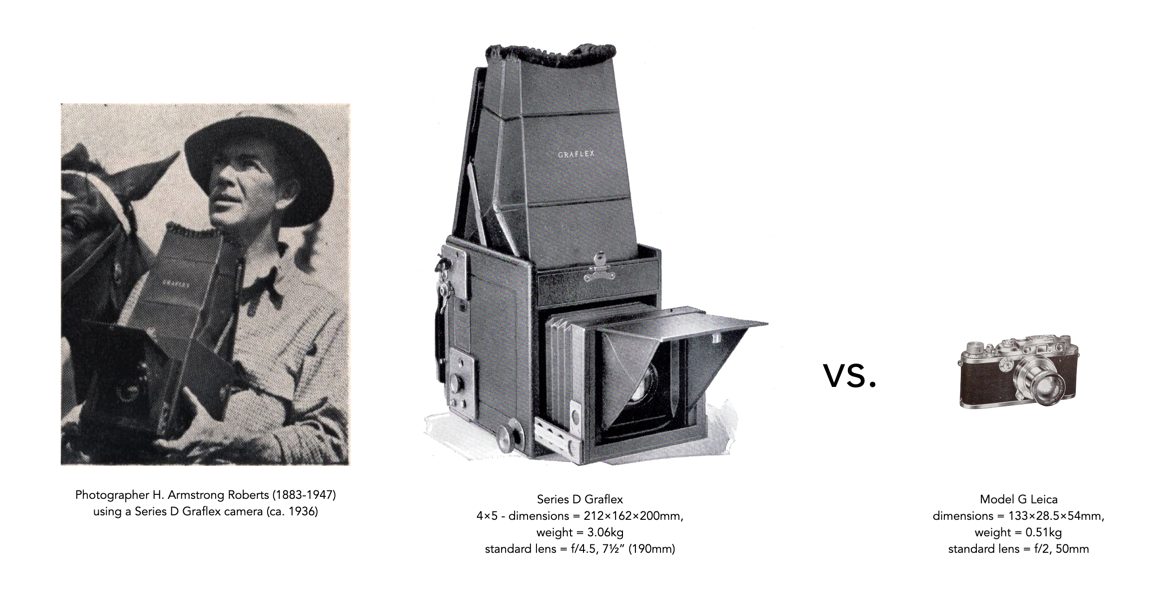
A large format Graflex camera versus a Leica “minicam”.

Large format cameras on the other hand, were sometimes referred to as “Big Berthas” due to their size [4]. The Series D Graflex, a quintessential 4×5″ press camera of the 1930s weighed 3.06kg, compared with the Leica G, which was one-sixth its weight, and roughly 1/30th its size. In a Graflex brochure from 1936, photographer H. Armstrong Roberts recalls a recent 14,000 mile journey where he took 3000 negatives using his Graflex camera, stating that “Certain I am that no other camera could have achieved the results which I have obtained with the GRAFLEX.”

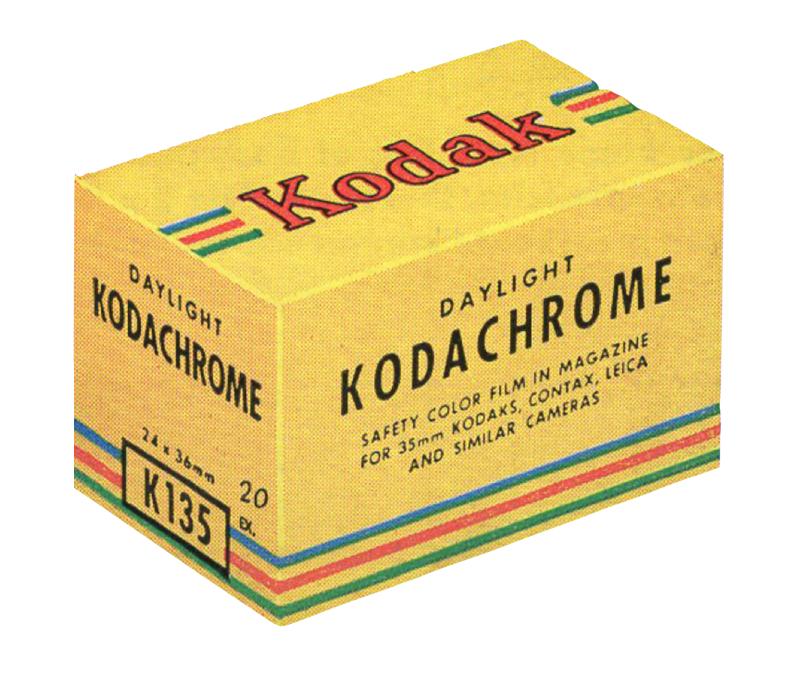
In 1935, another event foreshadowed the success of 35mm photography – Kodak’s introduction of Kodachrome colour film, followed shortly afterwards by Agfa’s Agfacolor Neu. This may have persuaded many a professional photographer to move to 35mm. Indeed, by 1938, H. Armstrong Roberts was also shooting in colour using a Zeiss Contaflex with a 50mm f/2 Sonnar lens [5] (so much for his belief in large format). The onset of WW2 brought a halt to the first minicam boom, but it was not the end of the story. By the early 1950s, the minicam was on the cusp of greatness, soon to become the standard means of taking photographs. More articles started to appear in photography magazines, enunciating the virtues of 35mm [3].

There are many reasons 35mm film became the format of choice.

  • Kodak’s 135 film single-use cartridge allowed for daylight loading. Prior to this 35mm film had to be loaded onto reusable cassettes in the darkroom.
  • The physical format of 35mm film made it very user friendly. The film is contained in a metal canister that reduces the risk of light leaks, and is easy to handle. Loading/unloading film is both intuitive, quick and easy. It’s compact size made it much easier to handle than larger format film.
  • 35mm also allowed for more exposures per roll than typical large format films. The norm is 24 or 36 exposures. This provided a great deal of flexibility in the amount of shots that could be taken, because 35mm film was easier and cheaper to develop.
  • In the hey-day of film photography there was a huge selection of film types – B&W, colour, infrared, and slide.

Of course there were also some limitations, but these mostly centre on the fact that 35mm film was considered to have less resolving power than medium-format film – great for “snapshots”, but anyone that required large prints needed a large film format to avoid grainy prints.

The invention of the Leica started a new era in photography, spurned on by the introduction of Kodak’s 135 film. Post WW2, 35mm film spearheaded the photographic revolution of the 1950s. It became the format used by amateurs, hobbyists, and professionals alike. 35mm photography allowed for a light, yet flexible kit, which was ideal for the travelling amateur photographer of the 1960s.

Further reading:

  1. Uzzell, Thomas, H., “Will the Miniature Survive the Candid Camera Craze? – No”, Popular Photography, 1(4), pp. 32,66 (1937)
  2. Jensen, Homer, “Will the Miniature Survive the Candid Camera Craze? – Yes”, Popular Photography, 1(4), pp. 33,84 (1937)
  3. “35mm: The camera and how to use it”, Popular Photography, pp.50-54,118, November (1951)
  4. Witwer, Stan, “Fast Action with a Miniature”, Popular Photography, 1(1) pp.19-20,66 (1937)
  5. “Taking the May Cover in Color”, Popular Photography, 2(5) pp.54 (1938)

The photography of Daidō Moriyama

Daidō Moriyama was born in Ikeda, Osaka, Japan in 1938, and came to photography in the late 1950s. Moriyama studied photography under Takeji Iwamiya before moving to Tokyo in 1961 to work as an assistant to Eikoh Hosoe. In his early 20’s he bought a Canon 4SB and started photographing on the streets on Osaka. Moriyama was the quintessential street photographer focused on the snapshot. Moriyama likened snapshot photography to a cast net – “Your desire compels you to throw it out. You throw the net out, and snag whatever happens to come back – it’s like an ‘accidental moment’” [1]. Moriyama’s advice on street photography was literally “Get outside. It’s all about getting out and walking.” [1]

In the late 1960s Japan was characterized by street demonstrations protesting the Vietnam War and the continuing presence of the US in Japan. Moriyama joined a group of photographers, associated with the short-lived (3-issue) magazine Provoke (1968-69), which really dealt with elements of experimental photography. His most provocative work during the Provoke-era was the are-bure-boke style that illustrates a blazing immediacy. His photographic style is characterized by snapshots which are gritty, grainy black and white, out-of-focus, extreme contrast, Chiaroscuro (dark, harsh spotlighting, mysterious backgrounds). Moriyama is “drawn to black and white because monochrome has stronger elements of abstraction or symbolism, colour is something more vulgar…”.

“My approach is very simple — there is no artistry, I just shoot freely. For example, most of my snapshots I take from a moving car, or while running, without a finder, and in those instances I am taking the pictures more with my body than my eye… My photos are often out of focus, rough, streaky, warped etc. But if you think about I, a normal human being will in one day receive an infinite number of images, and some are focused upon, other are barely seen out of the corners of one’s eye.”

Moriyama is an interesting photographer, because he does not focus on the camera (or its make), instead shoots with anything, a camera is just a tool. He photographs mostly with compact cameras, because with street photography large cameras tend to make people feel uncomfortable. There were a number of cameras which followed the Canon 4SB, including a Nikon S2 with a 25/4, Rolleiflex, Minolta Autocord, Pentax Spotmatic, Minolta SR-2, Minolta SR-T 101 and Olympus Pen W. One of Moriyama’s favourite film camera’s was the Ricoh GR series, using a Ricoh GR1 with a fixed 28mm lens (which appeared in 1996) and sometimes a Ricoh GR21 for a wider field of view (21mm). Recently he was photographing with a Ricoh GR III.

“I’ve always said it doesn’t matter what kind of camera you’re using – a toy camera, a polaroid camera, or whatever – just as long as it does what a camera has to do. So what makes digital cameras any different?”

Yet Moriyama’s photos are made in the post-processing stage. He captures the snapshot on the street and then makes the photo in the darkroom (or in Silver Efex with digital). Post-processing usually involves pushing the blacks and whites, increasing contrast and adding grain. In his modern work it seems as though Moriyama photographs in colour, and converts to B&W in post-processing (see video below). It is no wonder that Moriyama is considered by some to be the godfather of street photography, saying himself that he is “addicted to cities“.

“[My] photos are often out of focus, rough, streaky, warped, etc. But if you think about it, a normal human being will in one day perceive an infinite number of images, and some of them are focused upon, others are barely seen out of the corner of one’s eye.”

For those interested, there are a number of short videos. The one below shows Moriyama in his studio and takes a walk around the atmospheric Shinjuku neighbourhood, his home from home in Tokyo. There is also a longer documentary called Daidō Moriyama: Near Equal, and one which showcases some of his photographs, Daido Moriyama – Godfather of Japanese Street Photography.

Artist Daido Moriyama – In Pictures | Tate (2012)

Further Reading:

Vintage cameras and lenses – where to buy?

I have been buying vintage analog cameras and lenses for a few years now, and so this article offers a few tips, on where to buy them based on my experiences. Now when you’re dealing with vintage camera equipment, you will quickly realize that there is a lot of inventory around the world. This isn’t so surprising considering how the photographic industry blossomed with the expanding consumer market from 1950 onward. Analog equipment can be old, mostly dating pre-1980s, some quite common, others quite rare. I say pre-1980s because that decade heralded cameras and lenses that were bulky, ugly, made of plastic, and had clumsy auto-focus mechanisms. I will cover what to look for in vintage lenses, and cameras at a later date.

Bricks-and-mortar stores

If you are new to the buying vintage photographic equipment, then the obvious place to start is a store that focuses on vintage gear, but honestly they are few and far in between, which may be the nature of dealing with analog. Sometimes photographic retailers who sell modern camera equipment may deal with some “used” gear, but you often won’t find a really good range of gear, as they tend to deal more with used digital gear. Some people of course will comment that specialized stores tend to have higher prices, but we are talking about vintage equipment here, which may be anywhere from 40-70 years old, so if you are serious about lenses it is worth paying for the expertise to properly assess them.

In Toronto a good place to start is F-Stop Photo Accessories, which has a good amount of online information on their inventory (but does not ship). You will find a good assortment of Japanese gear, with some German and Soviet-era gear as well. The store is tiny, so best to check out the website and email to make sure the items you’re interested in are in stock, then drop by to examine them. In places like the UK, Europe and even Japan there are likely more bricks-and-mortar stores that deal predominantly with vintage. For example Tokyo abounds with used camera stores, some of which have huge inventories.

Fairs / Camera shows

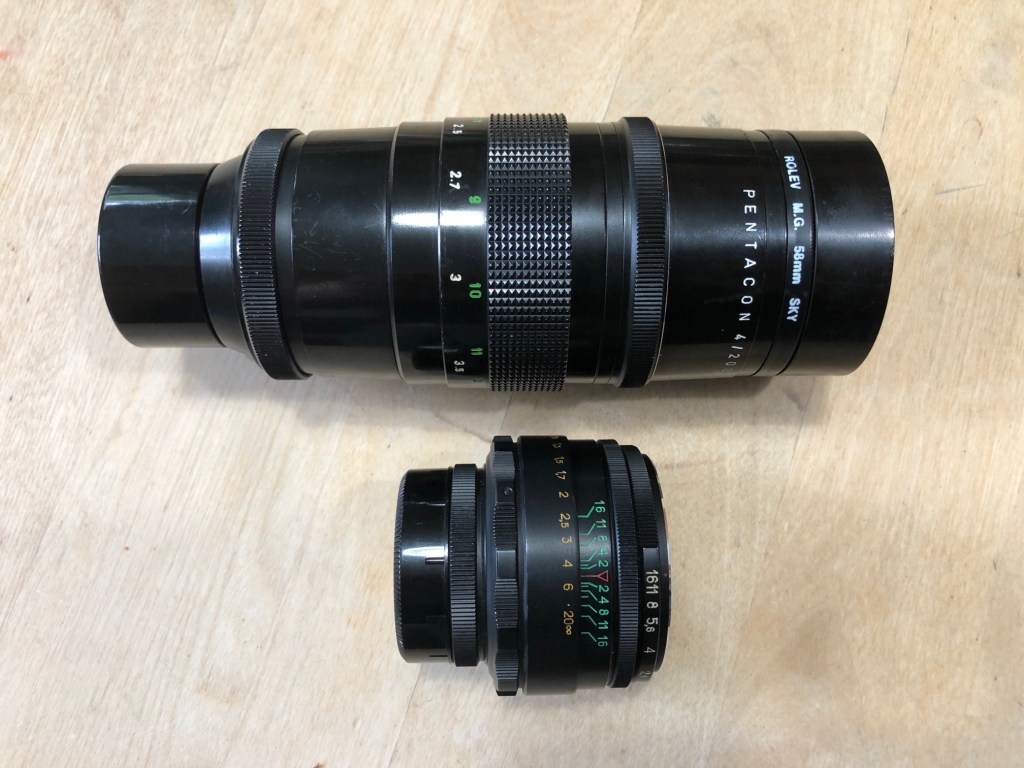
If you are fortunate to live somewhere that has a photographic club, they may also have swap-meets, or auctions. In Toronto there is the Photographic Historical Society of Canada, which typically has two fairs a year, which are a good place to pick up vintage gear. The first time I went in 2019 I managed to find an 8-element Takumar 50mm f/1.4 (C$250), a Helios 58mm Version 4 ($20), a Takumar 35mm f/3.5 ($60), and a Carl Zeiss Tessar and Biotar 58mm f/2 for $140. The benefit is always that you get to examine the lens/camera, and check the functionality. There is generally a huge amount of lenses and cameras, some quite inexpensive for the person wanting to get started in analog photography.

Online stores

What about purchasing from an online reseller? This is somewhat tricky, because you are buying a physical device. I typically don’t buy any vintage electronic things off the internet because you can never be 100% certain. Thankfully the type of vintage we are looking at here, especially as it pertains to lenses, rarely involves any electronics. However it still involve moving parts, i.e. the focusing ring, and the aperture, both of which have to move freely, and are obviously hard to test online. There are a number of differing options for buying online. There are (i) physical stores which have an online presence, (ii) online retailers with a dedicated website, and (iii) online retailers on platforms such as Etsy and eBay.

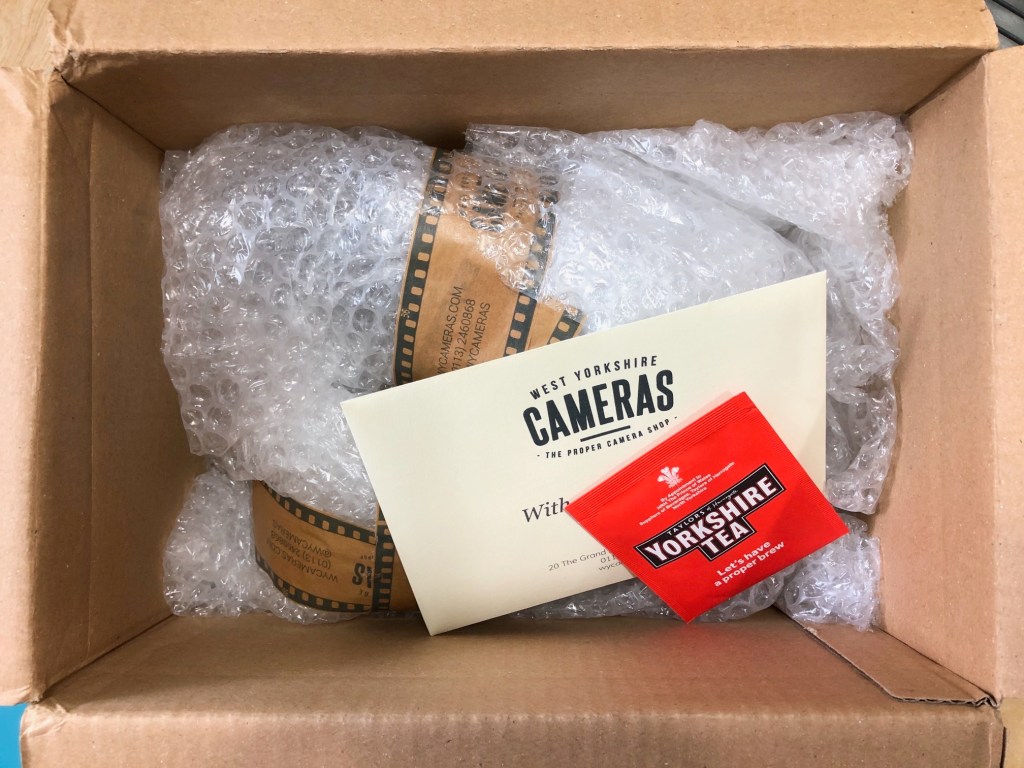
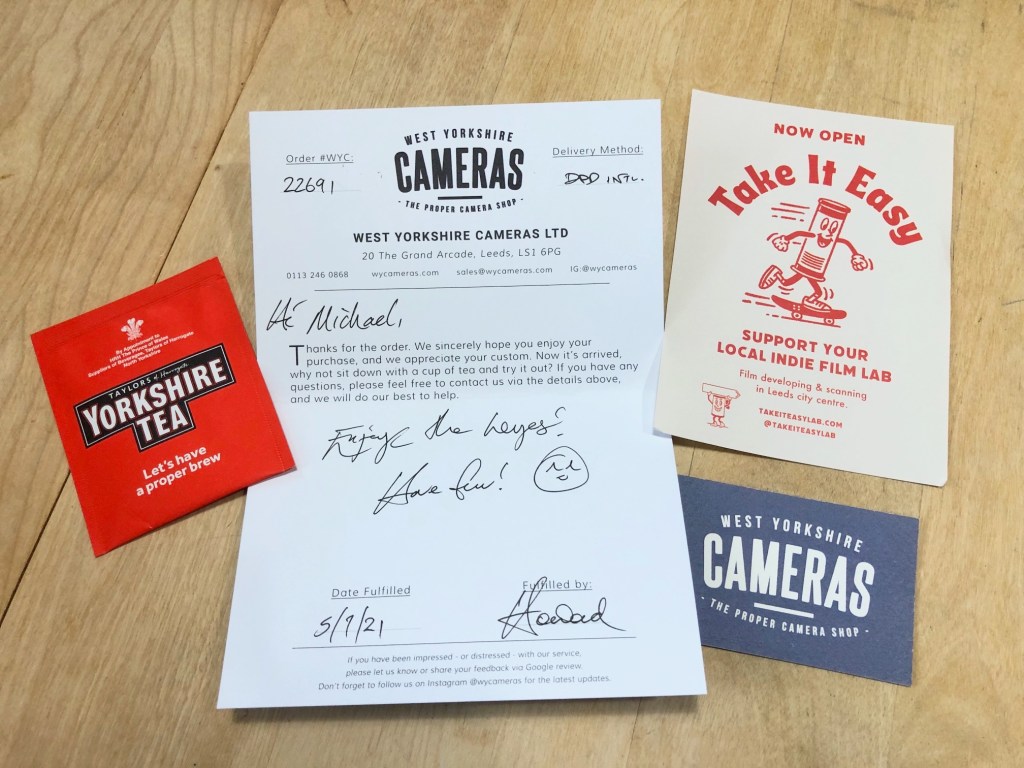
I have had a number of good experiences when shopping at online stores. The first one was with the Vintage & Classic Camera Co., on Hayling Island near Portsmouth (UK). I bought an Exakta Varex 11a, and the experience was extremely good. Listings are well described, with ample photographs and a condition reported (as a percentage). The second was a recent experience with West Yorkshire Cameras, arguably one of the premium retailers for vintage camera gear. I have also bought lenses from a number of resellers on Etsy and eBay. Etsy provides access to resellers from all over the globe, and vintage products have to be a minimum of 20 years. I have bought some Russian lenses from Aerarium (Ukraine), cameras from Coach Haus Vintage (Toronto, Canada) and Film Culture (Hamilton, Canada). If you are looking for Japanese vintage cameras, I can also recommend Japan Vintage Camera based in Tokyo, who have an Etsy store as well.

What makes a good store?

A good vintage camera reseller will be one who lives and breathes vintage cameras. Typically they might have an Instagram account, offer weekly updates of new inventory, and service/inspect the equipment before even advertising it. If there should be something wrong with an item when you receive it, the reseller should make it good (I mean things do get missed). A good online store will have listings which describe the lens/camera in detail while listing any defects, provide a good series of photographs showing the camera from different angles, and some sort of grading criteria. Ideally the store should also provide some basic information on shipping costs.

Regardless of the store, always be sure to Google them and check online reviews. Don’t be swayed by a cool website, if there is a lack of customer service you won’t want to shop there. Sometimes the company has a Google review, or perhaps a review on Trustpilot. If there are enough negative reviews, then it is safe to say there is likely some truth to them. For example a company that posts 70% bad reviews is one to avoid, regardless of the amount of inventory on their site, how quickly it is updated, or how aesthetically pleasing the website looks. I had an extremely poor experience with a British online reseller that has an extremely good website with weekly updates of inventory. I had purchased a series of vintage lenses in Nov.2020. After one month they had not shipped, after two also nothing. I conversed with the owner twice during the period and each time the items were going to be “shipped tomorrow”. To no avail, after 5 months, I finally submitted a refund request with Paypal, which was duly processed. I have since written a review, which wasn’t favourable, but then neither were 90% of the reviews for that particular reseller.

The website Light Box has a whole list of places to buy film cameras and lenses in the UK, including a section named “Caution advised”, outlining those to avoid. I have created a listing of various stores in the Vintage Lenses etc. page.

Stores by region

Geographical locations do play a role in where to purchase vintage camera equipment. For example during the early decades of the post-war camera boom, there were two core epicentres of camera design and manufacture: Europe (more specifically both East and West), and Japan. So if you are interested in cameras/lenses from these regions, then stores within those geographical locales might offer a better selection. For example there are quite a few vintage camera resellers on Etsy from Ukraine and Russia. This makes sense considering cameras like FED were made in factories in Kharkov, Ukraine. Interested in Pentax or any number of Japanese vintage lenses, then resellers from Japan make sense. There are a lot of good camera stores in places that have few links to manufacturing, but may have had a good consumer base, e.g. UK and the Netherlands. The trick of course is being able to navigate the sites. Many Japanese stores have online presence, but very few provide an English-language portal.

The simplicity of achromatic photographs

We live in a world where colour surrounds us, so why would anyone want to take an achromatic, black-and-white photograph? What draws us to a B&W photograph? Many modern colour images are brightened to add a sense of the exotic in the same way that B&W invokes an air of nostalgia. B&W does not exaggerate the truth in the same way that colour does. It does sometimes veil the truth, but in many ways it is an equalizer. Colours and the emotions they represent are stripped away, leaving nothing but raw structure. We are then less likely to draw emotions into the interpretation of achromatic photographs. There is a certain rawness to B&W photographs, which cannot be captured by colour.

Every colour image is of course built upon an achromatic image. The tonal attributes provides the structure, the chrominance the aesthetic elements that help us interpret what we see. Black and white photographs offer simplicity. When colour is removed from a photograph, it forces a different perspective of the world. To create a pure achromatic photograph means the photographer has to look beyond the story posed by the chromatic elements of the scene. It forces one to focus on the image. There is no hue, no saturation to distract. The composition of the scene suddenly becomes more important. Both light and the darkness of shadows become more pronounced. The photographic framework of a world without colour forces one to see things differently. Instead of highlighting colour, it helps highlight shape, texture, form and pattern.

Sometimes even converting a colour image to B&W using a filter can make the image content seem more meaningful. Colour casts or odd-ball lighting can often be vanquished if the image is converted. Noise that would appear distracting in a colour image, adds to an image as “grain” in B&W. B&W images will always capture the truth of a subjects structure, but colours are always open to interpretation due to the way individuals perceive colour. 

Above is a colour photograph of a bronze sculpture taken at The Vigeland Park in Oslo, a sculpture park displaying the works of Gustav Vigeland. The colour image is interesting, but the viewer is somewhat distracted by the blue sky, and even the patina on the statue. A more interesting take is the achromatic image, obtained via the Instagram Inkwell filter. The loss of colour has helped improve the contrast between the sculpture and its background.