Photographing large objects in the landscape

Photographing large objects in the landscape can be tricky. Some are near impossible, for example bridges. An exceptional example is the Landwasser Viaduct, part of the Rhaetian Railway in Graubünden, Switzerland. The best possible shot is taken from the valley beneath, preferably with a train crossing the viaduct, but that’s not a shot possible for everybody, because most people are on the train, and therefore won’t get anywhere near the perspective of a ground shot. It’s the same with many of these famous bridges, and viaducts. Some, like the Glenfinnan Viaduct, often known as “The Harry Potter Bridge“, are easier to photograph (there are some good instructions to help find the most optimal spots). Not to say that the Landwasser Viaduct can’t be photographed, there are also good commentaries on doing that as well.

Dunnotarr Castle in Scotland. Although the castle itself is not a “large” object, it becomes large when combined with the headland. If it wasn’t perched on a rocky headland, the resulting image would be quite flat, however the combination of man-made and natural features gives the photograph a great deal of depth.

While train journeys are fun, actually photographing things from the train doesn’t always produce the images people expect. It’s the same with large objects of any sort. Sometimes the best images these days are taken using drones, because they are able to take in the whole landscape. But not everyone has a drone available, and in some places they have actually cracked down on them over the past few years. landscape scenes in Iceland are monumental when taken from a drone… these are perspectives of features like waterfalls that just can’t be achieved any other way. But at nearly every major tourist site in Iceland, you will see ‘No Drone’ signs, e.g. Gullfoss waterfall.

So if you are interested in photographing a large natural, or man-made object, what’s the best approach? There are two good methods. Firstly, shooting from a distance, to provide an overall outlook. This involves finding the best position that allows for an uninterrupted view, and makes an interesting shot. Secondly, shooting up-close, providing a near perspective of the object, photographing just a portion of the structure and bringing things like texture and intricate detailing into play. Describing an object visually should never be just a one-perspective deal. It should incorporate different granularity of details, which help describe the object as a whole. You also want to be cognizant that you don’t just create the same picture that the masses do.

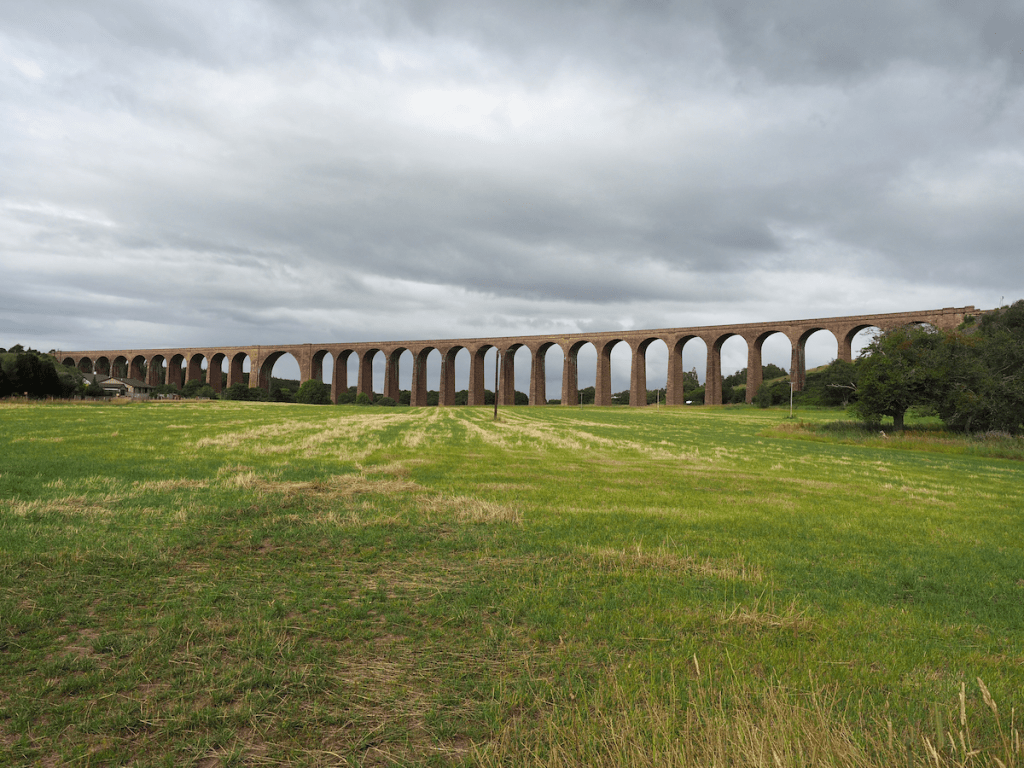
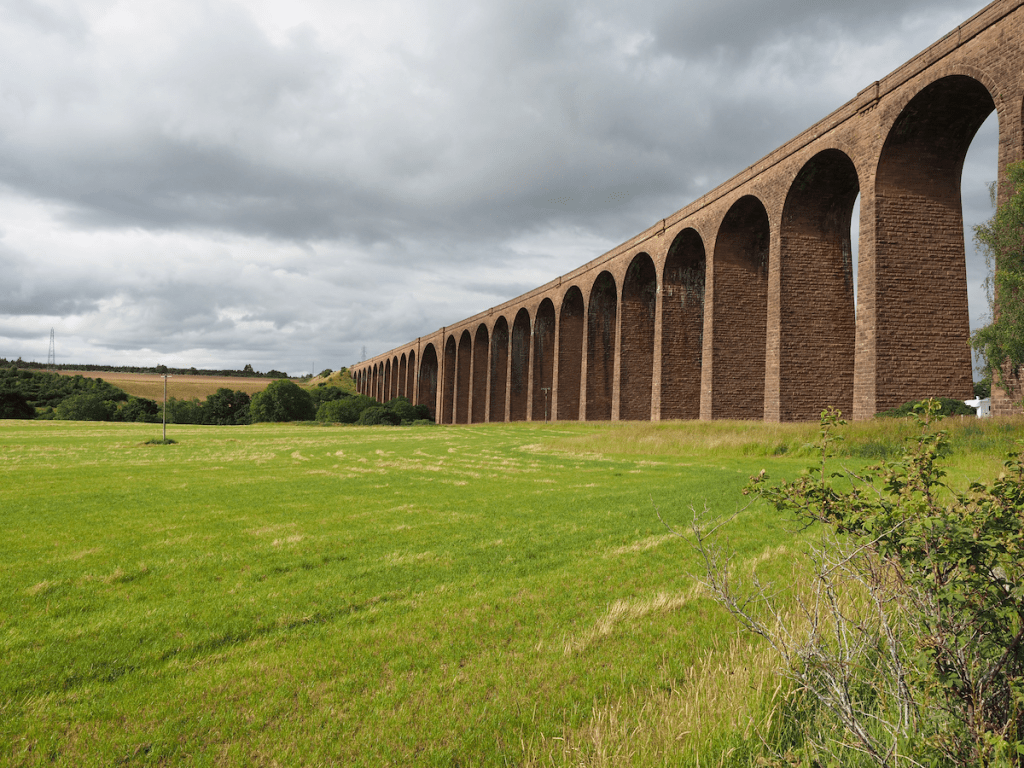
The Culloden Viaduct from a distance.
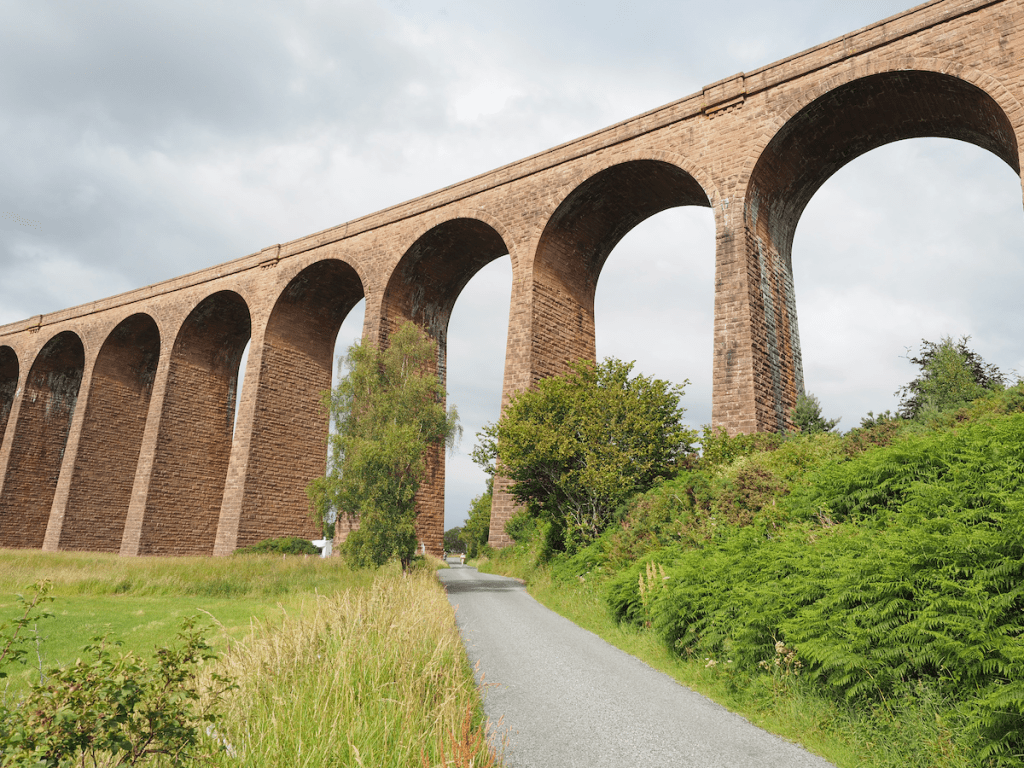
A perspective view.

As a case in point, consider these photographs of Culloden Viaduct, just east of Inverness, Scotland. This is an easy viaduct to get both a distant shot, and close shots, as a road goes directly underneath the southern portion of the viaduct. There are many options here, shooting it from the distance to provide an overall viewpoint of the viaduct, or from one end to provide a perspective. The viaduct is a long linear feature, which means distance shots make it appear small in relation to the rest of the photograph. The photograph also feels “flat”, something that can be partially fixed by shooting from an elevated position (which is above the feature being photographed, and hence the value of drone-based photography). A perspective view will often allow the scale of the structure to be included, in addition to a more 3D feel.

The interplay of arches
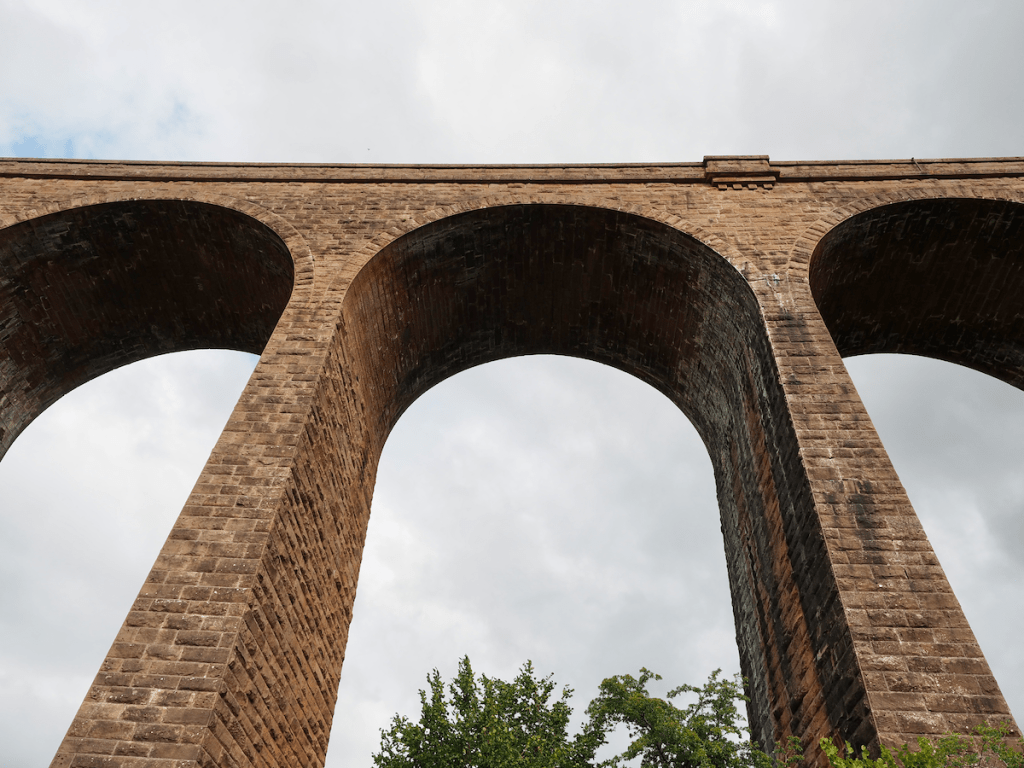
A close-up view of the arches

Close-up shots will fail to show the viaduct in its entirety, but will instead portray more architectural details, in this case, the design of the arches. It also provides more of a three-dimensional perspective of the viaduct than long-distance shots. it is the arches that make this viaduct interesting, and a distance shot will not do them justice. A close-up view exposes the tapered structure of the piers, and the precise nature of the arches. You can even goes as far as taking shots of individual components of an object to illustrate things like texture, and interplay of materials.

P.S. Naturally, aerial shots acquire with a drone do provide much more of a perspective of an object in the context of its surroundings, but that isn’t always realistic for the average photographer.

Good photography is not about technology

It’s funny how people get so tied up with the technical side of photography. They worry about the number of megapixels, the sharpness of the lens, and other such mundane things. Sure these are importance, but if you concentrate too much on the technical aspects of cameras and lenses, you miss out on the pure joy of taking photographs – I mean that’s the whole point right? Despite what people think, photography is not really a technical art. Sure there are lots of technical aspects to the art of photography (e.g. chemistry, physics), but these are but a means to an end.

People often tend to believe that fancier cameras and more megapixels makes them a better photographer. It doesn’t. Good photos come from experience, and an ability to observe the world around you in such a manner that allows meaningful photographs to be taken. The device being used should almost be an afterthought, although simpler is often better. Good photographs do not come from Photoshop… if there was no substance in the photograph to begin with, manipulating it in any manner will not induce any more aesthetic appeal, will not add any more meaning.

Good photography is about what you have inside your mind. It is the sum of all your life experiences and your aesthetic point of view, your interpretation of the world around you. A camera is merely a light capturing tool. You can make a photograph using a very expensive Leica, or a cheap disposable. At the end of the day, it is all about the aesthetic you are trying to achieve, and the story you want to tell.

Is that a Swiss camera in Wes Anderson’s “Asteroid City”?

Wes Anderson’s movies are always somewhat surrealistic. In Asteroid City we are taken to a remote one-café desert town in Nevada, in 1955. The town’s claim to fame is that it is built next to a 3000-year-old meteor crater and adjoining space observatory. The movie follows a writer on his world famous fictional play about a grieving father who travels with his tech-obsessed family to Asteroid City to compete in a junior stargazer’s convention, only to have his world view disrupted forever.

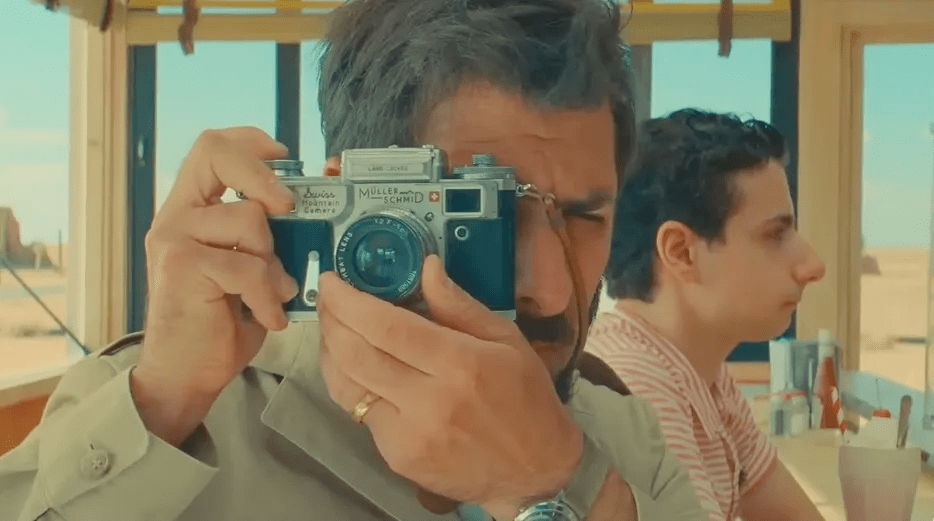
There looks to be a distant atomic explosion, which photographer Augie Steenbeck captures on his camera.

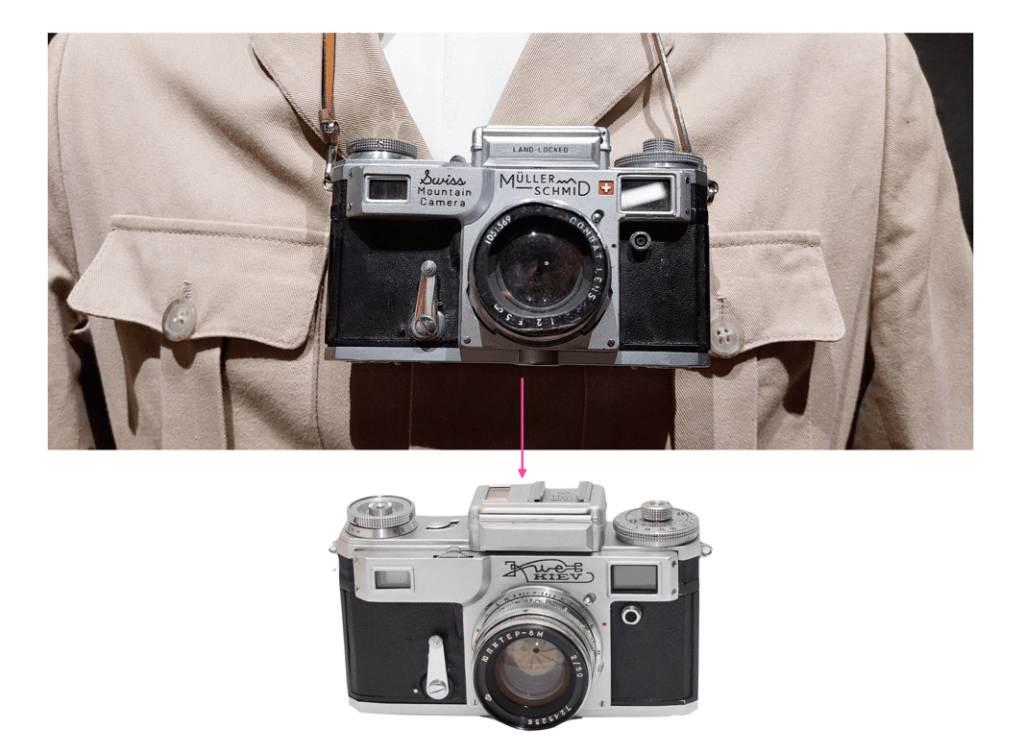
The camera is supposedly a Müller Schmid, “Swiss Mountain Camera”. But of course it isn’t. Does the “Swiss Mountain Camera” have some loose nod to the Swiss camera brand ALPA? Does Müller Schmid signify anyone? The closest association I could find is a Joey Schmid-Muller (1950-), a Swiss/Australian surrealist artist. Sure, Anderson could have pulled the name out of thin air, but I highly doubt it.

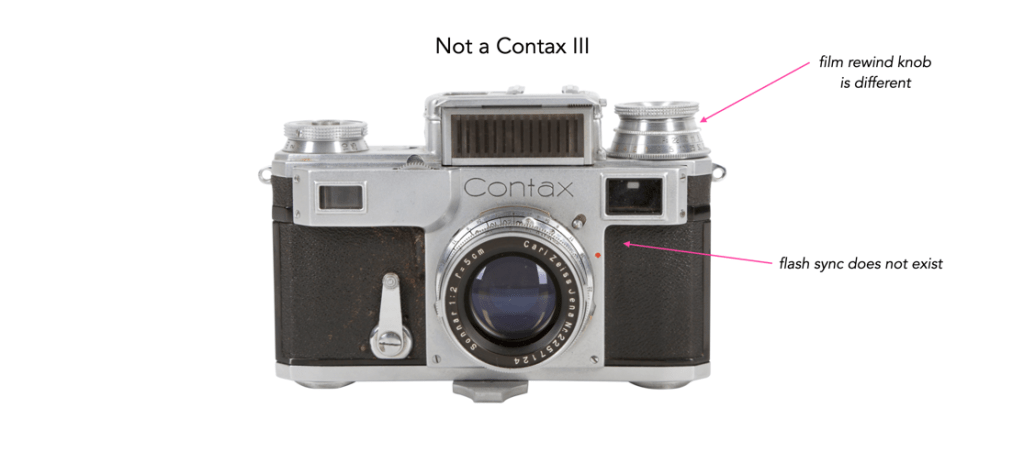
The camera of course may seem familiar to some. It seems like a rangefinder camera that came from Zeiss Ikon – perhaps a Contax? In the 1950s these cameras were produced in West Germany by Zeiss Ikon AG in the form of the Contax IIa and IIIa. Or it could have been a pre-1945 Contax II or III. The Contax III is an obvious contender, because it looks familiar, but there are two issues. Pre-war Contax III’s did not have a flash sync, and the film rewind knob was much taller. So it isn’t a Contax III. Instead we have to look further east, to Ukraine. After WW2, much of the Contax production line was taken as war reparations from the Zeiss-Ikon factories, to the Zavod Arsenal facility in Kiev. Production then started on Contax-döppelganger Kiev brand cameras in 1947 (the early models, Kiev 2, are believed to have been made from original Zeiss Ikon stock).

Why it’s a Kiev 4!

Now the Zavod factory made a bunch of different Kiev cameras, both metered and unmetered. The bump on the top identifies this as a metered Kiev. The most likely candidate is one of the most common Kiev’s, the Kiev-4, produced between 1957-79. All that has been done to this camera to convert it to a Müller Schmid is that three marking plates have been overlaid on the exiting camera – one for “Müller Schmid”, one for “Swiss Mountain Camera” plus a small Swiss flag, and one for “LAND-LOCKED” (is this somehow a nod to the fact that Switzerland is a land-locked country?). They are metal overlays because you can see the open seams in some areas.

What about the lens? It is just marked as “COMBAT LENS”, a 5cm, f/2 lens – again there is no such brand – obviously a node to the fact that Steenbeck is a war photographer. In all likelihood the lens is a Jupiter-8 50mm f/2 lens, which was the standard lens on the Kiev-4 (a copy of the Zeiss Sonnar lens of 1929). Want to buy a Kiev 4? They aren’t that expensive, you can pick one up from between US$100-200, but I would suggest buying one from a reputable source such as Fedka.com.

Further reading

The pros and cons of third-party lenses

Once you have chosen a particular camera, (and manufacturer) it is time to think about lenses. Most people will buy a camera with some sort of kit lens attached, usually because it is cheaper. Others buy just the camera body, and outfit it accordingly, but it often a vast maw of choices. Lens choice is usually foremost about need, and ultimately focal length. What are you going to be shooting – portraits, landscapes, architecture? Then it becomes a balancing act of lens characteristics. If you choose, say a 35mm lens on an APS-C sensor, so 50mm equivalent, then it’s about things like size/weight (e.g. for travelling), weatherproofing, maximum aperture, build (metal/plastic), and of course cost.

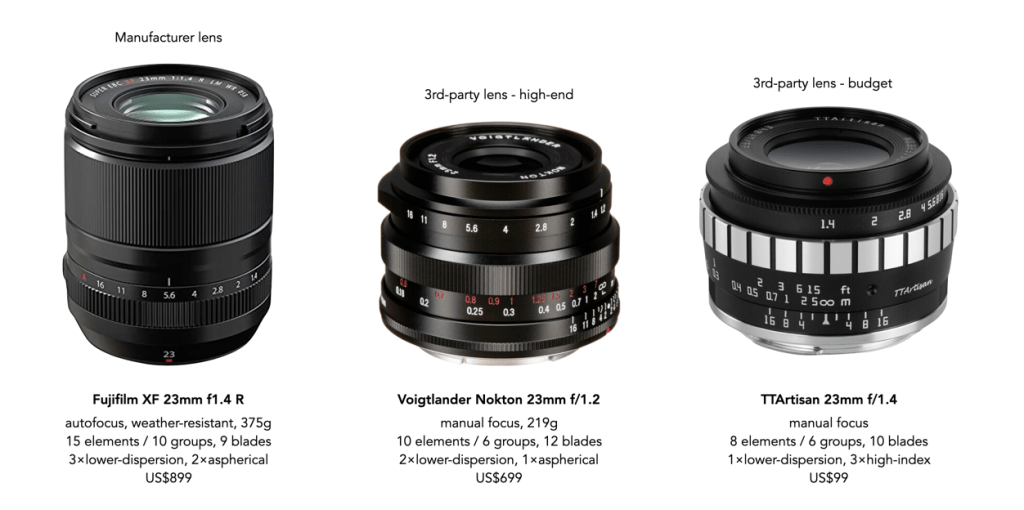
This leads us to the question some people end up pondering – do you buy a lens from the camera manufacturer or a third-party? Firstly, let’s consider each type of lens. Lenses produced by the camera manufacturer are often considered the creme-de-la-creme. They are designed from the bottom up, as integral components of the system. Quality and compatibility are the reasons why professional photographers stick with first-party lenses. These particular lenses are made specifically for the camera brands that they carry, so they are not compatible with any other manufacturers or brands.

Third-party lenses on the other hand, are often designed by lens companies from the perspective of creating a variety of lenses that will fit cameras from multiple manufacturers with the simple change of a mount (and tweaking some other specs). For example Sigma produces a 28mm f/1.4 lens that is available in Canon (EF), Nikon (F), Sony (E), and Leica (L) mounts. As with many manufactured items there are different levels of third-party lens manufacturers, from precision, high-priced lenses to mass-produced budget-oriented lenses. Third-party lenses can also be differentiated into long-established ”old-school”, and newer lens manufacturers. Voigtländer and Zeiss are good examples of well-established 3rd party lens makers who produce higher-end “boutique” glass.

Manufacturer versus third-party lenses

So why choose a 3rd party lens? There are many reasons. I suspect most people go that route because of the general affordability of the lenses. This also makes sense if someone wants to experiment with a particular lens, but doesn’t want to pay a small fortune. Affordability is often perceived as a sign that the lenses are inferior from the viewpoint of capabilities or build, but this isn’t always the case. Sometimes the lower price is a factor of trades-offs: manual focus instead of auto-focus capabilities, polycarbonate lens body instead of metal, etc. Some third-party lenses offer functionalities such as large apertures, e.g. f/1.0, or a smaller, lighter build, or even a lens not offered by a camera manufacturer, e.g. fish-eye lenses. For example the shortest focal length produced by Fuji is 8mm f/3.5 (12mm eq.), however it is US$800. An alternative for the photographer wishing to experiment with fish-eye lenses is the Tokina SZ 8mm f/2.8 (US$300).

What about disadvantages? Well the flip-side of 3rd party lenses is the lower-cost is that the lenses are sometimes optimized for lower cost. There may be some manufacturers that sacrifice the quality of materials used in lens manufacturing, and hence lens durability for a lower price. There is also the chance that the lens will not be 100% compatible with every one of the cameras it fits on. This goes back to the materials/build sacrifices made in construction. Another “disadvantage” for some is that many third-party lenses is manual focus. This is partially because it is cheaper and easier to produce a lens without focusing mechanisms, and electronic connections to the camera. However manual focusing is not a huge issue, because of functions built-into many cameras these days which assist with manual focusing, e.g. focus-peaking.

Actually the main problem in choosing lenses from 3rd-party manufacturers is differentiating between them. Because apart from the price differential, the specs of many lenses look quite similar. Below are five third-party 12mm lenses for the Fuji-X system (Fuji does not make a 12mm, the closest is a 14mm f2.8).

Aperture rangeElements/groupWeightBarrel materialCost (US$)
Zeiss Touitf/2.8 − 2211/8260gmetal$999
Rokinsonf/2.0 − 2212/10260gmetal + plastic$399
Meikef/2.8 − 2212/10326gmetal$230
Pergearf/2.0 − 2212/9300gmetal$165
7Artisansf/2.8 − 168/10265gmetal$149
Table: The gamut of 12mm lenses for Fuji-X

So when you get to choosing a lens, you may be swayed by the extremely reasonable prices of some of the 3rd party lenses. So what to do? Well the first thing to do is to find a website that maintains an updated list of lenses for a particular system. I’ll give examples of Fuji-X, because that has become my core system. Here is a good list from Alik Griffin. Third party lens manufacturers can be separated based partially on the quality of optics (and let’s face it, cost). At the end of the day, the actual lens you choose will depend on budget and individual requirements. If you decide to buy a third-party lens, make sure you do a good amount of research into the lens. Check out independent reviews from photographers, both professional and hobbiest, that have used the lens.

The Grand Kilar?

In a 1956 copy of Popular Photography, there was an article on the German lens maker Kilfitt. In the article, reference was made to a 180mm f/1.9 lens called the Grand-Kilar… there was even a picture. But did this lens actually exist? Well according to vague literature, it appeared in 1955, a 4-element lens, designed by A. Burger. But brochures of the early 1960’s show nothing in the way of 180mm lenses. It does appear in various editions of Arthur Cox’s “Photographic optics” in the 1960s, however searching the net does not seem to yield anything in the way of tangible proof to suggest any exist today. Perhaps very few were actually manufactured. In comparison the to SLR, it seems like a massive lens for the period.

Superfast lenses – the Zoomatar 180mm f/1.3

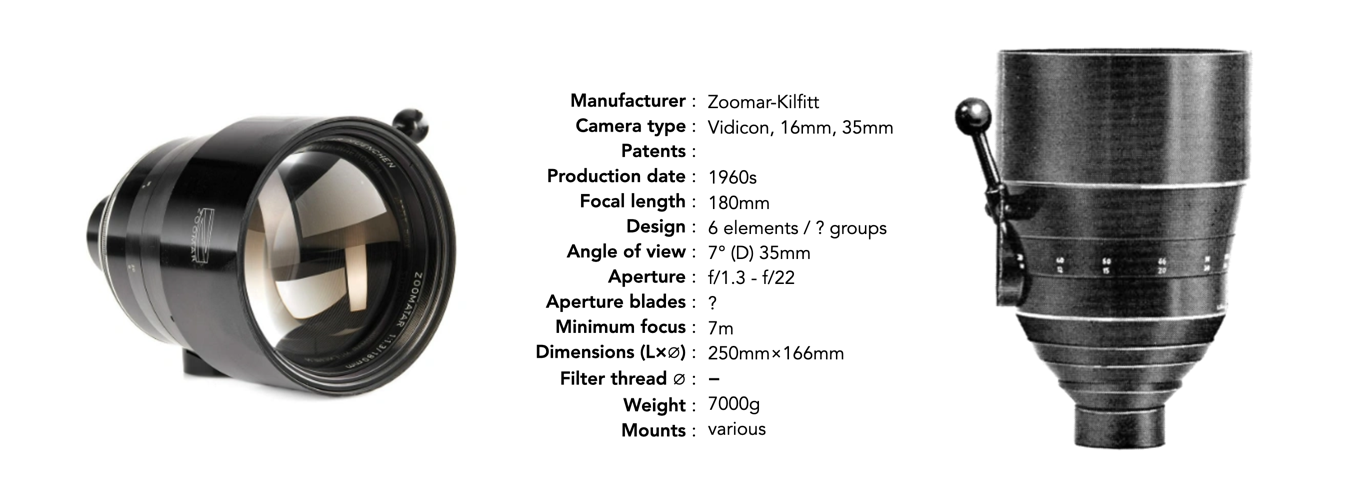
We now look at a fast telephoto lens – the Zoomatar 180mm f/1.3. This lens may have been a natural successor to the Grand-Kilar, the lens that seemingly never was. It was produced in the period after Zoomar Inc. took over Heinz Kilfitt. It is one of the fastest lenses above 100mm.

It was one of two super-fast telephoto lenses produced by Kilfitt in the 1960s, the other being the Zoomatar 75mm f/1.3. Both were intended for use in cinematography, with the 180mm also able to cover the 36×24mm area of normal SLRs. It seems like the 180mm lens was designed with the sole purpose to allow a maximum amount of light in, and it had the proportions to justify this – it was 250mm in length, had a diameter of 166mm, and weighed an astonishing 7kg – heavier than their Reflectar 1000mm f/8.

Kilfitt Zoomatar 180mm f/1.3

It has an optical scheme with six lenses, with a large difference between the diameter of the front (140mm) and rear (31mm) elements. Interestingly, because this lens was a cinematographic lenses, there is also some data on light transmission. Supposedly the light transmission was 80%, giving a T-stop of 1.5. Unlike the 75mm lens which was only supplied in C-mount, the 180mm lens came in various film formats (16mm and 35mm cine), in addition to 35mm. This means the angle-of-view could range from 3° on 16mm film to 7° on 35mm film. In 2011, one of these lenses sold on eBay for US$10,480.

Super Zoomatar 240mm f/1.2

Considering it sold in the mid-$2000’s in the 1970s, I don’t imagine many were actually manufactured (I have seen estimates of between 50-70). Zoomar did however create an even faster lens, relative to focal length – the Super Zoomatar 240mm f/1.2 – it was a behemoth at 11kg. It was originally developed for instrumentation cameras and for use with image intensifier tubes.

Further reading:

What is lens light transmittance?

Lenses allow light to be focused on a film/sensor, but not all that incident light that enters a lens gets to the target. Some of this light is reflected or absorbed by the lens. For example, lens materials absorb a certain amount of the light that is incident on its surfaces and passing through the substrate. There are a number of factors that affect light transmission rates: glass quality, quality of coatings, optical construction, and number of lenses.

Light transmittance (LT) is the term for the actual amount of light that makes it to the film/sensor, i.e. the percentage of light that goes through an optical instrument, often expressed as the light transmission rate. What this means, is that a lens with a maximum aperture of f/1.2 could potentially transmit less light, which could be equivalent to say f/1.4 in terms of brightness. The latter number is what is often referred to as a “T-stop”, or Transmission-stop, which is basically an adjusted f-stop that takes into account this light loss. So an f-stop is essentially a “theoretical” measurement, whereas a t-stop is an actual measurement that is tested when the lens is calibrated.

In the classic book Applied Photographic Optics, Sidney Ray describes two lenses. The first is a 4-element Zeiss Tessar f/3.5, with six air-glass surfaces and one cemented surface with a total glass thickness of 24mm. It has measured transmittance’s of 0.717, 0.99 and 0.941 respectively, gave a total transmittance of 0.66, and a loss of 34%. The second is an 8-surface Zeiss Biotar f/1.5, with three cemented surfaces, and a 72mm thickness, with transmittance’s of 0.642, 0.97 and 0.80 gave a total transmittance of only 0.45, a loss of 55%. But these are vintage lenses.

In reality very few manufacturers describe the actual LT of their lenses, possibly because it would reflect somewhat negatively, especially as it relates to lens speed. You will find that the only lenses that cite T-stops consistently are cinematographic lenses. For example, the Fujinon MK18-55mm is a cinematic lens with a speed of T2.9, describing the amount of light that the camera sensor is truly receiving. The actual aperture in a classic sense is f/2.75.

Remember to consider usability when choosing a digital camera

One characteristic of digital cameras which is more often than not ignored in reviews is their usability. Now usability in this context looks at how easy it is to use a camera. There are two levels of usability in a digital-camera. The first has to do with the usability of the software, i.e. generally how easy is it to navigate through the menu, and find things. The second has to do with physically operating the camera, e.g. how the camera is held, how the physical controls are laid out, etc. In the age of film cameras, the layout of buttons and levers was pretty much consistent for most cameras, often constrained by the physical mechanisms inside the camera. When film cameras started to gain more electronics, usability started to become more of an issue.

The simplest compact 35mm film cameras were exactly that – simple. As a good example, consider the AGFA Optima 335. It was aesthetically beautiful, and had a minimal number of controls. Using it involved (i) loading the film; (ii) setting the film speed (both done once for each roll); (iii) setting the distance; (vi) pointing the camera at the scene; and (v) pushing the shutter release. Obviously it was an automatic exposure camera, but everything was in the right place.

Fig.1: The AGFA Optima 335 with its simple system

When things started to move away from manual controls, which let’s face it were basically (i) film speed, (ii) shutter speed, (iii) lens aperture, and (iv) lens focusing, things started to gets more challenging from a usability perspective. The more features added, the more physical controls, or electronic menus a camera needed. It’s the reason people tend to like vintage film cameras like the Pentax Spotmatic. There is just so little involved in taking a picture.

Fig.2: Holding the Ricoh GRIII, a small camera with minimalistic usability

Digital cameras may be the worst from a usability perspective. Usability is sometimes ignored because “generic” reviews tend to concentrate on the “fancy” features of a camera, and neglect usability. You need to go to blog-based reviews by photographers who have actually used cameras in real-world settings to get a real idea about a camera’s usability. Note that if you are unsure about a camera, it is really important to go to a store and actually handle it, to get a real feel as to whether or not it is comfortable and intuitive to use. Sometimes it is the little things that make a camera not feel quite right. The awkwardness of a particular button, the ease of deleting an image, signage too small to read, or an annoying viewfinder.

The first issue to consider is physical “usability”, or comfort – basically how the camera “feels” in your hands. Does it require two hands to hold, or is one fine? Is there enough room on the camera to actually grip it? Is the camera the right size from the perspective of your hands? Some people have large sized hands, and find it uncomfortable to hold a small camera with manipulate small controls. Conversely, people with small hands might find it wearisome holding up a heavy full-frame camera with a heavy lens. Is the camera body a “block” or does it have a grip? Grips make it much easier to grasp a camera, particularly a larger one. Some camera manufacturers provide camera grips as accessories, or perhaps there is one made by a third-party if it is a popular camera. Like gloves, one size does not fit all.

Usability also has to do with size, and weight and that’s where sensor size plays a role. Full-frame cameras are the largest of the regular format cameras (i.e. smaller than medium format), and together with their lenses are generally heavy and large. Compact cameras are small and light. Depending on its use, the size and weight of a camera can play a large role in how useable it is. For example travelling with a full-frame camera and all its lens accoutrements by air, and on public transport can be back-breaking, yet travelling with it in a car and using a tripod, maybe not so much. A compact camera can easily be slipped into a pocket and weigh next to nothing. Size and weight issues also translate to lenses. Large full-frame lenses can be heavy, because they require more glass. Although most camera manufacturers provide various choices when it comes to lens sizes, with appropriate tradeoffs in image quality.

Next there are those characteristics of a camera related to its use. Is there a viewfinder, and is it comfortable to press your eye up against? Is the shutter-release button comfortable to use? What is the screen like – does it pivot and tilt? Is the image crisp? Does it provide a reasonably good rendition of the colours in the image? What about the physical controls? Is it easy to delete an image? Is there a macro function with easy accessibility? Are the controls accessible, even when taking a picture?

Fig.3: The layout of the top of the Fujifilm X-H1

Consider the layout of the top of a Fujifilm X-H1 shown in Figure 3. The camera body is large, and hence a grip is provided on the right-hand side. The shutter release button is located in an optimal position, surrounding by readily accessible controls, i.e. shutter speed control, etc. The secondary LCD monitor also provides a good summary of current setting on the top of the camera, in addition to the rear screen. The fact that there are physical controls for sensitivity (aka ISO, but a better term because it’s not really the same as film ISO), and shutter speed makes it much easier to adjust them, as opposed to a button, and having to rely on watching a screen.

Cameras from other manufacturers often may lack these basic controls, opting instead for a more customizable top configuration, as shown for the Panasonic Lumix DC-S5II in Figure 4. In place of the shutter speed dial, there is mode dial, and a drive mode dial in place of the sensitivity dial. The Fuji requires WB (white balance) to be modified in-menu, whereas the Panasonic provides a dedicated button. The shutter speed and aperture can be modified on the Panasonic based on mode setting, using the front and rear dials. So two different approaches to functional usability – some people may prefer one over the other. From my own perspective, I prefer to have shutter speed and sensitivity readily accessible as marked controls. Changing camera mode or even drive mode is something I don’t do that often (I won’t get into the nitty gritty of specific camera usability).

Fig.4: The layout of the top of the Panasonic Lumix DC-S5II

In comparison, a more compact camera, like the Ricoh GR III will have little in the way of external controls on the top, with most changes actuated via the menu or back-buttons (e.g. Macro, WB). These types of cameras are commonly used for street photography where setting may not change that often. It is much more of a minimalist approach to usability.

Fig.5: The layout of the top of the Ricoh GRIII

Usability also extends to the lens. Does the lens have a physical means of switching to manual mode? Is the focusing mechanism smooth (in manual mode). Is it easy to attach filters? How heavy is the lens? Will it be comfortable to lug the lens around all day? Then there is also the camera mount. You may want to attach vintage lenses which have different mounts, and hence need a converter. Is there a converter from camera-X to lens-Y? What about the tripod mount? Is it in the centre of the camera or bias to one side? Then there is maybe the biggest elephant in the room – battery life? Usability of a camera plummets if one battery charge only takes 200 photos. This means you will need to carry more batteries, which means more weight. Is the charger small and easy to pack anywhere?

Last but not least there is the software usability side of things. This really is a category unto itself. Menu screens are usually very small, and can be quite cluttered, even if some care has been taken in designing the actual menu. By what means does one interacts with the screen, i.e. button or touch. What does the screen show, and what does it let you manipulate. Is is customizable? Does changing a simple thing require you to delve into the menu system? Do you need to carry the manual just to access the maze of menus to change something?

There are many different facets to usability, and choosing a digital camera based on its usability characteristics is often ignored with users opting instead for the more “tangible” features of a digital camera, i.e. megapixels, lens selection, brand, cost etc. And while the interaction with a camera is a very individual experience, not every camera will offer a perfect usability experience for every person.

Schwalberg on the 50mm lens

“Say what you will about the undoubted advantages of other focal lengths, no lens can handle so many different subjects and situations as satisfactorily as the good old reliable 50-mm. Unless the photographer is working on a specific idea, or is faced with some special problem demanding something markedly longer or shorter, the 50 gives a frame that’s neither too tight for most indoor work, nor too loose for general outdoor shooting. If there is no lens for all seasons, at least there is one for most situations, and this is the versatile 50.”

Bob Schwalberg, “The shifty fifty”, Popular Photography, pp.73-75,118,119 (Sep., 1970)