That’s pretty obvious right? But the eye sees things a little differently. The process of looking at a photograph is by no means trivial.
The thing is that the human eye does not stand still. Try focusing your eye on an object for a minute or two. After just a few seconds your eyes will begin to tire, and you long to move them onto something new. By the time you reach a minute, if you have even made it that long, you will struggle to continue staring at the object – your eyes are well past being bored. How many times during the day do you suppose you look at anything for more than a few seconds? (the TV doesn’t count because the picture changes) The answer is likely not many. The same can be said of people that look at the photographs we take. After an initial view, their eyes become restless, longing to move on.
In reality, most people will spend less than a minute looking at a photograph, especially if they have seen the subject/object of the picture before. The only person who really spends a great deal of time looking at a photograph is the person who took it. So with such a short viewing time-span it is important for an image to contain an interesting subject, and provide enough distraction to spend longer considering its message. To do this you have to somehow control movement of the viewers eyes through the picture.
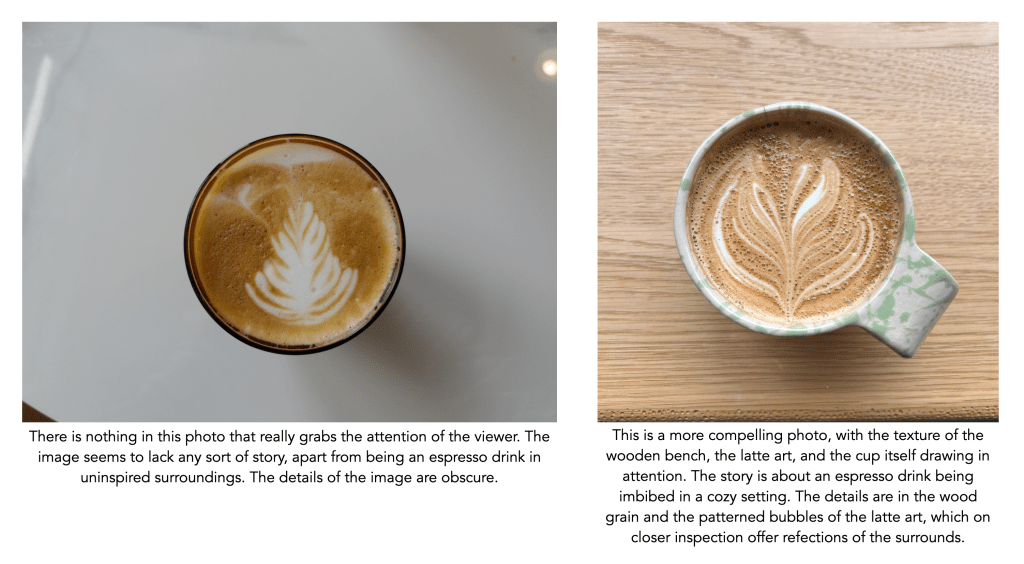
The first step involves grabbing a viewers attention. Therefore there should be something in the image that is outstanding or unusual. In the second phase, the viewer should be made to understand the story of the image. This is all about the flow of the image, with the viewer being lead through the composition. The third step involves maintaining the viewers gaze by getting them interested in the details of the image. Examples are shown in the figure above.
 Crafting Pixels