If you haven’t heard the news, Ricoh is considering developing a series of new “Pentax” film cameras, by means of its “Film Camera Project“. Pentax of course has a long and proud history of film camera development, but hasn’t really made huge inroads into the digital world. It was bought by Ricoh in 2011, becoming Ricoh Imaging Company Ltd. Still, the most successful digital camera coming out of the combined company is the Ricoh GR series.The company apparently surveyed 3,000 people in Japan and concluded that 20% of camera owners also owned film cameras. So in all likelihood, I imagine developing a series of film cameras is not a bad idea.
The trick of course is what route do you take? Do you go for a fully manual camera with no electronics aboard, or do you go with the opposite end of the spectrum and go fully electronic? I mean if you are going to start somewhere, why not reproduce the famed Ricoh GR1? It was introduced in 1996, so there wouldn’t be a huge curve in getting it back into production – update the lens, and the inner workings a bit. A fixed lens is fine – keep it simple, and I imagine there would be a bunch of Ricoh GR digital users that would spring for a film version. Small and compact is ideal.

Or perhaps rejig a Pentax Espio? The reality is that it shouldn’t be too hard to “develop” new cameras. You don’t need to add anything “fancy”, i.e. digital. And picking the best camera to replicate is as easy as determining which vintage cameras sell the best. They could build one from scratch, but would this be worthwhile? Could they replicate some other camera? What about full-frame cameras? Do you go with a Spotmatic type camera for an entry level, fully-manual? Or perhaps the diminutively sized MX series? Do you offer a manual and semi-automatic camera? Then there are the lenses – do you allow the use of vintage M42 mount lenses, or do you conform to the K-mount? Making a film camera without taking into consideration the legacy lenses is problematic. Then of course there are the lenses themselves – new digital-like lenses, or re-manufactured manual legacy lenses.
Done properly these film cameras could be very successful. Poorly done, and it will be a disaster. The best way to test the market would be simply to reintroduce an existing design like the GR1. But Ricoh needs to look beyond the Japanese market, and explore the needs of film users worldwide. At the same time, introducing a film camera requires some level of sustainability. A camera low in electronics, would of course reduce a camera’s footprint, and perhaps using a rechargeable battery would help as well. Of course there is also the issue of processing films, which does have quite an impact on the environment. One interesting addition to a new camera might be to allow cameras to incorporate both full- and half-frame shots. Allowing a 36-exposure film to take 72 shots certainly reduces the amount of rolls required, as honestly no one should treat film in the same manner as digital, i.e. 1000 frames of film when travelling is not really that realistic.
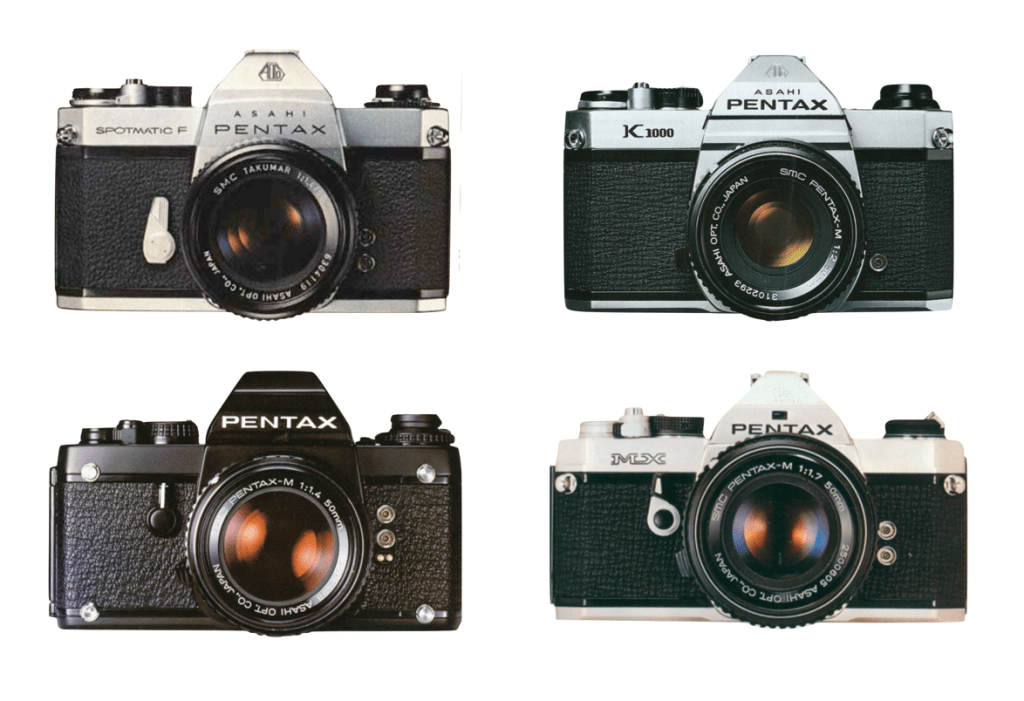
Ultimately it’s a very intriguing idea. Will it work? Time will tell I guess. A successful film camera will have to be well-priced for the market – even though Ricoh doesn’t really have any competition to speak of, there are still a *lot* of reasonably priced vintage film cameras around the world. And I’m not talking about Leica film cameras. The remade Leica M6 is likely a wonderful rangefinder camera, but at US$5,295 it’s not exactly affordable. Ricoh has one chance to get this right, and deliver a series of film cameras worthy of its legacy.

 Crafting Pixels