This FAQ deals more with the purchasing side of things of SLR cameras.
What is the average price of a vintage SLR?
There is no such thing. See below.
What sort of things impact price?
The cost of a vintage SLR is directly associated with a number of differing things. Firstly things like brand and rarity. Rare cameras cost a lot, sometimes it doesn’t even matter that their condition is somewhat mediocre. Next there is the brand, specific type, year of manufacture, condition, i.e. what works, and what doesn’t, and of course the spec of the lens attached to the camera. Some cameras will sell just as bodies, and others will be coupled together with a lens of some sort – it might be the stock lens the camera camera with, or perhaps something similar.
Why are some cameras so expensive?
Some cameras are expensive, either because the camera is rare, or has some attribute that makes it more expensive, or a review by someone with a lot of followers has pushed prices up. It also depends on the condition of a camera, those in pristine condition will have a greater value associated with them.
Are prices sometimes overinflated?
Basically yes. Sometimes this is due to someone’s belief that a camera (or lens) is worth far more than it actually is. Sometimes it is because of availability – there may have been 10,000 copies of a camera manufactured, but if only two are currently available on the market, it will invariably push up the price. Desirability also helps over-inflate prices.
Is price equitable with value?
Not always. Someone might advertise a camera for $4000, even though it’s value may only be $2500 – this may be related to availability (or possibly the camera is just overpriced).
What is the cheapest SLR?
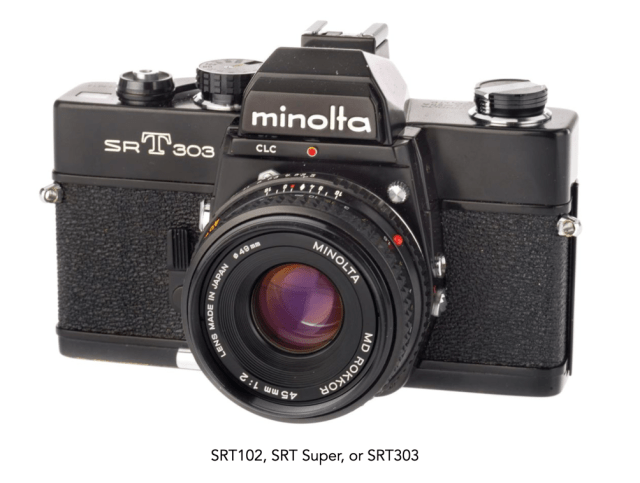
There are quite a few cheap SLRs on the market. For example Asahi Pentax sold over 4 million Spotmatic cameras between 1960 and 1977 – a Spotmatic SP1000 can go as cheap as C$150, whereas a Spotmatic F might go for C$350. Generally lesser-known brands are always less expensive, e.g. Konica, Miranda, Yashica.
Is the market for vintage cameras the same as that for vintage lenses?
No, largely because there is one end-user for cameras, and two for lenses. Lenses will be bought by people who (i) want to use them on a film camera, or (ii) want to use them on a digital camera. Photographers purchasing vintage cameras will only use them for film, and may only purchase one or two film cameras (useless they have GAP), whereas lens purchasers may buy many.
Should I take a risk on a cheap camera?
Sometimes there are sellers who are selling a camera without knowing what they have, usually because it was part of an estate, and not something they normally deal with. If the item is cheap enough, there is likely very little risk, but if it seems too expensive (or seems to have excessive shipping), avoid it. This is especially true if the item is marked “rare”.
How do you know a camera will be in good condition?
You don’t, unless you buy it from a reputable dealer. Someone who has been dealing in vintage photographic equipment for a long time, and sells a good amount of it will provide a good insight into a particular camera body, including providing a quality rating. Otherwise, without a full evaluation it is difficult to know exactly how well a camera will function. For example, unless shutter speeds are tested, there is no way to properly determine that they function accurately. The word “functioning” is pretty vague if there aren’t any qualifying statements. It could just mean the person has played with all the knobs and levers, and they work. Whether the shutter speeds are accurate is another thing altogether.
Are there red-flags for purchasing cameras online?
Yes – if a listing somewhere only has 1-2 images, and offers no real description, then stay well clear – unless of course it is a $500 camera selling for $20, and even then you have to wonder if there is anything wrong with it.
Is eBay any good?
Like anything, it really depends on the seller. Some sell only camera gear, and have been doing it for a while, or have a physical shop and use eBay as their storefront. Always check the resellers ratings, and review comments.
There are a lot of vintage cameras available on eBay from Japan – are they trustworthy?
In most circumstances yes. There are a lot of physical camera stores in Japan, so its no surprise that there are a lot of online stores. Japanese resellers are amongst the best around, because nearly all of them rate every aspect of a camera, cosmetic and functional. If something seems like a bargain it is likely because there are a lot of vintage cameras in Japan.
What should camera ratings include?
If we take the example of Japanese resellers, there are normally four categories: overall condition, appearance, optics, and functionality (body and lens). Appearance deals with aesthetics of the lens, and indicates any defects present on the lens body, e.g. scratches or scuffs. Optics deals with the presence of absence of optical issues: haze, fungus, balsam separation, scratches, dust. Finally functionality deals with the operation of the lens, and camera (e.g. shutter speeds).
What does “untested” mean?
If a posting is marked as untested, it basically means exactly that, you are buying the camera “as is”. There is usually some basic information on condition, but the camera functions haven’t been tested in any manner, i.e. shutter speeds, or with film. If a camera is marked as “parts-only”, it means exactly that, i.e. it does not function properly.

 Crafting Pixels