Choosing a digital camera, and a sensor size is one thing, but I think the thing that really stumps people is choosing the most appropriate lenses to use. Of course for the amateur photographer, what the lens will be used for may be the most important consideration. Travel? Landscapes? Street photography? The task is always made easier if there are some constraints on the number of lenses available. For example the range of lenses available for Micro-Four-Thirds, or even Fuji-X cameras has always been a little bit constrained, well until recently with the expansion of 3rd-party lenses.
So how do you choose the right lens? Like vintage lenses, digital lenses are principally chosen based on focal length (which advocates their use), and speed, i.e. aperture size. In addition there is cost, and “extras” such as weather sealing, and stabilization. The problem comes with the variety of lenses available – consider the long list of Fuji-X lenses, many of which are 3rd-party. Which one should you choose? Do you choose a prime or a zoom, a Fujifilm, or a third-party? Do you need an 8mm APS-C lens? Would 13mm be better? What about 16mm? Is manual focus okay, or would you prefer auto-focus? It’s not easy, even with the myriad of videos reviewing lenses.
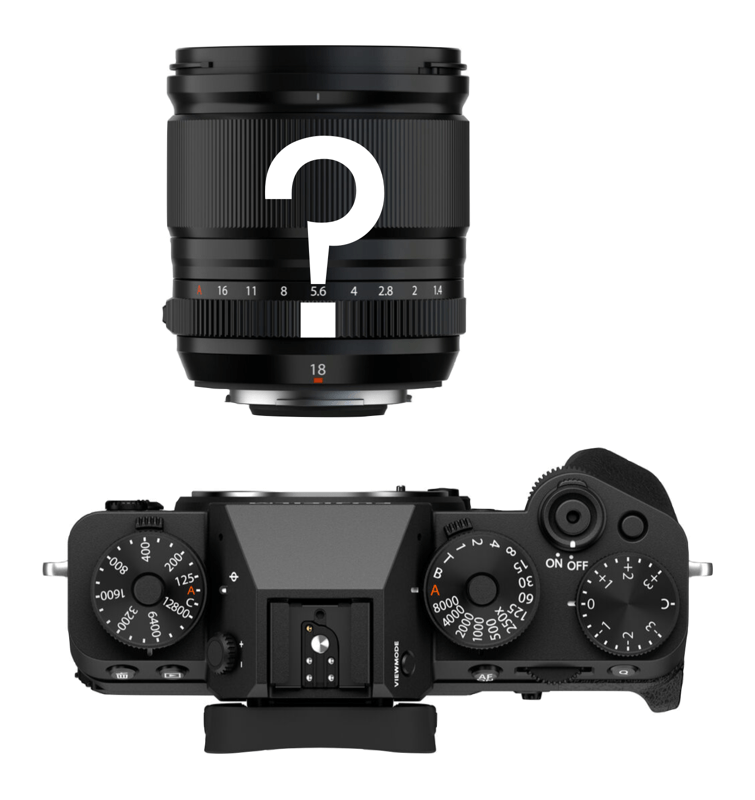
I’ll concentrate on Fuji-X here, because it’s at the heart of my current lens dilemma (my camera is a Fujifilm X-H1). Now my photography is a mixed bag of street, landscape, architecture and travel. I currently have the 23mm f/2 R WR (which is a FF 35mm equiv.). Now I’m looking to expand, primarily a wide-angle lens. Here are some of the typical focal lengths for Fuji-X (APS-C sensor), and their applications. Measurements in ( ) represent the full-frame equivalences.
- 50-56mm (75-85mm) – Good for portraiture.
- 33-35mm (50-53mm) – Good for general photography, portraiture and cityscapes.
- 23mm (35mm) – The upper end of the wide spectrum, provides more scene than the 33mm, but without the distortion of wider focal lengths. Good for street photography.
- 18mm (28mm) – The standard choice for landscapes (and sometimes architecture), providing a relatively wide angle of view, without introducing obvious distortions.
- 14-16mm (21-24mm) – The common lower end of the wide spectrum, good for very broad landscapes. Can include some noticeable perspective distortion, especially if the camera is tilted.
Beyond that we begin to move into the ultra-wide focal lenses, of which there seem to be quite a number. 11-13mm (16-20mm) lenses encompass more of the scene than can be seen with normal vision, so there is an innate sense of exaggerated perspective. Subjects close to the camera appear quite large, with the relative size of more distant subjects reducing quickly with distance. These lenses can be ideal for photography where the distortion does not impact the aesthetics of the image.
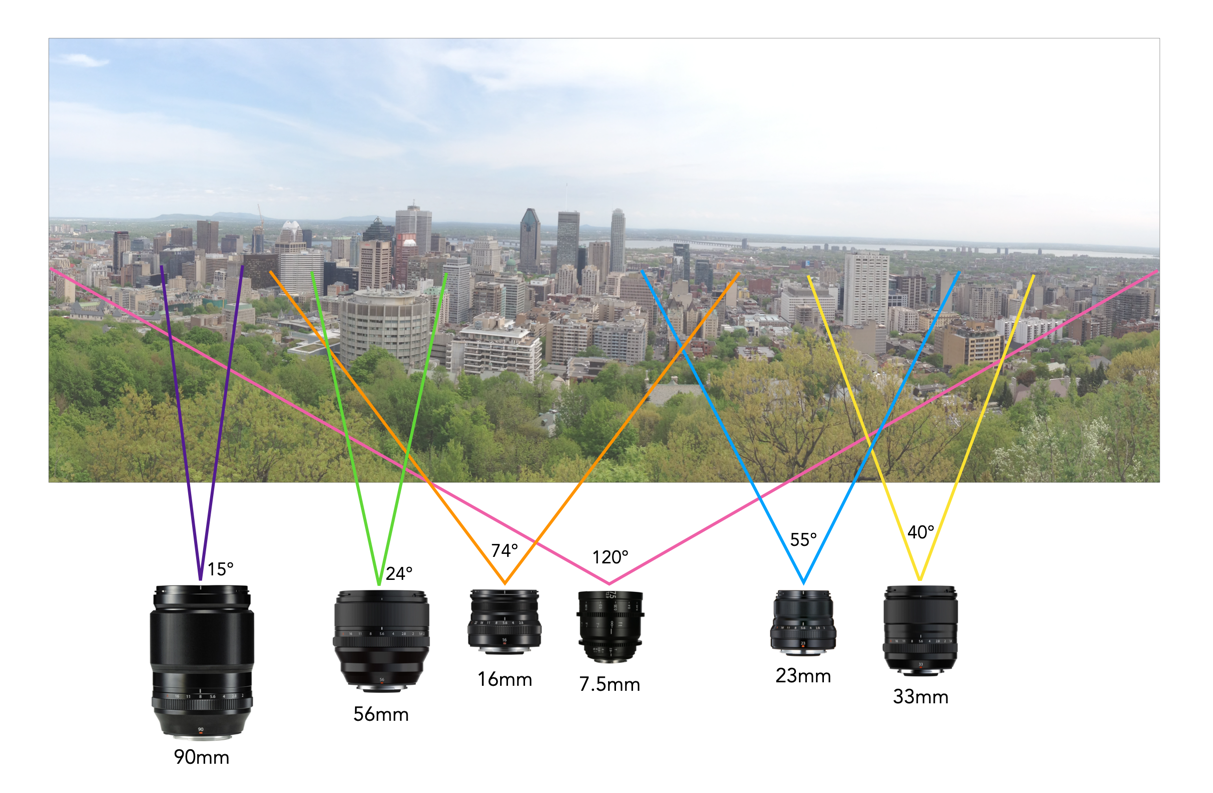
In reality, going down this rabbit hole has led me towards the 16mm, and possibly something like a 33-35mm. I have enough vintage lenses to cover the 50mm+ spectrum, and this makes sense as I don’t envision using them that often. And I’m going to stick with prime lenses. Some people really like zoom lenses because of the flexibility they allow, but I find I always seem to stick to one focal length – the 12-40mm on my Olympus camera used when travelling is perpetually set at 12mm (24mm). There are other compromises as well – weight can be an issue, as well as slower apertures.
Choosing a digital lens is challenging, especially for the hobbyist photographer. There are a lot of options, regardless of the sensor. Even Micro Four Thirds also has a long list of lenses. If someone is unsure, then I suggest starting with lenses from the camera manufacturer. As to focal length, choose a lens that provides the most optimal angle-of-view for the application you are most interested in. For example, if you shoot with an APS-C camera, and your focus is street photography, then a 23mm (35mm) lens is the most optimal solution.
 Crafting Pixels