Yesterday I was out int he backyard, cleaning out a sled that had tipped over and filled up with snow in the last snowstorm. Since then the snow had melted, and then refroze when it got cold again. Today there was a ½” (1cm) thick coating of ice, and about 4″ of water underneath. As I poured it out, it shattered. But then I picked up a piece and looked at it. It was consistently thick, and very clear. I put this down to the relative purity of the snow falling, and the process of refreezing. Then I thought, what would happen if I used a piece of this as a filter, through which I would take a photo?

There are likely very few organic substances which can be used to make camera (lens) filters. Water has to be pure enough so as to create somewhat transparent ice filters. Most water is not 100% pure, due to dissolved gases like oxygen, and impurities like suspended sediments, dust particles or flecks of minerals like calcium. When the water freezes, these internal impurities become concentrated, impeding light, and making the ice seem cloudy. Clear ice is almost entirely free of impurities. Also, when ice freezes quickly, ice crystals are small and numerous making the ice appear whiter. Transparent ice usually has larger and fewer crystals, a result of slow freezing. This ice was transparent because water freezing outside freezes from the top down. As a layer of water freezes, it pushes any air below it down, then the next layer freezes, etc.
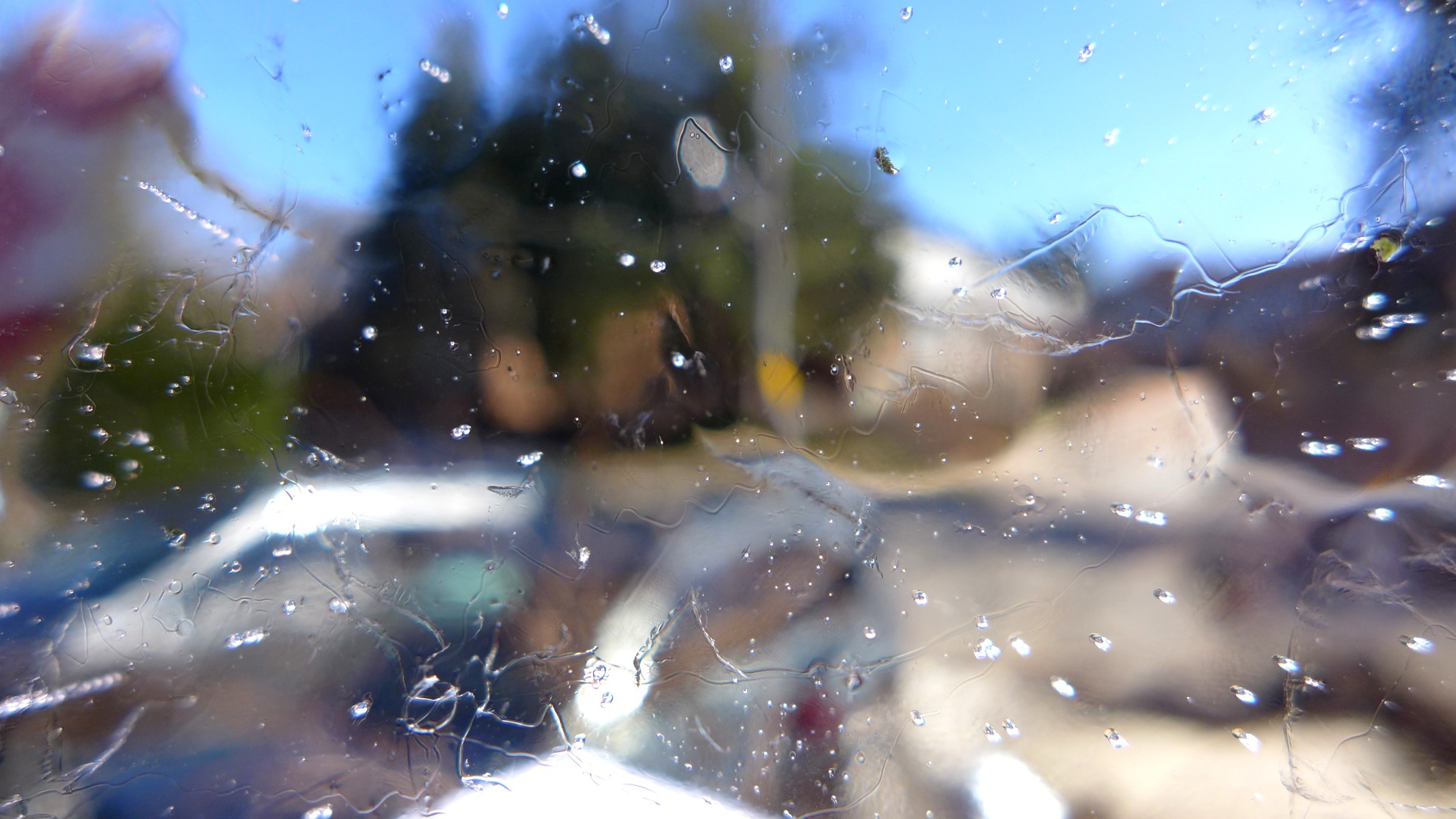
These pieces of ice reminded me of vintage pieces of glass that are imperfect, with bubbles, albeit melting. The image above shows a photograph of the ice surface, showing a few air trails (the white dots). I took some photographs using my Leica D-LUX 6, largely because I could easily take photos singe-handed while holding the piece of ice in the other hand.
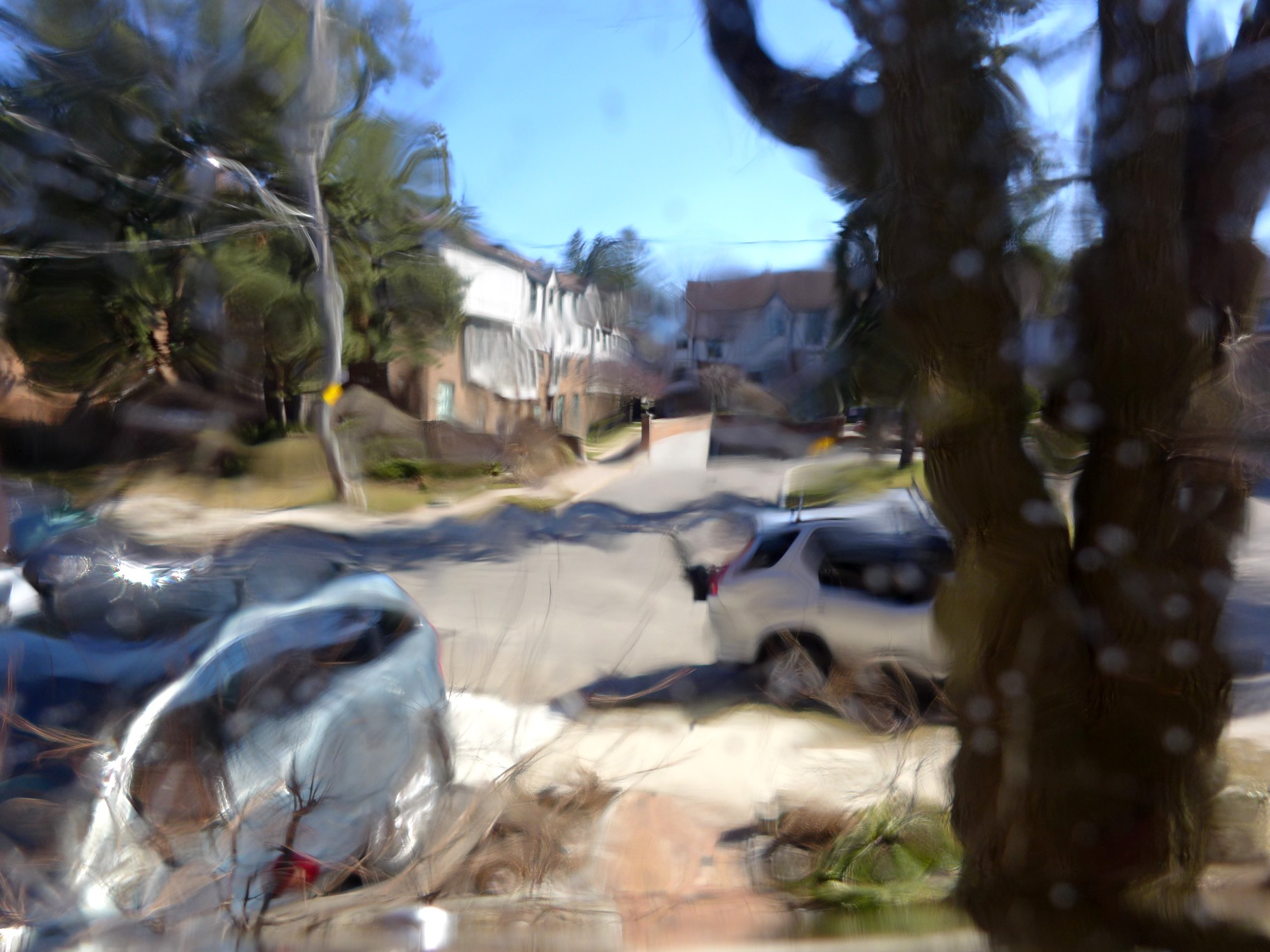
What are the results? Well, firstly these ice filters are not perfect – they are organic in natural, and therefore the effect may be dependent on how the layers of ice froze to create the slab. In Fig. 2, the image becomes quite defocused without any inherent warping. In Fig.3, objects are both organically warped, and blurred. The blur may be caused in part by the fact that the filter actually melts as it is being used, causing melt water to move down the filter.

In Fig.4, things are again warped, but what is special here is that due to the angle of sunlight, the air trails through the ice have formed circular, bokeh type effects, something we will term ice-bokeh. These images are very organic, and no two will be the same. This is made even more evident by the fact that the filter melts.
These filters are more for fun than anything else, adding a surreal art-like effect to a photograph. As each piece of ice is unique, each photograph taken again becomes a unique entity. It would be fun to experiment with different thicknesses, and different shapes. The one caveat is that these filters are cold and wet.
 Crafting Pixels