Camera gear that amateur photographers should avoid

There is a lot of information about photography on the internet, and honestly for the beginner it can be overwhelming. The task of deciding on a digital camera is hard enough without content creators prattling on about things you probably don’t need. Here are a few pieces of gear to steer clear of – from the pure perspective of the amateur photographer.

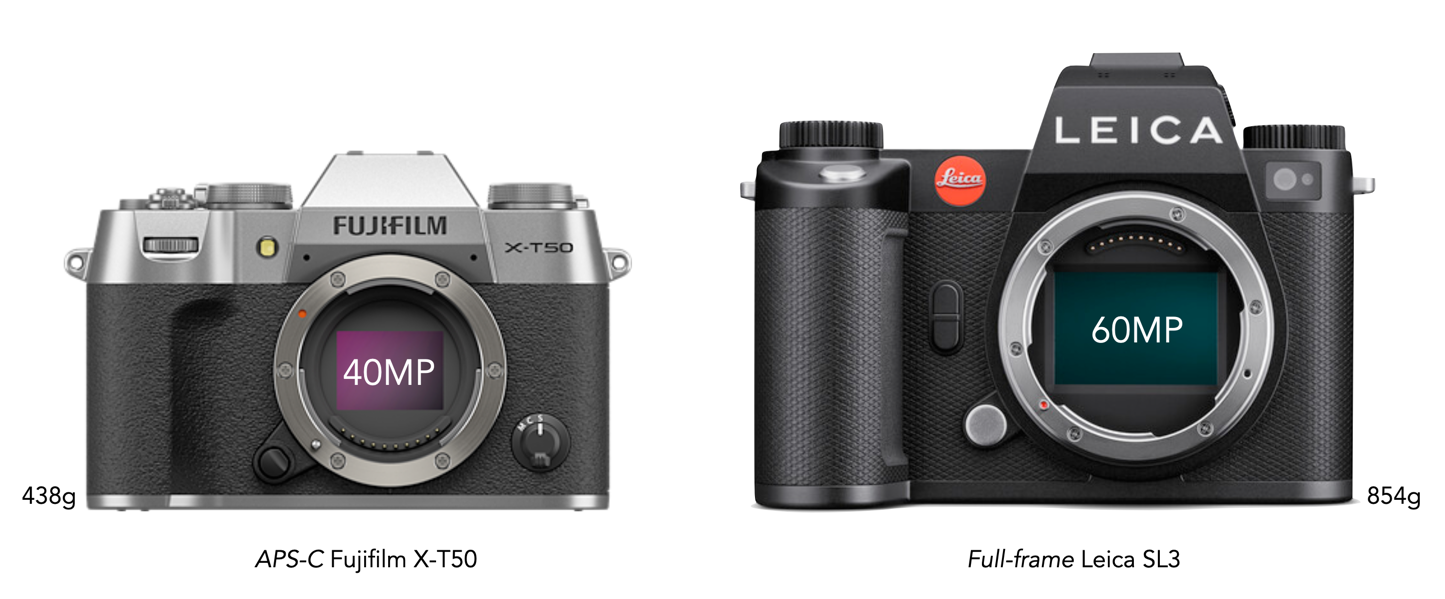
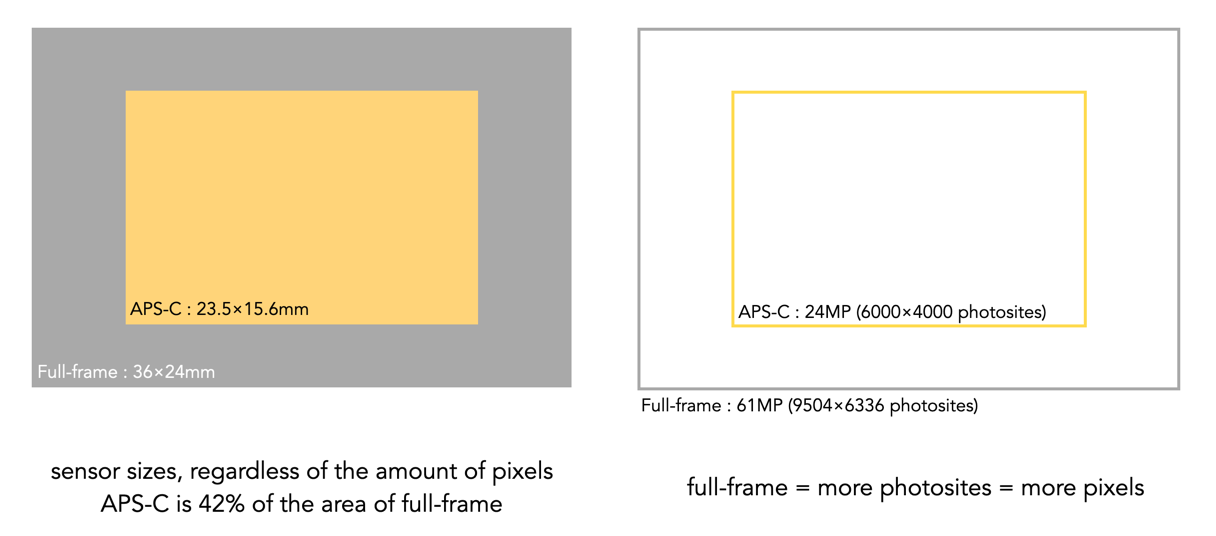
Full-frame cameras − The ubiquitous dSLR, or “digital SLR” is an extension of 35mm film cameras, hence the reference to “full-frame” (sensors are 36×24mm). They have been the mainstay of professional photographers for the past two decades. But they are not something that an amateur photographer should even consider. They are large, heavy, and prohibitively expensive. The size alone makes them inconvenient for things like long-term travel. In an age of mirrorless cameras with good APS-C sensors they honestly just don’t make a lot of sense. Even the big manufacturers such as Nikon have shifted their emphasis away from dSLRs. There are situations where dSLRs are more of an advantage – low light, a larger sensor, wildlife an sports photographer, none of which are really the concern of the amateur photographer.

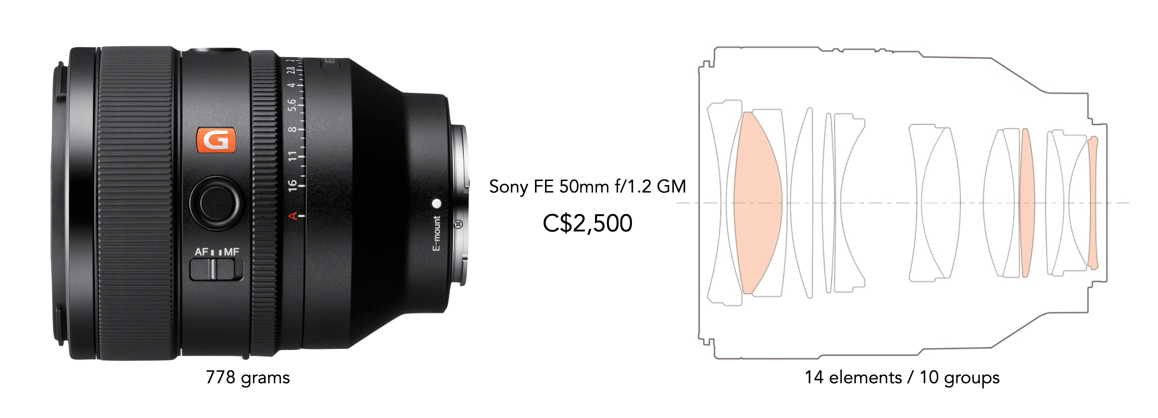
This Sony 50mm lens is fast, but it is too much lens for the beginner

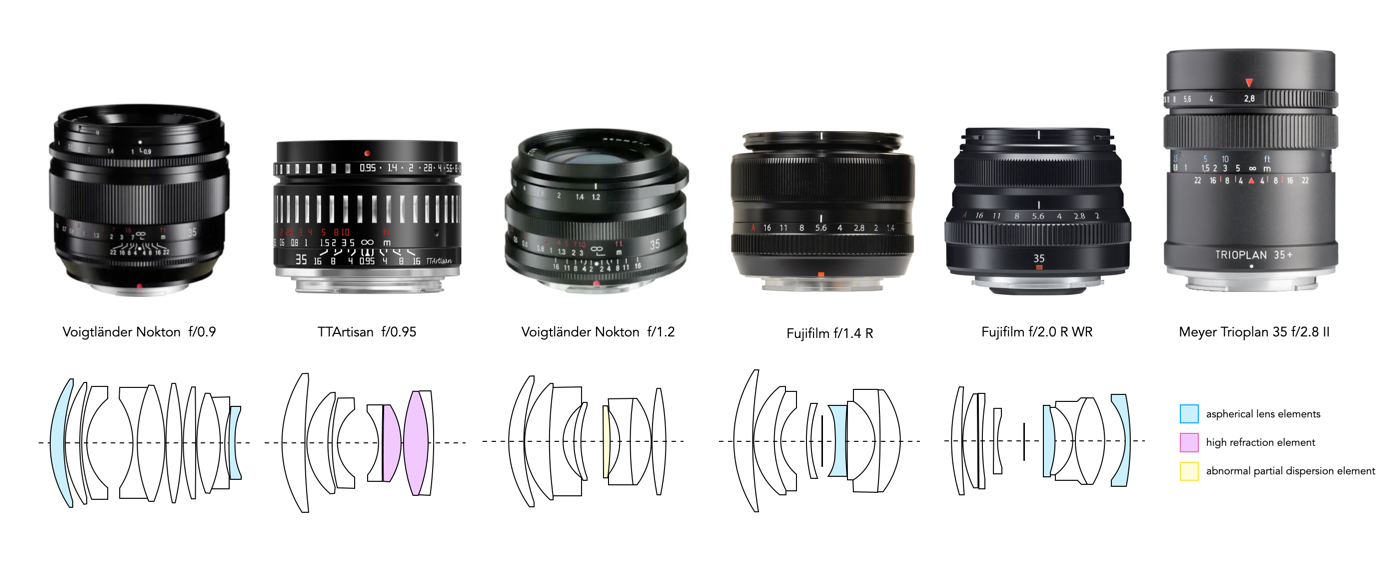
Fast lenses − What is a fast lens? I would probably categorize it as a lens with a speed faster than f/1.8 up to f/1.2. They contain a lot of glass, are heavy, and expensive. But frankly most people don’t need these lenses. They are perfect for people who shoot a lot at night, or in low-light settings, but slower lenses can also be used in these scenarios. (I wrote a whole post on whether you Should you buy a superfast lens?, and Are modern ultrafast lenses useful?)

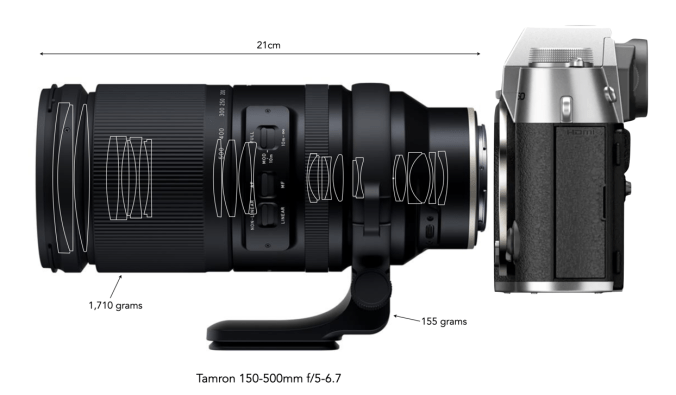
Super telephoto zooms − The zooms offer focal lengths like 100-500mm, and are very versatile, just not for the beginner. It’s tempting to consider, but not actually that useful unless you have a specific need, i.e. sports and wildlife photography. In many cases it is just too much zoom. For example landscape photography doesn’t always gel well with focal lengths beyond say 200mm, because there is a tendency to loose perspective, which is the whole point of many landscapes. The other problems are pretty obvious – size and weight. Of course here there is another benefit of mirrorless APS-C cameras, smaller zooms. The Tamron 150-500mm lens for Fuji-X seems amazing (225-750mm eq.), but it contains 25 elements, and weighs 1.71kg – try lugging that around for an extended period!

The Tamron 150-500mm super telephoto zoom – a behemoth for amateurs

Filters − There are a lot of really good filters which do things like reduce glare, and unwanted reflections, and correct or enhance colours. For example polarizing filters are useful when shooting landscapes in sunny locales, they darken skies, and make colours stand out more. Neutral density filters reduce light hitting the sensor, but doesn’t affect image colours. But it may be best to focus on taking good photographs, and conquering exposure before adding filters into the fray. P.S. UV filters are basically pointless because most sensors aggressively filter UV light. Save the filters for when you gain a little experience.

Tripods − Most people do not need a tripod. They are super useful for taking stills at home, or when you need to use a super-slow shutter speed, but otherwise they are a bit of a door-stop. They are not at all useful for travel, and overall just aren’t worth the effort. The only ones that can be somewhat useful are the mini variety such as the Manfrotto PIXI (but honestly avoid the Gorilla-type flexible tripods).

Camera body upgrades − Avoid the trap of upgrading your camera body every 1-2 years. A camera body should last a good amount of years, so there really is no need to consistently upgrade. If you are at the point of considering which camera to buy, save some money and buy an older version of the camera. The reality is that technology has plateaued somewhat in digital cameras, and there isn’t going to be much difference between two or three generations of a camera (except the price). Advanced features aren’t that useful if you are still grappling with the basics.

A light meter − If you have a film camera, then a light meter might be a must. But in the case of digital cameras, having a dedicated light meter may not be necessary. Good ones are expensive, and take up room. It’s easier to trust the light meter in the camera, or for film cameras use a light meter app such as Light Meter Ultra.

Lenses you don’t need − It’s hard not to want all the lenses that photographers review online. They look cool, and it would be fun to play with them right? Especially the myriad of inexpensive lenses now on offer. But here’s the thing, most of them you won’t use on a regular basis. Fish-eye lenses are a good example. They are fun and creative because they provide an ultra-wide view of the world. But the caveat is that reasonably priced ones are typically manual focus, and there are very few applications (unless it is a rectilinear fish-eye). There is probably a good reason that manufacturers like Fuji don’t have any fish-eye lenses.

Photography can get to be an expensive hobby, and buying things you don’t need can be a slippery slope. Many of these things I learned the hard way. Buying lenses that I thought I would need, but ended up sitting on a shelf. Think of it this way – every piece of gear that you buy should solve a problem of some sort, but not just a 1-2 instances, a problem you encounter a lot. If you are really interested in a lens, then try and rent the lens before buying to actually see if it is as useful as you think.

Ultimately a new lens or any other gear doesn’t replace the need for knowledge and experience, or frankly will it help you do something if you don’t really know what you are doing.

What happened to the Zeiss lens collection?

When Carl Zeiss Jena was still under US control in June 1945, the US Army Signal Corp’s Pictorial Division expropriated the “Zeiss lens collection”, which consisted of approximately 2000 sample lenses, and associated documentation. The collection was handed over to Colonel Tebov on May 12, 1945 in Jena.

The collection represented not only Zeiss lenses, but optics from other manufacturers, and was used in research and production control. The lenses were transferred to the Signal Corps laboratories at Fort Monmouth, and the documentation to Dayton-Wright Army Air Field in Ohio. At Fort Monmouth, chief of the photographic branch (Signal Corps Engineering Laboratories) Dr. Edward F. Kaprelian, studied the lenses, attempting to understand and recreate the optical designs in many of the prototype Zeiss lenses. Supposedly the lenses were to be analyzed, in particular several hundred experimental lenses that were never sold. None of these historically and technically significant lenses had been clearly documented as part of the appropriation. Willy Merté, head of optical computation at the former Carl Zeiss Jena was apparently languishing in a refugee camp in Heidenheim before Carl Zeiss could begin operation in Western Germany. Merté would go on to catalogue the collection.

In April 1947, Popular Photography was the first major US publication to give a two page sneak peek [1]. Example lenses described include:

  • The Spherogon, a 1.9cm f/8 lens with a plano (flat) front element 3” in diameter, with an AOV of almost 160°.
  • The R-Biotar, was the fastest commercially produced lens in the world, at 4.5cm with an aperture of f/0.85. It was used for 16mm movies of fluorescent x-ray screens.
  • The Bauart BLC, a 20cm f/6.3 objective used by the Luftwaffe for aerial mapping.
  • The Perimetar 2.5cm f/6.3 for 35mm cameras, covering a 90° AOV with a deeply concave front element.

Probably the best description of some of the more unusual lenses comes from a June 1947 article by Kaprelian himself [2]. In it he describes some of the V (versuch) or experimental lenses. He describes lenses like the V1940, a 7.5cm f/2.8 lens with a 70° AOV, with little astigmatism or coma, and very little in the way of distortion. Or the V1935, 10cm f/6.2 lens whose front element is strongly concave. Another lens already produced in certain quantities was the Sphaerogon, available in focal lengths from 1.6 to 12cm and f/7, f/8 apertures. Other lenses include experimental aspherical surfaces, telephoto, and wide-aperture lenses.

Where are these lenses today? Perhaps stuck in a storage locker somewhere in the vast storage facilities of the US Army? Well, actually no. In an article in Zeiss Historica in 2016, the fate of the collection is documented [3]. Stefan Baumgartner bought a number of lenses from the collection in 2006, and as he tells it, this is when a major portion of the collection was put up for sale on eBay, a legacy of the estate from American photographic businessman Burleigh Brooks. Apparently after Kaprelian’s release from his military service the collection was left in the custodianship of Burke and James in Chicago, occupying warehouse space for about 20 years. It was later disposed of as military surplus, which is why Brooks probably acquired some of the lenses (as he owned Burke and James).

Further reading:

  1. Walter Steinhard, “Lens Oddities”, Popular Photography, 20(4), pp.82-83 (1947)
  2. Edward K. Kaprelian, “Recent and Unusual German Lens Designs”, Journal of the Optical Society of America, 37(6), pp.446-471 (June, 1947)
  3. Stefan Baumgartner, “A Mystery of Another Lens from the Zeiss Collection”, Zeiss Historica, 38(1), pp.17- (Spring, 2016)

Vintage lens makers – Zunow (Japan)

Zunow was a lens maker who dabbled in camera making. Their biggest claim to fame is arguably that they were the first to introduce an ultrafast 50mm lens for rangefinder cameras. Supposedly the meaning of Zunow derived from the Japanese word zunō meaning “brain” (although there was also a Zunow company producing bikes where it meant “genius”).

Suzuki Sakuta founded Teikoku Kōgaku Kenkyūjo (Imperial Optical Research Institute) circa 1930 and worked for other companies grinding lenses. In 1954, the company changed names to Teikoku Kogaku Kogyo Kabushiki Kaisha (Teikoku Optical Industry Corporation), and in 1956 it became Zunow Kōgaku Kōgyō K.K., or Zunow Optical Industry Co. Ltd..

Fig.1: Various lenses produced by Zunow

Zunow made a number of lenses for both rangefinder and SLR cameras, including slower 50mm lenses in f/1.3, and f/1.9, a 35mm f/1.7, and a 100mm f/2 lens. In 1953 they introduced a 5cm f/1.1 lens for rangefinder cameras, which at the time was the fastest lens available for any 35mm camera. The f/1.1 lens was not matched in speed until Nippon Kogaku introduced the Nikkor 50mm 1.1 in 1956. After this they started making lenses for other manufacturers, which weren’t as fast, but they were good quality lenses. For example the 35mm f/1.7 was a smidgen faster than the Nikkor 35mm f/1.8. The lenses were often used by other manufacturers as standard lenses. A good example is the Miranda T which came standard with a Zunow 50mm f/1.9 lens. There is some supposition that Zunow supplied the 5.8cm f/1.7 lens for the Yashica Pentamatic II when it appeared in 1960 [1].

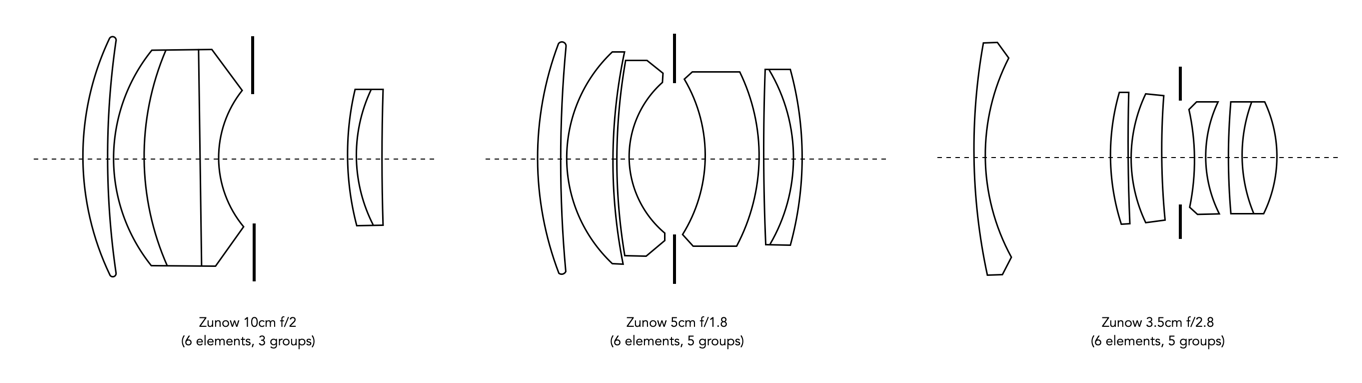
Fig.2: Lens configurations of various Zunow 35mm lenses

The first cine lens was a 5cm f/1.1 lens produced for American motion picture camera company Mitchell. The company also produced Zunow-Elmo Cine f/1.1 lenses for D-mount (8mm) in 13mm, 25mm, 38mm; and C-mount (16mm) 25mm, 38mm and 50mm.

Fig.3: Zunow lenses can be found on Neoca cameras, as fixed lenses with leaf shutters; and on Nikon rangefinders

The decline of Zunow was precipitated by the failure of its Zunow SLR in 1959, and by the bankruptcy of two of its customers – Arco in late 1960 and Neoca in January 1960. Zunow’s financial situation worsened, and rather than become a subsidiary of another company, the company was closed in 1961 [2]. In the same year, Suzuki Takeo founded a new company in partnership with Elmo (who Zunow had supplied lenses for) called Ace Optical who continued making lenses for 8mm and 16mm cine cameras, as well as other commercial lenses [2].

Besides the 5cm f/1.1, other lenses are available, especially in the Japanese market. The cine lenses seem to sell anywhere from US$200-1000. The 3.5cm f/1.7 rangefinder (L39) lens has sold for around US$3500. Typically they are found mostly on the Japanese market.

Fig.4: Zunow packaging and advertising

A list of lenses produced in 1957:

  • Rangefinders (Leica IIIf and M-3, Contax Canon, Nikon) : 35mm f/1.7, 50mm f/1.1, 50mm f/1.3, 50mm f/1.9, 100mm f/2.
  • 35mm SLR : 50mm f/1.9, 100mm f/2
  • 8mm cine : f/1.1 – 13mm, 25mm, 38mm
  • 16mm cine : f/1.1 – 25mm, 38mm, 50mm

Company name timeline:
1930 − Teikoku Kōgaku Kenkyūjo (Imperial Optical Research Institute)
1954 − Teikoku Kogaku Kogyo Kabushiki Kaisha or Teikoku Optical Industry Corporation
1956 − Zunow Kōgaku Kōgyō K.K., or Zunow Optical Industry Co., Ltd.
1961 − Company closes, re-envisioned as Ace Optical the same year

Notable lenses: Zunow 5cm f/1.1 (1953)

Note that there is still an unrelated company called Zunow in the north of Japan, which makes conversion lenses and filters (for cine cameras).

Further reading

  1. Was this beautiful lens, which was made exclusively for the Pentamatic II designed by Zunow Optical?, Chasing Classic Cameras with Chris (2017)
  2. Interview with Suzuki Takeo, CEO of Ace Optical (son of Zunow’s president), May 2006

Ultrafast lenses – the Zunow 5cm f/1.1 (and 58mm f/1.2)

The 1950s photographic industry in Japan was marked by a race to develop the fastest lens. In December 1950, Nippon Kogaku, maker of the Nikon, would introduce the Nikkor 50mm f/1.4, the fastest normal lens produced. But the victory was short lived, as in 1953 an even faster f/1.1 lens was introduced by a little known company – Zunow.

Fig.1: Literature in Japanese news announcing the f/1.1 lens

The development of the Zunow 5cm f/1.1 began in 1943 at the Teikoku Optical Co. to meet the high-speed optical needs of the Japanese Navy [2]. There was a requirement for a fast lens in low-level light situations such as aerial surveillance at dawn and dusk. The design was spearheaded by Sakuo Suzuki, and Michisaburo Hamano (NY Times, Nov.21 1953), and managed to produce three prototypes, but the factory was destroyed in a raid late in the war. It would take ten years to complete the lens. The first prototypes were completed in 1950, and the 50mm f/1.1 was Zunow released in 1953.

Fig.2: Lens diagram from the patent with associated optical glass types

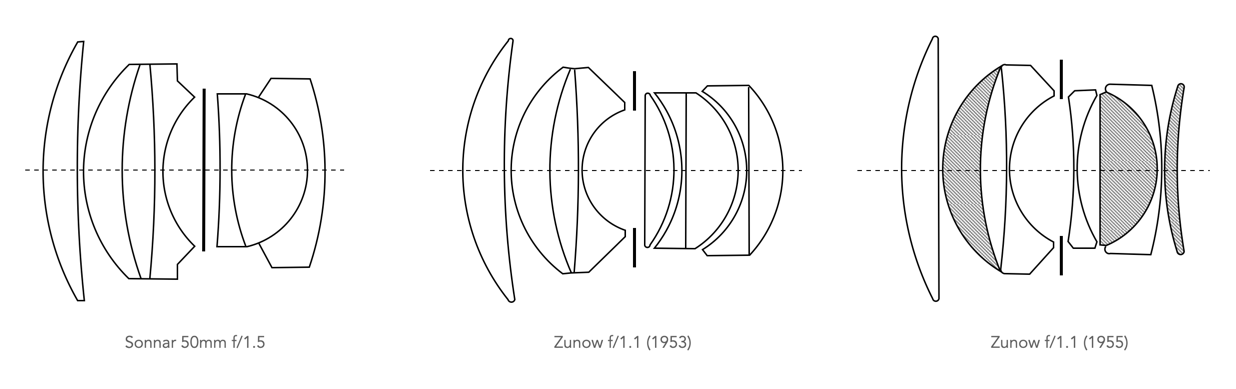
The patent for the Zunow f/1.1 lens [3] describes the lens as “an improved photographic objective suited for use with a camera that takes 36×24mm pictures”. The lens had a configuration of 9 elements in 5 groups, in a Sonnar-type design, likely derived from the Sonnar 50mm f/1.5. It was available in mounts for Contax, Nikon and Leica rangefinder cameras. The amazing thing about this lens is the fact that it was not constructed using any “rare earth” glasses.

Fig.3: Comparison of lens diagrams for Sonnar f/1.5, and the two versions of the Zunow f/1.1 (hatched lines indicate new glass) [2]

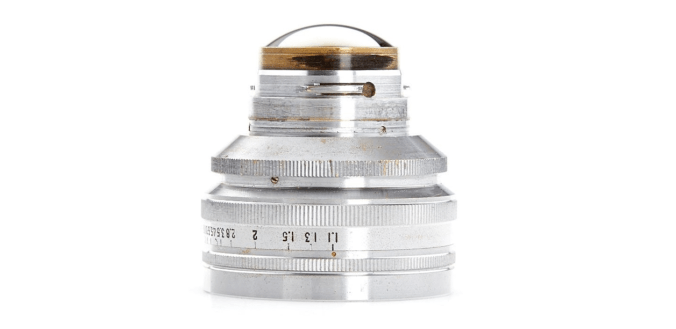
The original version earned the nickname “Ping-Pong ball” because it featured a rounded end. However it faced some issues, mostly when the aperture was wide open, e.g flare. Kenji Kunitomo and Yoshitatsu Fujioka would join the company to address these issues. This lead to the introduction of the Type 2 in 1955. The new design dealt with the protruding ball structure by redesigning the lens. It was transformed into a flat rear design with 8 elements in 5 groups, which also dealt with the flare and brightness issues when wide open. The lens elements featured a hardcoating on all air-glass surfaces to reduce internal reflections [7].

Fig.4: Specs for the original 1953 lens

Comments on the lens performance in The Truth About Superspeed Lenses (1957) [4]:

  • Performance: Vignetting at the widest aperture f/1.1, disappears completely at f/2.8. The lens is acceptably sharp at the centre of the negative. Detail is lost toward the edges and corners. Sharpest range is f/5.6 to f/11.
  • Comments: The Zunow lens mount may cut off the right corner of some camera viewfinder windows, blocking part of the image. It might be a good idea to use an accessory viewfinder with the Zunow. We found it an easy lens to focus quickly.
Fig.5: The “Ping-Pong ball” lens

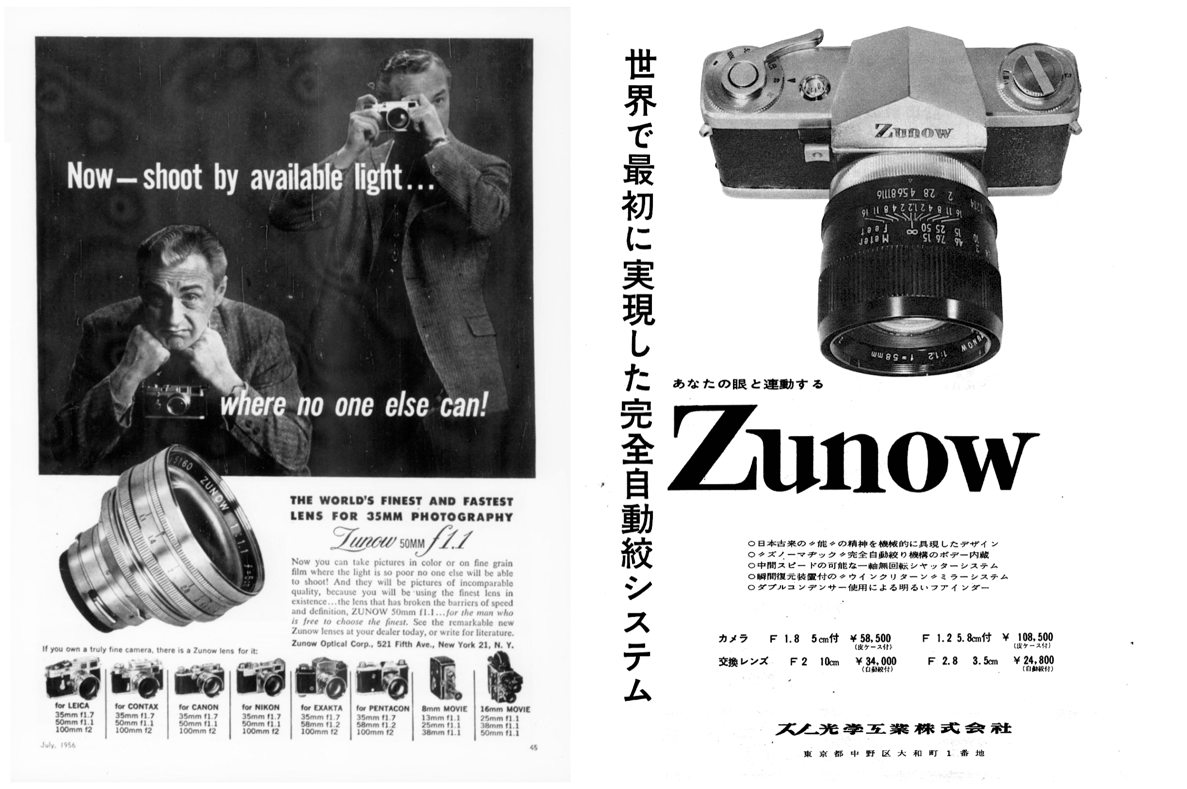
While the Zunow 50mm f/1.1 lens was the first ultrafast lens for rangefinders, there were few if any lenses of equal stature in the SLR realm. Ads at the same time showed a Zunow 58mm f/1.2 fast lens for Exakta and Pentacon SLR cameras. While very few have seen this lens in real life, and it does not appear to have been sold at any auctions in recent memory, there is a glimpse into what it looked like in the one of the ads for the Zunow camera shown in Figure 6. It was apparently a 7 element/5 group lens, of some expanded double-Gauss design [6]. The 58mm f/1.2 would have been the fastest lens offered by any camera manufacturer at that time for an SLR. In all likely so few were made that they today sit in private collections.

Fig.6: An ad for the 50mm f/1.1 lens, and a sneak peak at the 58mm f/1.2 in a Japanese ad for the Zunow SLR

Nevertheless, it would take Nippon Kogaku until early 1956 to match the Zunow lens in speed, introducing the Nikkor 50mm 1.1. Canon was not in the picture until the 50mm f/0.95 in 1961, and Leitz not until 1976 with the Noctalux 50mm f/1.0. The Zunow 50mm f/1.1 is today a vary rare lens. Sales are are US$5-10K, up to US$20K depending on condition, and mount. The price for this lens in 1956 was US$450, although it could be found for as low as US$300.

Fig.7: The Zunow SLR showing the 58mm f/1.2 lens, and its 7/5 configuration

Further reading:

  1. Norman Rothschild, “Meet the Zunow f/1.1”, Popular Photography, pp.126/128, February (1956)
  2. Kogoro Yamada, “Japanese Photographic Objectives for use with 35mm Cameras”, Photographic Science and Engineering, 2(1), pp.6-13 (1958)
  3. U.S. Patent 2,715,354, Sakuta Suzuki et al., “Photographic Objective with Wide Relative Aperture”, August 16, (1955)
  4. “The Truth About Superspeed Lenses”, Popular Photography, 21(10) pp.62-64 (1957)
  5. Zunow Teikoku Kogaku Japan 50mm f1.1 – The First Ultra Fast Lens
  6. Tsuneo Baba, “Zunow: Indication of things to come in 35mm single-lens reflexes?”, Modern Photography, 23(4), p.110 (1959)
  7. “New f/1.1, 50mm Zunow Lens”, Popular Photography, 20(5) pp.26,30 (1956)
Fig.8: The 50mm f/1.1 lens in various guises

Vintage SLR cameras – the Alsaflex, a French SLR

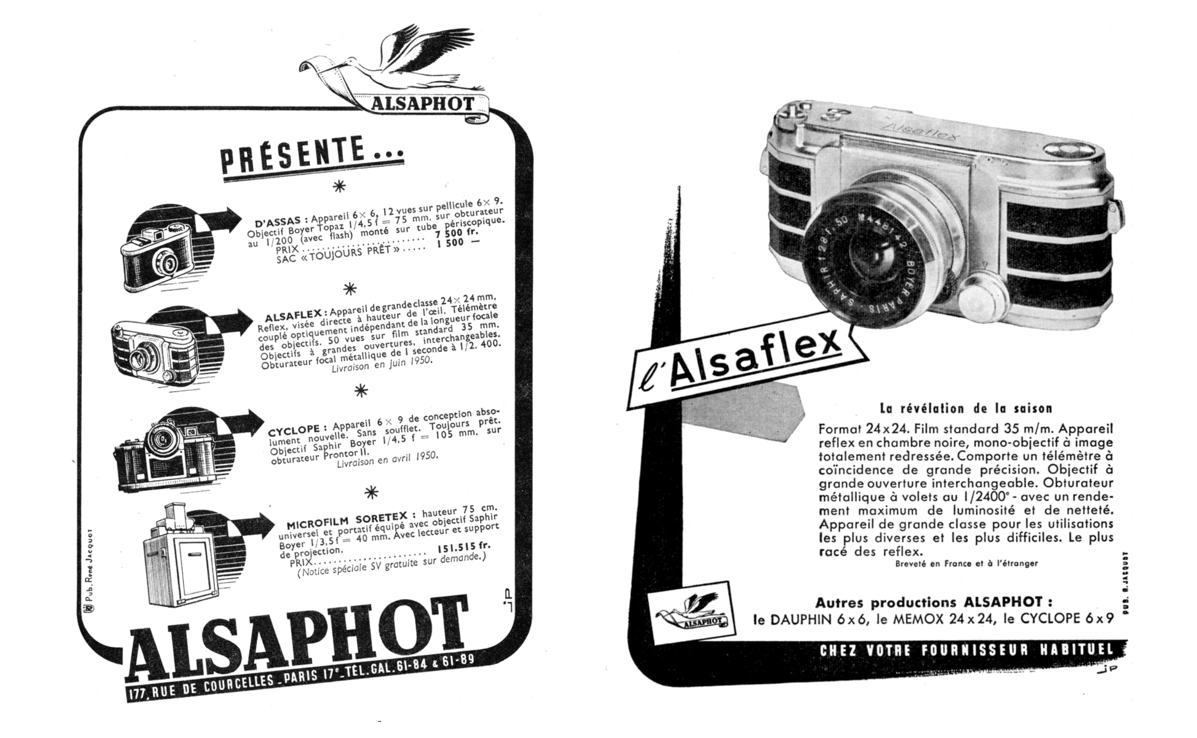
This is a story of another camera that could have been quite successful, but unfortunately didn’t make it past the initial batch of cameras. Alsaphot was the photographic department of a French company called Alsetex, and produced cameras from 1949 to 1970. Using a brand logo which incorporated an Alsatian stork, the company produced a broad range of cameras. This included the Dauphin I, II and III, small 6×6 reflex cameras in the style of the Voigtländer Brilliant and the Cima (4×6), Ajax (6×6), and D’Assas (6×6) viewfindser cameras.

In 1947 the company hired French inventor Lucien Dodin (1900-1989) as technical director. Dodin designed two cameras, the Cyclops, and Alsaflex. The Cyclops, which appeared in 1950 was a 6×9cm format camera. Dodin’s claim to fame was the design of the “stigmometer”, or Dodin telemeter, more commonly known as the split-image rangefinder, something found in many SLRs.

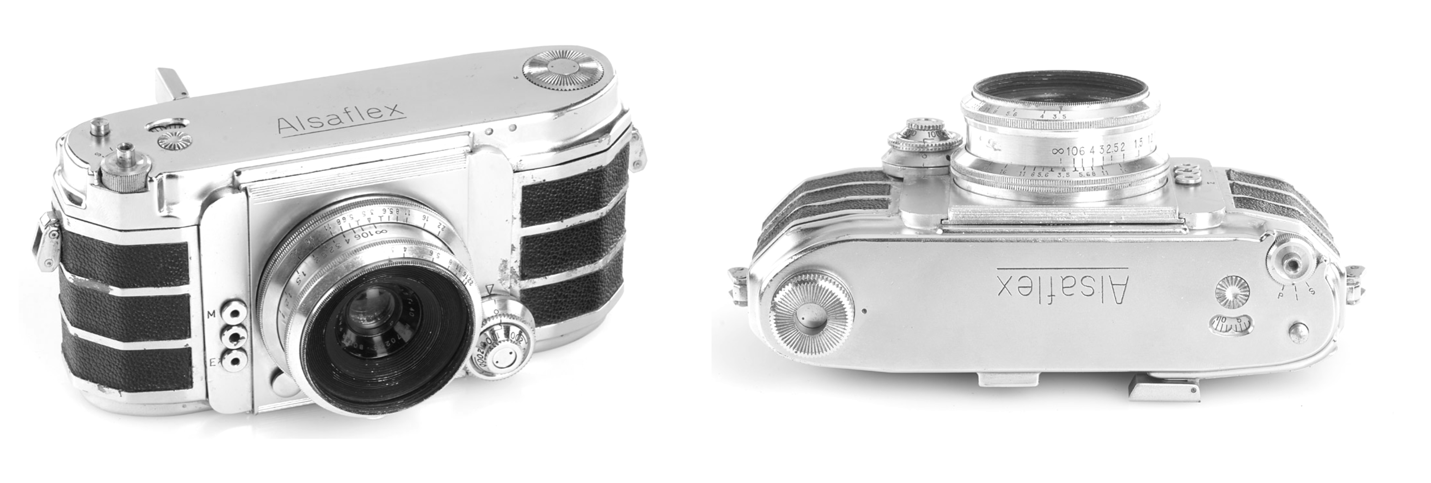
Fig.1: The aesthetically pleasing Alsaflex

The Alsaflex was an SLR camera which used the 24×24mm format on 35mm film, and incorporated Dodin’s stigmometer. The viewfinder was reduced in size by using lateral reflection, the retractable mirror pivoting around a vertical axis – essentially a Porro prism. The camera was innovative because it was quite compact for an SLR. It sported a bayonet mount with interchangeable lenses, with a Saphir Boyer 40mm f/3.5 (with automatic aperture selection) as the standard lens. The shutter was of a new design, made of metal and in the shape of a fan, with speeds from 1 to 1/2400 sec. The body of the camera was die-cast (150mm×70mm×42mm) with a back that could open to accommodate carious accessories. The camera has a rapid lever actuation which causes the film to advance, the mirror and the frame counter to be set up, and the shutter to cock in a single movement. When activated during shutter release, the mirror retracts without vibration.

Fig.2: Advertising the camera that never really made it big

A second variant, the Dudragne is a special, much simpler model of the Alsaflex, without a horizontal viewfinder eyepiece, X-sync and 1/100 speeds, and made to be used with a retinograph (instrument for examining the retina of the eye) made by Dudragne. Interestingly, the license for the viewfinder using the Porro prism would be taken over in 1963 by Olympus for the Pen F series. The camera appeared in advertising in early 1950, suggesting it would be released in May 1950, but in reality it would be 1952, and very few would be produced. It was advertised as having an “optically coupled rangefinder independent of the focal length of the lens”.

Alsaphot itself declined in the 1960s with the rise of both German and Japanese imports. In 1954 the Alsaflex with a Saphir Boyer 50mm f/2.8 was advertised for 138,000 Frs or about C$384 [1]. When the occasional camera go on sale, the price is generally in the range of €3000-5000.

  1. In January 1954, 1 Canadian $ equals about 360 Old French Francs.

Vintage SLR cameras – The mythical Malik Reflex

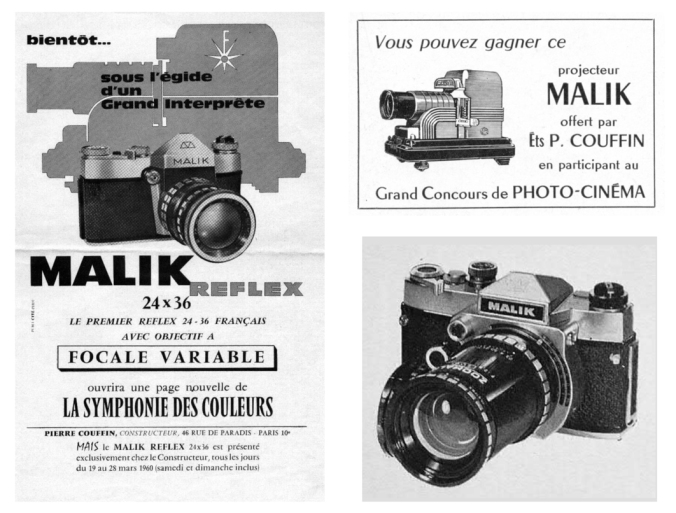
Some cameras were designed to be rare. They were often prototypes, or cameras that were just made in small quantities that very rarely come on the market. Such is the SLR produced by French company Malik. Malik was a company who produced included projectors, enlargers, a 9×12 camera (pre-WW2) and tripods, all made in France. Pierre Couffin was the sister company which was a distributor of cameras, like the Robot, and Leidox. Both were founded by Ets Pierre Couffin.

Fig.1: Some of the advertising for Malik and the Malik Reflex

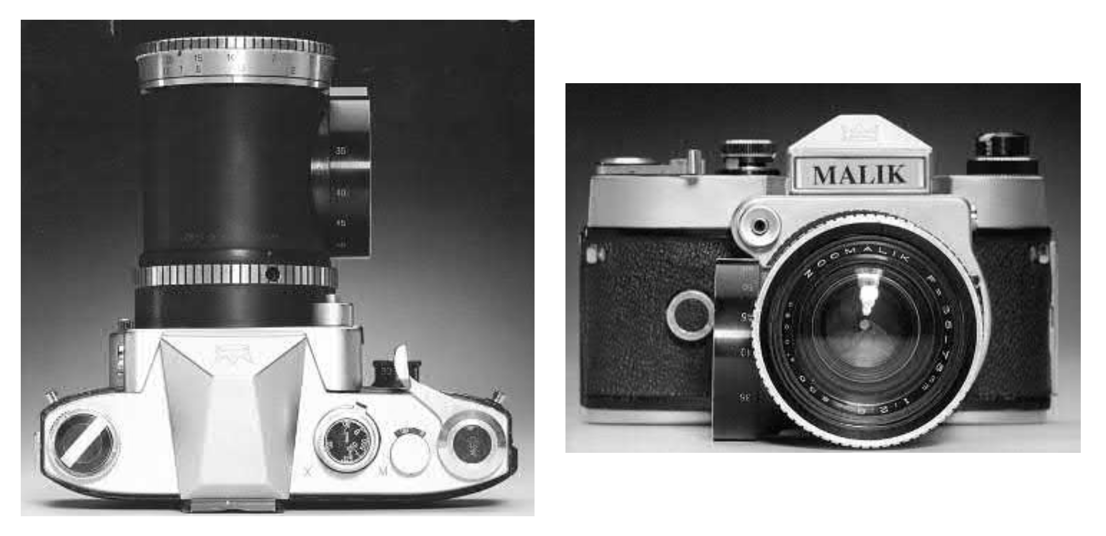
The Reflex Zoomalik was presented at Photokina in 1960. It was an SLR that came standard with a zoom lens, which was unusual for the time period. It was a 35-75mm f/2.8 (preset, 16 elements, although some reports note 14 or even 17). The literature seems to talk more about the lens than the camera – the fact that it is “only 75mm in length for a diameter of 55mm, hardly larger than a classic 90mm lens”. Changing the focal length on the lens was done by means of a large side wheel. The camera had a series of features: focal-plane shutter, five speeds (1/30, 1/60, 1/120, 1/250, and 1/500), crank rewind, removable rear, die-cast metal body. One curious feature was that the film-winding lever was in the front of the camera, which did not allow fast wind-on using the thumb. It was a well advertised camera, appearing in numerous industry magazines, and even a journal, The French Review [1].

Fig.2: Some of the few pictures of the camera

A press release in L’Express (June 16, 1960) suggested it would be the first SLR manufactured in France. It also said the camera was design in consultation with American company Bell & Howell of which Couffin was the French agent. It was suggested the camera would be provide serious competition for the Bessamatic from Voigtlander.

Modern Photography described the camera in the following way [2]:

The picture of the camera is an excellent example of French retouching and airbrush work. Production? By the time you are reading this, Maliks should be flowing from the production line like champagne. At the price of $200 for camera and lens, it’s a bargain even if the camera is never made.

But it was only ever produced as a pilot series, and abandoned before production began. It’s hard to know why it fell apart, possibly because the company had little experience in actual producing cameras (other Malik cameras, like the Malik, Auto Malik, and Super Auto Malik were manufactured by German company Leidorf). Or perhaps the idea of a zoom lens as the main lens of a camera was just too radical for the time – the Zoomar 36-82mm had only appeared in 1959, and many photographers were still sceptical. Likely it was a combination of events, not least of which would have been increased competition from Japanese camera companies.

Further reading:

  1. “Smallest-Best of its Type”, The French Review, 34(5) p.513 (Apr. 1961)
  2. “The French Touch”, Modern Photography, 24(9) pp.18,28 (1960)
  3. Couffin – Malik – Appareils photo

Superfast lenses – the Taika Harigon 58mm f/1.2

Not all fast lenses came from the lens giants. Other slipped under the radar. A good example is the Harigon 58mm f/1.2. It was made by Taika, which in reality was a export brand of Taisei Kōgaku Kōgyō K.K., the company which would later become Tamron (in all likelihood, Taika was a simpler and easier brand to remember than the company name). It was also sold as a Tamron lens.

The Harigon 58mm f/1.2

The lens was introduced in 1960, for the US market. The design was likely along the lines of the Zunow 5.8mm f/1.2, which is a itself is scarce as hen’s teeth.

Optical Science has produced this all-new Taika Rare Earth Lens, Eight hard coated complex elements of fabulous precision are responsible for its superb color correction and sharpness beyond reproach. The Taika Harigon has a dignified beauty – ebony black with colored engraved scales. A “Rolls Royce” in performance and appearance. You will be proud to own it, proud to show it and proud to exhibit its beautiful pictures.

Apparently it was available in Exakta mount, in addition to Praktica M42, and Miranda. In the early 1960s it was advertised as the standard lens on the Exa II camera for US$198.50 (from Seymour’s, NY). Interestingly the lens itself sold for US$169.50. By the time the Adapt-A-Matic Lenses appeared in the late 1960s, the 58mm lens had disappeared. There seem to be very few on the market today.

Further reading:

Vintage lens makers – Dr. Weth Optik (Germany)

Dr. Max Weth Optik, was a German lens maker located in Berlin in the 1950s (West Germany). The company is best known for its Telestigmar multi focal lens set, first made in 1955 (sometimes known as Votar Telestigmar). This was a very unique 6-element lens, with the ability to configured in four different focal lengths, with four different apertures: 315mm f/6.3, 250mm f/5, 225mm f/4.5, and 175mm f/3.5. The lens was described in a 1957 article in Modern Photography [1]. The lens has three interchangeable components: N and P are negative and positive lenses, and Z an extension tube, i.e. spacer (the kit also included R, a close-focus extender). When one or two of these are combined with the front lens, V, the different focal lengths are obtained. For example P+V = 135mm. The article suggest that the best “critical sharpness” was obtained using N+P+V=225mm lens. The lens was made in mainly in M42, and Exakta mounts (and custom ALPA).

The Telestigmar multi focal lens

The rationale behind the lens was that it provided four telephoto lens without the weight of four telephoto’s. It was basically a prime lens with two ancillary rear elements and a spacer. The lens would ultimately be superseded by zoom lenses of similar focal range, i.e. 175-315mm. In 1957 the lens sold for US$220. The most recent prices online are around US$100-300.

Further reading:

  1. “The Amazing Tele-Lens of Dr. Weth”, Modern Photography, 21(10), pp.70,71,140 (Oct,1957)
  2. “The Magical Optic of Dr. Weth”, Peter Dechert (1992)

Vintage lenses – a 360° lens from the 1970s

There aren’t many Swiss companies that manufacturer lenses apart from Kern, but one lens exists in the form of Volpi AG, a company based in Urdorf near Zurich. The company specialized in higher-end projection systems. In the early 1970s the company produced a lens called the Peri-Apollar 360°.

The Peri-Apollar 360°, nicknamed the “optical bell”, or “Swissorama” lens, does not use the fisheye principle or any of the other well-known panorama methods. It was developed by H. Brachvogel of Volpi AG, allowing the capture of 360° seamlessly in one image. If the camera is pointed with the lens in a vertical position, then the camera and photographer are covered by the centre of the image, which is blocked out. The inner edge of the circular ring is the lower edge of the image, the outer edge is the upper edge of the image.

Fig.1: The Volpi Peri-Apollar lens

The lens came in two focal lengths 25mm f/4, and 40mm f/5.6. The lenses could be adapted to many differing formats, including 16mm, 35mm, and 120 film (and could also be used as a periscope without a camera). The lens covers a complete circular image of 360°, without any gaps. When mounted in vertical position, the field of view has an angle of 60°, i.e. 30° above, and 30° below the horizon. The image is created according to the rules of central projection, where all verticals in the object field converge in a radially symmetric manner in the centre of the image. The lens was not actually intended for taking pictures in the horizontal direction

Fig.2: One of the few images available from the lens (somewhere in the Alps) Note that the point from which the image is taken, i.e. the lens itself in the image centre, is blacked out.

The light enters the protruding glass dome (which is an aspherical lens), and is refracted inwards at the transition between air and glass, and then totally reflected at the opposite glass-air interface. In this way the ring-shaped image is created in the front glass body. It then passes through a corrective lens and is projected onto the film by a lens of normal construction. Distance and f/stops can be set as with any normal lens.

Fig.3: A schematic of the lens configuration of the 40mm f/5.6 lens

The marketing material for the lens suggested applications in numerous fields, industrial applications, e.g. remote observation of pipes, police and military applications, recording of traffic intersections, aviation, and internal observation of nuclear reactors. The 25mm f/4 C-mount lens (with an attachable 90° periscope viewfinder sold for US$4,995 (1983); and the ALPA 40mm f/5.6 was US$3,595 (1977). In the US it was marketed by Karl Heitz. The lens is often attributed to Kinoptic because it appeared in their catalogs, however they did not produce the lens.

Lens specifications:

24mm×36mm16mm film
lens40mm f/5.625mm f/4
focal length of the peri-lens20mm15mm
aperture of the peri-lensf/1f/1
outer diameter of the image23mm11mm
inner diameter of the image8mm4mm
degrees, horizontal360°360°
degrees, vertical2×30°2×30°
number of lens elements84
aperture rangef/5.6 to f/22f/4 to f/22
close focusing distance0.1m0.1m
weight900g750g

Acknowledgement:
Data for the table, and help with schematics adapted from information in “Fisheye-Objektive und verwandte Abbildungstechniken (IV)”, J. Scheibel in PHOTO-TECHNIK UND WIRTSCHAFT, No.8, pp. 225-227 (1973)

Optical Anomalies – Are air bubbles problematic?

Vintage lenses of a certain era often contain air bubbles, but this by no means suggests that they are of inferior quality. A 1940 article in Minicam Photography describes this as a fallacy [1]. It seems that in early cameras, some photographers may have been weary of such imperfections. In all likelihood there are like-minded individuals today.

“They may look like undesirable blemishes, but they are much more apparent visually than photographically.” [1]

In early glass manufacturing, air bubbles were practically impossible to eliminate. At the time the rationale provided was that bubbles formed when ingredients were melted together at temperatures of 2750°F to form glass. Even first-glass lenses contained some number of bubbles.

“In the manufacture of the famous Jena glass the various elements used must be heated for a given length of time and to a certain degree, the process being stopped at just the right moment whether all the air has been driven out or not. There is no alternative.” [2]

The article goes on to provide an example of a 6-inch, f/4.5 lens with a diameter of 32mm across the front lens [1]. They count 12 bubbles, on average 0.1mm in diameter. The lens has an area of 804mm², and the bubbles an area of 0.0942mm², making up 0.012% of the surface area. So only 0.012% of the light passing through the lens is impeded by the air bubbles. The outcome? Light interference caused by bubbles is negligible.

“The actual loss of light is inappreciable, and the presence of these bubbles, even if near the surface, has no effect whatever on the optical quality of the image.” [2]

“Air bubbles will be found in most high-class lenses and are a sign of quality rather than a defect, since at present it is impossible to make certain optical glasses absolutely bubble-free; their presence doesn’t affect the quality of the image in any way. [3]

In the literature for many modern optical glass manufacturers, e.g. Schott, there are caveats on bubbles (and inclusions). Basically bubbles in glass cannot be avoided due to complicated glass compositions and manufacturing processes. The melting of raw materials produces reactions which invariably form gas bubbles in the melt (typically carbonates or hydrogen-carbonates) [4]. These bubbles are removed in the refining process, when the temperature of the glass is increased, reducing the viscosity of the glass and allowing bubbles to move up through the melt and disappear. Some residual bubbles are still left from imperfect refining. However, it is actually quite rare to see bubbles in modern lenses.

So do they make a difference in vintage glass? According to much of the literature, not at all. Besides, vintage lenses are all about character – nobody is looking for a perfect image.

Further reading:

  1. “Fallacy: That “air” bubbles in a lens are a sign of inferior quality”, Minicam Photography, 3(8), pp.30-31 (1940)
  2. “The Crucible – Air-Bubbles in Lenses”, Photo-Era, 31(6) p.319 (1913)
  3. “Andreas Feininger on Lenses at Work”, Popular Photography, 18(3) p.124 (1946)
  4. TIE-28: Bubbles and Inclusions in Optical Glass, Schott Technical Information (2016)
  5. The Impact of Air Bubbles in the Optics of Old Lenses”, Jordi Fradera (2020)