The first forays into computer designed lenses

The early years of lens design, and particularly photographic lens design, were not for the faint-of-heart. Calculations were performed using mechanical calculators, books of trigonometric tables, Fuller’s cylindrical slide rules with helical scales, and people who known as ‘computers’ as assistants. Probably the most important tool in lens design was geometrical ray tracing, a technique by which the paths of light rays emanating from a point in an object are traced through several lens elements following the laws of geometrical optics to determine the manner in which these rays recombine in the image. An ideal lens would see all rays from a point recombine a corresponding point [3].

A Fuller’s spiral cylindrical slide rule (Keuffel & Esser 4015). This had a helical scale which allowed for 50 turns around the cylinder. It was equivalent to a traditional slide rule 500 inches (12.7m) in length. They could provide results of up to 4-5 significant digits.

One of the original pioneers of the use of computers in designing lenses was Charles Wynne. The design of his revolutionary f/0.71 lens took more than two years. At the time Alan Turing, working on the Manchester computer at Manchester University was looking for some arduous tasks to test the capability of the new machine. Wynne send the provisional design for the lens, including copies of the ray-trace equations. The computer wasn’t exactly up to the task, due to something like its thermionic valves failing, so the calculations results appeared long after the prototype had been completed.

By 1955 the next generation of computers were appearing, and with increased complexity a realization that they would be required to enhance optical formulae. This lead to the creation of dedicated computers to perform lens calculations. In continental Europe, by 1953 Leitz had in operation the Z5, a relay computer from Conrad Zuse. To keep up with the number crunching needs of lens design, Carl Zeiss Jena developed a relay computer, the Oprema [6], in 1954/55 (the first in the GDR). The computer was developed by a team led by Wilhelm Kämmerer and Herbert Kortum – it took up a floor area of 55m², had 17,000 relays, and used 500km of cables. It was in operation until 1963, and reduced calculations that would have taken an hour by hand to a few seconds. On the other side of the globe in 1956, Dr. Okazaki Bunji created Japan’s first electronic computer, for Fuji [5]. Known as the FUJIC, it was designed to perform lens calculations, and supposedly was 2000 times faster than the equivalent human calculation.

Post 1955, Wynne began work on the first Atlas computer, developing programs for ray-tracing. In 1959 Wynne, with his colleague at the Wray company, Michael Nunn, published their pair of classic papers on Wynne’s invention for iterative lens design with digital computers, with work performed on a Ferranti Mark 1 [1,2]. Later work [4] continued on a Ferranti Mercury computer.

Further reading:

  1. Wynne, C.G., “Lens Designing by Electronic Digital Computer: I”, Proceedings of the Physical Society, 73(5), pp.777-787 (May 1959)
  2. Nunn, M., Wynne, C.G., “Lens Designing by Electronic Digital Computer: II”, Proceedings of the Physical Society, 74(3), pp.316-329 (Sept. 1959)
  3. Finkelstein, N.A., “Small digital computers and automatic optical design”, in Proc. Eastern Joint Computer Conference: Design and Application of Small Digital Computers, pp. 81-85 (1954)
  4. Wynne, C.G., Wormell, P.M.J.H., “Lens Design by Computer”, Applied Optics, 2(12), pp.1233-1238 (1963)
  5. Okazaki, B., “The first electronic computer in Japan: The birth of FUJIC and its death”, BIT (Tokyo), 3(12), pp.1091-1097 (1971)
  6. Winkler, J.F.H., “Oprema – The Relay Computer of Carl Zeiss Jena“, (2019)
  7. Kidger, M.J., “The Application of Electronic Computer to the Design of Optical Systems, including Aspheric Lenses”, PhD Dissertation, University of London (1971)
  8. The World’s Largest Commercial Cylindrical Slide Rule has a Scale Length of 24m, Herbert Bruderer (2020)
When more is not always better – the deception of megapixels

I have never liked how companies advertise cameras using megapixels. Mostly because it is quite deceptive, and prompts people to mistakenly believe that more megapixels is better – which isn’t always the case. But the unassuming amateur photographer will assume that 26MP is better than 16MP, and 40MP is better than 26MP. From a purely numeric viewpoint, 40MP is better than 26MP – 40,000,000 pixels outshines 26,000,000 pixels. It’s hard to dispute raw numbers. But pure numbers don’t tell the full story. There are two numeric criteria to consider when considering how many pixels an image has: (i) the aggregate number of pixels in the image, and (ii) the image’s linear dimensions.

Before we look at this further, I just want to clarify one thing. A sensor contains photosites, which are not the same as pixels. Photosites capture light photons, which are then processed in various ways to produce an image containing pixels. So a 24MP sensor will contain 24 million photosites, and the image produced by a camera containing this sensor contains 24 million pixels. A camera has photosites, an image has pixels. Camera manufacturers use the term megapixel likely to make things simpler, besides which megaphotosite sounds more like some kind of prehistoric animal. For simplicities sake, we will use photosite when referring to a sensor, and pixel when referring to an image.

Aggregate pixels versus linear dimensions
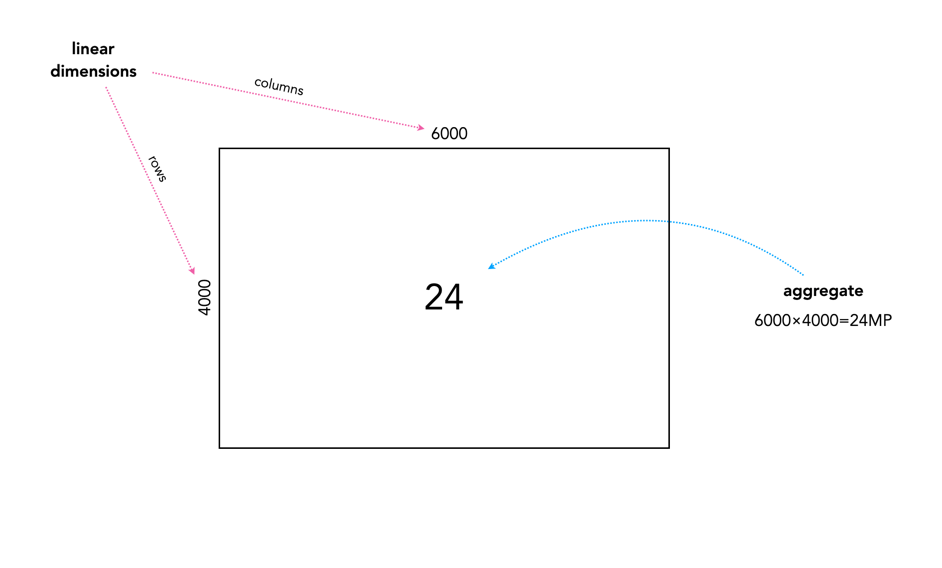
Fig.1: Aggregate pixels versus linear dimensions

Every sensor is made up of P photosites arranged in a rectangular shape with a number of rows (r) and a number of columns (c), such that P = r×c. Typically the rectangle shape of the sensor forms an aspect ratio of 3:2 (FF, APS-C), or 4:3 (MFT). The values of r and c are the linear dimensions, which basically represent the resolution of the image in each dimension, i.e. the vertical resolution will be r, the horizontal resolution will be c. For example in a 24MP, 3:2 ratio sensor, r=4000, c=6000. The image aggregate is the number of megapixels associated with the sensor. So r×c = 24,000,000 = 24MP. This is the number most commonly associated with the resolution of an image produced by a camera. In reality, the number of photosites and the number of pixels are equivalent. Now let’s look at how this affects an image.

Doubling megapixels versus doubling linear dimensions
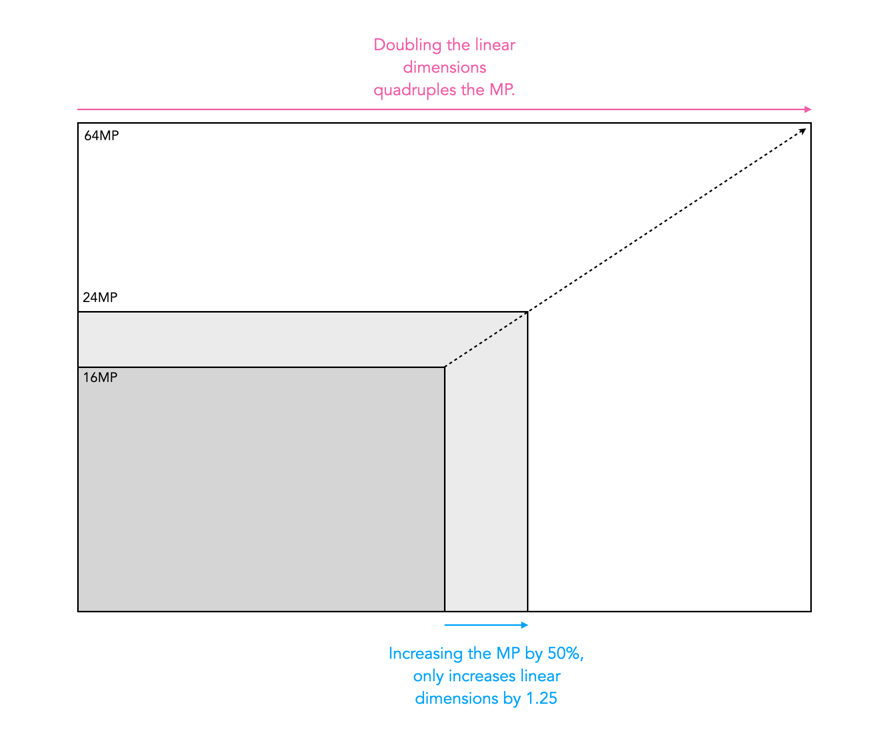
Fig.2: Doubling megapixels versus doubling linear dimensions

The two numbers offer different perspectives of how many pixels are in an image. For example the difference between a 16MP image and a 24MP image is a 1.5 times increase in aggregate pixels. However due to how these pixels are distributed in the image, it only adds up to a 1.25 times increase in the linear dimensions of the image, i.e. there are only 25% more pixels in the horizontal and vertical dimensions. So while upgrading from 16MP to 24MP does increase the resolution of an image, it only adds a marginal increase from a dimensional perspective. Doubling the linear dimensions of an image would require a sensor with 64 million photosites.

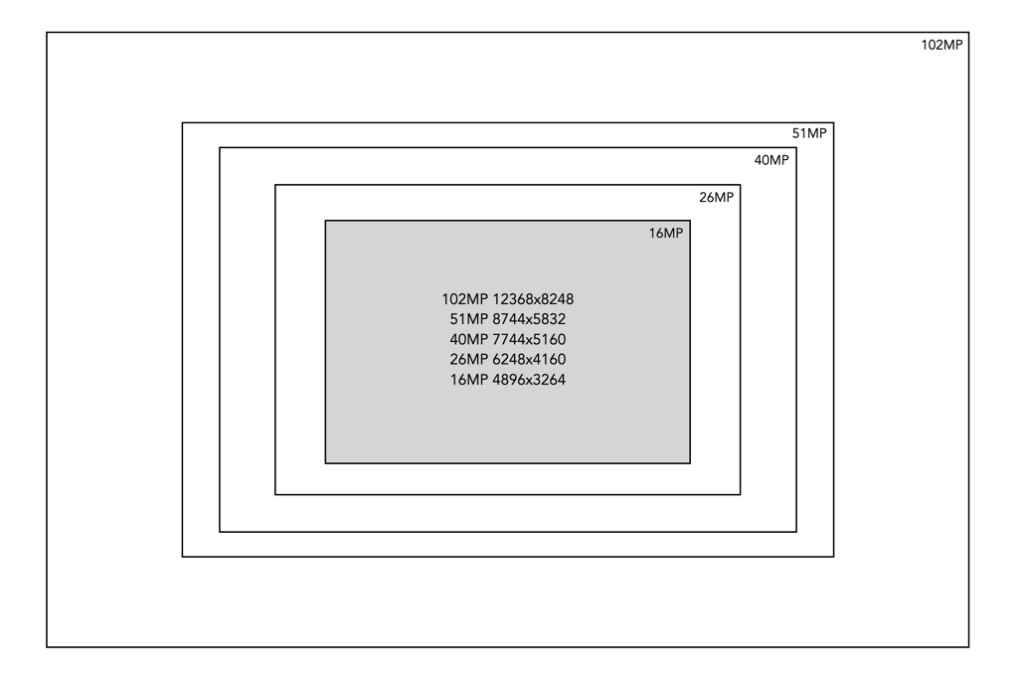
A visual depiction of different full-frame sensor sizes for Fuji sensors
Fig.3: A visual depiction of different full-frame sensor sizes for Fuji sensors

The best way to determine the effect of upsizing megapixels is to visualize the differences. Figure 3 illustrates various sensor sizes against a baseline 16MP – this is based on the actual megapixels found in current Fuji camera sensors. As you can see, from 16MP it makes sense to upgrade to 40MP, from 26MP to 51MP, and 40MP to 102MP. In the end, the number of pixels produced by an camera sensor is deceptive in so much as small changes in aggregate pixels does not automatically culminate in large changes in linear dimensions. More megapixels will always mean more pixels, but not necessarily better pixels.

A new film camera – Is Ricoh bonkers?

If you haven’t heard the news, Ricoh is considering developing a series of new “Pentax” film cameras, by means of its “Film Camera Project“. Pentax of course has a long and proud history of film camera development, but hasn’t really made huge inroads into the digital world. It was bought by Ricoh in 2011, becoming Ricoh Imaging Company Ltd. Still, the most successful digital camera coming out of the combined company is the Ricoh GR series.The company apparently surveyed 3,000 people in Japan and concluded that 20% of camera owners also owned film cameras. So in all likelihood, I imagine developing a series of film cameras is not a bad idea.

The trick of course is what route do you take? Do you go for a fully manual camera with no electronics aboard, or do you go with the opposite end of the spectrum and go fully electronic? I mean if you are going to start somewhere, why not reproduce the famed Ricoh GR1? It was introduced in 1996, so there wouldn’t be a huge curve in getting it back into production – update the lens, and the inner workings a bit. A fixed lens is fine – keep it simple, and I imagine there would be a bunch of Ricoh GR digital users that would spring for a film version. Small and compact is ideal.

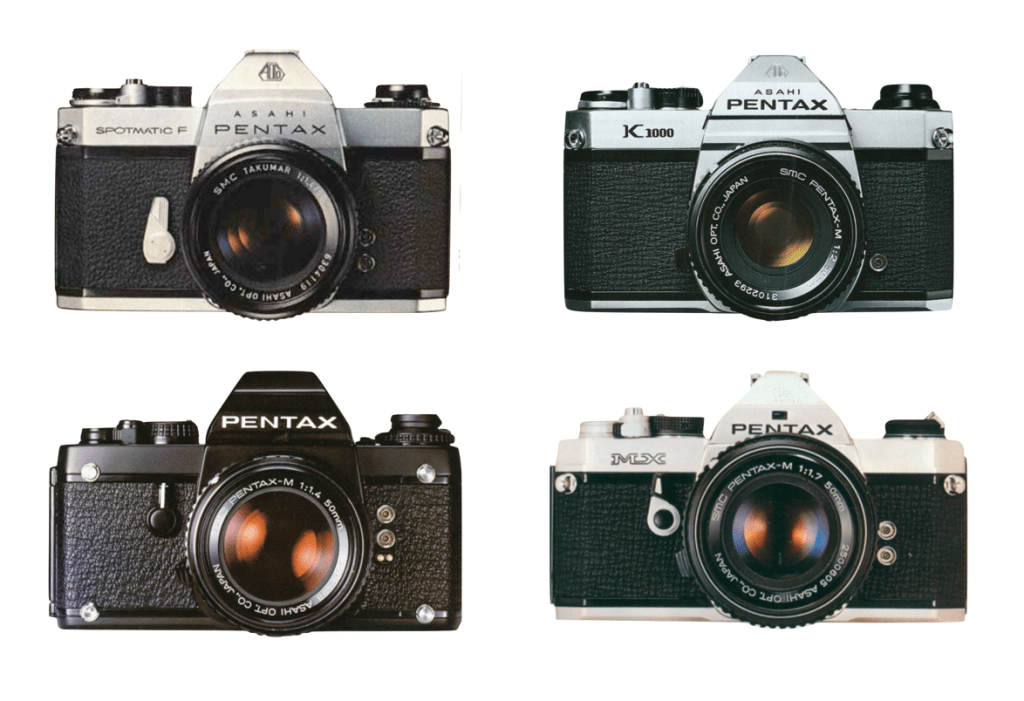
Or perhaps rejig a Pentax Espio? The reality is that it shouldn’t be too hard to “develop” new cameras. You don’t need to add anything “fancy”, i.e. digital. And picking the best camera to replicate is as easy as determining which vintage cameras sell the best. They could build one from scratch, but would this be worthwhile? Could they replicate some other camera? What about full-frame cameras? Do you go with a Spotmatic type camera for an entry level, fully-manual? Or perhaps the diminutively sized MX series? Do you offer a manual and semi-automatic camera? Then there are the lenses – do you allow the use of vintage M42 mount lenses, or do you conform to the K-mount? Making a film camera without taking into consideration the legacy lenses is problematic. Then of course there are the lenses themselves – new digital-like lenses, or re-manufactured manual legacy lenses.

Done properly these film cameras could be very successful. Poorly done, and it will be a disaster. The best way to test the market would be simply to reintroduce an existing design like the GR1. But Ricoh needs to look beyond the Japanese market, and explore the needs of film users worldwide. At the same time, introducing a film camera requires some level of sustainability. A camera low in electronics, would of course reduce a camera’s footprint, and perhaps using a rechargeable battery would help as well. Of course there is also the issue of processing films, which does have quite an impact on the environment. One interesting addition to a new camera might be to allow cameras to incorporate both full- and half-frame shots. Allowing a 36-exposure film to take 72 shots certainly reduces the amount of rolls required, as honestly no one should treat film in the same manner as digital, i.e. 1000 frames of film when travelling is not really that realistic.

Which Pentax?

Ultimately it’s a very intriguing idea. Will it work? Time will tell I guess. A successful film camera will have to be well-priced for the market – even though Ricoh doesn’t really have any competition to speak of, there are still a *lot* of reasonably priced vintage film cameras around the world. And I’m not talking about Leica film cameras. The remade Leica M6 is likely a wonderful rangefinder camera, but at US$5,295 it’s not exactly affordable. Ricoh has one chance to get this right, and deliver a series of film cameras worthy of its legacy.

Choosing a vintage lens – things to consider

After looking at the basics of vintage interchangeable lenses, there is a point when you will have to make some decisions about choosing a lens. There are literally millions of vintage lenses out there in the ether. Some are exceptional, most are good, some are mediocre. But even mediocre lenses can be interesting if they are cheap enough, and you want to experiment (even if that involves taking a lens apart and putting it back together again).

Choosing a lens is often quite a daunting experience, because there are so many possibilities, and it can be hard to narrow things down. Some people only buy lenses from a single manufacturer, others only buy lenses of a single focal length, others only buy lenses from a specific time period, and still others buy lenses that have a cool bokeh effect. The type of vintage lens you buy is a very individualistic thing. You can read the reviews about particular lenses, and formulate your own opinion about buying a lens, but you never really know what you get until you use it. Lenses come in different versions, and sometimes from different factories. Choosing a lens is also more than just looking at quantitative data such as lens sharpness, it is often more about the aesthetic appeal of the image produced, than the exactness of the MFT (Modulation Transfer Function) diagrams.

The best place to start is to decide what the lens will be used for. This aids in determining the focal length and lens characteristics, helping to constrain the search. For example someone who takes architectural photographs may be interested in a shift perspective lens such as the Olympus OM 35mm f/2.8 Shift lens. For astrophotographers, a sharp lens that is well corrected for coma is important. Those who take portraits may opt for a 85mm lens. If you have no specific needs, then start with a 50mm lens – it is by far the most common vintage focal length (and every manufacturer produced various models). Don’t forget that a lens behaviour will depend on the size of the camera’s sensor it is used on. For example a 50mm lens with a standard 46° diagonal angle-of-view, will behave like a “full-frame” 75mm lens on an APS-C sensor (with a diagonal AOV of 32°), i.e. the 50mm lens will be “the equivalent of” a 75mm FF lens.

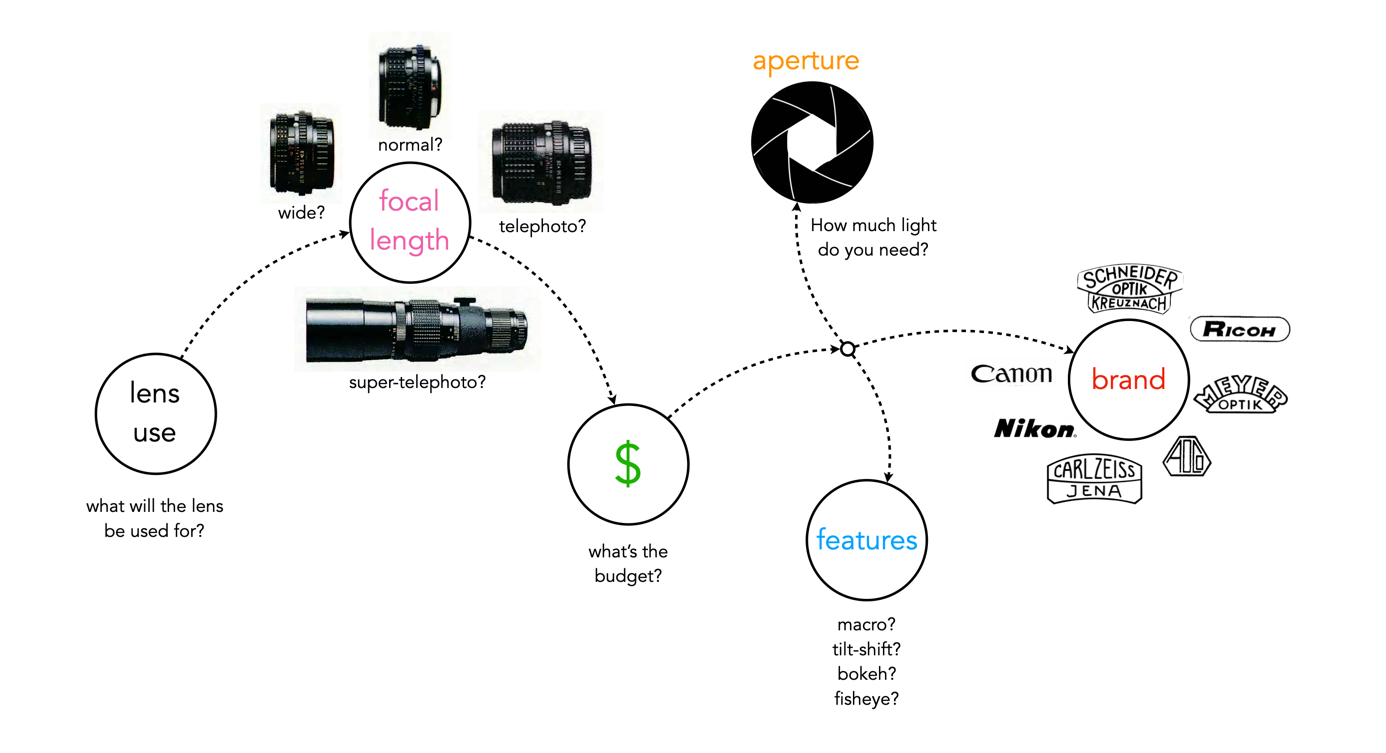
Things to consider when choosing a vintage lens: lens use, focal length, budget, features, aperture, brand
Things to consider when choosing a vintage lens

Once you have an idea of the focal length, then you need to decide what features you want: must-haves, nice-to-haves, and things-not-needed – and of course how much you want to spend. Choosing a focal length is of course the easy part. Now you have to choose a brand, and a configuration (aperture, number of aperture blades, mount). This is harder because there are a lot of choices. Sometimes the best approach is to take the lead from someone who has done some of the hard work for you. For the beginner, there is very little difference between any 50mm lenses from the core camera manufacturers: Pentax, Canon, Nikon, Minolta, Zeiss, etc., they are all pretty good. Of course the “elephant in the room” is often budget. Choosing an upper limit on how much you are willing to spend on a lens will help constrain your search from the get-go, which helps avoid pursuing lenses that are nice, but just ooh too expensive. it you can’t afford it, don’t go there.

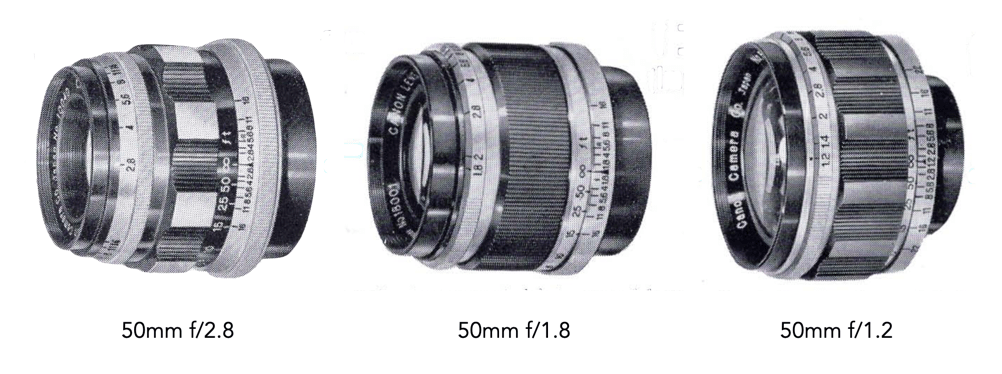
Now with a focal length, and a budget, it’s time to explore aperture, or lens speed, i.e. when the aperture of a lens is completely open, how much light comes in. In situations where you are shooting in broad daylight, then is there any need for a 50mm f/1.4 lens, or would a f/2 suffice? For example, Canon 50mm rangefinder lenses were produced in three different types: f/2.8, f/1.8, and f/1.2. The f/2.8 is 128g, the f/1.8 is 270g, and the f/1.2 is 322g. The f/1.2 lens will provide a lot of light, but at 2.5 times the weight. A lot of effort can be put into deciding the speed of the lens. However the faster the lens, i.e. the larger the aperture, the more expensive the lens will be. Don’t spend a lot of money on your first few of lenses. You can experiment with these lenses and decide whether using vintage lenses is for you.

Canon rangefinder 50mm lenses

Once you have chosen a lens, it is good to review some of the literature on the lens. How expensive is it? What about availability – is it common or rare? Is the lens generally found in good stead, or is it susceptible to abnormalities such as fogging/hazing, or has a front lens which is easily scratched? For example it is common knowledge that some of the Canon rangefinder LTM mount lenses are very susceptible to fogging. Is it easy to repair if there are issues?

Then it helps to look at some reviews, either on blogs, or videos. Just remember that reviews are a subjective viewpoint from someone with similar or differing circumstances to your own. Try and stick to reviewers that have a long history of reviewing vintage lenses. If their lens review, how did they evaluate the lens? Did they show actual photographs taken using the lens, in a good variety of situations? Did they take the shots using the same sensor size as your camera has? Was it a review performed with the lens on a film camera? It’s best to look at several different views, but always keep in mind that the lens you might buy will be different to the one they are reviewing. It could be a newer model of a lens which uses the same optical formula, but is housed differently, or uses a different aperture mechanism, e.g. number of blades; or perhaps it uses a different type of glass in some of the lens elements, e.g. thoriated versus regular glass. There is never a guarantee that the lens you buy will behave in exactly the same manner.

Don’t choose a lens solely on its specifications. Just because a 50mm f/1.2 lens seems like a good idea because it is rare, and some people proclaim it as the “best” lens, does not mean it will work properly for what you want it to do. Don’t be swayed by the large collections of some photographers. Some people take photographs for a living, and so may have more requirements, and also more ability to sustain large collections. Having dozens of 50mm lenses is fine, if you can afford them, and if you are actually going to use them (and it’s easy to fall down this rabbit hole). You may decide after some investigation that the lens you had coveted it really not something you need – for various reasons. Maybe it’s too expensive? Maybe it’s too hard to find? Maybe it is notorious for needing repairs?

Vintage lenses – some general FAQ

Here are some questions relating to vintage lenses, things that people might like to know before they dive into the world of vintage lenses (and how to choose them).

Can any vintage lens be used on a digital camera?

Just about. Most mirrorless full-frame and crop-sensor cameras can be used with vintage lenses, but there are some lenses which don’t work, either because they have a strange lens-mount, or the lens itself projects too far beyond the mount into the camera.

Are vintage lenses affordable?

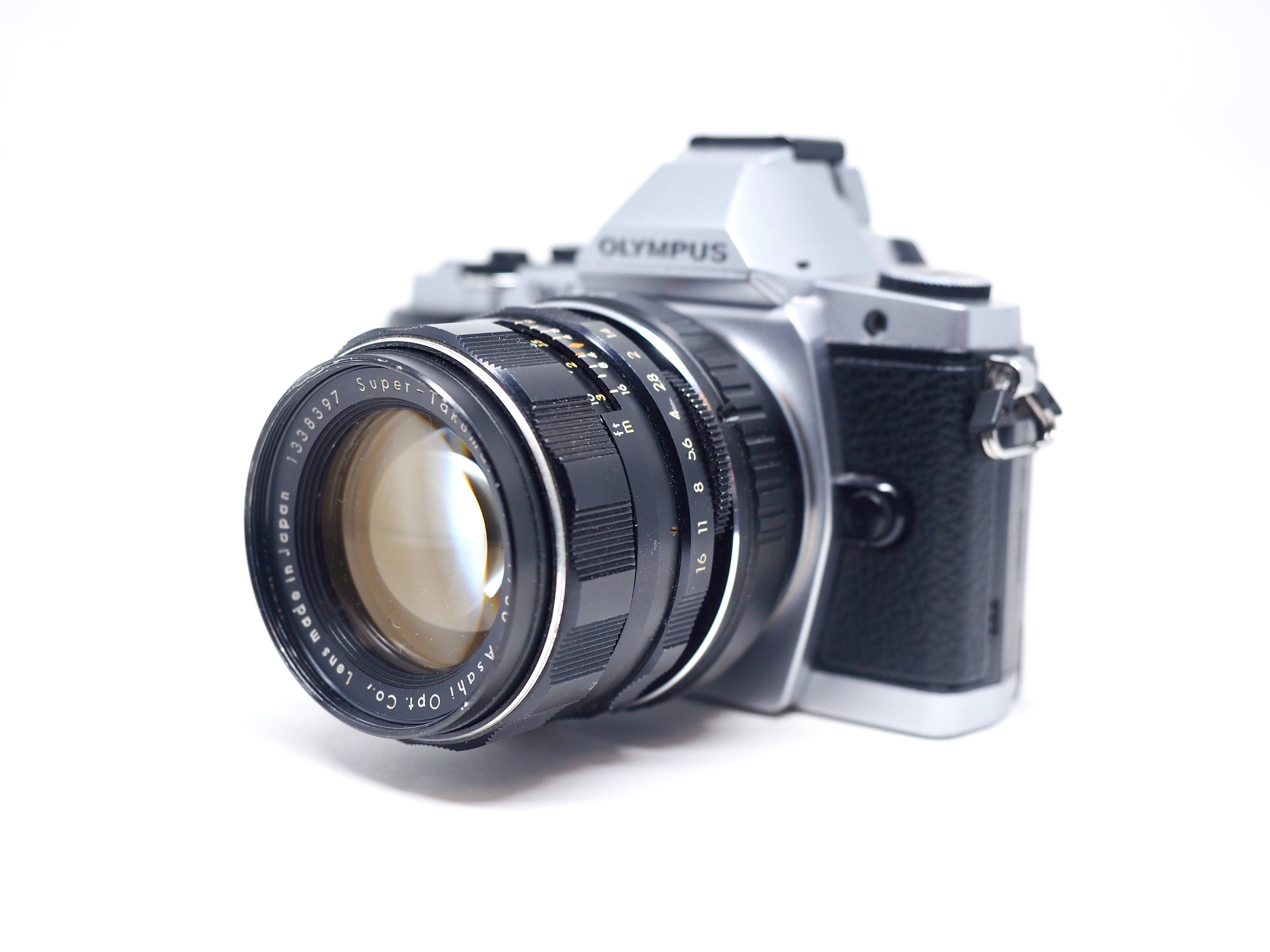
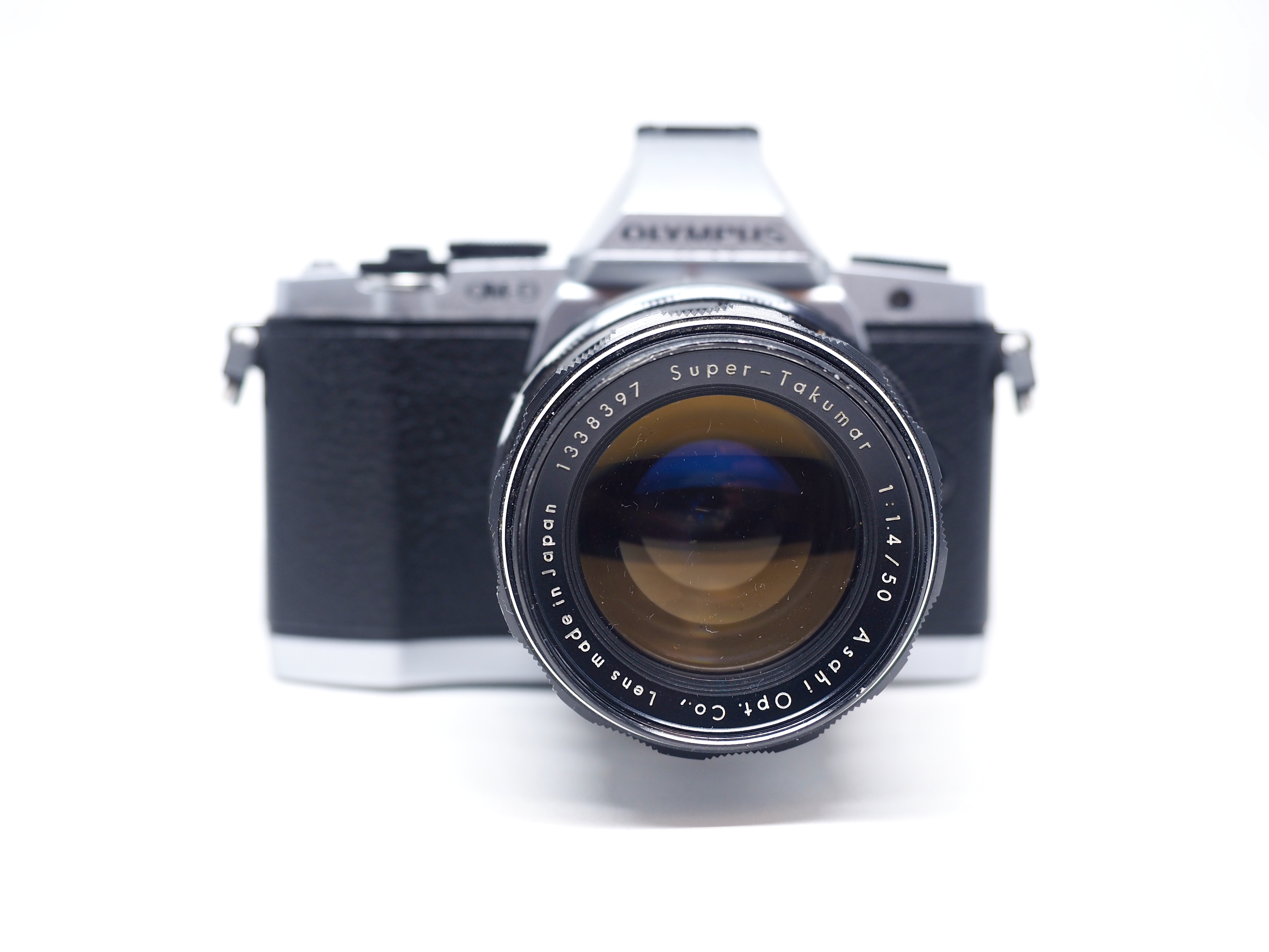
Vintage lenses were once quite inexpensive, but as more people discover them, some are increasing in price – well the popular ones are. That being said, they are still often cheaper than modern glass, especially the faster lenses. For example, the Super-Multi-Coated Takumar 50mm f/1.4 sells for around C$100-150. The 8-element version of the lens, the Super-Takumar, in good condition usually sells for C$300-500 (which is still pretty affordable). The most affordable vintage lenses, are often those mass-produced kit-lenses that don’t get a second look at. Leica lenses are nearly always expensive.

What is the best vintage lens?

There is really no such thing, because the inherent character of a lens is very subjective. Many people swear by the Carl Zeiss Jena lenses, others prefer the Asahi Pentax Takumar series, and yet others gravitate towards Nikon. There are a lot of “best vintage lenses” lists out there, but it is best to look at reviews of people who use a lot of vintage lenses. For example Zenography, Simon’s utak, or Mark Holtze all have great vintage lens reviews on their respective YouTube channels.

Is there such a thing as a perfect vintage lens?

No, even the most sought-after lenses can have limitations. For example the 8-element Takumar 50mm f/1.4 does not outperform other legacy lenses in certain situations. It can be quite soft when the lens is shot wide open in some circumstances, and is a heavy lens. Yet people are still charmed by the lens because it does a really good job with colour rendering. It produces warm colours with very little vignetting. The Takumar lenses also have good ergonomics.

What about vintage zooms?

Some people like them, others don’t. The reality is that there are many really good, well-built early zoom lenses out there, and because they are often so underrated, they are really quite inexpensive.

Aren’t newer lenses better?

Newer lenses are more technologically savvy, and the glass is likely to be near perfect (although truthfully there is no such thing as a perfect lens). Modern lenses built for digital cameras try very hard to remove abnormalities, which is the very reason most people gravitate towards vintage lenses. Modern lenses are also inherently more complex. For example the Olympus Zuiko 25mm f1.2 Pro (MFT 50mm FF equivalent) has 19 lens elements in 14 groups, including low dispersion, high-refractive, and aspherical elements. The vintage equivalent, the Olympus OM Zuiko AUTO-S 50mm f1.2 has 7 elements in 6 groups. Vintage lenses often use a very simple optical designs that have been around for a hundred years. Do you really need a lens with 15 lens elements, or will 6 do?

Are all vintage lenses manual?

Practically all vintage lenses require manual focus, and manually setting the aperture. Manual focusing is slower than autofocus, but most mirrorless cameras provide tools, e.g. focus peaking, to help with the process of manual focusing. Manual focus lenses might not be an optimal choice for activities such as travel involving fast-paced tourism, but it brings you closer to understanding the subtleties how a camera-lens combination works.

Is there a good range of focal lengths?

Brands aside, there is usually a good selection of focal lengths available. The most common focal length is 50mm, because of it’s “normal” status, and the fact that it came as the standard “kit” lens on most cameras. After that there is a good range of wide-angles (28mm, 35mm), and short telephotos (85-135mm). Ultra-wide angle lenses are rarer, yet there seems to be a wide range of telephotos (possibly because they aren’t as popular).

What about the build quality of lenses?

Many of these lenses were built tough. They featured solidly build body’s with aluminum lens barrels and stainless steel mounts. Without a bunch of electronic and motors inside to facilitate things like auto-focus, vintage lenses can often be quite compact, and light. They are robust, easy to fix, and lack the complex electronics of modern lenses (meaning they will last for decades).

How does adapting a vintage lens to a crop-sensor affect it?

Most vintage lenses were designed for 35mm film cameras, and their equivalent is full-frame digital cameras. So a vintage lens put on a crop-sensor camera will behave the same way as any other lens on a crop sensor, i.e. its angle-of-view will be modified. For example you could choose any vintage 50mm lens, and when added to an APS-C camera it would behave like a 75mm lens in “full-frame equivalency”. Used on a camera with a MFT sensor, it would behave like a 100mm FF equivalent.

Can vintage lenses be used to create retro-looking images?

Possibly, it really all depends on the type of lens, and the type of digital camera it is used upon. There are many more variables involved with using digital cameras, as opposed to film cameras. It is possible to try and replicate the “look” of old photos, but digital cameras will not replicate film 100%.

Where is the best place to buy vintage lenses?

I have covered this in a separate post. I also maintain a list of “Where to buy what”.

Why choose a vintage lens?

There are many reasons why people choose to use vintage lenses. Many just opt for the chance of experimenting with their photography. Some people buy a particular lens for the Bokeh it produces, or its level of sharpness, or just perhaps for its unique character. Some use vintage lenses as an alternative to expensive digital lenses.

They have character

From a technical viewpoint vintage lenses are not better than modern lenses – in fact from an optical viewpoint they are likely quite inferior – in theory anyways. What they are however, is much simpler in design. There is no auto-anything – manual focus is top dog, as is aperture adjustment. They also have qualities that modern lenses often try to avoid in their design, e.g. optical aberrations. Yet it is these imperfections that provide vintage lenses with one thing new lenses often lack – a sense of character. We’re talking contrast, distortion, chromatic aberrations, illumination (flaring), and vignetting. This gives the images created a very distinctive look (although likely not as distinctive as it would coupled with various types of film). Sometimes this is in the way they render out-of-focus regions in a image or perhaps the sharpness of the image, or colour-rendition. Some people like to use vintage lenses because they produce nice contrast, or have nice bokeh, but it is all highly subjective. One person’s “bokeh-monster” will be another nightmare.

Some people may choose to use only vintage 50mm lenses. You may question why someone needs half a dozen different 50mm lenses, but the reality is that they may all have unique, noteworthy attributes. Many manufacturers produced a number of 50mm lenses at any given time, all with differing characteristics. For example, they may have used different (i) lens formulae, (ii) optical glass, (iii) aperture system (e.g number of blades), or (iv) lens speed. A lens is the sum of all its characteristics, not just the focal length.

They are (mostly) available at a good price

One of the main reasons people like to choose vintage lenses is affordability. Most vintage lenses fall into the “reasonably priced” category, usually somewhere in the range of US$80-250. It’s hard to talk too specifically about lens prices because of the broad range of lenses. However within the scope of a particular lens it is also possible to have a wide gamut of prices usually largely dependent on the condition of the lens. There are a lot of good vintage lenses that don’t get a lot of coverage that are extremely well positioned from a price point.

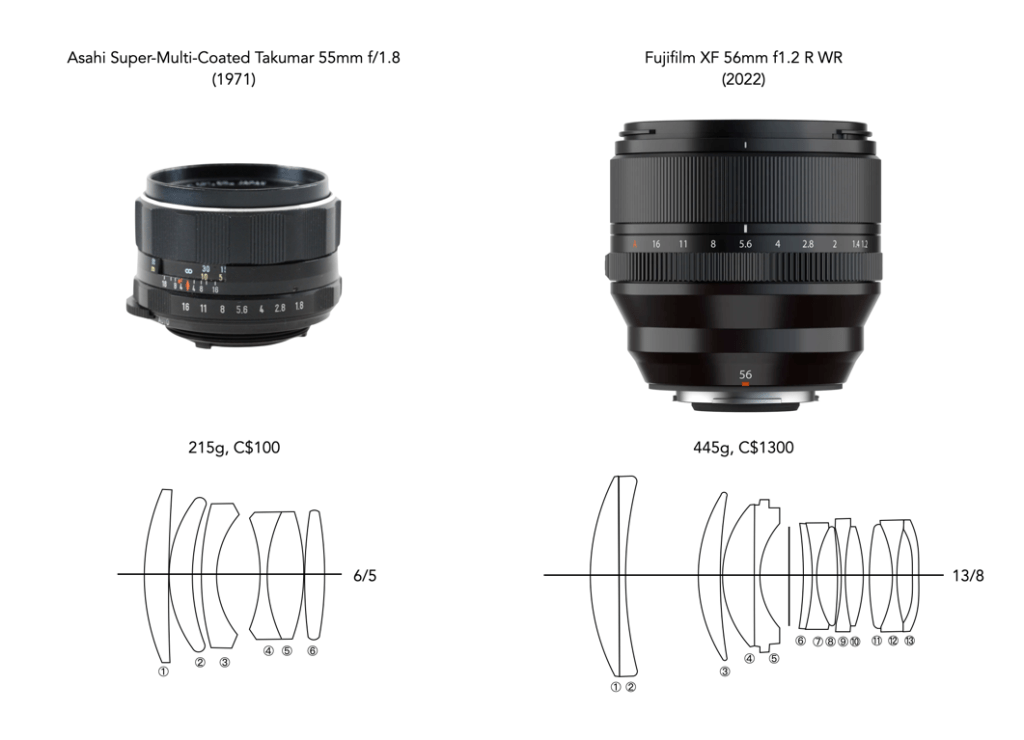
There are of course some vintage lenses that are expensive, but that is usually because they are (i) rare, or (ii) too popular. For example superfast 50mm f/1.2 lenses are not cheap, but you probably don’t need a superfast lens. Others, like say the Zeiss 50mm Pancolar, is expensive because it is well known to be a good lenses. Sometimes a good lens will be talked up by someone in a video – this causes a run on them, and hence pushes up the cost. Some lenses like the Pancolar 55mm f/1.4 are so rare they are often advertised in the C$3-5K range. Vintage lenses are often chosen as an alternative to modern lenses, or perhaps to try out a lens of a certain focal length before buying a modern version. For example, an 85mm equivalent for the Fuji-X system would be the Fujifilm XF 56mm f/1.2 R WR, which retails for about C$1300. It is possible to get an Asahi Super-Multi-Coated Takumar 55mm f/1.8 for about C$100 – slightly slower, but less than 10% of the cost.

They are well built (but can have some flaws)

Lenses of a certain vintage are built like proverbial tanks. Many of those built prior to 1970 are predominantly made of metal and glass. It was in the 1970s that plastics started to creep into the manufacturing process. There are pros and cons to each. More recent vintage lenses likely have lens coatings and optics that are much better than older lenses whereas earlier 35mm lenses featured solidly build body’s with aluminum lens barrels and stainless steel mounts. Of course not all vintage lenses are worthy. The downside is that vintage lenses can suffer from any number of maladies, some superficial like cosmetic scratches on the barrel, some affecting the functionality such as stiff focusing ring, and others more serious affecting the optical surfaces of the lens, e.g haze, scratches, and fungus. The other thing to think about is weight. Modern lenses typically have a lot more optical elements, and hence are larger and heavier than most equivalent vintage lenses.

They provide an education

One of the issues with digital cameras is that so much is automated. That’s not a bad thing in a lot of situations because it allows you to concentrate on framing the shot. However because of this, the inner workings of the camera are sometimes lost to the photographer. Using vintage lenses means you have to gain a more intimate understanding of how apertures work, and master the art of focusing. However on the flip-side you do gain better control of the photographic process.

They are eco-friendly

Lastly, using vintage lenses is very eco-friendly. The lenses already exist, and apart from buying an adapter, which can be used for any vintage lens with the same mount, there is very little in the way of a carbon footprint (save postage if bought online). Well-built products, have a longevity that keeps them out of landfills. Vintage lenses are inherently sustainable for a number of reasons: (i) No requirement for more materials to build the lenses (plastics, electronics, glass); (ii) Little to no pollution; and (iii) Interchangeability, i.e. the same lens can be used on different cameras, and so changing systems only means acquiring a new adapter.

So mechanical cameras were simple right?

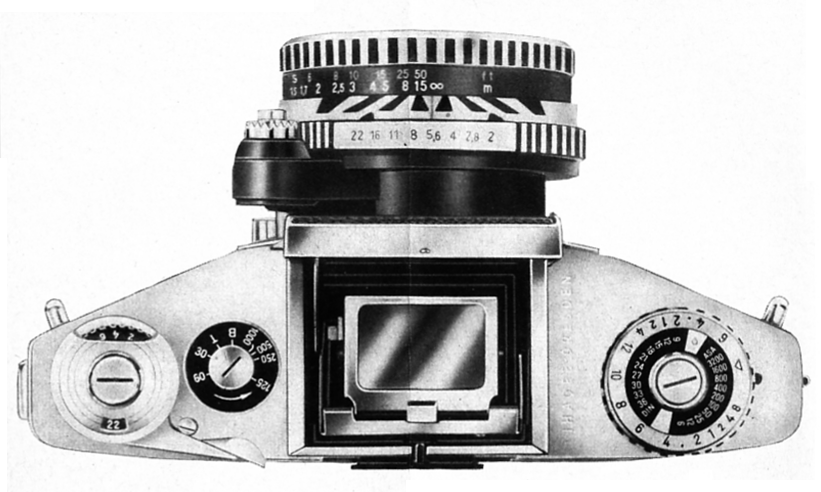
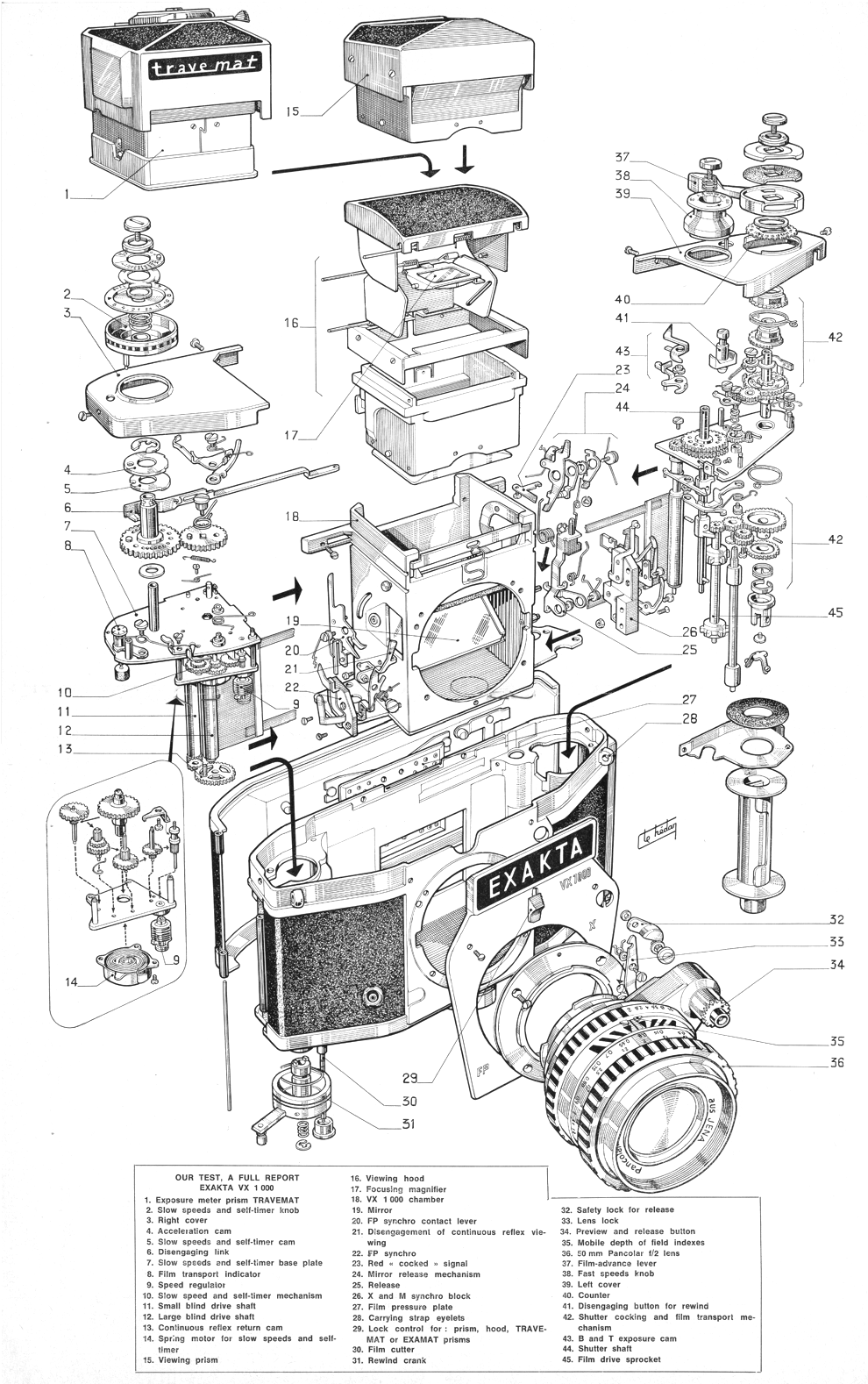
There were various types of analog cameras, but the simplest were mechanical cameras, that contained no electronics at all. That means everything that happened inside was mechanical in nature. Not that much really happened, I mean the mechanisms basically moved the film forward, set the film and shutter speeds, and set/activated the shutter mechanism (and move the mirror). But these mechanisms were inherently complex, and the cameras themselves were typically built by hand. A plan view of an Exakta VX1000 camera shows how simple it was…

… but the workings inside were another matter altogether – which was basically comprised of a whole lot of sprockets, rods, and some levers. Things got even more complicated once electronics were introduced.

How a f/0.71 lens helped advance TB screening

Charles G. Wynne (1911-1999) was a lens pioneer, but not in the traditional sense, i.e. his forte was not traditional photographic lenses. We presume sometimes that all advances in photography were made in the realm of cameras, but there are other fields that require lenses as well. Wynne began has optical career at Taylor, Taylor and Hobson Ltd. in 1936, after graduating from Oxford. Wynne worked for TT&H until 1943, when he moved to Wray Optical Works. Here he was not just an assistant, but a lens designer in his own right. His first job at Wray was improving the short focal length aerial reconnaissance lenses that the company made for the RAF.

Wynne designed a series of interchangeable lenses for Wray’s 35mm SLR, the Wrayflex camera, the only British full-frame 35mm SLR camera ever made. Around 1950, there was an opportunity for developing fast lenses for use in the photography of cathode-ray tube (CRT) images and the phosphor screens that were used in X-ray machines. Wynne developed a f/0.71 lens, which although too expensive for industrial CRT photography, was ideally suited the the mobile mass screening program of the 1950s that helped eradicate TB. Wynne likely gleaned some personal satisfaction from this lens, as he had contracted tuberculosis whilst at Oxford. The f/0.71 lens used exposure times eight times shorter than a typical modern photographic lens with an aperture of f/2.0.

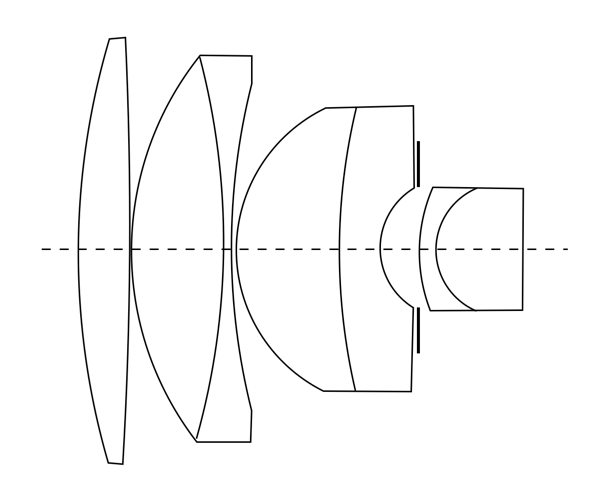
The Wynne 64mm f/0.7 lens
  1. Wynne, C.G., Wray, P., “A new form of f/0.71 lens for 35 mm cine-radiography”, Journal of Scientific Instruments, 28, pp.172-173 (1951)
  2. Maxwell, J., Wormell, P.M.J.H., “Charles Gorrie Wynne“, The Royal Society, p.499-514 (2001)

Glass from the past, aka vintage lenses

When digital cameras started to supplant analog ones, everyone likely thought that the manual focus interchangeable lenses of yore would be relegated to dark closets, attics, and the few who still used film. It became rare to find these lenses, except perhaps languishing in the “used” section of a camera store, often gathering dust. Digital cameras used digital lenses, and as such there was very little need for analog lenses. There were also few means of adapting these lenses for use on DSLR’s, largely because of the lack of mount adapters, but also because of compatibility issues with mirror-based cameras, both full frame and crop-sensor. This changed with the advent of the mirrorless camera which having a shorter distance to the sensor allowed the adoption of lens adapters.

So what is a vintage lens? This is somewhat of a loaded question because there is no definitive answer. One of the defining characteristics of a vintage lens is that it is manual, i.e. it relies on both manual focus, and aperture setting. But there are a lot of manual lenses available. There are lenses available from the 1930’s, 40’s and even the 19th century. But many of these suffer from not being easy to adapt to digital cameras. In all likelihood, anything pre-digital could be construed as vintage, however I hesitate to include the pre-digital lenses with electronic components in them, e.g. auto-focus, because most cannot be easily converted for use on a digital camera. But in the end, vintage really means interchangeable lenses made for cameras that used film, and specifically 35mm film cameras, either SLR or rangefinders.

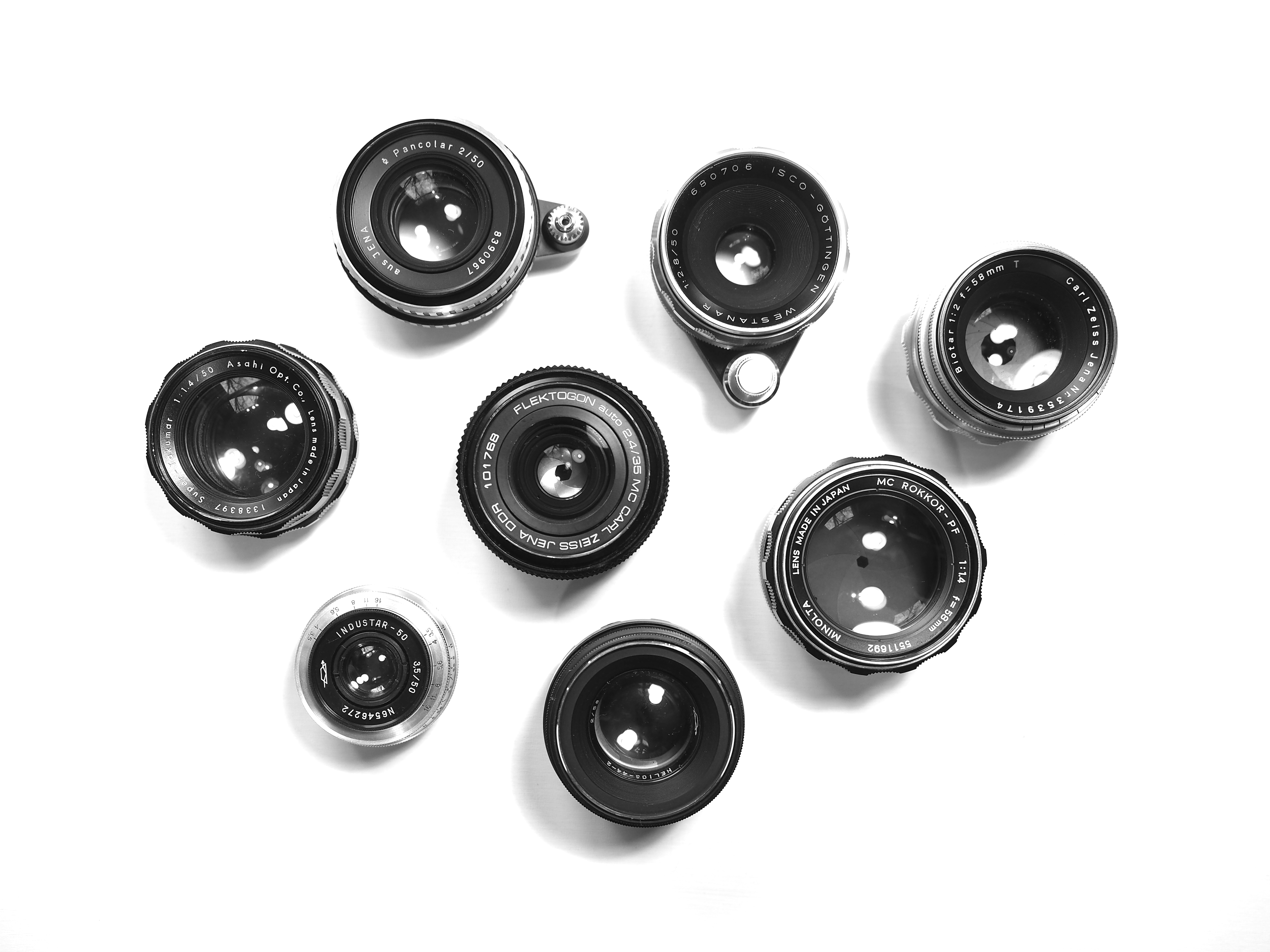
There are millions of vintage lenses in the world today, the majority of these interchangeable lenses hail from the period 1950-1985, predominantly made in Japan and Europe. Some brands have a large ubiquity in the world of vintage lenses, such as Asahi Takumar, while others such as Minolta’s Rokkor have a more subdued presence, e.g. the Rokkor 58mm f/1.4 lens an example of a star performer. Vintage lenses come in various focal lengths, but many are in the “normal” range 45-58mm. They can be fast, i.e. have a large aperture, aesthetically pleasing, e.g. made of chrome, or just come from a company with an exceptional optical reputation. All vintage lenses have their own character, from optical anomalies and aberrations, to colour rendering, and boken, and the out-of-focus qualities. Many of the Carl Zeiss Jena lenses such as the Flektogon 35mm f/2.4 is renowned for how it renders out-of-focus regions. At the opposite end of the spectrum, is the Jupiter 9, an 85mm f/2 lens made in the USSR – it has a wonderful 15 blade aperture, and what some people call “dreamy bokeh”.

In some cases a particular lens may have been made for only a couple of years, in limited quantities, and in other cases a lens may have evolved over a dozen or more years, with slight changes in lens formulae, glass composition, and mounts. For example Asahi Pentax produced a huge number of Takumar branded lenses in the 1960s. Some like the 8-bladed Super-Takumar 50mm f/1.4, a Planar-type lens, almost have legendary status, the optics are that good. The lens evolved over the years from the legendary 8-element Super-Takumar (1964-65) to the thoriated 7-element Super-Takumar (1965-71), Super-Multi-Coated Takumar (1971-72) and SMC Takumar (1972-75). At more than 50 years old, many of these lenses still pass muster. So why choose a vintage lens?

This series will focus on vintage lenses. Over the course of the next few months we will explore various aspects of vintage lenses, from questioning why they are of interest to digging down into the intricacies of choosing a lens, adapters, and how to examine a lens prior to purchase. This won’t be a review of specific lenses (that may come later), but more of a broad overview, providing links to extra information that might be of interest.

A photograph’s life in the world

“As an object, a photograph has its own life in the world. It can be saved in a shoebox or in a museum. It can be reproduced as information or as as advertisement. It can be bought and sold. It may be regarded as a utilitarian object or as a work of art. The context in which a photograph is seen effects the meanings a viewer draws from it.”

Stephen Shore, The Nature of Photographs