Charles G. Wynne (1911-1999) was a lens pioneer, but not in the traditional sense, i.e. his forte was not traditional photographic lenses. We presume sometimes that all advances in photography were made in the realm of cameras, but there are other fields that require lenses as well. Wynne began has optical career at Taylor, Taylor and Hobson Ltd. in 1936, after graduating from Oxford. Wynne worked for TT&H until 1943, when he moved to Wray Optical Works. Here he was not just an assistant, but a lens designer in his own right. His first job at Wray was improving the short focal length aerial reconnaissance lenses that the company made for the RAF.
Wynne designed a series of interchangeable lenses for Wray’s 35mm SLR, the Wrayflex camera, the only British full-frame 35mm SLR camera ever made. Around 1950, there was an opportunity for developing fast lenses for use in the photography of cathode-ray tube (CRT) images and the phosphor screens that were used in X-ray machines. Wynne developed a f/0.71 lens, which although too expensive for industrial CRT photography, was ideally suited the the mobile mass screening program of the 1950s that helped eradicate TB. Wynne likely gleaned some personal satisfaction from this lens, as he had contracted tuberculosis whilst at Oxford. The f/0.71 lens used exposure times eight times shorter than a typical modern photographic lens with an aperture of f/2.0.
The Wynne 64mm f/0.7 lens
Wynne, C.G., Wray, P., “A new form of f/0.71 lens for 35 mm cine-radiography”, Journal of Scientific Instruments, 28, pp.172-173 (1951)
Maxwell, J., Wormell, P.M.J.H., “Charles Gorrie Wynne“, The Royal Society, p.499-514 (2001)
When digital cameras started to supplant analog ones, everyone likely thought that the manual focus interchangeable lenses of yore would be relegated to dark closets, attics, and the few who still used film. It became rare to find these lenses, except perhaps languishing in the “used” section of a camera store, often gathering dust. Digital cameras used digital lenses, and as such there was very little need for analog lenses. There were also few means of adapting these lenses for use on DSLR’s, largely because of the lack of mount adapters, but also because of compatibility issues with mirror-based cameras, both full frame and crop-sensor. This changed with the advent of the mirrorless camera which having a shorter distance to the sensor allowed the adoption of lens adapters.
So what is a vintage lens? This is somewhat of a loaded question because there is no definitive answer. One of the defining characteristics of a vintage lens is that it is manual, i.e. it relies on both manual focus, and aperture setting. But there are a lot of manual lenses available. There are lenses available from the 1930’s, 40’s and even the 19th century. But many of these suffer from not being easy to adapt to digital cameras. In all likelihood, anything pre-digital could be construed as vintage, however I hesitate to include the pre-digital lenses with electronic components in them, e.g. auto-focus, because most cannot be easily converted for use on a digital camera. But in the end, vintage really means interchangeable lenses made for cameras that used film, and specifically 35mm film cameras, either SLR or rangefinders.
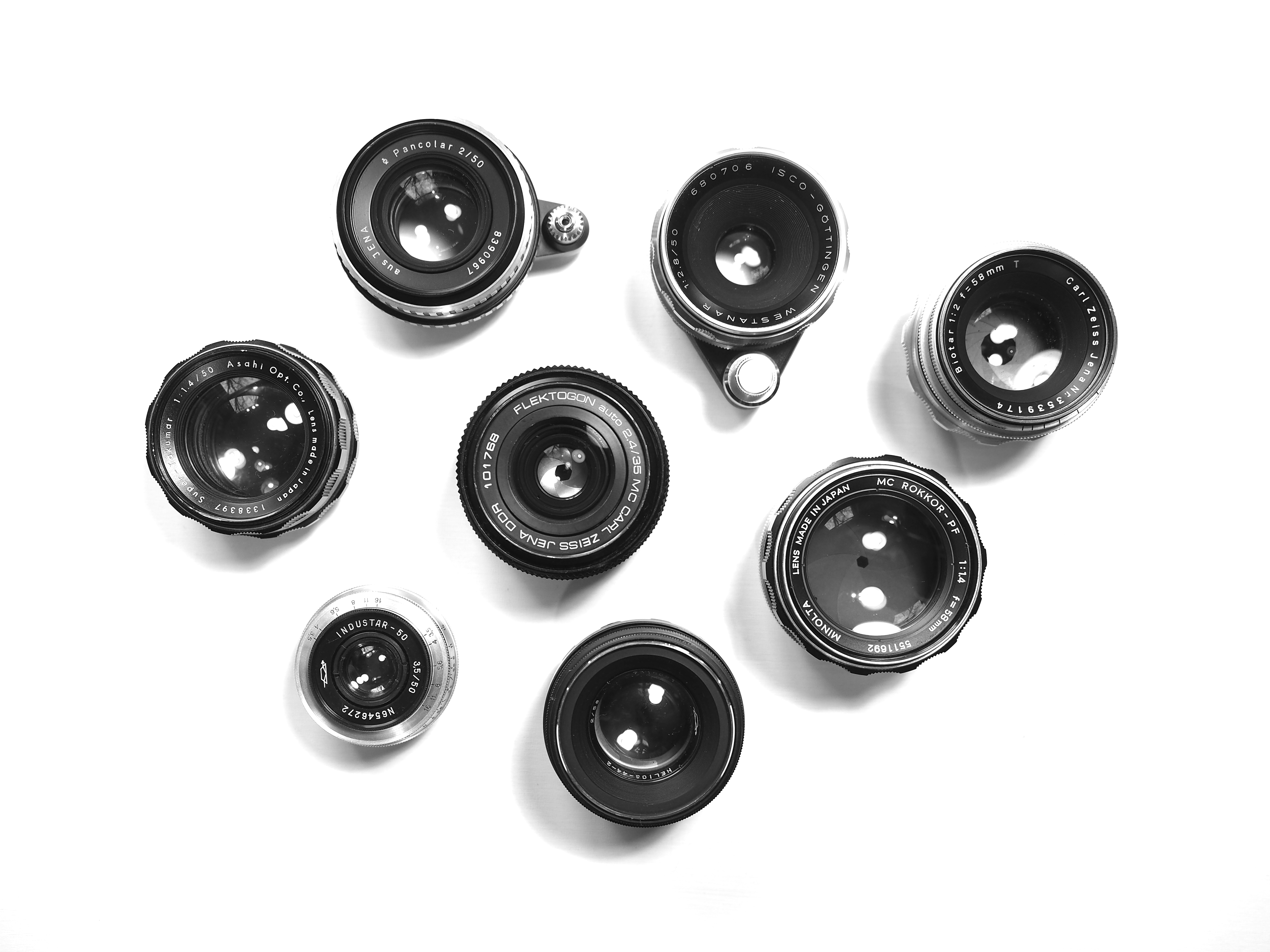
There are millions of vintage lenses in the world today, the majority of these interchangeable lenses hail from the period 1950-1985, predominantly made in Japan and Europe. Some brands have a large ubiquity in the world of vintage lenses, such as Asahi Takumar, while others such as Minolta’s Rokkor have a more subdued presence, e.g. the Rokkor 58mm f/1.4 lens an example of a star performer. Vintage lenses come in various focal lengths, but many are in the “normal” range 45-58mm. They can be fast, i.e. have a large aperture, aesthetically pleasing, e.g. made of chrome, or just come from a company with an exceptional optical reputation. All vintage lenses have their own character, from optical anomalies and aberrations, to colour rendering, and boken, and the out-of-focus qualities. Many of the Carl Zeiss Jena lenses such as the Flektogon 35mm f/2.4 is renowned for how it renders out-of-focus regions. At the opposite end of the spectrum, is the Jupiter 9, an 85mm f/2 lens made in the USSR – it has a wonderful 15 blade aperture, and what some people call “dreamy bokeh”.
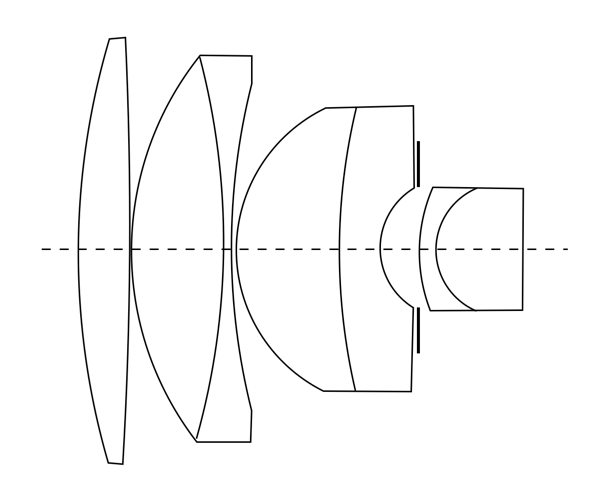
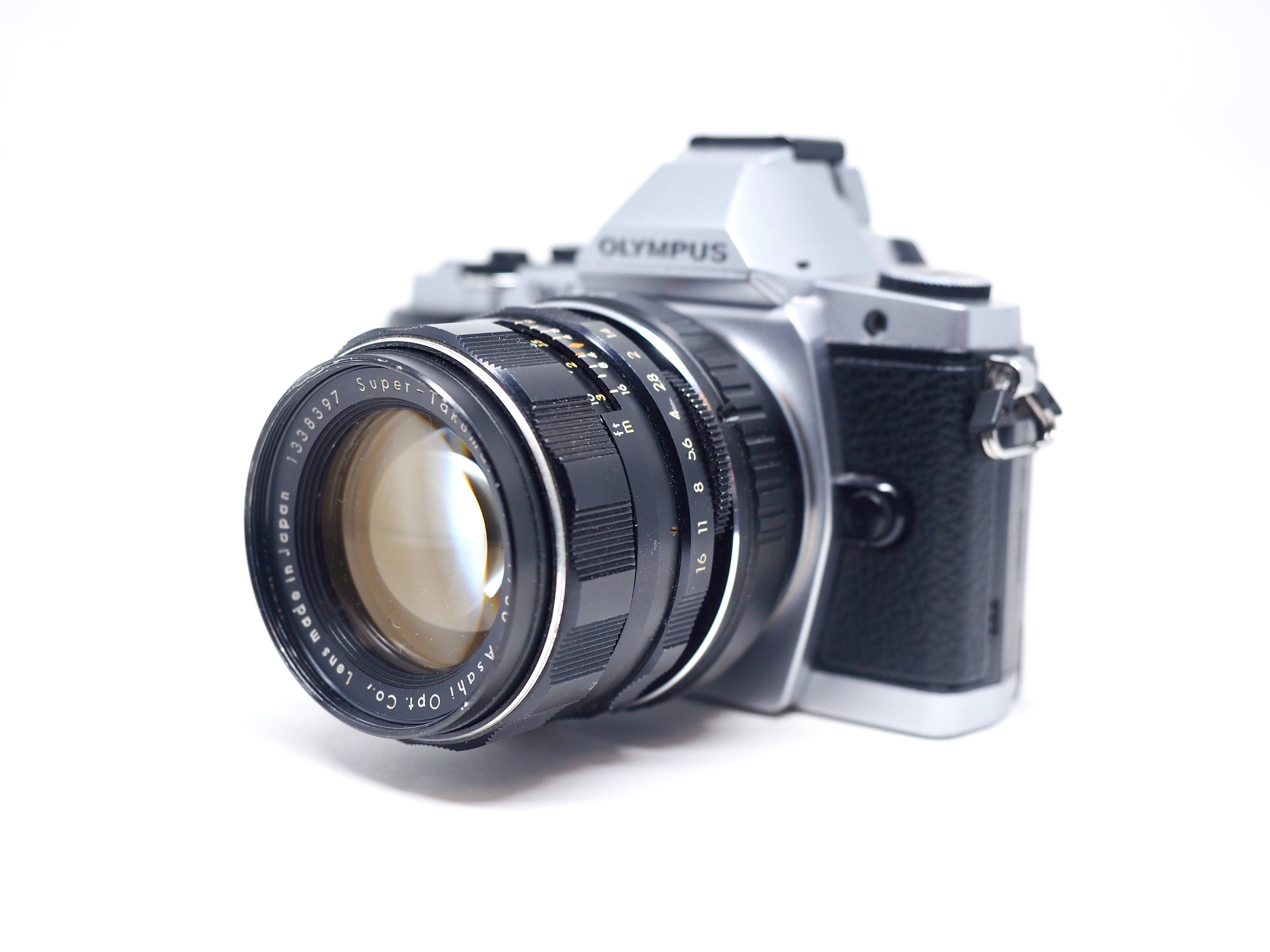
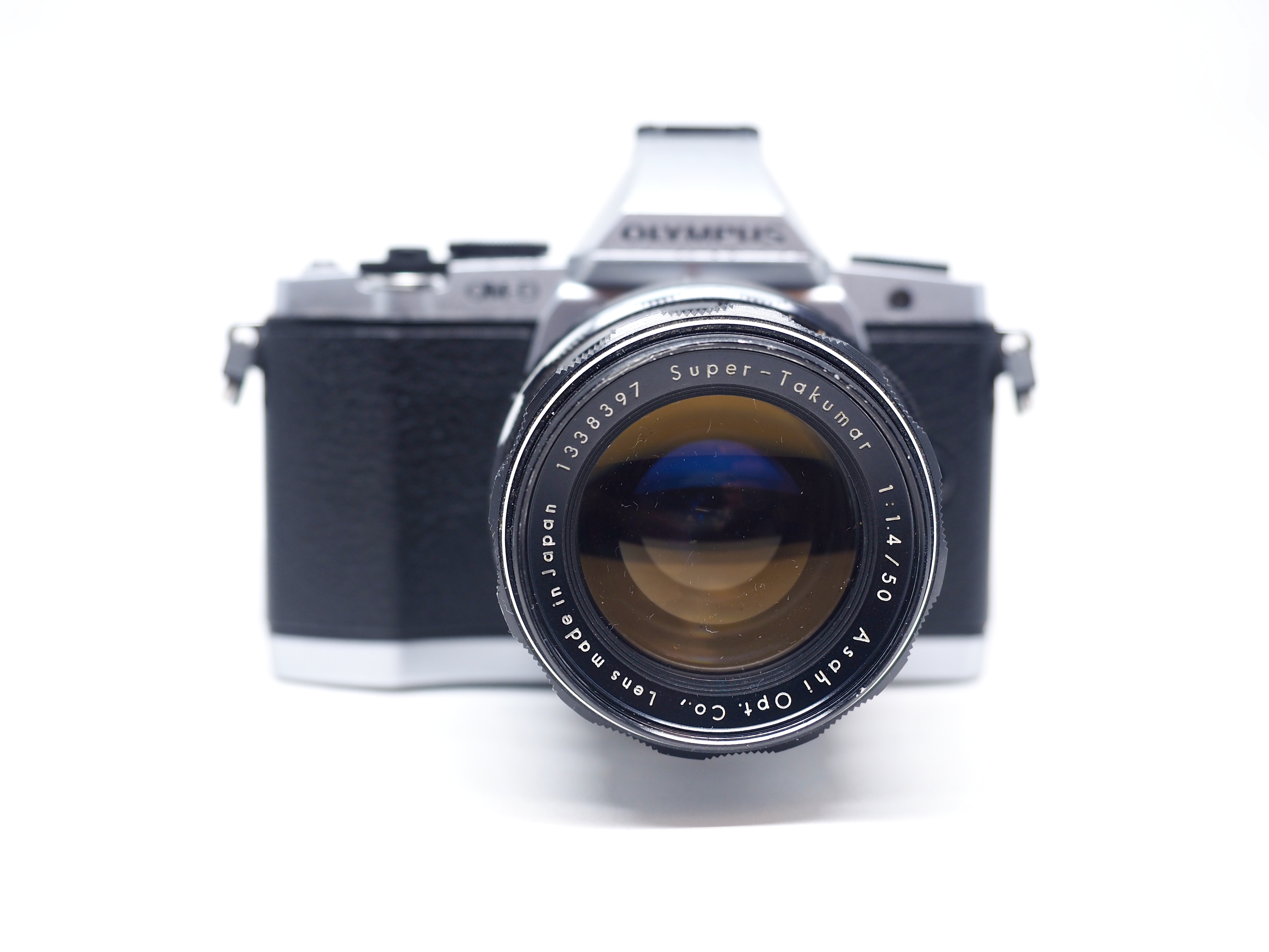
In some cases a particular lens may have been made for only a couple of years, in limited quantities, and in other cases a lens may have evolved over a dozen or more years, with slight changes in lens formulae, glass composition, and mounts. For example Asahi Pentax produced a huge number of Takumar branded lenses in the 1960s. Some like the 8-bladed Super-Takumar 50mm f/1.4, a Planar-type lens, almost have legendary status, the optics are that good. The lens evolved over the years from the legendary 8-element Super-Takumar (1964-65) to the thoriated 7-element Super-Takumar (1965-71), Super-Multi-Coated Takumar (1971-72) and SMC Takumar (1972-75). At more than 50 years old, many of these lenses still pass muster. So why choose a vintage lens?
This series will focus on vintage lenses. Over the course of the next few months we will explore various aspects of vintage lenses, from questioning why they are of interest to digging down into the intricacies of choosing a lens, adapters, and how to examine a lens prior to purchase. This won’t be a review of specific lenses (that may come later), but more of a broad overview, providing links to extra information that might be of interest.
In the days of film cameras, every company had it’s own way of “naming” cameras and lenses. This made it very easy to identify a lens. Asahi Pentax had the ubiquitous Takumar (TA-KOO-MA) name associated with its 35mm SLR and 6×7 lenses. The name would adorn the lenses from the period of the Asahiflex cameras with their M37 mount, through the M42 mount until 1975 when the switch to K-mount came with a change to the lens branding.
Asahi was founded by in 1919 by Kumao Kajiwara as Asahi Optical Joint Stock Co. Asahi began making film projection lenses in 1923, and by the early 1930s was producing camera lenses for the likes of future companies Minolta (1932), and Konica (1933). In 1937 with the installation of a military government in Japan, Asahi’s operations came under government control. By this time Kajiwara had passed away (it is not clear exactly when), and the business passed to his nephew Saburo Matsumoto (possibly 1936?). It was Matsumoto who had the vision of producing a compact reflex camera. In 1938 he bought a small factory in Tokyo and renamed it as Asahi Optical Co. Ltd.
It seems as though the lens series was named in honour of one of the founders brother, Takuma Kajiwara. There might have been the analogy that photography was a means of painting with light, and lenses were like an artists brushes. On a side note, the name Takuma in Japanese is an amalgam of “taku” meaning “expand, open, support”, and “ma” meaning “real, genuine”.
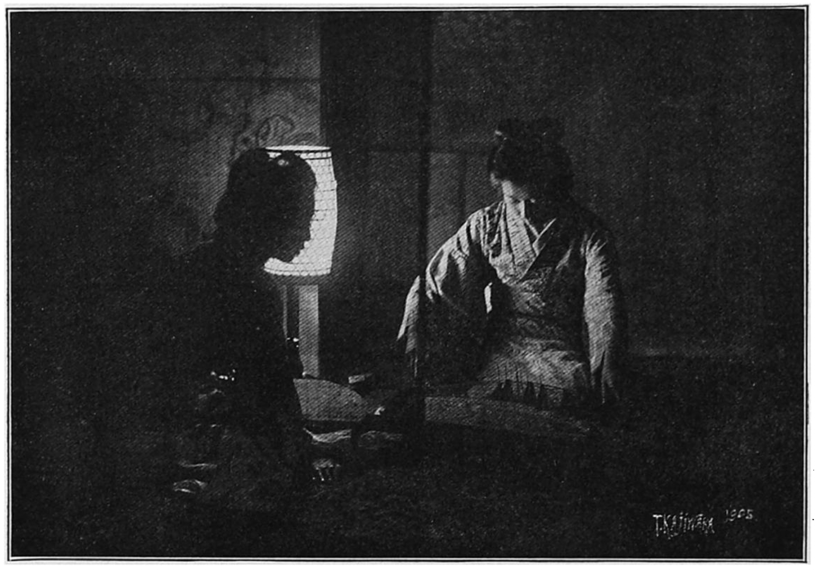
A photograph by Takuma titled “Domestic Life in Japan”, published in the September 1905 issue of Brush and Pencil (“St. Louis Art at the Portland Exposition” XVI(3), p.75).
Takuma Kajiwara (1876-1960) was a Japanese-American photographic artist and painter who specialize d in portraits. Born in Kyushi, Japan he was the third of five brothers in a Samurai family. Emigrating to America at the age of 17, he settled in Seattle, and became a photographer. He later moved to St.Louis and opened a portrait studio, turning from photography to painting. In 1935 he moved to New York. In 1951 he won the gold medal of honour for oils from the Allied Artists of America for his expressionist painting of the Garden of Eden titled “It All Happened in Six Days”. Takuma himself had an interest in cameras, patenting a camera in 1915 (Patent No. US1193392).
Note that it is really hard to determine the exact story due to the lack of accessible information.
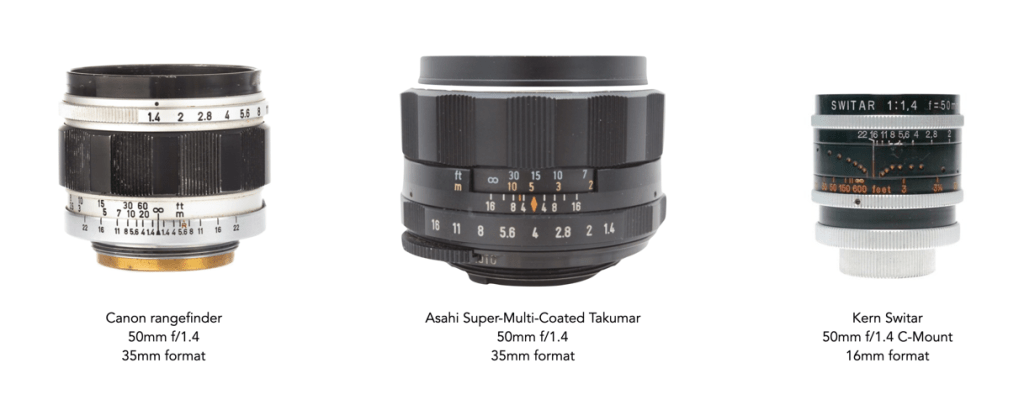
So a 50mm lens is a 50mm lens, is a 50mm lens, right? Well that’s not exactly true. The focal length of a 50mm lens is always 50mm, regardless of the system it is associated with. The focal length of a lens is independent of the camera system. So a 50mm lens on an SLR will have the same focal length as a 50mm lens on a DSLR, which is the same as one on an APS-C sensor, or a medium-format sensor. What is different is how they behave in terms of angle-of-view (AOV), with respect to a particular sensor size.
Fig.1: 50mm lenses all have the same focal length
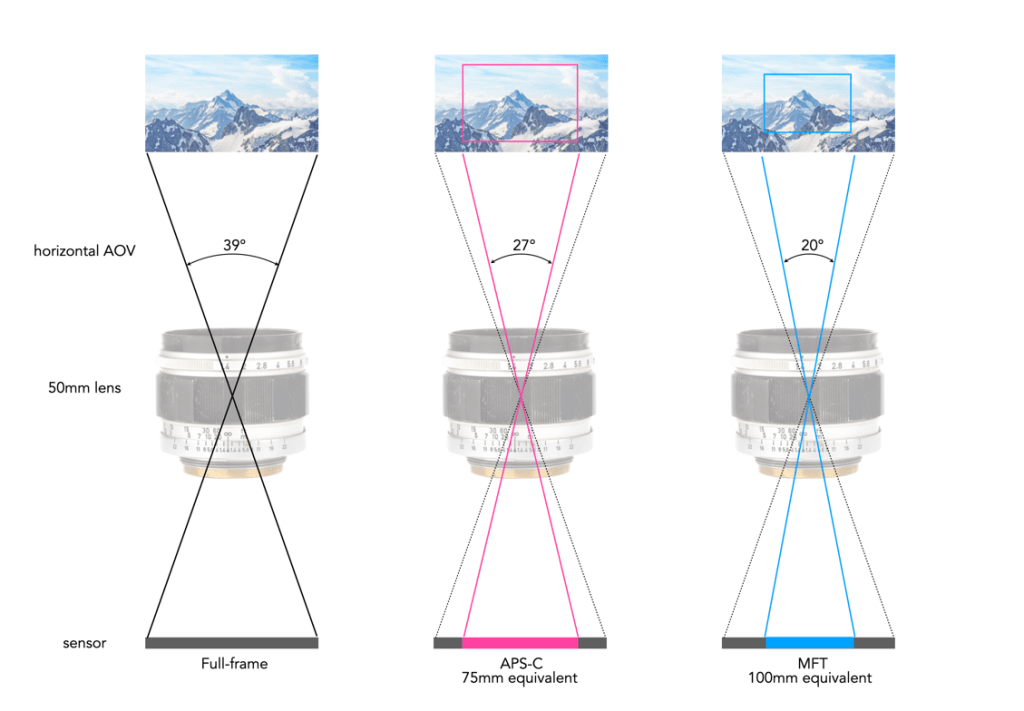
Table 1 shows the behavioural differences of 50mm lenses on various systems. For example a 50mm lens from a 35mm rangefinder camera has a (horizontal) AOV of 39.6°, whereas the AOV of an APS-C camera, is 26.6°. This is because due to crop-factors, a 50mm lens on an APS-C sensor is equivalent to a 75mm on a full-frame camera (from an AOV perspective). To get a 39.6° equivalent AOV on an APS-C camera, you need roughly a 33mm lens – but the closest lens to this is a 35mm APS-C lens (35mm×1.5≈52mm).
System
AOV (diag)
AOV (hor)
Crop-factor
FF equiv.
16mm cine
14.5°
11.7°
×3.4
170mm
1″ sensor
18.2°
14.6°
×2.7
135mm
Micro-Four Thirds
24.5°
19.6°
×2.0
100mm
APS-C
31.7°
26.6°
×1.5
75mm
film SLR
46.8°
39.6°
×1.0
50mm
film rangefinder
46.8°
39.6°
×1.0
50mm
digital SLR (full-frame)
46.8°
39.6°
×1.0
50mm
digital Medium (44×33mm)
57.4°
47.5°
×0.8
40mm
6×7 (72×56mm)
84°
67.6°
×0.5
25mm
4×5”
117°
104°
×0.27
13.5mm
Table 1: Differences in 50mm lenses used on different systems
Note that because a 50mm lens on a Micro-Four-Thirds camera behaves like a 100mm FF lens, most manufacturers won’t sell a native 50mm MFT lens, opting instead for the 50mm FF equivalent – the 25mm. That’s because a 25mm MFT lens provides the “normal” angle-of-view, just like a 35mm APS-C lens, or a 100mm 6×7 lens. A vintage 50mm SLR lens used on an APS-C camera will behave like it was designed for APS-C, i.e. it will have a horizontal AOV of around 26.6°. The remaining 6.5° either side is just cut off because of the smaller sensor (as shown in Figure 2).
Fig.2: A visualization of what a 50mm lens sees on different sensors.
Invariably, all focal lengths are treated similarly. A 35mm is always 35mm, an 85mm is always 85mm. It’s just their behaviour, or rather their “view on life”, that changes.
After Canon and Nikon gave up on their sub-f/1.1 lenses, there was a lull for a while. In all possibility it was likely considered that film would just get so fast there would be little need for these light behemoths. But high ISO film was only introduced in the mid to late 1970s – Fujicolor 400 (1976), Kodakcolor 400 (1977). Indeed faster films begat faster lenses.
The Leitz 50mm Noctilux f/1 for Leica M cameras appeared in 1976, designed by Walter Mandler (1922-2005) and produced by Ernst Leitz Canada. It was a successor to the earlier Noctilux f/1.2. Bob Schwalberg reviewed the lens in 1976 [1]. His observation was that it had a high optical contrast and almost no flare at f/1, “outimaging” its compatriots the Noctilux f/1.2 and the Summilux f/1.4.
The lens was manufactured for a long time, from 1976-2007. The name Noctilux, was designated for three lenses with differing apertures:
Leitz Noctilux 50mm f/1.2 aspherical (1966-1976).
Leitz/Leica Noctilux-M 50mm f/1.0 (1976-2007).
Leica Noctilux 50mm f/0.95/50mm ASPH (2008- )
The lens was constructed using only spherical curvatures, as opposed to the f/1.2 which used two aspherical surfaces with a 6/4 design. The earlier design was likely changed because the aspherical lenses were too expensive to manufacture. The f/1 uses a modified Gauss design of seven elements in six groups with an “air-lens” between the second and third elements. The second and fifth elements were made using Noctilux 900403 glass. The 1st, 6th, and 7th elements were made with Lanthanum glass (LaK12, LaF21). The 900403 glass, developed at the Leitz Glass Laboratory had a higher zirconium oxide content giving it a refractive index of 1.9005 and a dispersion value of 40. (This glass had a melting point of 1600°C, and had to be cooled in a controlled manner over 10-12 days).
But it was no light lens. It was 63mm in diameter, and weighed about 600g. It still suffered from the one thing all ultrafast lenses suffer from – a narrow DOF (2” at 5 feet). When released it sold for US$855. They now routinely sell for C$8,000-11,000.
References:
Bob Schwalberg, “50-mm Noctilux f/1: Sharpest superspeed lens yet?”, Popular Photography, 78(2), pp. 80,81,105 (1976) Dominique Guebey Jungle, “Leitz Noctilux 50mm f:1.0”
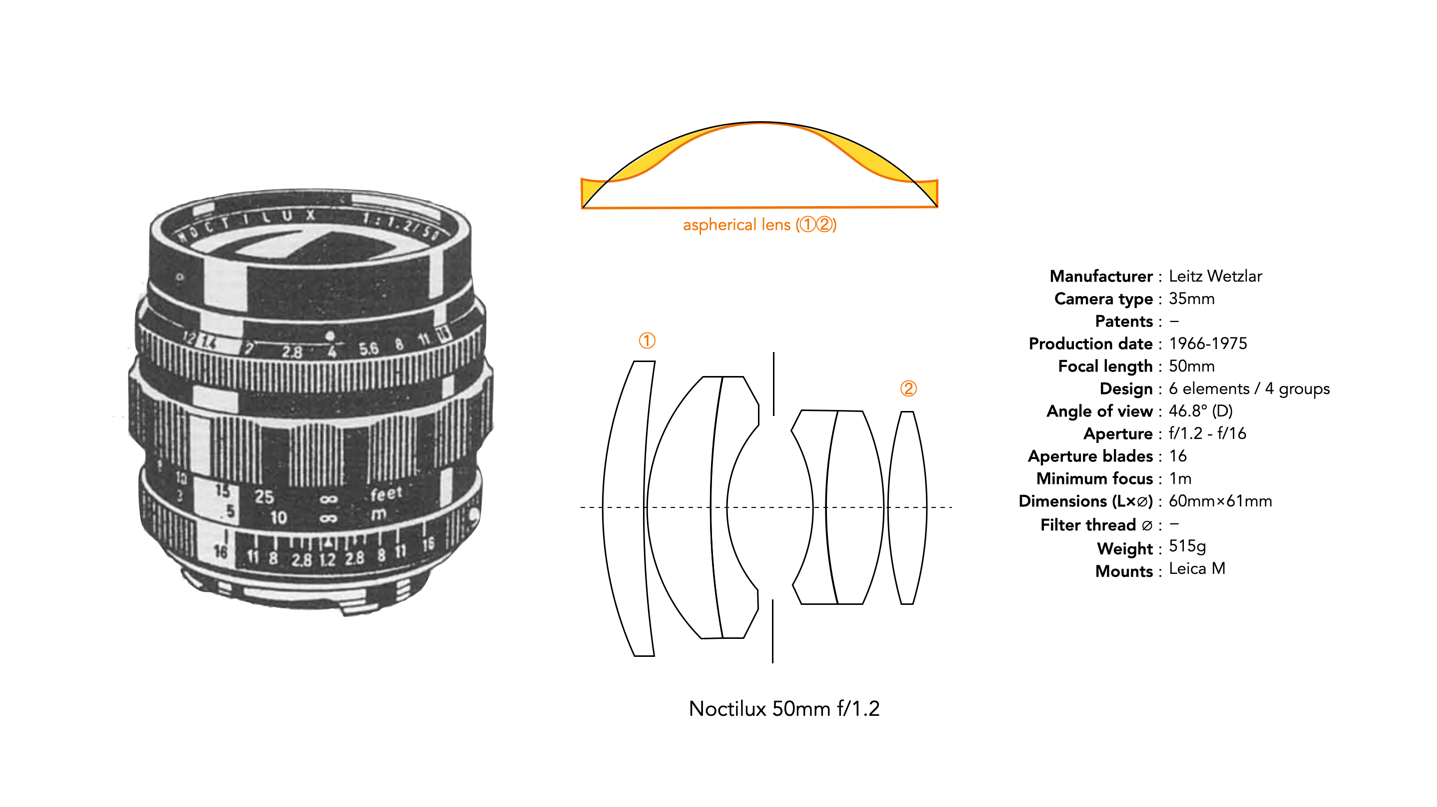
When it was released in 1966, the Leica Noctilux 50mm f/1.2 was an altogether different animal. It was great at shooting in low light, expensive and difficult to make. That’s probably why less than 2000 were made. By the mid 1960s, there were a number of players in the sub-f/1.4 field, primarily for shooting in low light. Nikon, Canon, and Minolta all had f/1.2 lenses. Work on the use of aspherical elements in lenses began in the late 1950s.
The Noctilux 50mm f/1.2 was produced from 1966 until 1975, and was the worlds first lens to feature aspherical elements. The name Noctilux is a combination of Nocti, which is derived from the word nocturnal, while Lux is Latin for light.
“Even at f/1.2 the NOCTILUX produces so very little flare that strong light-sources are imaged with only minimum halo surround. Brightly back-lighted subjects, anathema to poorly corrected high-aperture lenses, have clear, accurate outlines.” [2]
This was supposedly the first Leitz lens to sacrifice some resolution in order to gain contrast. Bill Pierce who wrote a brief article on the new lens in 1967 remarked: “To the best of my knowledge, rather extensive in this tiny field, none previous to the Noctilux could deliver a clean, biting journalistic image at maximum aperture.” [1]
“Superior optical contrast due to high correction for coma and all other critical aberrations and due to freedom from internal reflections, make the NOCTILUX the ·ideal high-aperture lens for use with high-speed available-light films.” [2]
The first prototypes were made in April of 1964 Designed by Helmut Marx and Paul Sindel (Helmut Marx was Professor Max Berek’s successor as head of the photographic lens design in Wetzlar, and creator of the first Summicron 50 in 1953). The Noctilux 50mm f/1.2 was released in 1966. The Leica Noctilux 50mm f/1.2 is a 6-element Gauss variant with 4 members. It has two aspherical elements (front and rear) which were made on a specially built grinding machine that had to be operated manually. There was only one machine, and only one person capable of operating it (Gerd Bergmann), so many elements had to be discarded as rubbish.
It was sometimes claimed to be the fastest production lens in the world, because other manufacturers lenses often proved to be slower than indicated. After the release in 1966 there was much research to produce an f/1 version of the lens with 3 Aspherical elements, but in 1970 the project was abandoned because the aspherical technology was in its infancy, and the production costs were immense. The f/1.2 lens remained in production until only 1975 with 1757 units produced. A new version of the lens, the Noctilux-M 50mm f/1.2 ASPH was released in 2021, with the construction only minimally changed. The new lens sells at US$7900, which is a bargain considering the old lens can sell for upwards of $US70,000.
References:
Bill Pierce, “Because it was possible”, Popular Photography, 60(1), p.135-156 (1967)
Before the Zeiss f/0.7 there were other lenses used in the space race. The Ranger program was a series of unmanned missions to space launched by NASA in the early 1960s, primarily to obtain the first close-up images of the surface of the moon. Ranger 1, launched in August 1961 failed to launch. It was not until Ranger 7, launched in July 1964, that the first high-resolution images of the lunar surface were obtained.
The mission carried six lenses, two wide-angle, and four narrow-angle that transmitted on two channels. The F (for full) system had one wide-angle and one narrow-angle camera. The P (for partial) channel had 4 cameras: two wide-angle and 2 narrow-angle. The images provided better resolution than was available from Earth based views by a factor of 1000. All 6 cameras were RCA-Vidicon slow scan TV cameras using C-mount optics.
Three of the cameras (A,P3,P4) had a 25mm f/l lens and three had a 76mm f/2 lens [1]. The wide-angle lenses used were made by French optical company Angenieux and were 25mm M1 lenses with an adapter attached to mount them to the Vidicon cameras. Strangely enough the NASA documentation specs [1] these lenses out with f/1.0 apertures, but these lenses seem to actually be f/0.95.
The P.Angenieux Paris 25mm f0.95 Type M1 was developed in 1953. The patent for the lens, was issued in 1955 [2]. It is a 8 element lens in 6 groups. It is derived from the Gauss-type, from which is differs by the fact that each of the front lens, and the rear lens is subdivided into two lenses. This allows for the increase in relative aperture while retaining good correction for spherical aberrations.
You can still pick up one of these lenses today for circa US$500.
In the May 1975 issue of Popular Photography, Norman Rothschild talked about this lens [1] – the Zeiss 40mm Super-Q-Gigantar f/0.33 for Contarex cameras. A truly remarkable fast lens. Or was it?
The lens was a complete gag. It was first shown at a press dinner at Photokina 1968, but the lens is nothing more than an aspheric condenser lens, “capable of little else but woozy images” [1]. Rothschild actually carried the lens, mounted on a Contarex, around with him for a number of days at Photokina, with lots of people admiring it. He recalls people whispering excitedly that “It must be some new kind of fisheye lens!”, or a newly designed superspeed lens. But few asked what it was, and fewer still asked to look through the viewfinder.
It was the brainchild of Zeiss Ikon’s manager of Public Relations, Wolf Wehran. At Photokina 1966, many of Zeiss’s competitors had displayed their new light gathering heavyweights with apertures of f/1.2 or faster. Wehran, together with a friend in the lens making department then created a lens so unorthdox it could not be ignored. His point was to illustrate that lens speed was not the most important feature of a lens. The lens was always a physical impossibility – it had a diameter of 125mm, and was a 2-element, 1 group lens. The images produced were similar to that of a normal lens with a Softar soft-focus/diffusion filter attached.
The “Q” stands for “Quatsch,” which translates to “nonsense” in German (derived from quatschen – to talk nonsense). The lens itself went up for auction in 2011 at the famous WestLicht Photographica Auction where it sold for €60,000. Not bad for a lens that does nothing!
Norman Rothschild, “The Super-Q-Gigantar lens – it’s a gag, but some people took it rather seriously”, Popular Photography, 72(5), pp.58,62 (1975)
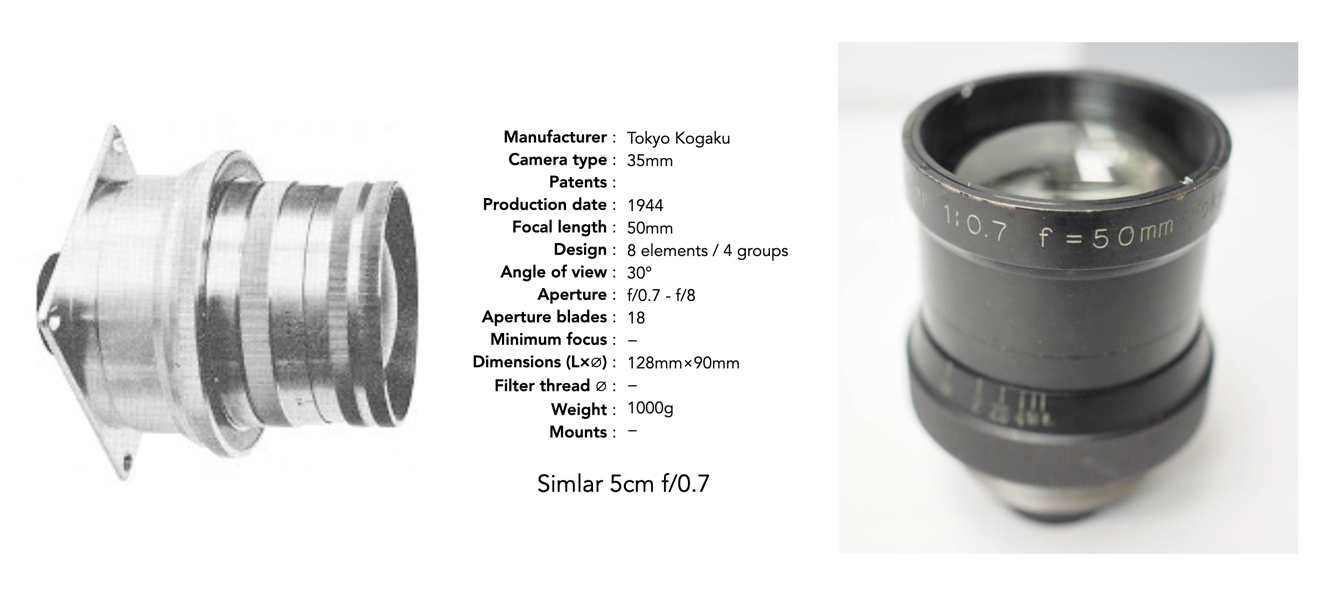
The Zeiss 50mm f/0.7 Planar was not the only f/0.7 lens of the period. There was also the Simlar 50mm f/0.7. The Simlar lenses were made by Tokyo Kogaku, which would eventually become Topcon (Japan). The original lens was designed by Maruyama Shūji. The story of the lens originates from the December 1951 issue of Asahi Camera [1]. It was ordered by the Japanese Army for use in nighttime reconnaissance photography, and was completed in 1944. Before it could be used for its intended purpose, the copies of the lens were claimed by the Aeronautical Engineering Institute of Tachikawa for X-ray medical photography. The article suggests ten copies were made by wars end, but their fate is unknown except for one lens kept by Maruyama Shūji.
A second, postwar version of the camera was produced in 1951 – the dimensions and the weight had both changed (123.7mm×105mm ∅, 2.5kg). Only three copies of the lens were made, of which two were supposedly used on a Antarctic expedition by the Mainichi Newspaper. The Trade and Industry of Japan publication from 1955 shows the lens.
The strange thing about the second series is that the weight of the lens changed from 1kg to 2.5kg, which is a substantial increase. I would beckon to suggest that the design of the original series was copied from either the wartime Zeiss objective, or perhaps the Herzberger objective. When the war was over, there was either issues with using the patent, or an inability to obtain the proper glass, adding extra weight. However there does not seem to be any surviving pictures of the second series.
For those interested, here is a link to another lens, the Simlar-F 180mm f/1.5 produced in 1942. It provides a sense of the aesthetics of the Simlar lenses.
Further reading:
Asahi Camera December 1951. “Toki no wadai: Hachi-nen mae ni Nihon de dekite ita F0.7 no renzu” (時の話題・八年前に日本で出来ていたF0.7のレンズ, Topic of the time: An f/0.7 lens made in Japan eight years ago). P.84.
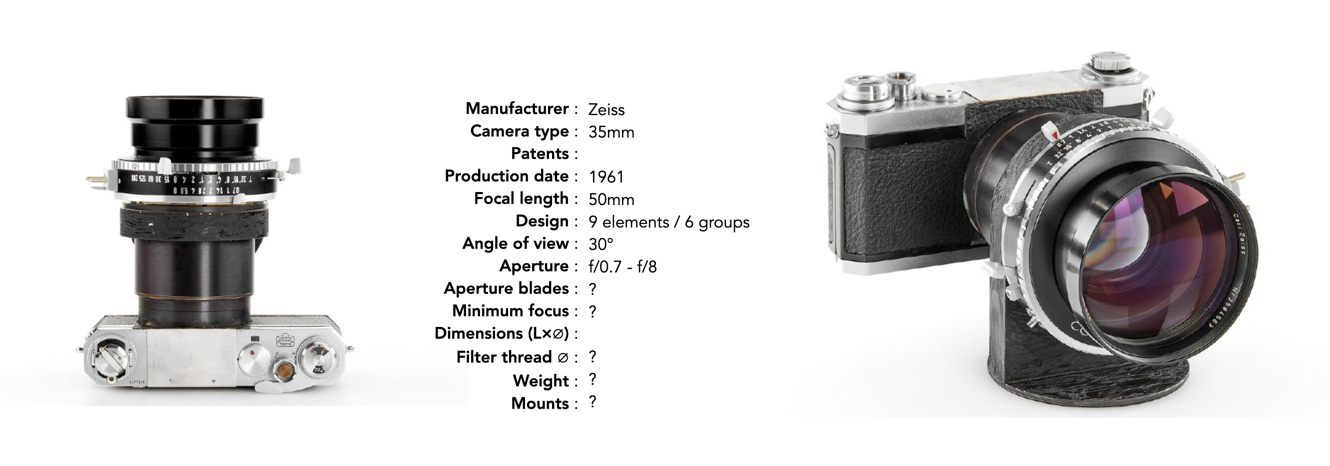
The quintessential vintage ultra-fast camera lens is the Zeiss Planar 50mm f/0.7. It was developed in 1961 for a specific purpose, namely to photograph the dark side of the moon during the NASA Apollo lunar missions. Only 10 lenses were built, one was kept by Zeiss, 6 went to NASA and 3 were sold to director Stanley Kubrick. Kubrick used the lenses to film scenes lit only by candlelight in the movie “Barry Lyndon” (1975).
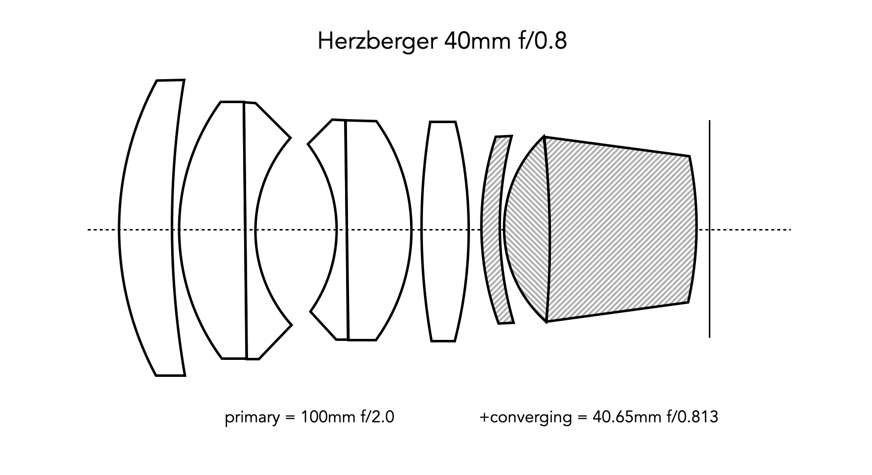
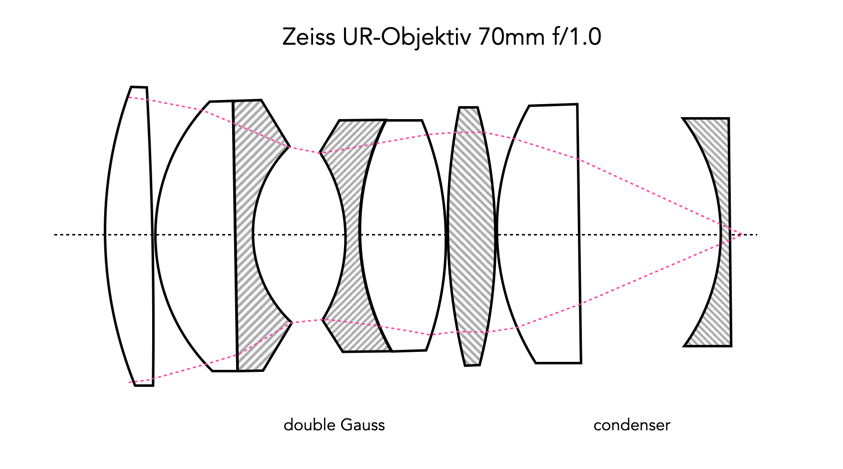
There is a similarity, at least in the double-Gauss optical design – it is essentially a Gauss front with two doublets glued together and a rear group which functioned as a condenser. (copies of optical diagram). The 50mm f/0.7 Planar was designed by Dr. Erhard Glatzel (1925-2002) and Hans Sauer. It is supposedly based on an f/0.8 lens designed by Maximilian Herzberger (1900-1982) for Kodak in 1937. Looking at the two schematics, they look quite similar. The idea is to take the 70mm f/1, and by adding a condenser, brute-force the lens into a 50mm f/0.7. The condenser actually shortens the focal length and condenses the light – in reality adding a ×0.7 teleconverter that gives 1 f-stop.
But this lens has an interesting backstory. According to Marco Cavina, who has done a lot of research into the origin of this lens (and others), the design of this lens was derived at least in part from lenses designed for the German war effort. During WW2, Zeiss Jena designed a series of lenses for infrared devices to be used for night vision in various weapons systems. One such lens was the Zeiss UR-Objektiv 70mm f/1.0. The design documents were apparently recovered during Operation Paperclip from the Zeiss Jena factory before the factory was occupied by the Soviets and then provided to the new Zeiss Oberkochen.
The design went through four prototypes before achieving the final configuration [1]. The final scheme was optimized on an IBM 7090, which had been in operation since the late 1950s. The lenses were used on a modified Hasselblad camera.
Glatzel, E., “New developments in the field of photographic objectives”, British Journal of Photography, 117, pp.426-443 (1970)






 Crafting Pixels