Why choose a vintage lens?

There are many reasons why people choose to use vintage lenses. Many just opt for the chance of experimenting with their photography. Some people buy a particular lens for the Bokeh it produces, or its level of sharpness, or just perhaps for its unique character. Some use vintage lenses as an alternative to expensive digital lenses.

They have character

From a technical viewpoint vintage lenses are not better than modern lenses – in fact from an optical viewpoint they are likely quite inferior – in theory anyways. What they are however, is much simpler in design. There is no auto-anything – manual focus is top dog, as is aperture adjustment. They also have qualities that modern lenses often try to avoid in their design, e.g. optical aberrations. Yet it is these imperfections that provide vintage lenses with one thing new lenses often lack – a sense of character. We’re talking contrast, distortion, chromatic aberrations, illumination (flaring), and vignetting. This gives the images created a very distinctive look (although likely not as distinctive as it would coupled with various types of film). Sometimes this is in the way they render out-of-focus regions in a image or perhaps the sharpness of the image, or colour-rendition. Some people like to use vintage lenses because they produce nice contrast, or have nice bokeh, but it is all highly subjective. One person’s “bokeh-monster” will be another nightmare.

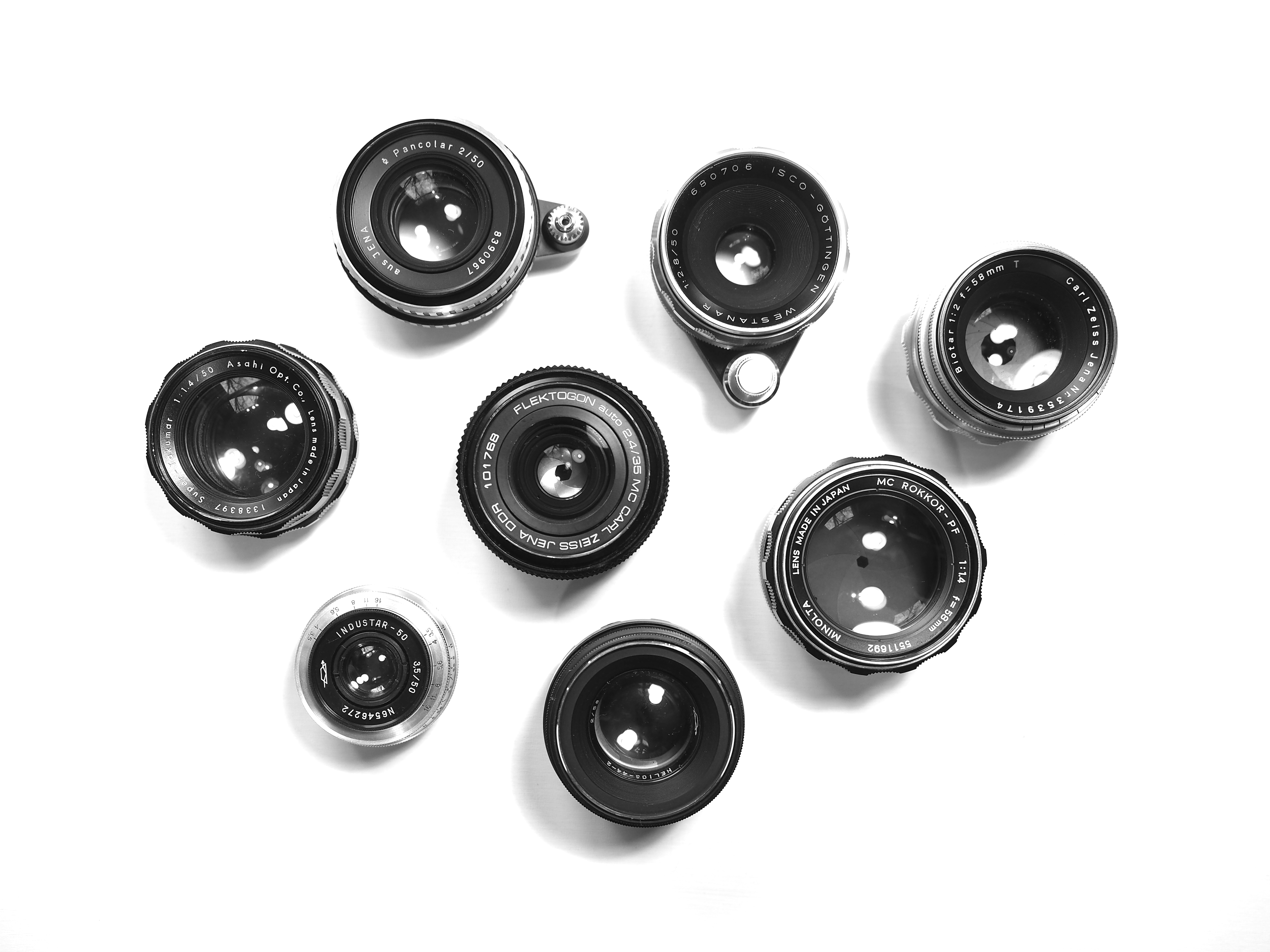
Some people may choose to use only vintage 50mm lenses. You may question why someone needs half a dozen different 50mm lenses, but the reality is that they may all have unique, noteworthy attributes. Many manufacturers produced a number of 50mm lenses at any given time, all with differing characteristics. For example, they may have used different (i) lens formulae, (ii) optical glass, (iii) aperture system (e.g number of blades), or (iv) lens speed. A lens is the sum of all its characteristics, not just the focal length.

They are (mostly) available at a good price

One of the main reasons people like to choose vintage lenses is affordability. Most vintage lenses fall into the “reasonably priced” category, usually somewhere in the range of US$80-250. It’s hard to talk too specifically about lens prices because of the broad range of lenses. However within the scope of a particular lens it is also possible to have a wide gamut of prices usually largely dependent on the condition of the lens. There are a lot of good vintage lenses that don’t get a lot of coverage that are extremely well positioned from a price point.

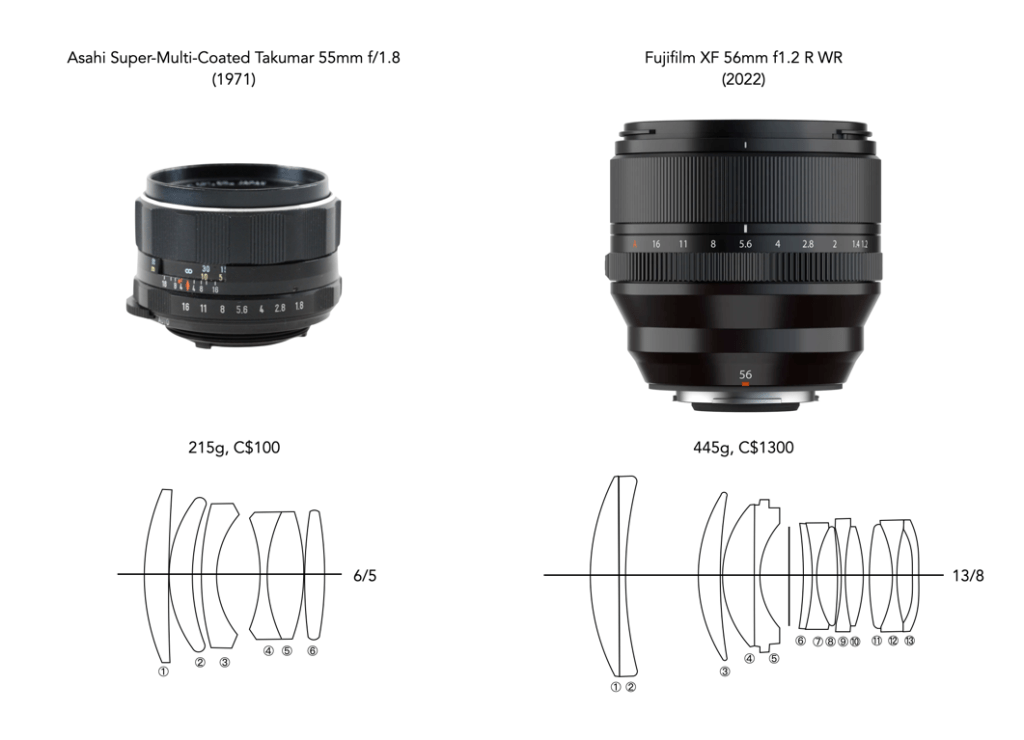
There are of course some vintage lenses that are expensive, but that is usually because they are (i) rare, or (ii) too popular. For example superfast 50mm f/1.2 lenses are not cheap, but you probably don’t need a superfast lens. Others, like say the Zeiss 50mm Pancolar, is expensive because it is well known to be a good lenses. Sometimes a good lens will be talked up by someone in a video – this causes a run on them, and hence pushes up the cost. Some lenses like the Pancolar 55mm f/1.4 are so rare they are often advertised in the C$3-5K range. Vintage lenses are often chosen as an alternative to modern lenses, or perhaps to try out a lens of a certain focal length before buying a modern version. For example, an 85mm equivalent for the Fuji-X system would be the Fujifilm XF 56mm f/1.2 R WR, which retails for about C$1300. It is possible to get an Asahi Super-Multi-Coated Takumar 55mm f/1.8 for about C$100 – slightly slower, but less than 10% of the cost.

They are well built (but can have some flaws)

Lenses of a certain vintage are built like proverbial tanks. Many of those built prior to 1970 are predominantly made of metal and glass. It was in the 1970s that plastics started to creep into the manufacturing process. There are pros and cons to each. More recent vintage lenses likely have lens coatings and optics that are much better than older lenses whereas earlier 35mm lenses featured solidly build body’s with aluminum lens barrels and stainless steel mounts. Of course not all vintage lenses are worthy. The downside is that vintage lenses can suffer from any number of maladies, some superficial like cosmetic scratches on the barrel, some affecting the functionality such as stiff focusing ring, and others more serious affecting the optical surfaces of the lens, e.g haze, scratches, and fungus. The other thing to think about is weight. Modern lenses typically have a lot more optical elements, and hence are larger and heavier than most equivalent vintage lenses.

They provide an education

One of the issues with digital cameras is that so much is automated. That’s not a bad thing in a lot of situations because it allows you to concentrate on framing the shot. However because of this, the inner workings of the camera are sometimes lost to the photographer. Using vintage lenses means you have to gain a more intimate understanding of how apertures work, and master the art of focusing. However on the flip-side you do gain better control of the photographic process.

They are eco-friendly

Lastly, using vintage lenses is very eco-friendly. The lenses already exist, and apart from buying an adapter, which can be used for any vintage lens with the same mount, there is very little in the way of a carbon footprint (save postage if bought online). Well-built products, have a longevity that keeps them out of landfills. Vintage lenses are inherently sustainable for a number of reasons: (i) No requirement for more materials to build the lenses (plastics, electronics, glass); (ii) Little to no pollution; and (iii) Interchangeability, i.e. the same lens can be used on different cameras, and so changing systems only means acquiring a new adapter.

Glass from the past, aka vintage lenses

When digital cameras started to supplant analog ones, everyone likely thought that the manual focus interchangeable lenses of yore would be relegated to dark closets, attics, and the few who still used film. It became rare to find these lenses, except perhaps languishing in the “used” section of a camera store, often gathering dust. Digital cameras used digital lenses, and as such there was very little need for analog lenses. There were also few means of adapting these lenses for use on DSLR’s, largely because of the lack of mount adapters, but also because of compatibility issues with mirror-based cameras, both full frame and crop-sensor. This changed with the advent of the mirrorless camera which having a shorter distance to the sensor allowed the adoption of lens adapters.

So what is a vintage lens? This is somewhat of a loaded question because there is no definitive answer. One of the defining characteristics of a vintage lens is that it is manual, i.e. it relies on both manual focus, and aperture setting. But there are a lot of manual lenses available. There are lenses available from the 1930’s, 40’s and even the 19th century. But many of these suffer from not being easy to adapt to digital cameras. In all likelihood, anything pre-digital could be construed as vintage, however I hesitate to include the pre-digital lenses with electronic components in them, e.g. auto-focus, because most cannot be easily converted for use on a digital camera. But in the end, vintage really means interchangeable lenses made for cameras that used film, and specifically 35mm film cameras, either SLR or rangefinders.

There are millions of vintage lenses in the world today, the majority of these interchangeable lenses hail from the period 1950-1985, predominantly made in Japan and Europe. Some brands have a large ubiquity in the world of vintage lenses, such as Asahi Takumar, while others such as Minolta’s Rokkor have a more subdued presence, e.g. the Rokkor 58mm f/1.4 lens an example of a star performer. Vintage lenses come in various focal lengths, but many are in the “normal” range 45-58mm. They can be fast, i.e. have a large aperture, aesthetically pleasing, e.g. made of chrome, or just come from a company with an exceptional optical reputation. All vintage lenses have their own character, from optical anomalies and aberrations, to colour rendering, and boken, and the out-of-focus qualities. Many of the Carl Zeiss Jena lenses such as the Flektogon 35mm f/2.4 is renowned for how it renders out-of-focus regions. At the opposite end of the spectrum, is the Jupiter 9, an 85mm f/2 lens made in the USSR – it has a wonderful 15 blade aperture, and what some people call “dreamy bokeh”.

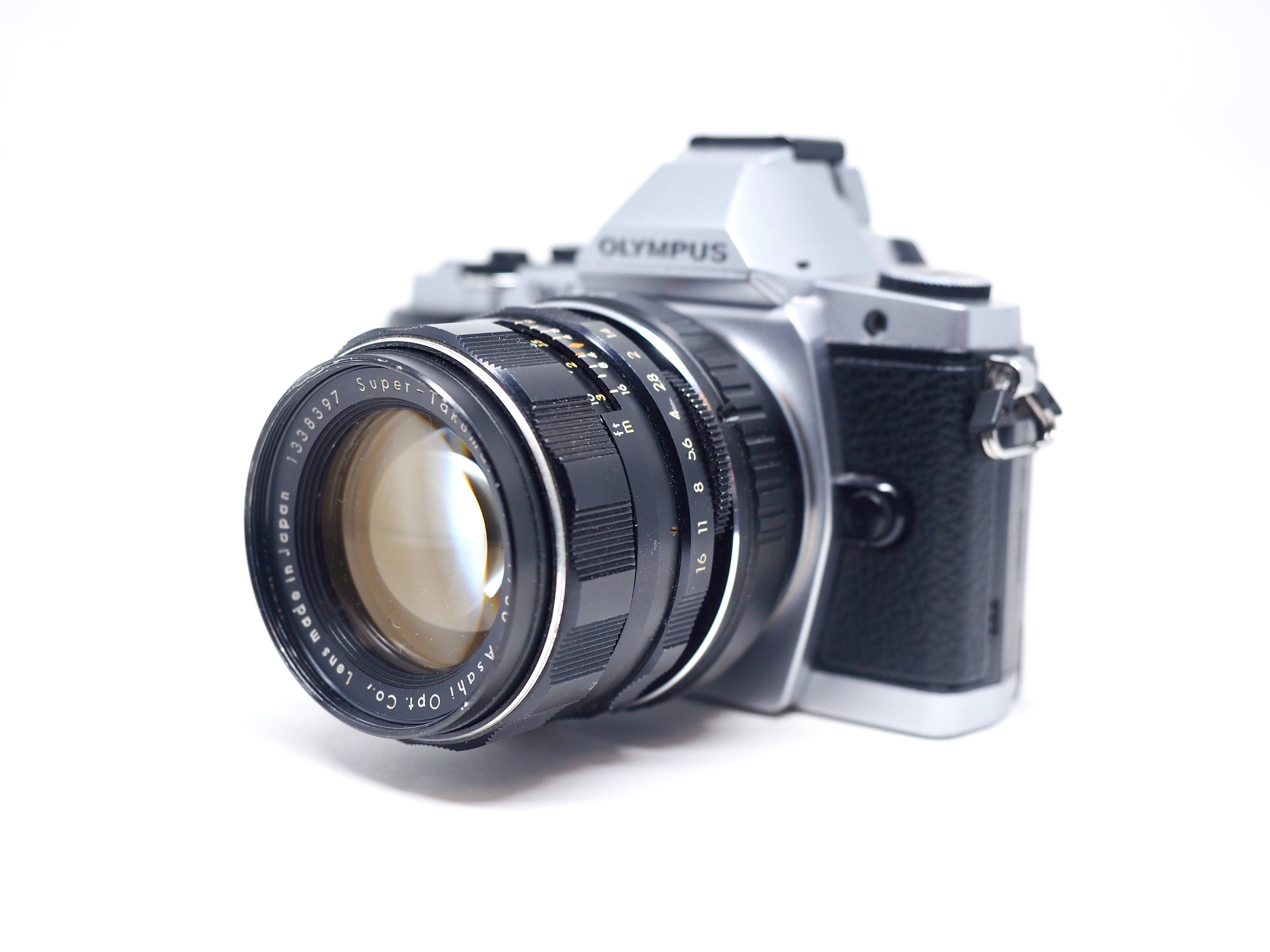
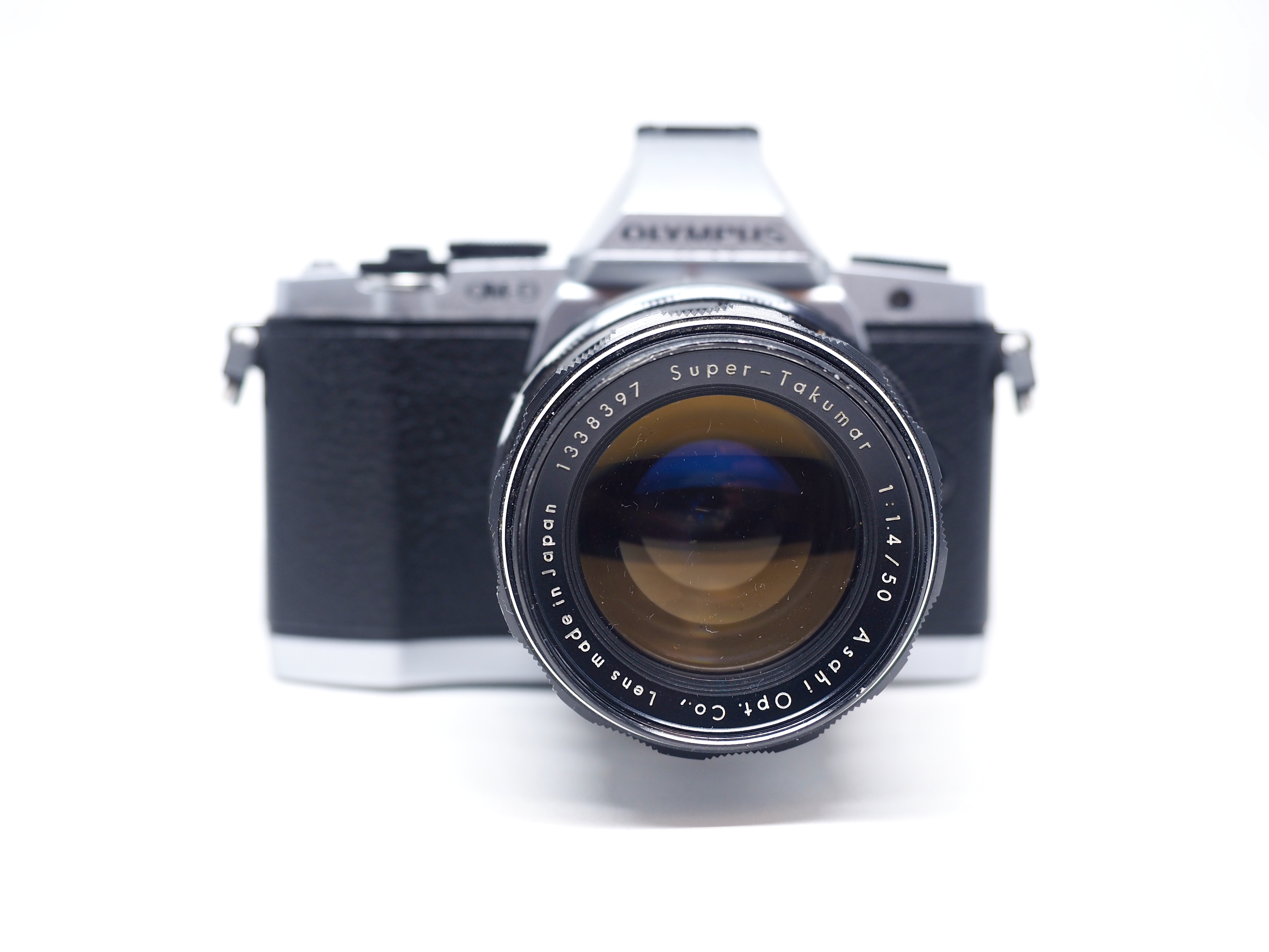
In some cases a particular lens may have been made for only a couple of years, in limited quantities, and in other cases a lens may have evolved over a dozen or more years, with slight changes in lens formulae, glass composition, and mounts. For example Asahi Pentax produced a huge number of Takumar branded lenses in the 1960s. Some like the 8-bladed Super-Takumar 50mm f/1.4, a Planar-type lens, almost have legendary status, the optics are that good. The lens evolved over the years from the legendary 8-element Super-Takumar (1964-65) to the thoriated 7-element Super-Takumar (1965-71), Super-Multi-Coated Takumar (1971-72) and SMC Takumar (1972-75). At more than 50 years old, many of these lenses still pass muster. So why choose a vintage lens?

This series will focus on vintage lenses. Over the course of the next few months we will explore various aspects of vintage lenses, from questioning why they are of interest to digging down into the intricacies of choosing a lens, adapters, and how to examine a lens prior to purchase. This won’t be a review of specific lenses (that may come later), but more of a broad overview, providing links to extra information that might be of interest.

Vintage cameras and lenses – where to buy?

I have been buying vintage analog cameras and lenses for a few years now, and so this article offers a few tips, on where to buy them based on my experiences. Now when you’re dealing with vintage camera equipment, you will quickly realize that there is a lot of inventory around the world. This isn’t so surprising considering how the photographic industry blossomed with the expanding consumer market from 1950 onward. Analog equipment can be old, mostly dating pre-1980s, some quite common, others quite rare. I say pre-1980s because that decade heralded cameras and lenses that were bulky, ugly, made of plastic, and had clumsy auto-focus mechanisms. I will cover what to look for in vintage lenses, and cameras at a later date.

Bricks-and-mortar stores

If you are new to the buying vintage photographic equipment, then the obvious place to start is a store that focuses on vintage gear, but honestly they are few and far in between, which may be the nature of dealing with analog. Sometimes photographic retailers who sell modern camera equipment may deal with some “used” gear, but you often won’t find a really good range of gear, as they tend to deal more with used digital gear. Some people of course will comment that specialized stores tend to have higher prices, but we are talking about vintage equipment here, which may be anywhere from 40-70 years old, so if you are serious about lenses it is worth paying for the expertise to properly assess them.

In Toronto a good place to start is F-Stop Photo Accessories, which has a good amount of online information on their inventory (but does not ship). You will find a good assortment of Japanese gear, with some German and Soviet-era gear as well. The store is tiny, so best to check out the website and email to make sure the items you’re interested in are in stock, then drop by to examine them. In places like the UK, Europe and even Japan there are likely more bricks-and-mortar stores that deal predominantly with vintage. For example Tokyo abounds with used camera stores, some of which have huge inventories.

Fairs / Camera shows

If you are fortunate to live somewhere that has a photographic club, they may also have swap-meets, or auctions. In Toronto there is the Photographic Historical Society of Canada, which typically has two fairs a year, which are a good place to pick up vintage gear. The first time I went in 2019 I managed to find an 8-element Takumar 50mm f/1.4 (C$250), a Helios 58mm Version 4 ($20), a Takumar 35mm f/3.5 ($60), and a Carl Zeiss Tessar and Biotar 58mm f/2 for $140. The benefit is always that you get to examine the lens/camera, and check the functionality. There is generally a huge amount of lenses and cameras, some quite inexpensive for the person wanting to get started in analog photography.

Online stores

What about purchasing from an online reseller? This is somewhat tricky, because you are buying a physical device. I typically don’t buy any vintage electronic things off the internet because you can never be 100% certain. Thankfully the type of vintage we are looking at here, especially as it pertains to lenses, rarely involves any electronics. However it still involve moving parts, i.e. the focusing ring, and the aperture, both of which have to move freely, and are obviously hard to test online. There are a number of differing options for buying online. There are (i) physical stores which have an online presence, (ii) online retailers with a dedicated website, and (iii) online retailers on platforms such as Etsy and eBay.

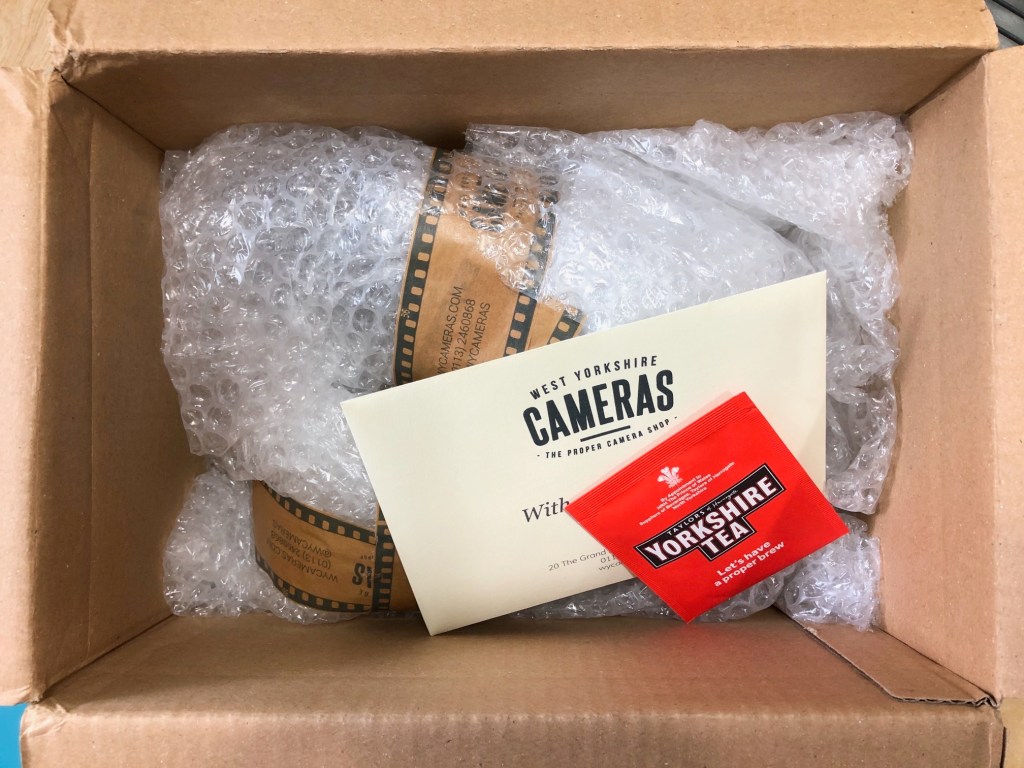
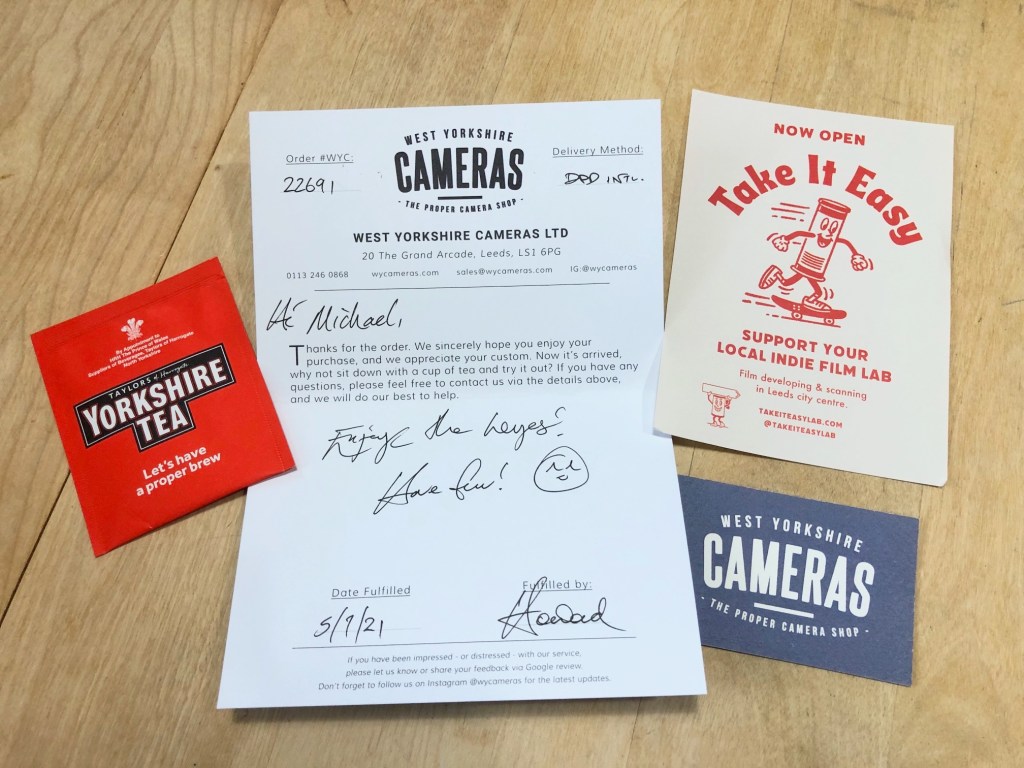
I have had a number of good experiences when shopping at online stores. The first one was with the Vintage & Classic Camera Co., on Hayling Island near Portsmouth (UK). I bought an Exakta Varex 11a, and the experience was extremely good. Listings are well described, with ample photographs and a condition reported (as a percentage). The second was a recent experience with West Yorkshire Cameras, arguably one of the premium retailers for vintage camera gear. I have also bought lenses from a number of resellers on Etsy and eBay. Etsy provides access to resellers from all over the globe, and vintage products have to be a minimum of 20 years. I have bought some Russian lenses from Aerarium (Ukraine), cameras from Coach Haus Vintage (Toronto, Canada) and Film Culture (Hamilton, Canada). If you are looking for Japanese vintage cameras, I can also recommend Japan Vintage Camera based in Tokyo, who have an Etsy store as well.

What makes a good store?

A good vintage camera reseller will be one who lives and breathes vintage cameras. Typically they might have an Instagram account, offer weekly updates of new inventory, and service/inspect the equipment before even advertising it. If there should be something wrong with an item when you receive it, the reseller should make it good (I mean things do get missed). A good online store will have listings which describe the lens/camera in detail while listing any defects, provide a good series of photographs showing the camera from different angles, and some sort of grading criteria. Ideally the store should also provide some basic information on shipping costs.

Regardless of the store, always be sure to Google them and check online reviews. Don’t be swayed by a cool website, if there is a lack of customer service you won’t want to shop there. Sometimes the company has a Google review, or perhaps a review on Trustpilot. If there are enough negative reviews, then it is safe to say there is likely some truth to them. For example a company that posts 70% bad reviews is one to avoid, regardless of the amount of inventory on their site, how quickly it is updated, or how aesthetically pleasing the website looks. I had an extremely poor experience with a British online reseller that has an extremely good website with weekly updates of inventory. I had purchased a series of vintage lenses in Nov.2020. After one month they had not shipped, after two also nothing. I conversed with the owner twice during the period and each time the items were going to be “shipped tomorrow”. To no avail, after 5 months, I finally submitted a refund request with Paypal, which was duly processed. I have since written a review, which wasn’t favourable, but then neither were 90% of the reviews for that particular reseller.

The website Light Box has a whole list of places to buy film cameras and lenses in the UK, including a section named “Caution advised”, outlining those to avoid. I have created a listing of various stores in the Vintage Lenses etc. page.

Stores by region

Geographical locations do play a role in where to purchase vintage camera equipment. For example during the early decades of the post-war camera boom, there were two core epicentres of camera design and manufacture: Europe (more specifically both East and West), and Japan. So if you are interested in cameras/lenses from these regions, then stores within those geographical locales might offer a better selection. For example there are quite a few vintage camera resellers on Etsy from Ukraine and Russia. This makes sense considering cameras like FED were made in factories in Kharkov, Ukraine. Interested in Pentax or any number of Japanese vintage lenses, then resellers from Japan make sense. There are a lot of good camera stores in places that have few links to manufacturing, but may have had a good consumer base, e.g. UK and the Netherlands. The trick of course is being able to navigate the sites. Many Japanese stores have online presence, but very few provide an English-language portal.