The photography of Daidō Moriyama

Daidō Moriyama was born in Ikeda, Osaka, Japan in 1938, and came to photography in the late 1950s. Moriyama studied photography under Takeji Iwamiya before moving to Tokyo in 1961 to work as an assistant to Eikoh Hosoe. In his early 20’s he bought a Canon 4SB and started photographing on the streets on Osaka. Moriyama was the quintessential street photographer focused on the snapshot. Moriyama likened snapshot photography to a cast net – “Your desire compels you to throw it out. You throw the net out, and snag whatever happens to come back – it’s like an ‘accidental moment’” [1]. Moriyama’s advice on street photography was literally “Get outside. It’s all about getting out and walking.” [1]

In the late 1960s Japan was characterized by street demonstrations protesting the Vietnam War and the continuing presence of the US in Japan. Moriyama joined a group of photographers, associated with the short-lived (3-issue) magazine Provoke (1968-69), which really dealt with elements of experimental photography. His most provocative work during the Provoke-era was the are-bure-boke style that illustrates a blazing immediacy. His photographic style is characterized by snapshots which are gritty, grainy black and white, out-of-focus, extreme contrast, Chiaroscuro (dark, harsh spotlighting, mysterious backgrounds). Moriyama is “drawn to black and white because monochrome has stronger elements of abstraction or symbolism, colour is something more vulgar…”.

“My approach is very simple — there is no artistry, I just shoot freely. For example, most of my snapshots I take from a moving car, or while running, without a finder, and in those instances I am taking the pictures more with my body than my eye… My photos are often out of focus, rough, streaky, warped etc. But if you think about I, a normal human being will in one day receive an infinite number of images, and some are focused upon, other are barely seen out of the corners of one’s eye.”

Moriyama is an interesting photographer, because he does not focus on the camera (or its make), instead shoots with anything, a camera is just a tool. He photographs mostly with compact cameras, because with street photography large cameras tend to make people feel uncomfortable. There were a number of cameras which followed the Canon 4SB, including a Nikon S2 with a 25/4, Rolleiflex, Minolta Autocord, Pentax Spotmatic, Minolta SR-2, Minolta SR-T 101 and Olympus Pen W. One of Moriyama’s favourite film camera’s was the Ricoh GR series, using a Ricoh GR1 with a fixed 28mm lens (which appeared in 1996) and sometimes a Ricoh GR21 for a wider field of view (21mm). Recently he was photographing with a Ricoh GR III.

“I’ve always said it doesn’t matter what kind of camera you’re using – a toy camera, a polaroid camera, or whatever – just as long as it does what a camera has to do. So what makes digital cameras any different?”

Yet Moriyama’s photos are made in the post-processing stage. He captures the snapshot on the street and then makes the photo in the darkroom (or in Silver Efex with digital). Post-processing usually involves pushing the blacks and whites, increasing contrast and adding grain. In his modern work it seems as though Moriyama photographs in colour, and converts to B&W in post-processing (see video below). It is no wonder that Moriyama is considered by some to be the godfather of street photography, saying himself that he is “addicted to cities“.

“[My] photos are often out of focus, rough, streaky, warped, etc. But if you think about it, a normal human being will in one day perceive an infinite number of images, and some of them are focused upon, others are barely seen out of the corner of one’s eye.”

For those interested, there are a number of short videos. The one below shows Moriyama in his studio and takes a walk around the atmospheric Shinjuku neighbourhood, his home from home in Tokyo. There is also a longer documentary called Daidō Moriyama: Near Equal, and one which showcases some of his photographs, Daido Moriyama – Godfather of Japanese Street Photography.

Artist Daido Moriyama – In Pictures | Tate (2012)

Further Reading:

Vintage cameras and lenses – where to buy?

I have been buying vintage analog cameras and lenses for a few years now, and so this article offers a few tips, on where to buy them based on my experiences. Now when you’re dealing with vintage camera equipment, you will quickly realize that there is a lot of inventory around the world. This isn’t so surprising considering how the photographic industry blossomed with the expanding consumer market from 1950 onward. Analog equipment can be old, mostly dating pre-1980s, some quite common, others quite rare. I say pre-1980s because that decade heralded cameras and lenses that were bulky, ugly, made of plastic, and had clumsy auto-focus mechanisms. I will cover what to look for in vintage lenses, and cameras at a later date.

Bricks-and-mortar stores

If you are new to the buying vintage photographic equipment, then the obvious place to start is a store that focuses on vintage gear, but honestly they are few and far in between, which may be the nature of dealing with analog. Sometimes photographic retailers who sell modern camera equipment may deal with some “used” gear, but you often won’t find a really good range of gear, as they tend to deal more with used digital gear. Some people of course will comment that specialized stores tend to have higher prices, but we are talking about vintage equipment here, which may be anywhere from 40-70 years old, so if you are serious about lenses it is worth paying for the expertise to properly assess them.

In Toronto a good place to start is F-Stop Photo Accessories, which has a good amount of online information on their inventory (but does not ship). You will find a good assortment of Japanese gear, with some German and Soviet-era gear as well. The store is tiny, so best to check out the website and email to make sure the items you’re interested in are in stock, then drop by to examine them. In places like the UK, Europe and even Japan there are likely more bricks-and-mortar stores that deal predominantly with vintage. For example Tokyo abounds with used camera stores, some of which have huge inventories.

Fairs / Camera shows

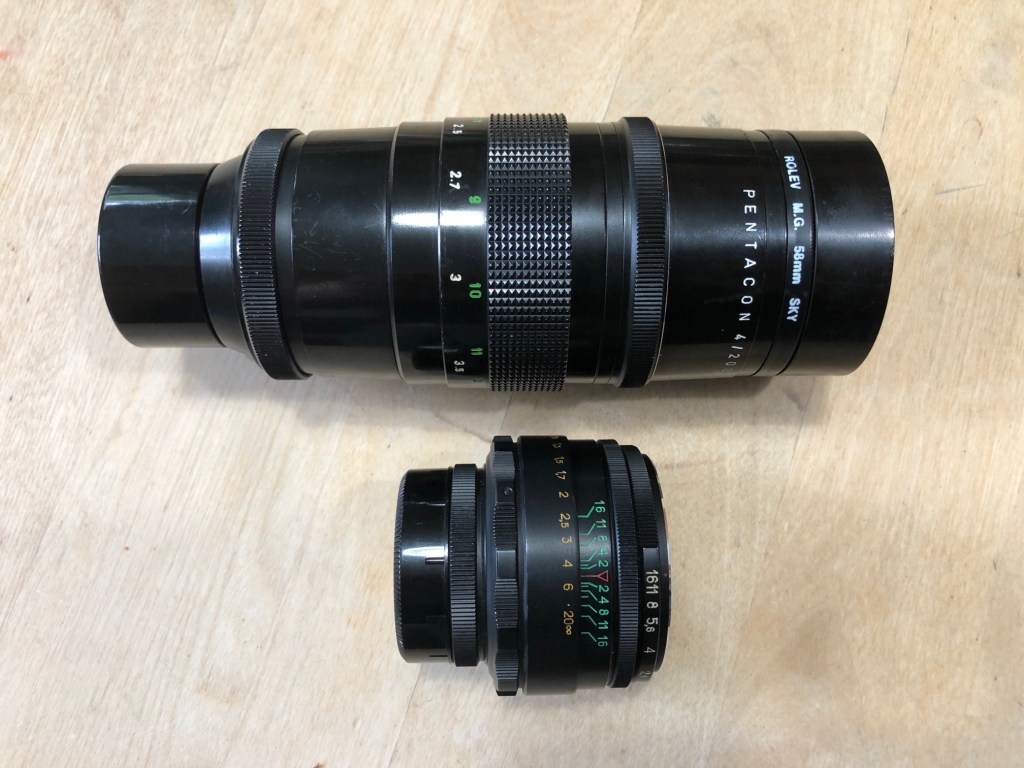
If you are fortunate to live somewhere that has a photographic club, they may also have swap-meets, or auctions. In Toronto there is the Photographic Historical Society of Canada, which typically has two fairs a year, which are a good place to pick up vintage gear. The first time I went in 2019 I managed to find an 8-element Takumar 50mm f/1.4 (C$250), a Helios 58mm Version 4 ($20), a Takumar 35mm f/3.5 ($60), and a Carl Zeiss Tessar and Biotar 58mm f/2 for $140. The benefit is always that you get to examine the lens/camera, and check the functionality. There is generally a huge amount of lenses and cameras, some quite inexpensive for the person wanting to get started in analog photography.

Online stores

What about purchasing from an online reseller? This is somewhat tricky, because you are buying a physical device. I typically don’t buy any vintage electronic things off the internet because you can never be 100% certain. Thankfully the type of vintage we are looking at here, especially as it pertains to lenses, rarely involves any electronics. However it still involve moving parts, i.e. the focusing ring, and the aperture, both of which have to move freely, and are obviously hard to test online. There are a number of differing options for buying online. There are (i) physical stores which have an online presence, (ii) online retailers with a dedicated website, and (iii) online retailers on platforms such as Etsy and eBay.

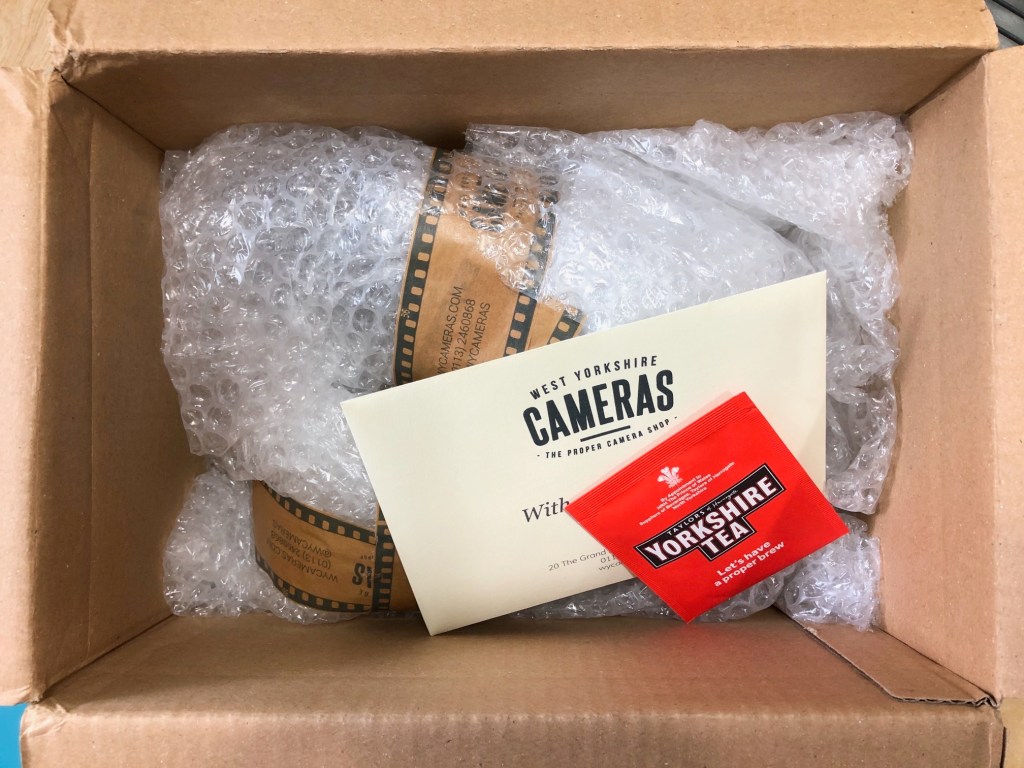
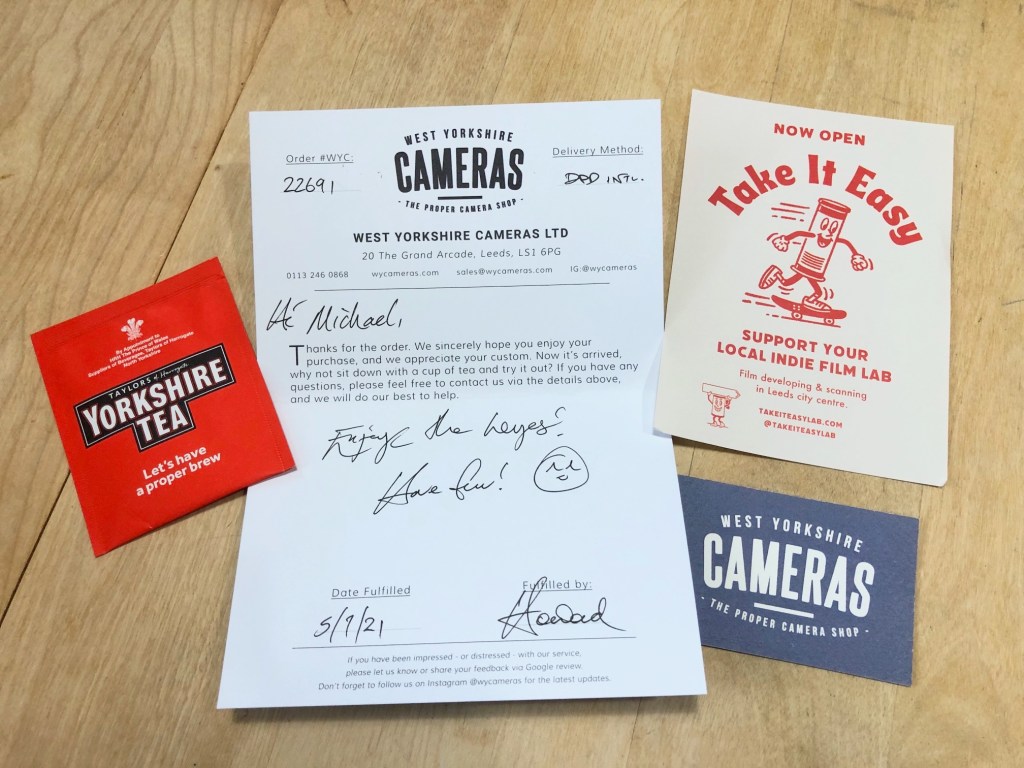
I have had a number of good experiences when shopping at online stores. The first one was with the Vintage & Classic Camera Co., on Hayling Island near Portsmouth (UK). I bought an Exakta Varex 11a, and the experience was extremely good. Listings are well described, with ample photographs and a condition reported (as a percentage). The second was a recent experience with West Yorkshire Cameras, arguably one of the premium retailers for vintage camera gear. I have also bought lenses from a number of resellers on Etsy and eBay. Etsy provides access to resellers from all over the globe, and vintage products have to be a minimum of 20 years. I have bought some Russian lenses from Aerarium (Ukraine), cameras from Coach Haus Vintage (Toronto, Canada) and Film Culture (Hamilton, Canada). If you are looking for Japanese vintage cameras, I can also recommend Japan Vintage Camera based in Tokyo, who have an Etsy store as well.

What makes a good store?

A good vintage camera reseller will be one who lives and breathes vintage cameras. Typically they might have an Instagram account, offer weekly updates of new inventory, and service/inspect the equipment before even advertising it. If there should be something wrong with an item when you receive it, the reseller should make it good (I mean things do get missed). A good online store will have listings which describe the lens/camera in detail while listing any defects, provide a good series of photographs showing the camera from different angles, and some sort of grading criteria. Ideally the store should also provide some basic information on shipping costs.

Regardless of the store, always be sure to Google them and check online reviews. Don’t be swayed by a cool website, if there is a lack of customer service you won’t want to shop there. Sometimes the company has a Google review, or perhaps a review on Trustpilot. If there are enough negative reviews, then it is safe to say there is likely some truth to them. For example a company that posts 70% bad reviews is one to avoid, regardless of the amount of inventory on their site, how quickly it is updated, or how aesthetically pleasing the website looks. I had an extremely poor experience with a British online reseller that has an extremely good website with weekly updates of inventory. I had purchased a series of vintage lenses in Nov.2020. After one month they had not shipped, after two also nothing. I conversed with the owner twice during the period and each time the items were going to be “shipped tomorrow”. To no avail, after 5 months, I finally submitted a refund request with Paypal, which was duly processed. I have since written a review, which wasn’t favourable, but then neither were 90% of the reviews for that particular reseller.

The website Light Box has a whole list of places to buy film cameras and lenses in the UK, including a section named “Caution advised”, outlining those to avoid. I have created a listing of various stores in the Vintage Lenses etc. page.

Stores by region

Geographical locations do play a role in where to purchase vintage camera equipment. For example during the early decades of the post-war camera boom, there were two core epicentres of camera design and manufacture: Europe (more specifically both East and West), and Japan. So if you are interested in cameras/lenses from these regions, then stores within those geographical locales might offer a better selection. For example there are quite a few vintage camera resellers on Etsy from Ukraine and Russia. This makes sense considering cameras like FED were made in factories in Kharkov, Ukraine. Interested in Pentax or any number of Japanese vintage lenses, then resellers from Japan make sense. There are a lot of good camera stores in places that have few links to manufacturing, but may have had a good consumer base, e.g. UK and the Netherlands. The trick of course is being able to navigate the sites. Many Japanese stores have online presence, but very few provide an English-language portal.

The effect of crop sensors on lenses

Lenses used on crop-sensor cameras are a little different to those of full-frame cameras. Mostly this has to do with size – because the sensor is smaller, the image circle doesn’t need to be as large, and therefore less glass is needed in their construction. This allows crop-sensor lenses to be more compact, and lighter. The benefit is that for lenses like telephoto, a smaller size lens is required. A 300mm FF equivalent in MFT only needs to be 150mm. But what does focal-length equivalency mean?

Focal-Length Equivalency

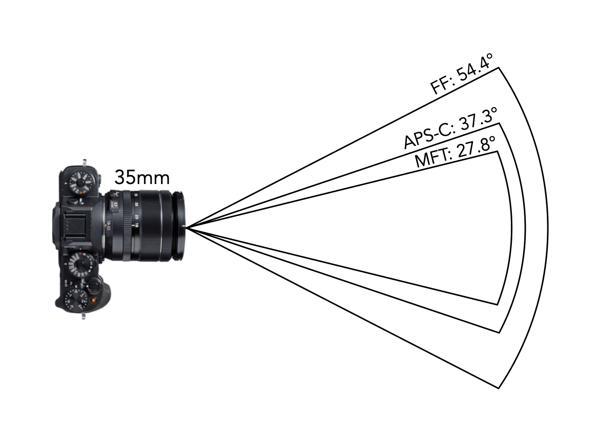
The most visible effect of crop-sensors on lenses is the angle-of-view (AOV), which is essentially where the term crop comes from – the smaller sensor’s AOV is a crop of the full frame. Take a photograph with two cameras: one with a full-frame and another with an APS-C sensor, from the same position using lens with the same focal lengths. The camera with the APS-C sensor will have a more narrowed AOV. For example a 35mm lens on a FF camera has the same focal length as a FF on an MFT or APS-C camera, however the AOV will be different on each. An example of this is shown in Fig.1 for a 35mm lens (showing horizontal AOV).

Fig.1: AOV for 35mm lenses on FF, APS-C, and MFT

Now it should be made clear that none of this affects the focal length of the lens. The focal length of a lens remains the same – regardless of the sensor on the camera. Therefore a 50mm lens in FF, APS-C or MFT will always have a focal length of 50mm. What changes is the AOV of each of the lenses, and consequently the FOV. In order to obtain the same AOV on a cropped-sensor camera, a new lens with the appropriate focal length must be chosen.

Manufacturers of crop-sensors like to use the term “equivalent focal length“. Now this is the focal length AOV as it relates to full-frame. So Olympus says that a MFT lens with a focal length of 17mm has a 34mm FF equivalency. It has an AOV of 65° (diagonal, as per the lens specs), and a horizontal AOV of 54°. Here’s how we calculate those (21.64mm is the diagonal of the MFT sensor, which is 17.3×13mm in size):

  • 17mm MFT lens → 2*arctan(21.64/(2*17)) = 65° (diag)
  • 17mm MFT lens → 2*arctan(17.3/(2*17)) = 54° (hor)
  • 34mm FF lens → 2*arctan(36/(2*34)) = 55.8° (hor)

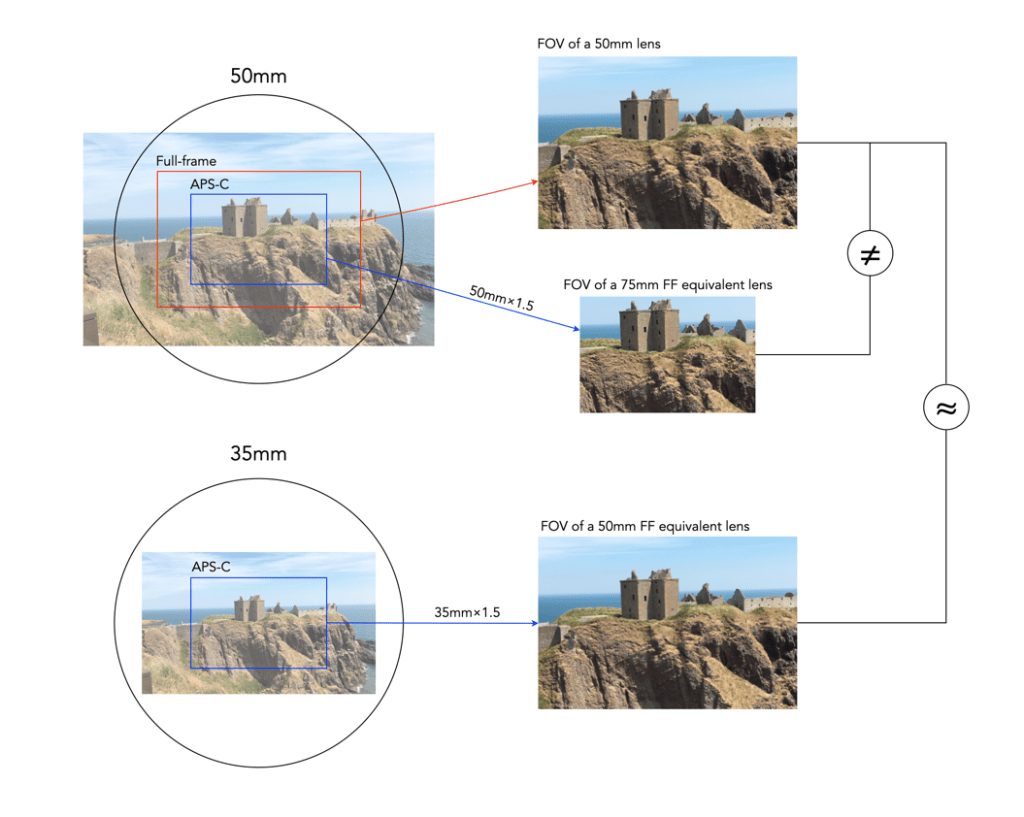
So a lens with a 17mm focal length on a camera with a 2.0× crop factor MFT sensor would give an AOV equivalent of to that of a 34mm lens. An APS-C sensor has a crop factor of ×1.5, so a 26mm lens would be required to give an AOV equivalent of the 34mm FF lens. Figure 2 depicts the differences between 50mm FF and APS-C lenses, and the similarities between a 50mm FF lens and a 35mm APS-C lens (which give approximately the same AOV/FOV).

Fig.2: Example of lens equivalencies: FF vs. APS-C (×1.5)

Interchangeability of Lenses

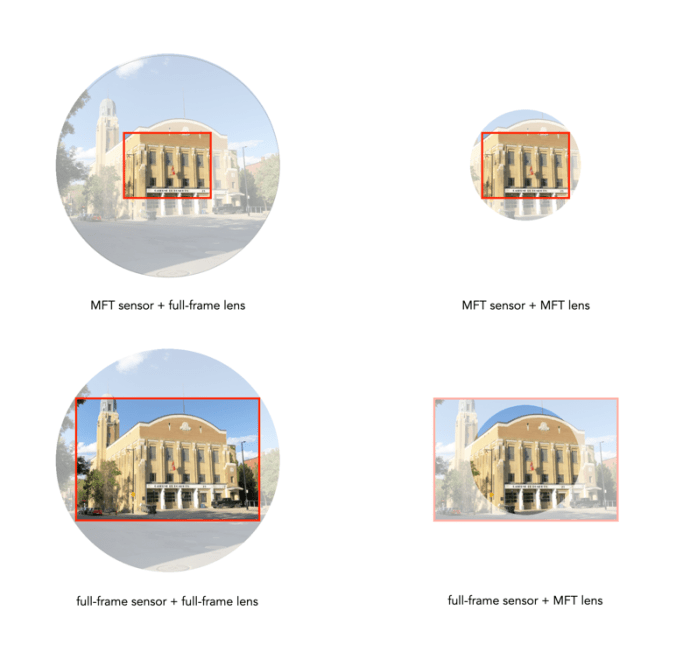
On a side note, FF lenses can be used on crop-sensor cameras because the image circle of the FF lens is larger than the crop sensor. The reverse is however not possible, as a CS lens has a smaller image circle than a FF sensor. The picture below illustrates the various combinations of FF/MFT sensor cameras, and FF/MFT lenses.

Fig.3:The effect of interchanging lenses between FF and crop sensor cameras.

Of course all this is pointless if you don’t care about comparing your crop-sensor camera to a full-frame camera.

NOTE: I tend to use horizontal AOV rather than the manufacturers more typical diagonal AOV. It makes more sense because I am generally viewing a scene in a horizontal context.

Are black-and-white photographs really black and white?

Black-and-white photography is somewhat of a strange term, because it alludes to the fact that the photograph is black-AND-white. However black-and-white photographs if interpreted correctly would mean an image which contains only black and white (in digital imaging terms a binary image). Alternatively they are sometimes called monochromatic photographs, but that too is a broad term, literally meaning “all colours of a single hue“. This means that cyanotype and sepia-tone prints, are also to be termed monochromatic. A colour image that contains predominantly bright and dark variants of the same hue could also be considered monochromatic.

Using the term black-and-white is therefore somewhat of a misnomer. The correct term might be grayscale, or gray-tone photographs. Prior to the introduction of colour films, B&W film had no designation, it was just called film. With the introduction of colour film, a new term had to be created to differentiate the types of film. Many companies opted for the use terms like panchromatic, which is an oddity because the term means “sensitive to all visible colors of the spectrum“. However in the context of black-and-white films, it implies a B&W photographic emulsion that is sensitive to all wavelengths of visible light. Afga produced IsoPan and AgfaPan, and Kodak Panatomic. Differentially, colour films usually had the term “chrome” in their names.

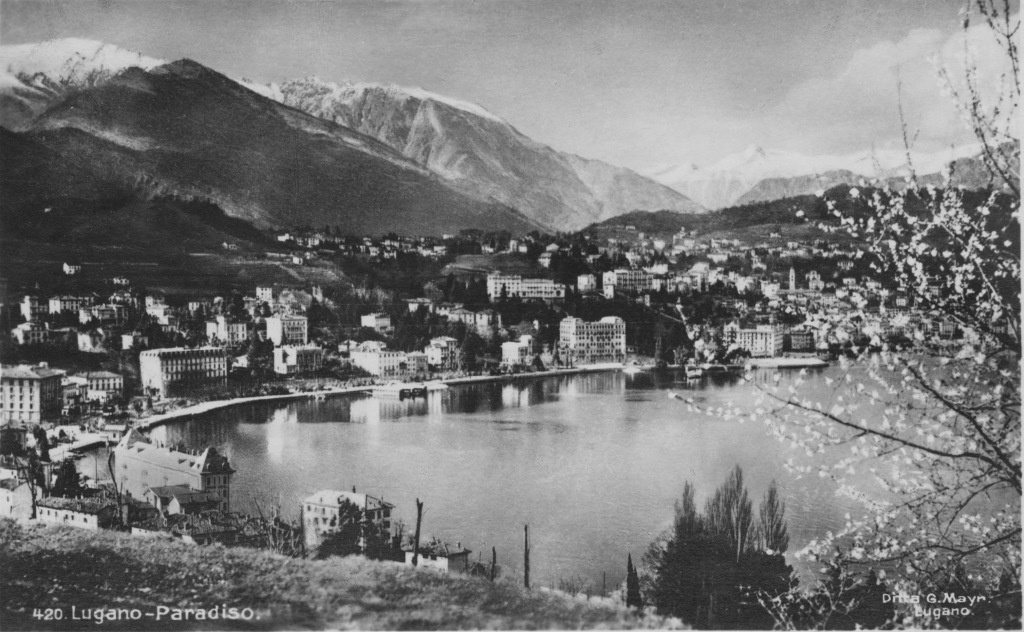
Fig.1: A black-and-white image of a postcard

All these terms have one thing in common, they represent the shades of gray across the full spectrum from light to dark. In the digital realm, an 8-bit grayscale image has 256 “shades” of gray, from 0 (black) to 255 (white). A 10-bit grayscale image has 1024 shades, from 0→1023. The black-and-white image shown in Fig.1 illustrates quite aptly an 8-bit grayscale image. But grays are colours as well, albeit without chroma, so they would be better termed achromatic colours. It’s tricky because a colour is “a visible light with a specific wavelength”, and neither black nor white are colours because they do not have specific wavelengths. White contains all wavelengths of visible light and black is the absence of visible light. Ironically, true blacks and true whites are rare in photographs. For example the image shown in Fig.1 only contains grayscale values ranging from 24..222, with few if any blacks or whites. We perceive it as a black-and-white photograph only because of our association with that term.

Myths about travel photography

Travel snaps have been around since the dawn of photography. Their film heyday was likely the 1950s-1970s when photographs taken using slide film were extremely popular. Of course in the days of film it was hard to know what your holiday snaps would look like until they were processed. The benefit of analog was of course that most cameras offered similar functionality, with the aesthetic provided by the type of film used. While there were many differing lenses available, most cameras came with a stock 50mm lens, and most people travelled with a 50mm lens, possibly a wider lens for landscapes, and later zoom lenses.

With digital photography things got easier, but only in the sense of being able to see what you photograph immediately. Modern photography is a two-edged sword. On one side there are a lot more choices, in both cameras, and lenses, and on the other side digital cameras have a lot more dependencies, e.g. memory cards, batteries etc., and aesthetic considerations, e.g. colour rendition. Below are some of myths associated with travel photography, in no particular order, taken from my own experiences travelling as an amateur photographer. I generally travel with one main camera, either an Olympus MFT, or Fuji X-series APS-C, and a secondary camera, which is now a Ricoh GR III.

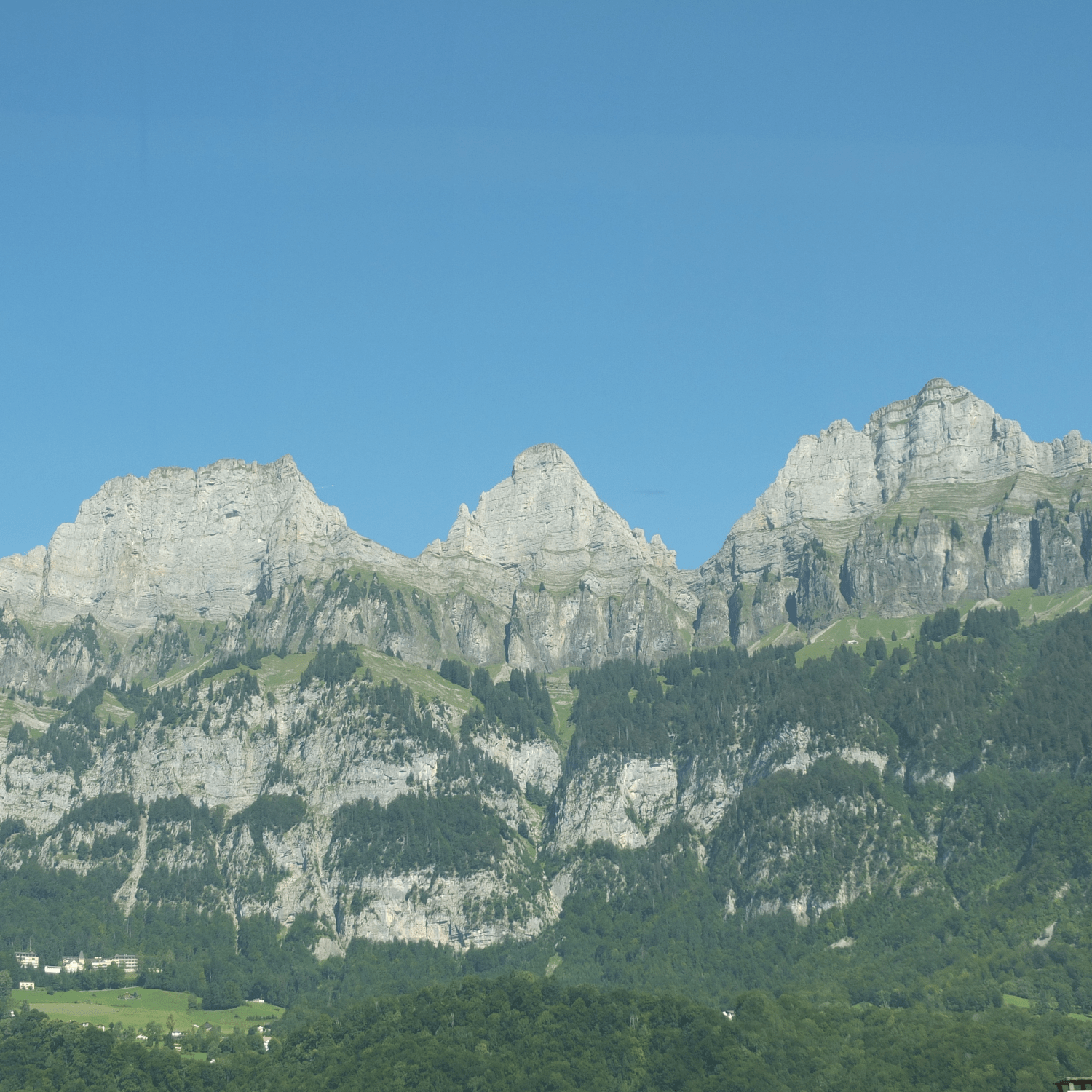
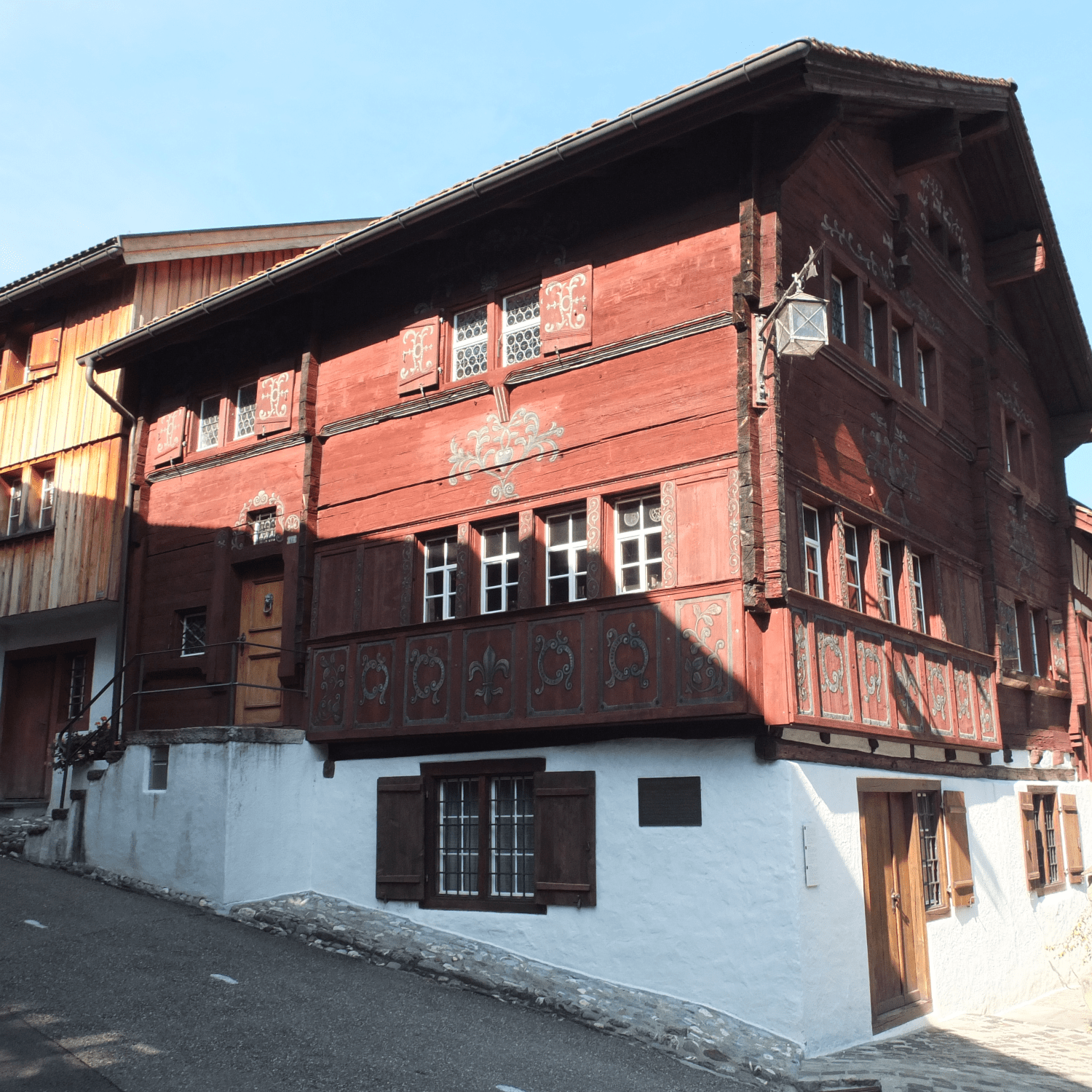
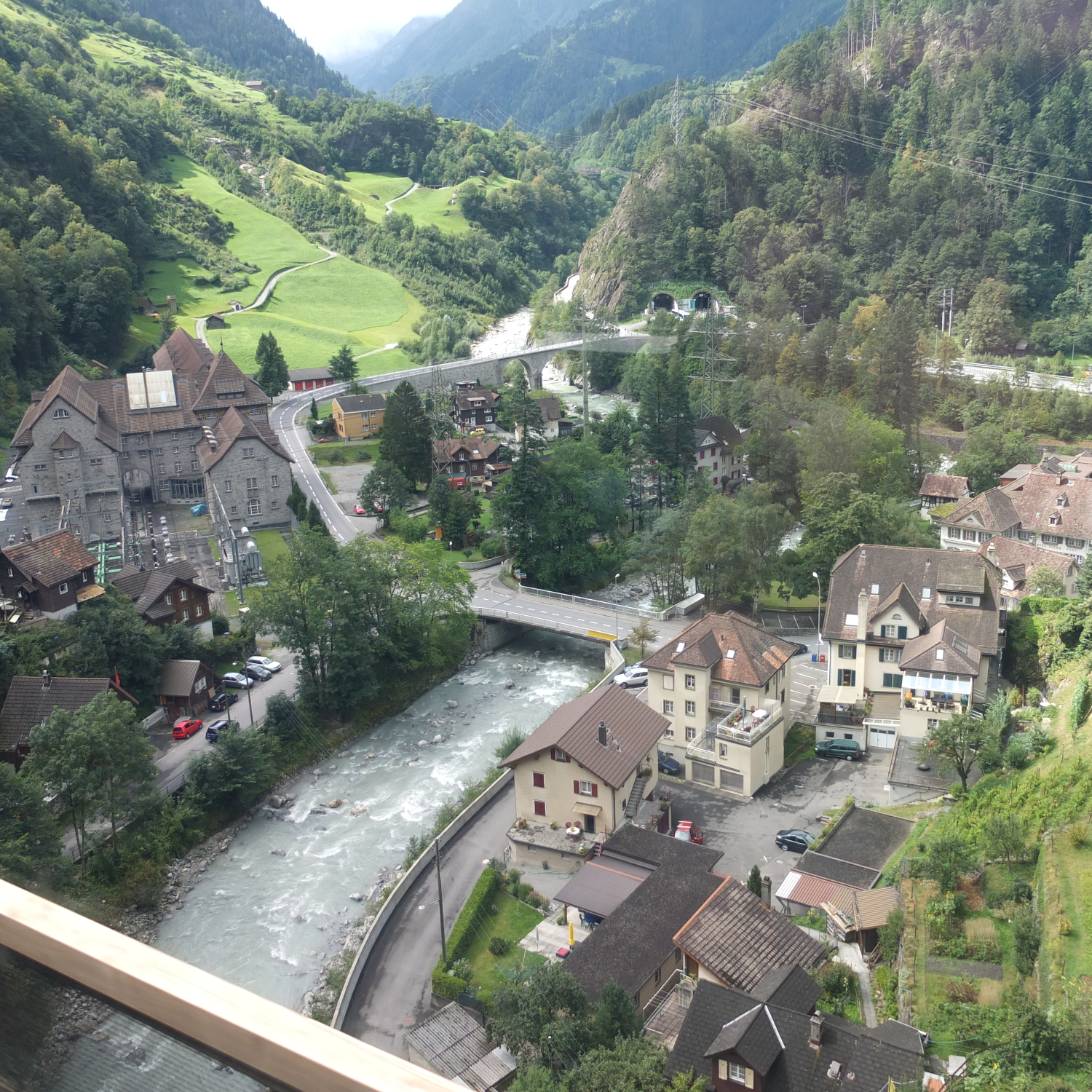
The photographs above illustrate three of the issues with travel photography – haze, hard shadows, and shooting photographs from a moving train.

MYTH 1: Sunny days are the best for taking photographs.

REALITY: A sunny or partially cloudy day is not always congenial to good outdoor photographs. It can produce a lot of glare, and scenes with hard shadows. On hot sunny days landscape shots can also suffer from haze. Direct sunlight in the middle of the day often produces the harshest of light. This can mean that shadows become extremely dark, and highlights become washed out. In reality you have to make the most of whatever lighting conditions you have available. There are a bunch of things to try when faced with midday light, such as using the “Sunny 16” rule, and using a neutral density (ND) filter.

MYTH 2: Full-frame cameras are the best for taking travel photography

REALITY: Whenever I travel I always see people with full-frame (FF) cameras sporting *huge* lenses. I wonder if they are wildlife or sports photographers? In reality it’s not necessary to travel with a FF camera. They are much larger, and much heavy than APS-C or MFT systems. Although they produce exceptional photographs, I can’t imagine lugging a FF camera and accessories around for days at a time.

MYTH 3: It’s best to travel with a bunch of differing lenses.

REALITY: No. Pick the one or two lenses you know you are going to use. I travelled a couple of times with an extra super-wide, or telephoto lens in the pack, but the reality is that they were never used. Figure out what you plan to photograph, and pack accordingly. A quality zoom lens is always good because it provides the variability of differing focal lengths in one lens, however fixed focal length lenses often produce a better photograph. I would imagine a 50mm equivalent is a good place to start (25mm MFT, 35mm APS-C).

MYTH 4: The AUTO setting produces the best photographs.

REALITY: The AUTO setting does not guarantee a good photograph, and neither does M (manual). Ideally shooting in P (program) mode probably gives the most sense of flexibility. But there is nothing wrong with using AUTO, or even preset settings for particular circumstances.

MYTH 5: Train journeys are a great place to shoot photographs.

REALITY: Shooting photographs from a moving object, e.g. a train requires the use of S (shutter priority). You may not get good results from a mobile device, because they are not designed for that. Even using the right settings, photographs from a train may not always seem that great unless the scenery allows for a perspective shot, rather than just a linear shot out of the window, e.g. you are looking down into valleys etc. There is issues like glare, and dirty windows to contend with.

MYTH 6: A flash is a necessary piece of equipment.

REALITY: Not really for travelling. There are situations you could use it, like indoors, but usually indoor photos are in places like art galleries and museums who don’t take kindly to flash photography, and frankly it isn’t needed. If you have some basic knowledge it is easy to take indoor photographs with the light available. Even better this is where mobile devices tend to shine, as they often have exceptional low-light capabilities. Using a flash for landscapes is useless… but I have seen people do it.

MYTH 7: Mobile devices are the best for travel photography.

REALITY: While they are certainly compact and do produce some exceptional photographs, they are not always the best for travelling. Mobile devices with high-end optics excel at certain things, like taking inconspicuous photographs, or in low-light indoors etc. However to get the most optimal landscapes, a camera will always do a better job, mainly because it is easier to change settings, and the optics are clearly better.

MYTH 8: Shooting 1000 photographs a day is the best approach.

REALITY: Memory is cheap, so yes you could shoot 1000 frames a day, but is it the best approach? You may as well strap a Go-Pro to your head and video tape everything. At the end of a 10-day vacation you could have 10,000 photos, which is crazy. Try instead to limit yourself to 100-150 photos a day, which is like 3-4 36 exposure rolls of film. Some people suggest less, but then you might later regret not taking a photo. There is something about limiting the amount of photos you take and instead concentrate on taking creative shots.

MYTH 9: A tripod is essential.

REALITY: No, its not. They are cumbersome, and sometimes heavy, and the reality is that in some places, e.g. atop the Arc de Triomphe, you can’t use a tripod. Try walking around the whole day in a city like Zurich during the summer, lugging a bunch of camera gear, *and* a tripod. For a good compromise, consider packing a pocket tripod such as the Manfrotto PIXI. In reality cameras have such good stabilization these days that in most situations you don’t need a tripod.

MYTH 10: A better camera will take better pictures.

REALITY: Unlikely. I would love to have a Leica DLSR. Would it produce better photographs? Maybe, but the reality is that taking photographs is as much about the skill of the photographer than the quality of the camera. Contemporary cameras have so much technology in them, learn to understand it, and better your skills before thinking about upgrading a camera. There will always be new cameras, but it’s hard to warrant buying one.

MYTH 11: A single battery is fine.

REALITY: Never travel with less than two batteries. Cameras use a lot of juice, because features like image stabilization, and auto-focus aren’t free. I travel with at least 3 batteries for whatever camera I take. Mark them as A, B, and C, and use them in sequence. If the battery in the camera is C, then you know A and B need to be recharged, which can be done at night. There is nothing worse than running out of batteries half-way through the day.

MYTH 12: Post-processing will fix any photos.

REALITY: Not so, ever heard of the expression garbage-in, garbage-out? Some photographs are hard to fix, because not enough effort was taken when they were taken. If you take a photograph of a landscape with a hazy sky, it may be impossible to post-process it.

The facts about camera aspect ratio

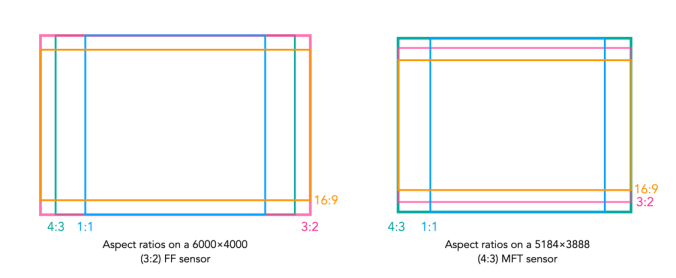
Digital cameras usually come with the ability to change the aspect ratio of the image being captured. The aspect ratio has a little to do with the size of the image, but more to do with its shape. The aspect ratio describes the relationship between an image’s width (W) and height (H), and is generally expressed as a ratio W:H (the width always comes first). For example a 24MP sensor with 6000×4000 pixels has an aspect ratio of 3:2.

Choosing a different sized aspect ratio will change the shape of the image, and the number of pixels stored in it. When using a different aspect ratio, the image is effectively cropped with the pixels outside the frame of the aspect ratio thrown away. 

The core forms of aspect ratios.

The four most common examples of aspect ratios are:

  • 4:3
    • Used when photos to be printed are 5×7″, or 8×10″.
    • Quite good for landscape photographs.
    • The standard ratio for MFT sensor cameras.
  • 3:2
    • The closest to the Golden Ratio of 1.618:1, which makes things appear aesthetically pleasing.
    • Corresponds to 4×6″ printed photographs.
    • The default ratio for 35mm cameras, and many digital cameras, e.g FF, APS-C sensors.
  • 16:9
    • Commonly used for panarama’s, or cinematographic purposes.
    • The most common ratio for video formats, e.g. 1920×1080
    • The standard aspect ratio of HDTV and cinema screens.
  • 1:1
    • Used for capturing square images, and to simplify scenes.
    • The standard ratio for many medium-format cameras.
    • Commonly used in social media, e.g. Instagram.

How an aspect ratio appears on a sensor is dependent on the sensors default aspect ratio.

Aspect ratios visualized on different sensors.

Analog 35mm cameras rarely had the ability to change the aspect ratio. One exception to the rule is the Konica Auto-Reflex, a 35mm camera with the ability to switch between full and half-frame (18×24mm) in the middle of a roll of film. It achieved this by moving a set of blinds in to change the size of the exposed area of the film plane to half-frame.

FOV and AOV

Photography, like many fields is full of acronyms, and sometimes two terms seem to merge into one, when the reality is not the case. DPI, and PPI for instance. Another is FOV and AOV, representing Field-Of-View, and Angle-Of-View respectively. Is there a difference between the two, or can the terms be used interchangeably? As the name suggests, AOV relates to angles, and FOV measures linear distance. But look across the net and you will find a hodge-podge of different uses of both terms. So let’s clarify the two terms.

Angle-of-View

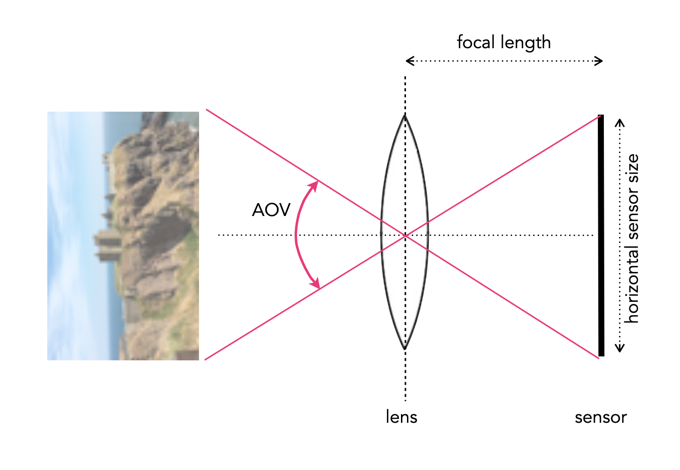
The Angle-of-view (AOV) of a lens describes the angular coverage of a scene. It can be specified as a horizontal, vertical, or diagonal AOV. For example, a 50mm lens on a 35mm film camera would have a horizontal AOV of 39.6°, a vertical AOV of 27°, and a diagonal AOV of 46.8°. It can be calculated using the following formula (calculated in degrees):

      AOV = 2 × arctan(SD / (2×FL)) × (180 / π)°

Here SD represents the dimension of the sensor (or film) in the direction being measured, and FL is the focal length of the lens. For example a full-frame sensor will have a horizontal dimension that is 36mm, so SD=36. A visual depiction of a horizontal AOV is shown in Figure 1.

Fig.1: A horizontal AOV

A short focal length will hence produce a wide angle of view. Consider the Fuji XF 23mm F1.4 R lens. The specs give it an AOV of 63.4°, if used on a Fuji camera with an APS-C sensor (23.6×15.6mm). Using this information the equation works well, but you have to be somewhat careful because manufacturers often specify AOV for the diagonal, as is the case for the lens above. The horizontal AOV is 54.3°.

Field-of-View

The Field-of-view (FOV) is a measurement of the field dimension a lens will cover at a certain distance from the lens. The FOV can be described in terms of horizontal, vertical or diagonal dimensions. A visual depiction of a horizontal FOV is shown in Figure 2.

Fig.2: A horizontal FOV

To calculate it requires the AOV and the distance to the subject/object. It can be calculated with this equation:

      FOV = 2 ( tan(AOV/2) × D )°

Here D is the distance from the object to the lens. Using this to calculate the horizontal FOV for an object 100ft from the camera, using the AOV as 0.9477138 radians (54.3°). The FOV=102 feet. It does not matter if the value of D is feet or metres, as the result will be in the same units. There is another formula to use, without the need for calculating the AOV.

      FOV = (SD × D)/FL

For the same calculation (horizontal FOV) using SD=23.6, FL=23mm, D=100ft, the value calculated is 102ft.

Shorter focal lengths will have a higher FOV than longer focal lengths, hence the reason why wide-angle lenses have such as broad FOV, and telephoto lens have a narrow FOV. A visual depiction of a the effect of differing focal lengths is shown in Figure 3.

Fig.3: FOV changes with focal length

FOV also changes with sensor size, as the dimension of the sensor, SD, changes. A visual depiction of the effect of differing sensor sizes on FOV is shown in Figure 4. Here two different sized sensors use lenses with differing focal lengths to achieve the same FOV.

Fig.4: FOV changes with sensor size

AOV versus FOV

The AOV remains constant for a given sensor and lens, whereas the FOV varies with the distance to the subject being photographed.

Quite a good AOV/FOV visualizer can be found here.

What is a snapshot?

The term snapshot is an interesting one. In reality all snapshots are photographs, but not all photographs are snapshots. A snapshot is almost an unexpected photograph, one taken quickly without thinking about it too much, and often in a surreptitious manner – an abrupt artifact. Snapshots are ubiquitous with small, pocket-cameras, like the Ricoh GR series, or even mobile phone cameras (although it just isn’t the same). Once a camera is set up using a tripod, or the camera itself is a behemoth dSLR, the whole atmosphere of taking a photograph changes. Often the thing that is to be photographed has already happened, the moment passed. Snapshots involving people also change as they become more self-aware. It’s hard to get a candid shot. Paul Strand [1] suggested that a snapshot is “when it becomes necessary to stop movement“.

A snapshot of the Hotel Spiezerhof in Spiez (Switzerland) taken from a ship moving on the lake, circa 1935.

For the first decades of the photograph, the snapshot did not really exist, for a number of reasons, both technological and sociological. From the 1840s to the turn of the century, the more formal portrait photograph was the mainstay. Cameras were slow, and although the “nuclear” family was considered a well developed entity, casual family life was not really considered a good basis for photographic subject matter. As Steven Halpern [2] suggests the portrait was a means for the masses to achieve a cultural identity. In 1878 Charles Haper Bennett discovered how to sensitize dry gelatin plates, a process which allowed exposures of 1/20th of a second or less. It was now possible to stop movements. The last two decades of the 19th century followed a series of innovations such as handheld cameras, roll film and the astigmat lens, culminating in the Kodak Brownie, which made photography available to everyone. Family life had also changed, and while the portrait had focused on the individual, the snapshot characterized the interaction of the whole family, in a much more laid-back manner.

A snapshot taken from the window of a moving VIARail train in Montreal using an iPhone.

Snapshots are interesting in scenes where there is movement, or change, a visual record of something that won’t happen the same way again. Taking pictures in a downtown core is a great example. Stand at a cross-walk and watch the movement of people. A snapshot will freeze the movement of people, but it is by no means an exact art. People can be partially in focus, partially blurred, or obscured. In that respect a snapshot means short exposures, using a fast shutter speed, and in the case of film, a high ISO film. Long exposures are by no means snapshots. Any photograph that stops movement could therefore be considered a snapshot.

[1] Paul Strand, The Snapshot, Aperture, 19(1), p.49 (1974)
[2] Steven Halpern, The Snapshot, Aperture, 19(1), p.65 (1974)

Camera versus binocular optics in Hitchcock’s “Rear Window”

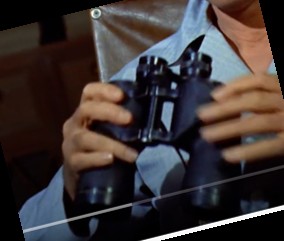
The other interesting thing about Hitchcock’s “Rear Window” is the fact that the binocular shots, and the camera shots appear the same. Again we could mark this down to artistic license, but there are inherently some issues which persist from an optical point-of-view. Firstly, what kind of binoculars are they? Little is written in the literature about the brand, so that requires a little investigative work.

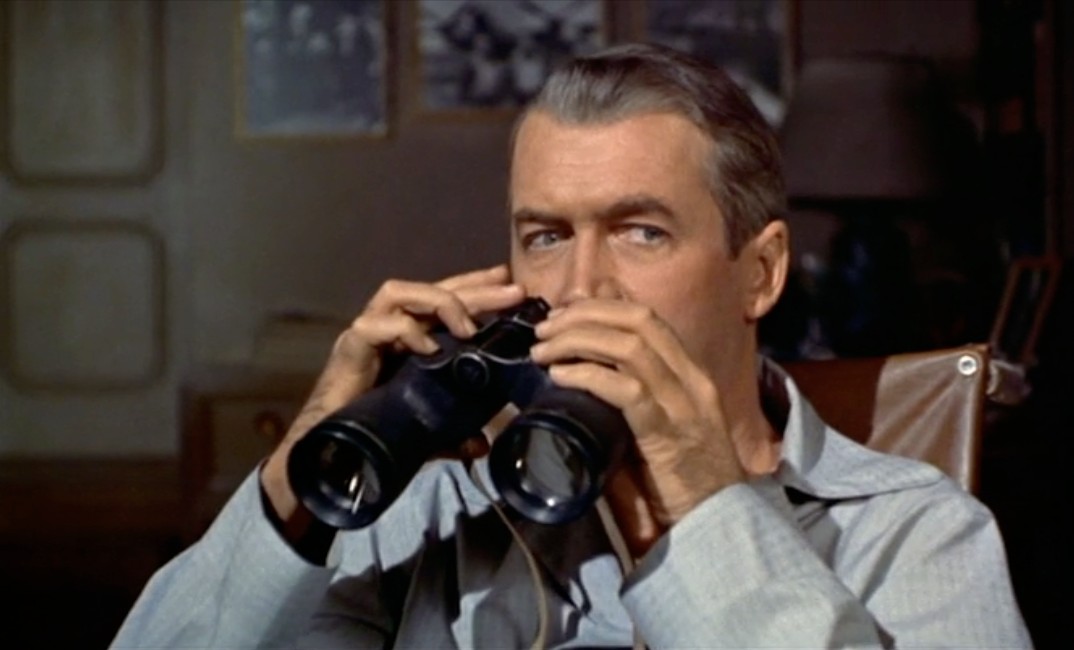
Jeff with his binoculars in Rear Window

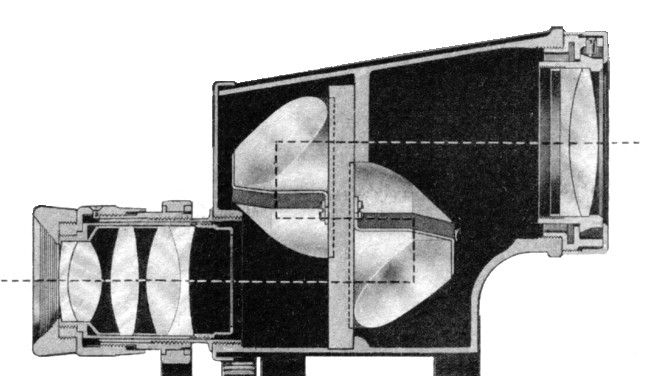
The most telling feature of these binoculars is that these are porro prism binoculars. In Porro prism Binoculars the objective or front lens is offset from the eyepiece. This offset is often characterized by a cap, which terminates the transition from ocular to objective lens.

The cross-section of half of a binocular. showing the transition from ocular (left) to objective (right) lens.

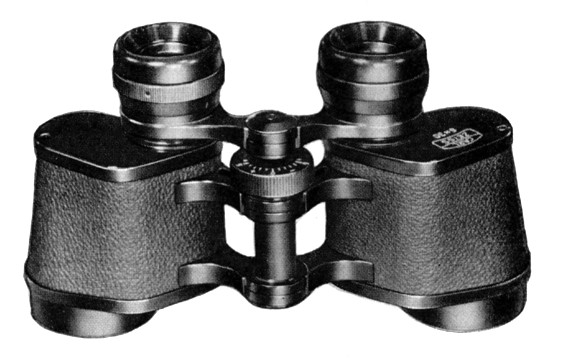
With some manufacturers, the transition seems to be smooth, with streamlined curves. There are a couple of brands that stand out in this respect: Bausch and Lomb (USA), Bushnell (USA), Cadillac (USA, made in Japan). Brands like Zeiss on the other hand, had a capped, “hard” transition.

A pair of Zeiss binoculars, showing the hard black “caps” covering the lenses.

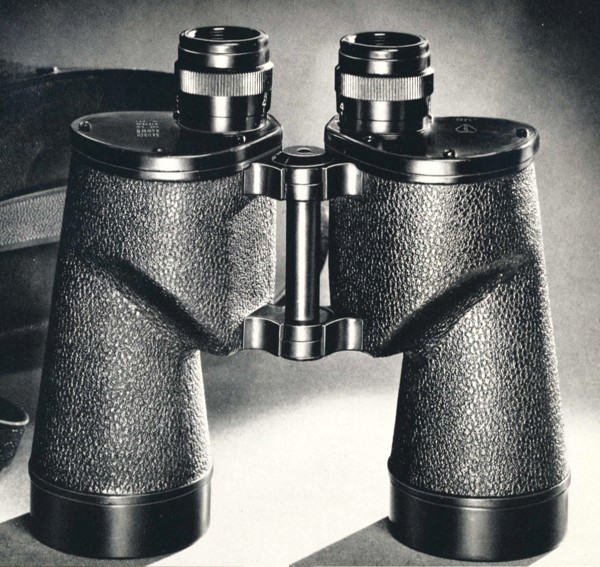
Beyond this, it is hard to tell what brand they were, because those markings would be on the front of the binoculars. More important are likely the power of magnification (how many times closer you are to the thing you are viewing), and the objective diameter of the lens. After doing some comparative measurements of the binoculars in the movie, with those in a early 1950s Bausch and Lomb catalog, I would guesstimate that these are the 7×50 binoculars, i.e. objective diameter was 50mm, and the power of magnification 7 times. A 400mm lens has a magnification factor of ×8, so binoculars with a power of ×7-8 would make sense (if we ignore the optical differences between binoculars and 35mm film lenses, e.g. cameras have a film plane, binoculars don’t).


A comparison of the binoculars in the movie, and the Bausch and Lomb 7×50 binoculars, circa early 1950s – notice the ergonomic flow of the lens parts.

The other factor which makes the B&L 7×50 the most likely candidate is that Bausch and Lomb supplied the US armed forces during WW2 (and Jeff was in the US Army Air Force), and this particular model was the Navy model, which had the “highest relative brightness of any binocular”, a so-called true “night glass”. So what are the issues between the 400mm camera lens and the binocular optics, assuming 7×50?

  • Field-of-View – The FoV of a 400mm lens is just over 5° (horizontal), which at 100′ distance (the width of the courtyard), translates to around 9 feet. The B&L 7×50 binoculars had a linear field of 381′ at 1000 yards, which would be about 12.7′ at 100′.
  • Full image circle – The camera would truncate the image circle of the lens to a rectangle, and therefore the maximum FoV is only possible along the diagonal of the frame. Binoculars allow you to see the full circle of the FoV and thus the maximum FoV in all directions. A 35mm camera with a 3:2 ratio only displays about 59% of an image circle with the same diameter as the diagonal of the rectangular image sensor.
  • Stereo Vision –  Binoculars allow both eyes to see slightly different angles of the same objects that allow use of depth perception. Other than specialized 3D cameras, most cameras are monocular.
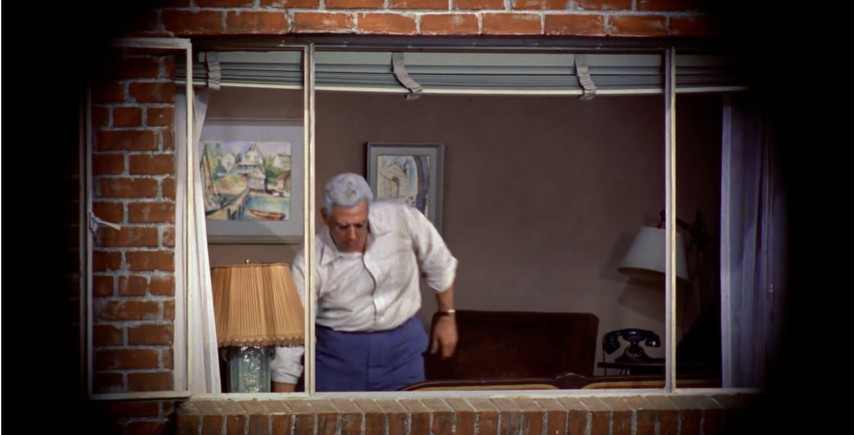
Rear Window: The view through the binoculars.

So Hitchcock’s use of both binoculars and a 35mm camera with a 400mm lens does take a lot of artistic license, because they are not the same, but portray the same thing on screen.

What is motion parallax?

Motion parallax is one of those perceptual things that you notice the most when looking out the window of a fast moving vehicle, like a train. It refers to the fact that objects moving at a constant speed across the frame will appear to move a greater amount if they are nearer to an observer (or camera) than they would if they were at a great distance (parallax = change in position). This phenomenon is true whether (i) the observer/camera is moving relative to the object, or (ii) object itself that is moving relative to the observer/camera. The rationale for this effect has to do with the distance the object moves with respect to the percentage of the camera’s field of view that it moves across. This helps provide perceptual cues about difference in distance and motion, and is associated with depth perception.

Consider the example below simulating taking a photograph out of a moving vehicle. The tree that is 300m away will move 20m in a particular direction (opposite the direction of the vehicle), but only traverse 25% of the field-of-view. The closer tree, which is only 100m away will move out of the frame completely with the same 20m displacement.

Motion parallax is an attribute of perception, so it exists in real scenes, but not when one views a photograph. Can a photograph contain artifacts of motion parallax? Yes, and it is easy – just take a photograph from a moving vehicle (trains are best), using a relatively slow shutter speed. The picture below was taken on the VIA train to Montreal, using my iPhone pressed up against the glass, with the focus plane approximately in the middle of the window.