Prime vs. zoom lenses − Help with choosing a lens

Trying to choose between a zoom and a prime lens can be challenging, mainly because they probably shouldn’t be compared in the first place. Basically they offer different outcomes. A prime is almost a lens specialized for a particular task, whereas a zoom can be more of a “jack-of-all-trades”. There are also different types of each of these lenses. There are expensive fast primes, and less-expensive primes with a slower maximum aperture. There are also native primes from the camera manufacturer, and third-party primes. The same criteria can be applied to zoom lenses. Table 1 summarizes some of the key differences between prime and zoom lenses.

characteristicprimezoom
price+ simple build, less expensive− complex build, more expensive
aperture+ brighter, wider aperture (faster)
e.g. f/1.2 to f/2
− darker, narrower aperture (slower)
sharpness+ sharper images, fewer optical deficiencies− less sharpness, some distortion
versatility− less versatile+ more versatile
size and weight+ lighter and more compact
− have to carry more lenses
− bulkier and heavier
+ need to carry fewer lenses
Table 1: Key differences between prime and zoom

A zoom provides a level of flexibility that a prime does not, but this comes with some trade-offs. The first thing a zoom lens typically gives up is speed, i.e. how wide the aperture opens up. Prime lenses on the other hand are fast, and some are super-fast. Note that prime lenses are nearly always smaller and lighter than zooms. Many things influence the size and weight of a lens including whether it is a pro-grade lens (often contain more glass), or whether it has a large maximum aperture (again requiring a bigger lens with more glass). Every lens has its pros and cons.

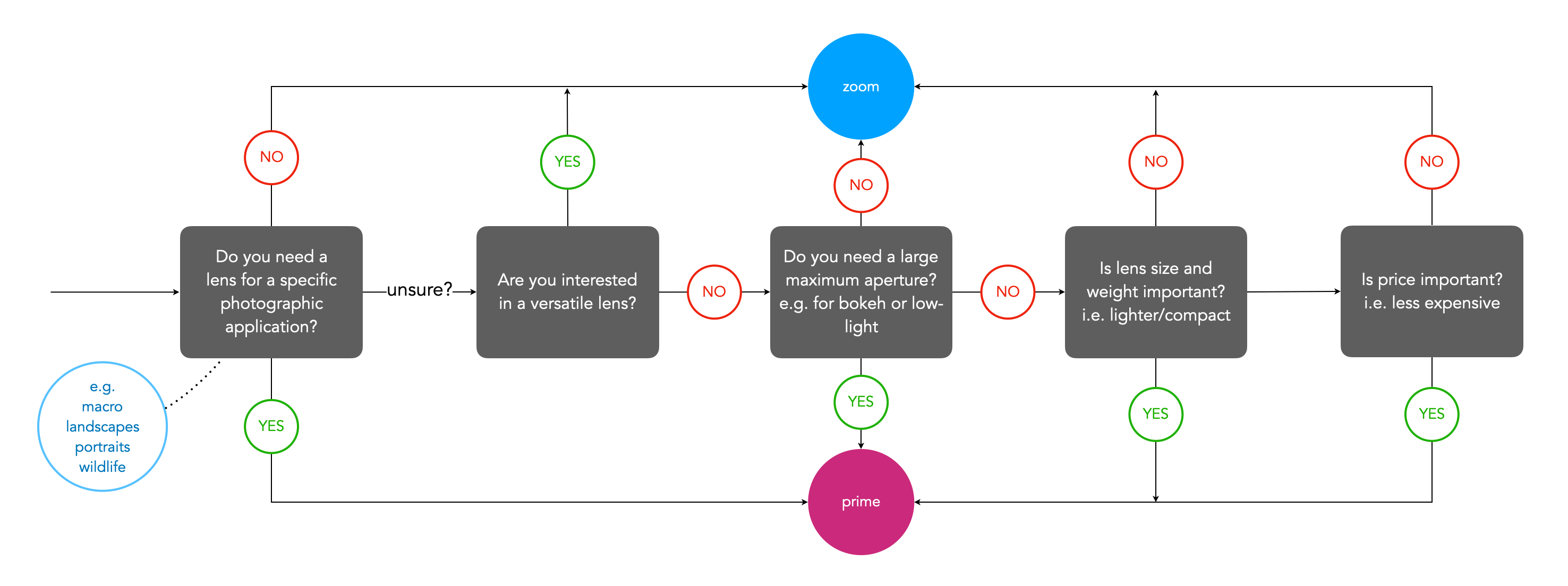
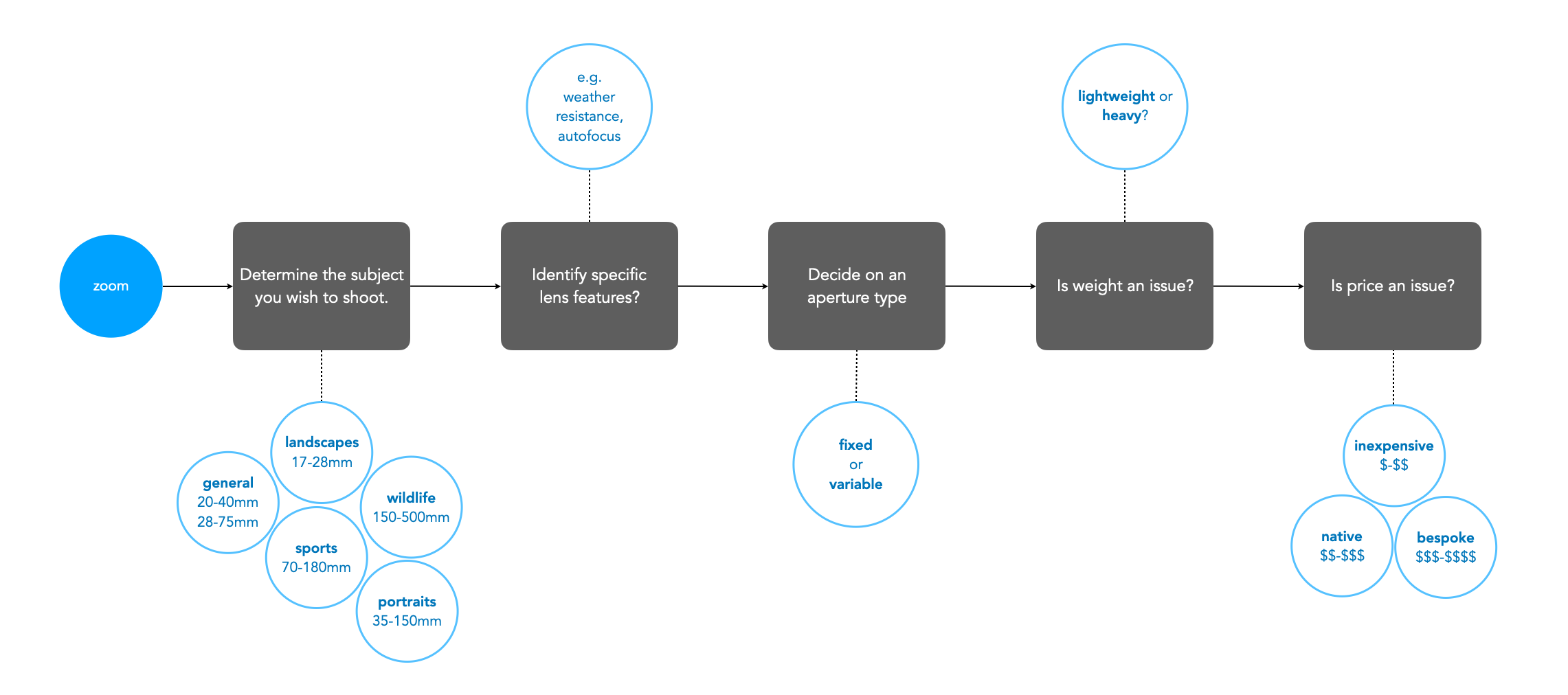
Fig.1: A very basic schema for choosing a prime or zoom lens

Despite the fact that prime lenses are often lauded for their specific nature, i.e. suited to one particular task, zoom lenses can also be categorized in this manner. For example someone might choose a 17-28mm full-frame lens for landscapes, providing some scope. In addition, although a good zoom lens may be more expensive than a prime, more prime lenses may be needed to equal the range of coverage, thereby leading to more cost. There are also some lenses that don’t work very well as a zoom, e.g. fish-eye lenses.

When selecting a prime lens it is often the case of deciding on an application, and then which lens meets all the criteria. For example, a trip to Iceland may warrant a wide-angle lens that is weatherproof (because the weather can change every 5 minutes in Iceland) − in this case something like a 24mm ultra-wide would be optimal. Alternatively, some photographers might opt for even a wider lens, e.g. 16/18mm due to the ‘largeness’ of the landscape. Choosing a zoom lens on the other hand can be a little more challenging. This is because there are often a variety of options. For example, choosing a 50mm prime means you get a 50mm lens, with perhaps the only variability being the speed (maximum aperture) of the lens. But there may be more than one option for choosing a particular zoom lens. Figure 2 shows a flowchart which considers some of the main factors to consider when choosing a zoom lens.

Fig.2: Factors to consider when choosing a zoom lens

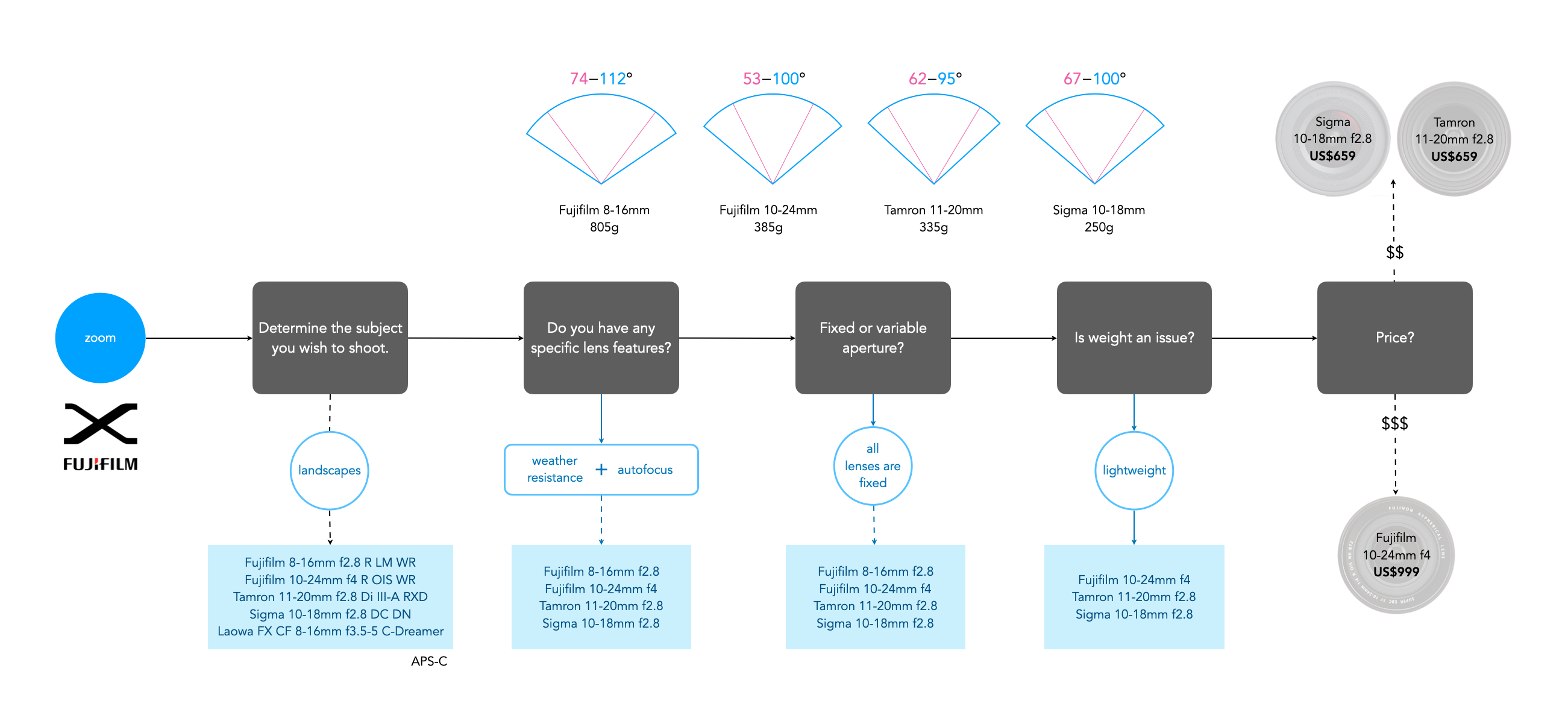
Figure 3 shows an example of choosing a wide zoom lens for a Fuji-X camera (APS-C), using the above factors. There isn’t that much difference between the lenses with respect to AOV (angle-of-view), but as each factor is considered, more lenses are filtered out. At the end only three of the five lenses satisfy the criteria considered, and then it comes down to price. If we were choosing this for the trip to Iceland then we might want the greatest flexibility in focal lengths, for example the Fujifilm 10-24mm (FF equivalent 15-36mm). If maximum aperture is an issue, then either the Tamron or Sigma are fine alternatives.

Fig.3: An example of choosing a Fuji (wide) zoom lens for landscape

There are some situations where one lens is just enough. Mountain enthusiast Jakub Cejpek talks about using the Fujifilm XF10-24mm/F4 on a mountain trek. He chose mirrorless for its ‘lightweight style’, and the 10-24mm lens for its versatility, knowing that changing lenses in impossible, ‘time is rare, and weather conditions are tough’.

Do you ✱need✱ a new lens?

Buying lenses can lead some to a phenomena known in many crafts as GAS, or Gear Acquisition Syndrome. In photography it refers to the compulsive need to buy more and more equipment, in particular, lenses.

How do you know if you have GAS? Well perhaps you have a bunch of lenses with overlapping focal lengths? Or a really expensive lens, such as an uber-fast f/1.2 lens that has sat on a shelf since the day you bought it? Do you have a tilt-shift or fish-eye lens that you used once or twice? Do you collect lenses from particular manufacturers just because you like things in sets? Then it’s likely that you are afflicted. This affliction may be worse if you have half a dozen camera bodies.

An inexpensive, fun, creative lens to shoot with.

It occurs because new lenses keep appearing, ones with new features, or just some sort of novelty (go on you really need that circular fish-eye, don’t you?). A lens that is just that little bit sharper, or even newer. Manufacturers often rely on lens GAS, because few people splurge out on a new camera body every year, but lenses, well that’s another matter altogether.

So how to decide when you need a lens? Here are some questions to ask yourself:

  • Do your current lenses inhibit your ability to be creative?
  • Is there a genre of photography you want to try which requires a new lens?
  • Will the lens be used more than once?
  • Is the lens affordable? (and is there more than one option)?

If you said yes to all the above, then it can probably be justified. Having said that, sometimes you just want a new lens, and there is certainly nothing wrong with that.

Where have all the lens names gone?

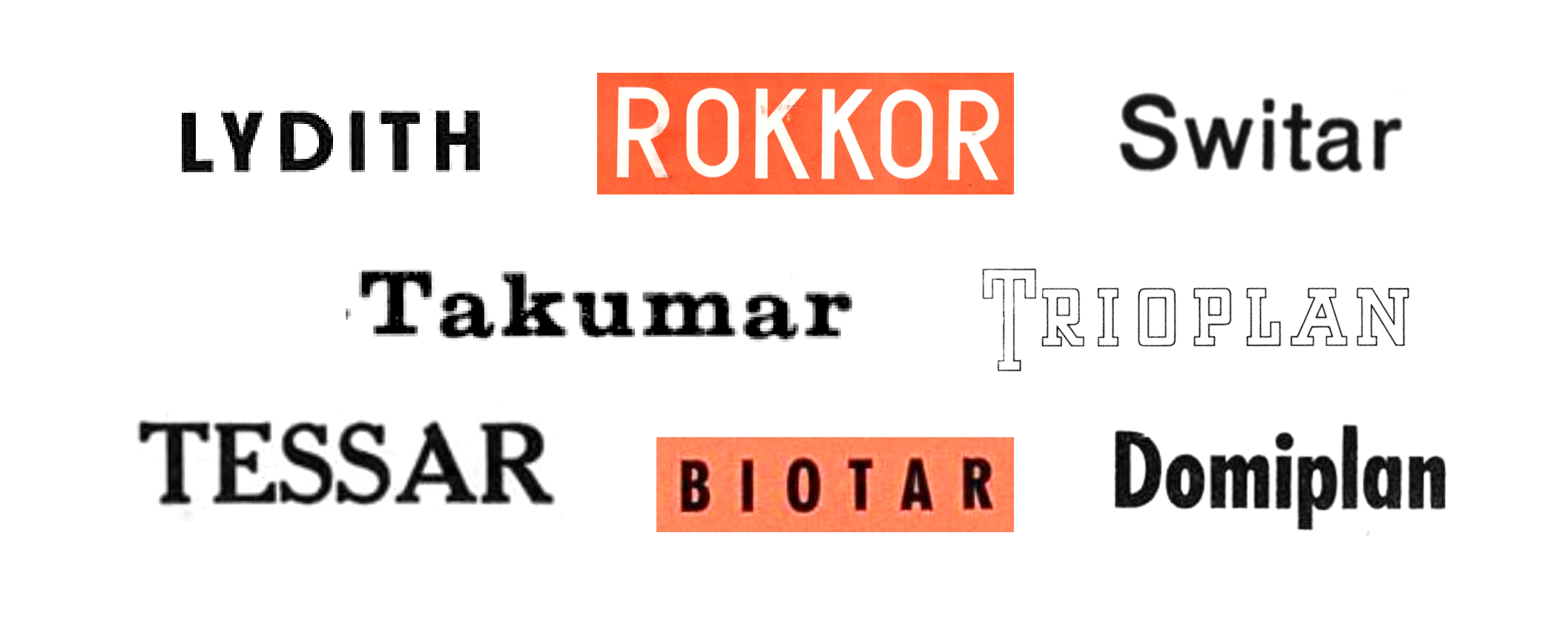
There was a time when lens manufacturers gave their lenses names − the likes of Pancolar (Zeiss Jena), Noctilux (Leica), Biotar (Zeiss), Switar (Kern). In some cases the names were derived from Latin words, which were meant to describe some intrinsic characteristic of the lens. For example Leica’s Summilux. The combination of ‘summi’ (meaning ‘highest point’) and ‘lux’ (Latin for ‘light’) results in the intimation of ‘maximum light’ – referring to the enhanced light-gathering abilities of these lenses. The name appeared in 1959, and has been a staple ever since.

Fig.1: Various historic lens names

But in the modern era, few companies do this anymore. There seem to be three exceptions: Leica, Zeiss, and Voigtländer, although to be honest, most Japanese companies did not give names to individual lenses. Asahi was the exception with the Takumar line, although it signified a time period and technology more than the characteristics of an individual lens. Leica still use names for historical families of lenses. Some of this may be tradition, helping users to identify certain characteristics of a lens just by reading the name. Zeiss is another company that still names its family of lenses, e.g. Touit (a small Brazilian parrot). Giving lens families names makes things a lot simpler, and also provides a better brand association. That’s why people still remember Zeiss’s Pancolar lenses, or Asahi’s Takumars.

Names existed to invoke some sort of an emotion. Like giving a lens a name gave it a sense of power. It is more likely to be remembered than the modern trend of adding a string of incomprehensible hieroglyphs of abbreviations – something most people forget in quiet quickly. But once you have heard of the legend that is the Pancolar, you are unlikely to forget it. The likes of Pancolar and Flektogon bring memories of lenses with exceptional background blur (aka bokeh), from East Germany. There are of course the classics of German lens design: Zeiss’s Tessar, Planar, Sonnar, or Voigtländer’s Ultron.

Fig.2: What’s in a name? The Voigtländer Nokton

Perhaps because there are always new lenses, and it would be hard to keep up with new names? Perhaps in the information age, names have been supplanted by acronyms, and abbreviations? It’s no different to cameras, which no longer have names anymore either. The Ricoh GR series was (supposedly) named after two of the first cameras marketed by Riken Kōgaku Kōgyō, the predecessor of Ricoh, namely Gokoku, and Ricohl. But without digging for it, nobody actually seems to know what GR means.

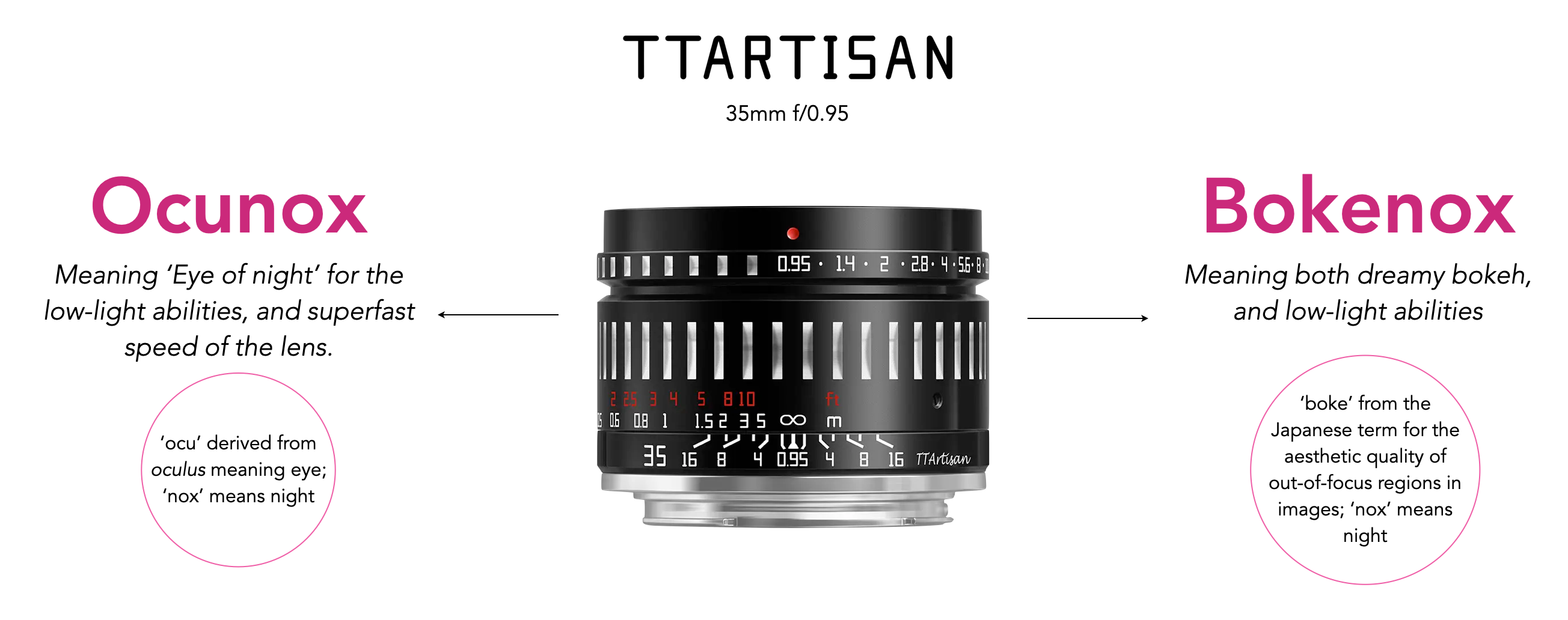
Fig.3: Some naming ideas for TTArtisan’s 35mm f/0.95 lens

I would like to see lens manufacturers look at giving lenses actual meaningful names. Not all of them of course, but perhaps families of lenses. Perhaps a line of lenses named after prominent lens designers, like Willi Merté who designed the Biotar for Carl Zeiss in 1927. Or a fish-eye series named after physicist Robert W. Wood who coined the term ‘fisheye lens’ in 1906. TTArtisan has a few lenses with a vintage striped aesthetic, why not give them a name that pays homage to the 1960s lenses? Or perhaps a name associated with the abilities of the lens. Two name suggestions for the TTArtisan 35mm f/0.95 are shown in Figure 3. I’m not suggesting that coming up with viable names will be easy, but once established they will help strengthen brand association.

Prime vs. zoom lenses − Is one better than the other?

One of the biggest dilemmas for novice photographers when choosing a digital lens is whether you buy a prime or a zoom? This is an age old debate, probably dating back to the 1970s when zoom lenses started to make real inroads into the SLR lens market. Back then zoom lenses were at a major disadvantage from a quality perspective, but over time they have improved in quality, and proliferated in quantity. Here we look at the major differences between the two.

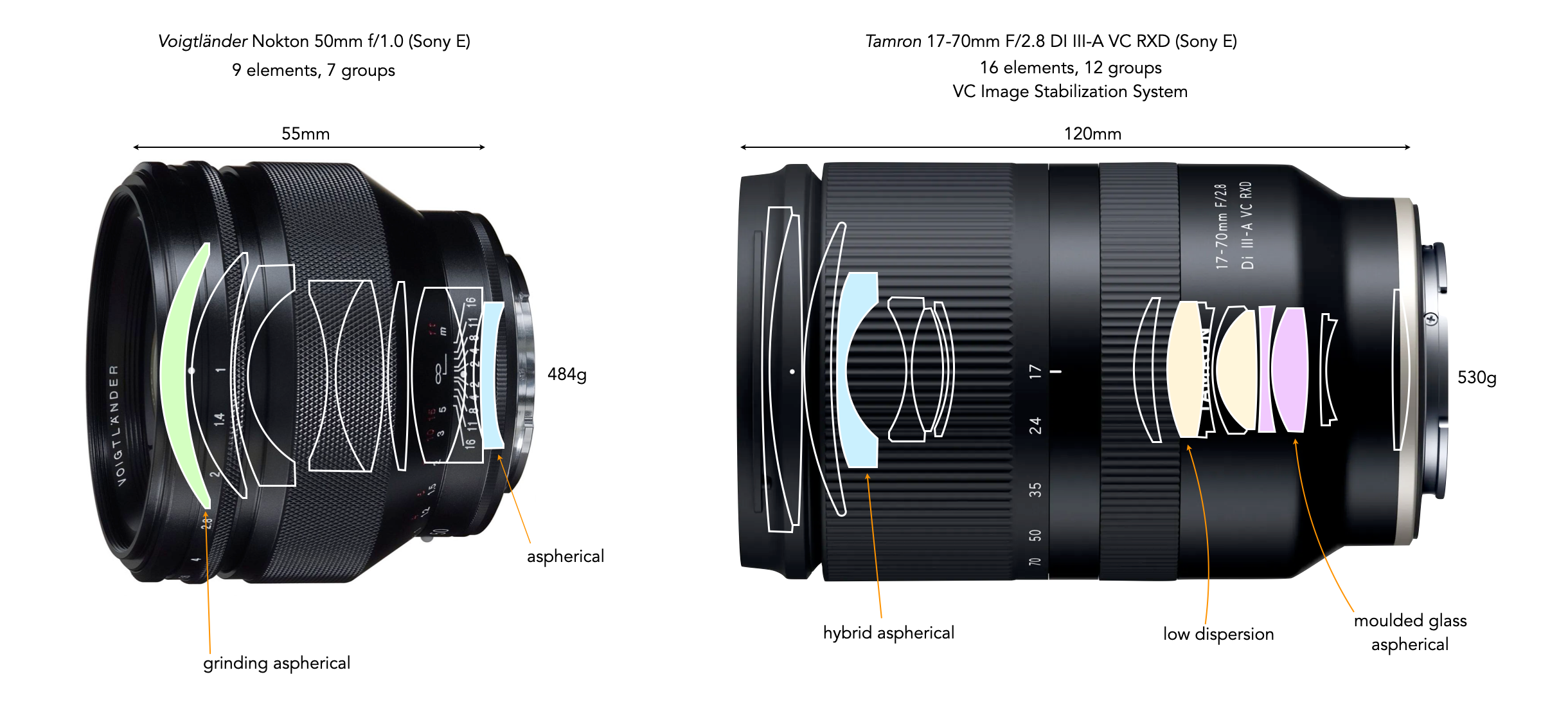
Fig.1: A comparison of a modern prime (50mm normal) versus a modern zoom lens (wide-to-short telephoto, 17-70mm), both full-frame.

Zoom lenses

A zoom lens is a lens designed with a variable focal length. This allows the lens to be modified to any focal length between the specified range, meaning the angle-of-view (AOV) of the lens will change with the focal length. For example 16-80mm means the lens is widest at 16mm, and at full zoom at 80mm. There are zoom lenses that are narrow in focus, e.g. wide-angle zooms where the zoom range covers wide-angle focal lengths, and there are others that are more broadly scoped, e.g. 17-300mm, covering wide-angle all the way through medium length telephoto. Some zooms have a fixed aperture, i.e. one maximum aperture, others have a variable aperture which changes with the focal length selected, e.g. a 28-60mm f/4-5.6 means that 28mm the aperture is f/4, while at 60mm the aperture is f/5.6.

Many cameras come standard with a kit lens which is typically a zoom. For example Fuji-X (APS-C) often pairs a 15-45mm zoom (f/3.5-5.6), with covers a horizontal AOV of 77.32° to 29.8° − wide angle to low-telephoto to cover from landscapes to portrait shots. Other Fuji cameras are paired with 16-80mm or even 18-120mm. Note that the downside to kit lens, is that they are typically of lower quality.

Pros:

  • Versatility − Zoom lenses offer a lot of flexibility, allowing the focal length to be changed on-the-fly (so there is no need to swap-out lenses). This makes them ideal for situations where there is a need to quickly adjust the framing.
  • Convenience − There is no need to carry multiple lenses to cover different focal lengths.
  • Discretion − A scene can be captured without having to get too close. Using one lens also means it may not be necessary to carry a camera bag.
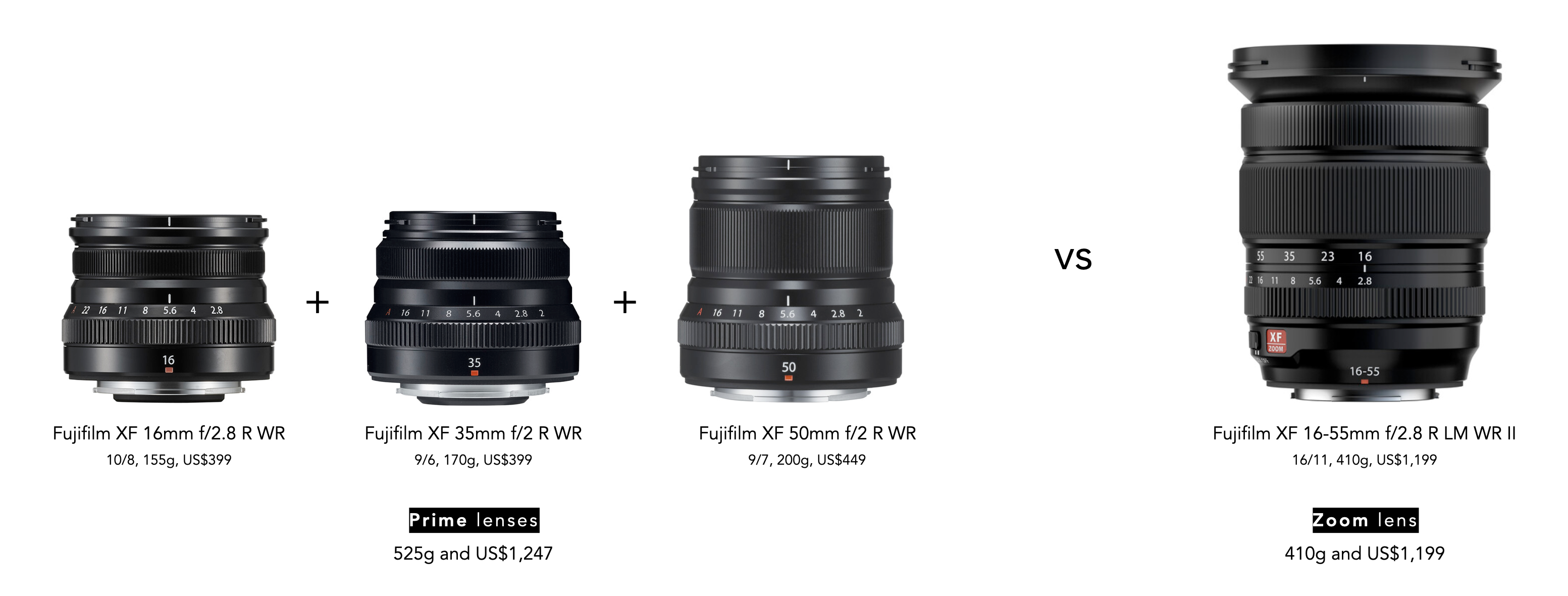
  • Portability − A single zoom lens can replace 2-3 prime lenses. This means less weight to tote around, and less lens swapping, so although the zoom may weigh more, it may be less than the sum of primes.

Cons:

  • Optical quality − Zooms can sometimes be less sharp than primes because of their complex, variable nature. However the gap between the quality of zooms versus primes is narrowing. An expensive zoom is likely to have better optical quality than a cheap one.
  • Aperture − Professional zooms have a maximum aperture of around f/2.8, or even f/4, making them less than optimal for low-light situations, i.e. slow.
  • Price − Zoom lenses can be expensive, because the zoom mechanism and lens configuration can be complex. Kit zooms are cheap, the Fuji-X 15-45mm is around C$325. The Fuji-X 16-80mm is C$880. Wide zooms can be even more expensive with the Fuji 10-24mm going for C$1050.
  • Weight − Generally quality zooms can be heavier than primes because the lens body is physically larger, and there are more complex mechanisms inside, e.g. auto-focusing motors.
  • Lens selection − Some platforms do not offer that many zoom lenses. For example there are a lot of third-party lenses in the Fuji-X environment, however most are prime lenses (probably due to the lower cost). Apart from Fuji native zooms, the only real competitors are Sigma and Tamron.
three prime lens compared to an equivalent zoom lens
Fig.2: A comparison of a 16-55mm zoom lens with three ‘equivalent’ prime lenses to covert the same range of focal lengths (note that the closest to a 55mm prime is a 56mm f/1.2 which puts it outside the bounds of comparison from the perspective of aperture).

Prime lenses

A prime lens is a lens with a fixed focal length, meaning it cannot change. It has an AOV that is set, so making an object fill more of the frame requires getting closer to the subject. For example a 16mm Fuji-X prime offers a horizontal AOV of 73.74°, no more, no less. So to enlarge a subject and make it fill more of the frame, the camera has to be moved physically closer to it. To make a subject fit a frame, the camera must be moved away. In terms of prime lenses, a wide angle might be 28mm, a normal lens 50mm, and a portrait lens 85mm (full frame). In comparison a 28-85mm zoom lens offers all these focal lengths (and many in between) in a single lens. Prime lenses are typically fast, with maximum apertures of f/1.8, f/1.4 or even f/1.2 (or faster).

Pros:

  • Optical quality − Prime lenses are focused on one focal length, and as such often have better optics. This includes having a better depth of field, sharpness, and rendered bokeh. Better optics = better image.
  • Aperture − Prime lenses are faster than zoom lenses, i.e. they have larger maximum apertures than zooms. They can have apertures as wide as f/0.95, but typically they are between f/1.2 and f/2.8. This makes them better in low-light situations, and helps them produce a shallower depth-of-field. This often negates the need for a flash or high ISOs that can introduce noise.
  • Focusing speed − Auto-focusing generally works a little faster on prime lenses.
  • Price − Prime lenses have fewer moving parts and as such can be less expensive. The caveat here are specialty lenses, superfast lenses e.g. f/1.2, and super-telephoto lenses. Prime lenses have the same range of cheap “kit” to expensive high-end lenses, but often it is possible to purchase a good prime for a reasonable cost. Note that superfast lenses can be significantly more expensive than their f/1.8 counterparts.
  • Compactness/Weight − Many normal prime lenses are generally lighter and more compact than zoom lenses.
  • Bokeh − Wide apertures provide a shallow depth of field, which makes primes ideal for taking portraits and artistic shots containing the coveted background blur known as bokeh.

Cons:

  • Limited versatility − Prime lenses only have one focal length, so it might be necessary to carry more than one lens to cover a gamut of scenarios. Adjusting a composition will require moving towards or away from the subject.
  • Inconvenience − With prime lenses it may be necessary to carry multiple lenses to cover different focal lengths. This impacts how much needs to be carried in the field.
  • Discretion − Carrying more than one lens might require changing lenses on-the-fly, because different lenses may be used for different scenes. A camera bag might be a requirement.
  • Portability − While a zoom lenses can replace a number of prime lenses, working only with primes may require carrying 2-3 lenses with different focal lengths. This means more weight to tote around, and more lens swapping.
  • Weight − There are circumstances where primes can be heavy, e.g. super-fast lenses often require more glass, which makes them heavier than other primes, and telephoto lenses can be larger and heavier than telephoto zoom lenses.

Choosing between a prime and a zoom lens really depends on photographic priorities, i.e. what is needed in a particular situation. Zoom lenses can be hard to use well for the inexperienced photographer − e.g. they often stay in one position, and zoom to capture everything, versus using a prime lens where you are forced to move in order to gain photographic perspective. Every optical design has its strengths and weaknesses, but as a prime lens is optimized for a single focal length in many cases it has a greater capacity for fewer weaknesses and more strengths. This may include characteristics such as: image quality (contrast, sharpness, distortion, flare control), colour aberrations, lens speed, size and weight, focusing ability, focus shift, etc.

Are lens descriptors getting too complicated?

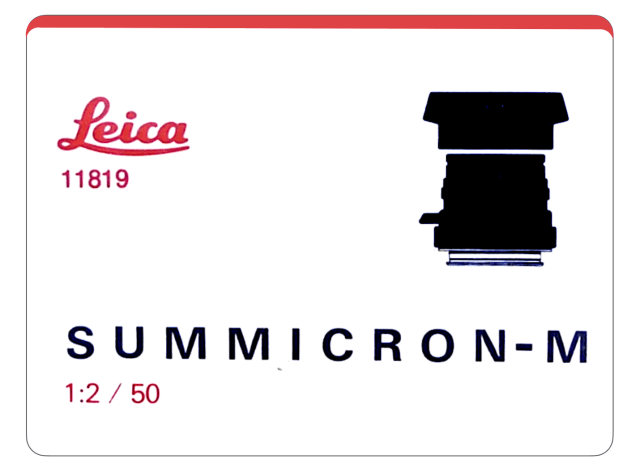
Lens descriptors, those one-liners that describe the characteristics of a lens use to be simpler. Consider the older Leica lens box shown below. A brand, a lens name, aperture, focal length, and a lens profile. But then maybe lenses were simpler? I guess they could have festooned the descriptor with lens coatings, and other fancy acronyms describing interesting lens features, but they didn’t, probably because whoever was in charge of marketing realized that lens descriptors need to be simple.

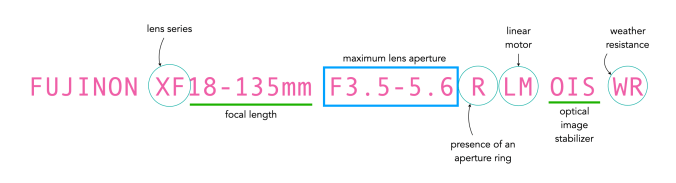
Many companies now give their lenses such complex descriptors it’s easy for people to get confused. Often the difference between two generations of a lens is the addition of another acronym on the newer lens. Take Fujifilm lenses as an example. I love Fujifilm lenses, but their names are a bit of a mouthful… to the extent that Fujifilm actually includes a section in their brochures called ‘Lens Names Explained‘. Here is an example of a Fujifilm lens descriptor:

There is a lot of information in this label, mostly describing the characteristics of the lens, such as weather-resistance, the type of motor driving the focusing mechanism, and whether the lens has a physical aperture ring or not. Most companies that produce lenses seem to have some sort of guide to explain their terminology. Canon provides ‘How to read a lens name‘ where they talk about lens mount, focal length and aperture (the easiest things to explain), and then a myriad of abbreviations to explain technology: L (Luxury), DO (diffractive optics), DS (defocus smoothing coating), IS (image stabilization), and focusing motor (USM/Nano USM/STM/Macro). or perhaps Sony’s ‘Lens terminology‘?

For the average user, it’s just too much information. Can things be improved? Yes − by simplifying naming conventions, i.e. removing the acronyms and abbreviations. Put them somewhere else, because most people in the first instance are interested in ① focal length, ② maximum aperture, and perhaps ③ weather resistance (and let’s be honest, price). I’m not even sure it matters if the acknowledgement of aspherical lens elements is necessary, or even the type of focusing motor. The only people that likely care are professional photographers. I mean most lenses have pages contains their specs that people will read, so is there any point to including so much detail in a lens descriptor? Perhaps try and create some industry standard symbols. For example using a symbol to denote weather resistance, e.g. ☔︎.

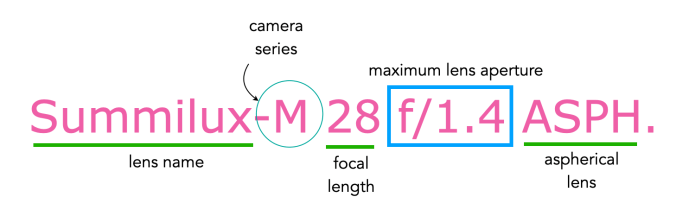
Below is a much simpler description of a Leica lens. Mostly just the basics, although I don’t really know why they include the fact the lens contains aspherical elements (ASPH)?

Although I always thought that in the age of different sensor sizes, it might be better to forgo the focal length, and replace it with the lenses angle-of-view (the horizontal one that is, not the nonsensical diagonal one). So for the example lens above (for full frame) this would be 65°. This would also avoid the whole issue with designating lenses, e.g. crop-sensor. Maybe the issue is also that lenses really don’t have ‘names’ anymore, well except for maybe Leica and Zeiss.

I understand, digital lenses are way more complex than their historical counterparts, and companies are continuously adding new features. But where does it end? Do we add lens elements/group data to the descriptor? What about lens coatings? The presence of ASPH already shows some creep of internal technology onto the side of a lens box. How important is it to know that a lens has aspherical elements? Do we also need to signify the existence pf extra-low dispersion glass?

I get it, it’s all about selling the lens, but the more complicated a lens descriptor is, the more questions that have to be asked.

Choosing lenses for travel

I previously covered choosing a camera for travel, now I thought I would provide some insight into choosing lenses for travel, in the context of an amateur photographer. There are many varied opinions on this travel photography, although I have to believe some come from photographers who aren’t really amateurs. This post speaks more to the traveller, who I consider distinctly different to the tourist. The tourist is a person who is just there to take photographs, with little interest in knowing the story behind the objects in the scene. They just care that they photographed the scene. The traveller is intrinsically interested in what they photograph. There are many forms of tourist ranging from the person who takes photos with an iPad to that annoying person who is fully decking out with a full-frame camera with the largest zoom lens available.

Travel photography, at least for the amateur, can suffer from what is commonly known as overpacking. You think you are going to need a bunch of lenses and accessories, and you end up with a bag overstuffed with gear. From my own experiences, you never end up using half of it. More important may be a couple of lenses for the large camera, and a secondary pocket-size camera, something like a Ricoh GR III. This ancillary camera is perfectly suited to street photography because it is designed to do just that, in a more discrete way (and offers macro as well). But back to the lenses. The reality is that you likely only need 1-2 lenses, or if you prefer zooms, a single lens.

The best travel combo is a normal and an ultra-wide lens

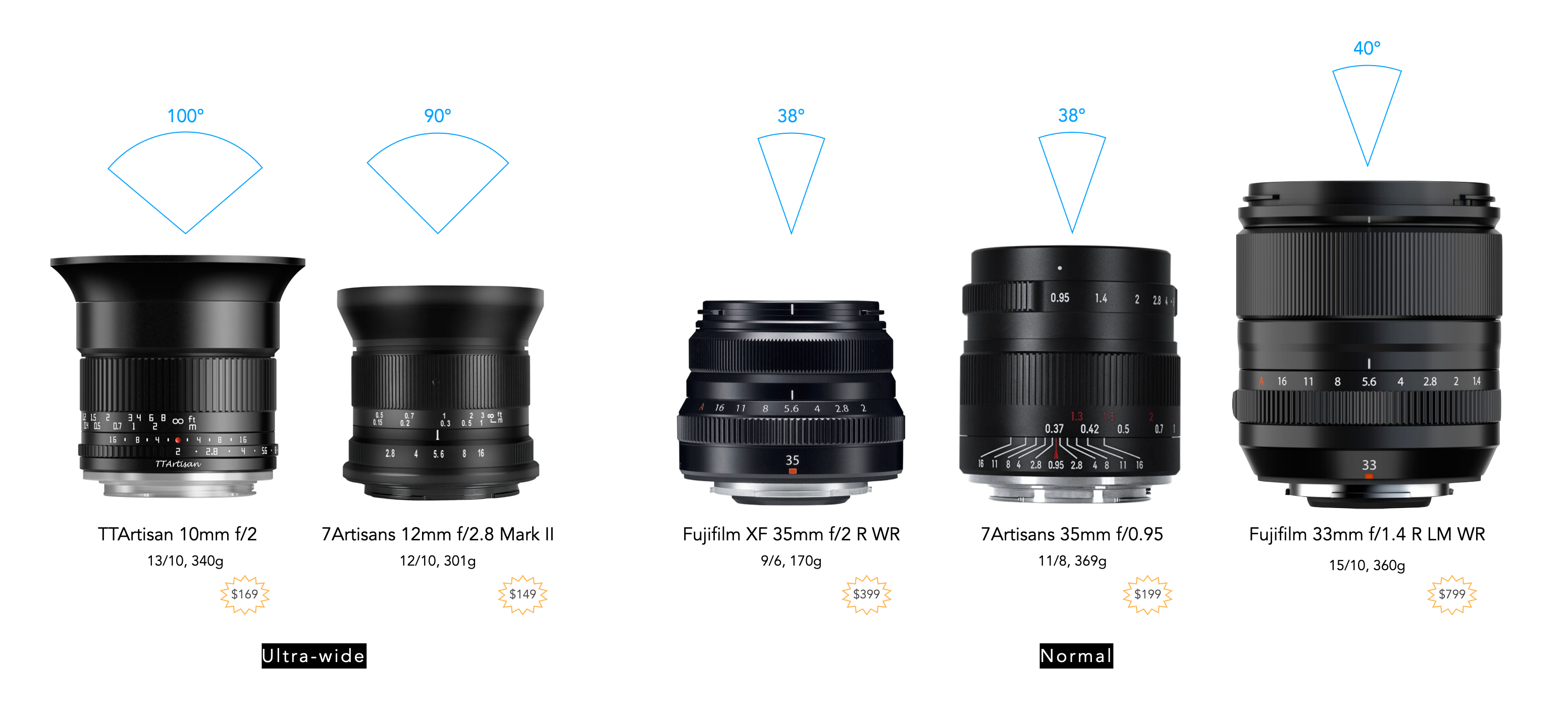
When you travel, you are trying to replicate in photographs what you see with your eyes. This means a normal lens, something in the range 40-55mm (or 26-36mm for APS-C), which provides roughly the same perspective as you see with your own eyes. A normal lens is good because it is inconspicuous, often quite compact, and quite adaptable to street photography. The faster normal’s also have the added benefit of performing well in low-light conditions, for example museums where flashes are often prohibited. For example with the Fuji-X system, a good choice might be a 35mm f/2 R WR, which provides a low-cost, weather-resistant normal lens (US$400, 170g), or the faster 33mm f/1.4 R LM WR (US$800, 360g).

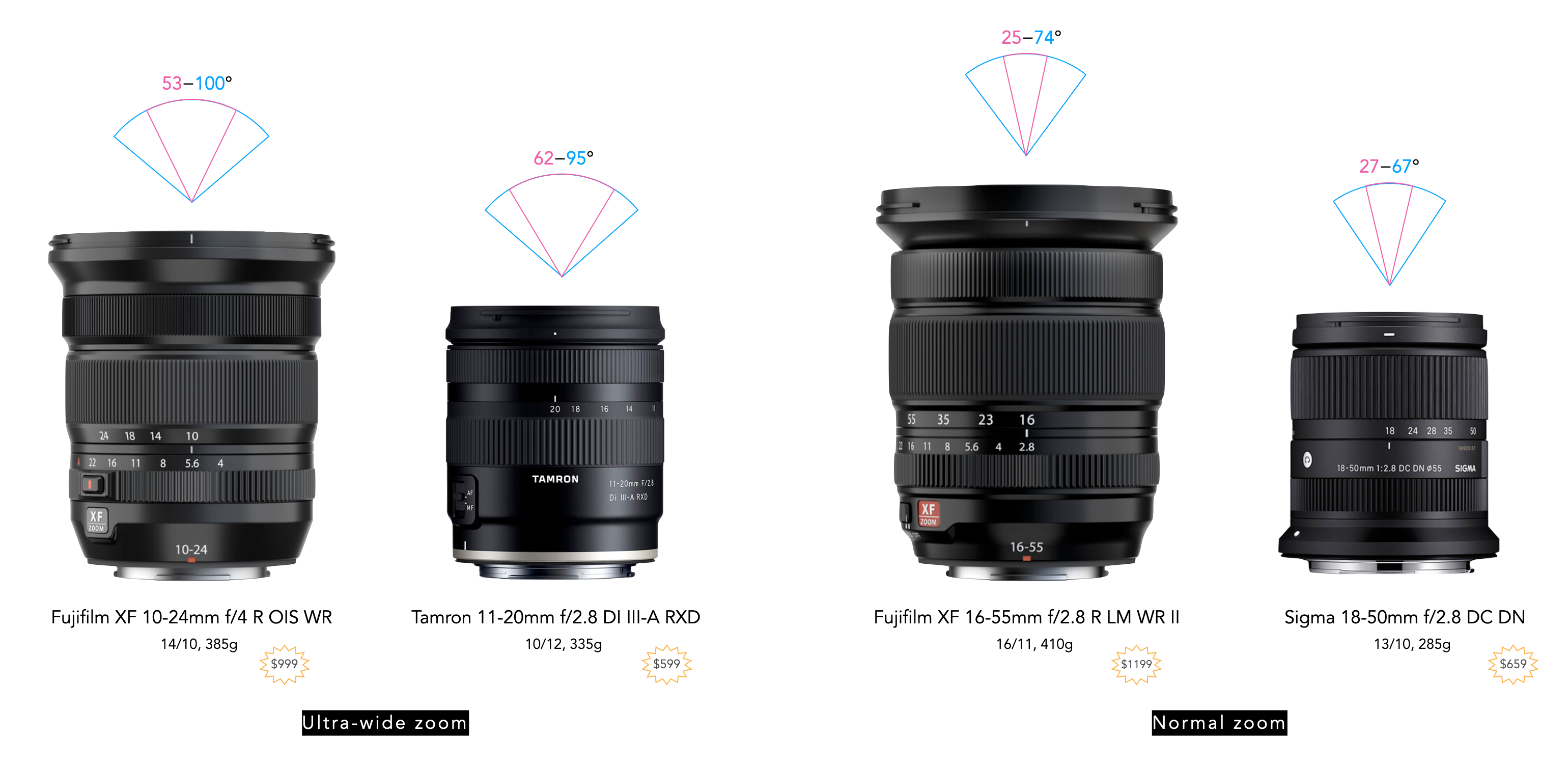
Fig.1: Choices for ultra-wide and normal lenses (Fuji-X)

Travel general involves scenes that are expansive, whether that is natural landscapes, streetscapes or simply photographing in tight spaces. The best lenses replicating this immersive experience in photographic form is an ultra-wide-angle lens. There are many situations, especially in older cities, where an ultra-wide angle lens helps transform a simple street into a dramatic scene. This means lenses in the range of 15−20mm (10−13mm for APS-C). Some Fuji-X choices for normal and ultra-wide lenses are shown in Figure 1.

Here are some of the things to consider when choosing a lens for travel photography:

  • weather-resistance − Not every day is sunny when travelling, so having some protection against moisture and dust is a good idea.
  • auto-focus + manual focus − Auto-focus makes taking photography easier, especially as the window for taking a shot can be limited. It’s also nice to have some control over more artistic shots with the option of manual focus.
  • a reasonable large aperture, good for low-light − Nobody wants to lug a flash around when touring, as it can be somewhat invasive.
  • compact enough to fit in a pocket − For a secondary lens, it’s handy just top be able to fit it in a pocket, or small bag.

This isn’t the telephoto you’re looking for

Some will argue that a telephoto while travelling is a must-have, helping to capture scenes that are physically out of reach, I would argue the opposite. On most trips, telephoto lenses just aren’t needed. They might be great for a safari, but traipsing through the alps, or the streets of Rome, there is little need for a telephoto. There may be some shots you won’t get, particularly those in the distance, but frankly travel is about immersing yourself in the immediate surroundings. There wouldn’t be much point in taking a photo of a Roman statue from a distance.

A zoom lens for those who want a single lens

For those who prefer a single lens, then the answer might be a zoom lens. Firstly, avoid the superzoom lens – these are cover everything from wide to ultra-telephoto providing a broad range of focal lengths. These offer exceptional flexibility, but at the expense of being heavy, which can impact travel portability. In addition they often just aren’t wide enough. For example Tamron makes a 18-300mm lens for Fuji-X cameras (f/3.5-f/6.3), which covers everything really – in terms of FF this is 27-450mm. That’s a *lot* of lens. But the lens is 620g, which is heavy, well heavier than I would want to lug around everyday, and at f/3.5 it is kind-of slow. Besides which, based on the previous discussion, there is little need for a telephoto zoom when travelling.

Fig.2: Choices for ultra-wide and normal zoom lenses (Fuji-X).

If you only want a zoom lens, stick to one which encompasses wide, normal, and perhaps portrait – for Fuji this would be something like a 16-55mm (24-82.5mm FF), considered by some to be the “Swiss Army Knife” of lenses. Or perhaps the lighter, less expensive Sigma 18-50mm (27-75mm FF). Figure 2 shows a series of potential zooms for Fuji-X, all of which are autofocus (generally for Fuji-X, the only autofocus lenses are restricted to Fujifilm, Sigma and Tamron lenses).

Artisanal lenses

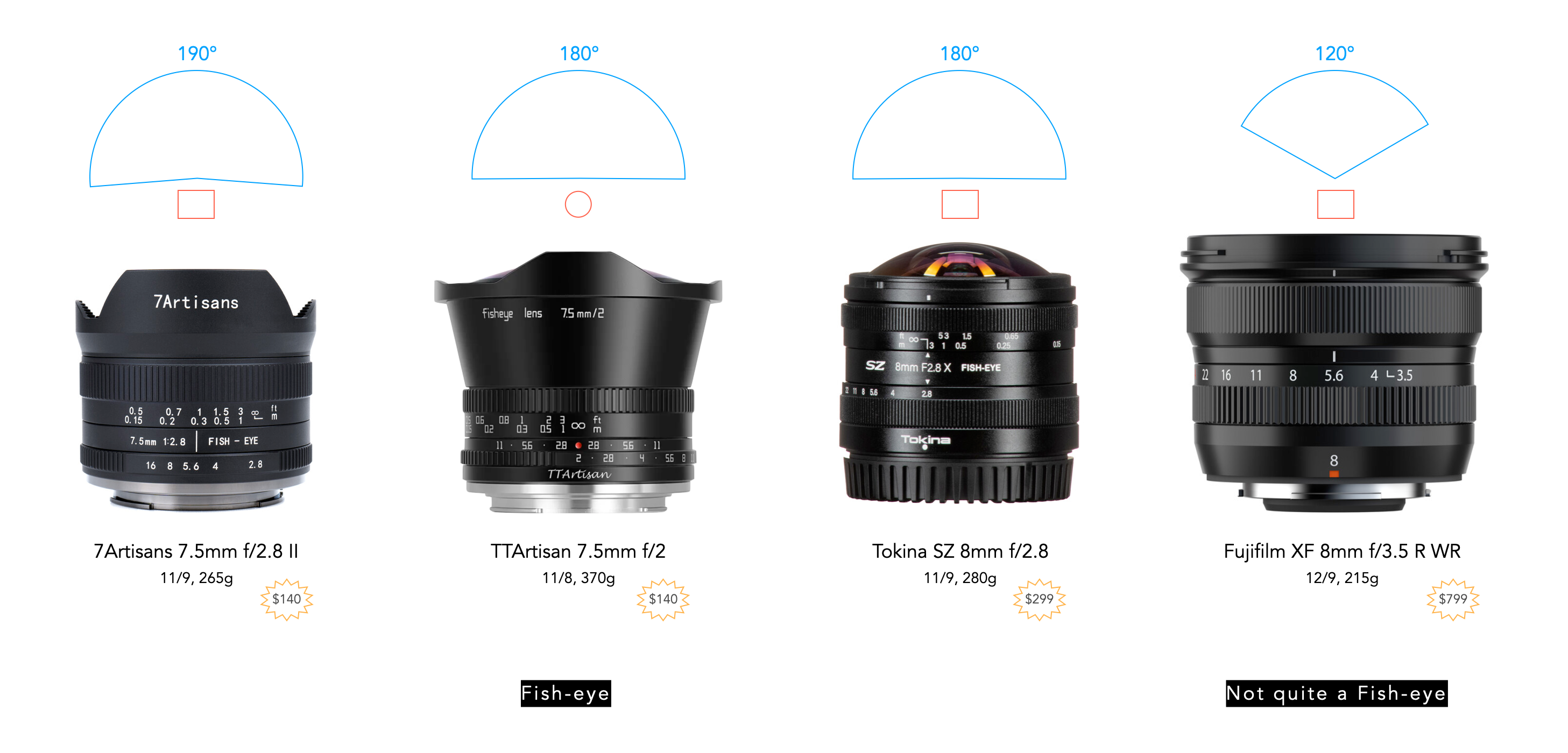
Another interesting lens to take along is a fish-eye lens, allowing for the creation of whimsical and fun travel photographs. A fish-eye is the wider alternative to the ultra-wide, and generally comes in a circular, or diagonal format. Both these formats generally exhibit some form of distortion, hence the reason they are usually used in a more artistic way. They are also perfect for photographing large, cavernous spaces, i.e. those whose grandeur would not be represented clearly by any other lens, e.g. cathedral ceilings. What about distortion? Consider it part of the art. Figure 3 shows some fish-eye choices for Fuji-X.

Fig.3: Choices for fish-eye lenses (Fuji-X)

The final choice?

In many cases you will end up using a single lens for 80-90% of the time. What that lens is, is really up to the needs of the photographer. What if you had to choose only one lens to take long on your travels? Some people photograph an entire trip entirely using a 35mm lens (APS-C 23mm), others may choose a versatile zoom. Or perhaps the best option is to compact zoom, and a wide aperture normal, e.g. 35mm f/1.4 (APS-C). A 35mm lens (23mm APS-C) is suitable for most landscapes, and covers most aspects of daily life encountered in street photography. For example the Fujifilm 23mm f/2 R WR is compact, lightweight, and has a horizontal AOV of 55°, which is reasonable. On the downside, low-light situations aren’t fantastic, and close-up shots can be soft. But it is weather resistant, less expensive than one of Fuji’s top lenses, and is fast to focus. Everything is a compromise.

Many people will push native lenses only, e.g. Fujifilm – it’s not necessary, there are many good 3rd party lenses, the only caveat being that many are manual focus only.

N.B. Prices are in US$, and AOV’s shown in the figures are always horizontal.

Further reading:

Are all prime lenses created equal?

The simple answer is no. One could argue that all 50mm lenses should do the same job, but from the perspective of image quality, nothing could be further from the truth. There are many reasons for this: the complexity of the optical formula, and its ability to keep optical deficiencies to a minimum, the quality of the glass, whether or not the housing is metal or plastic, whether or not the lens is automatic or manual… lots of things.

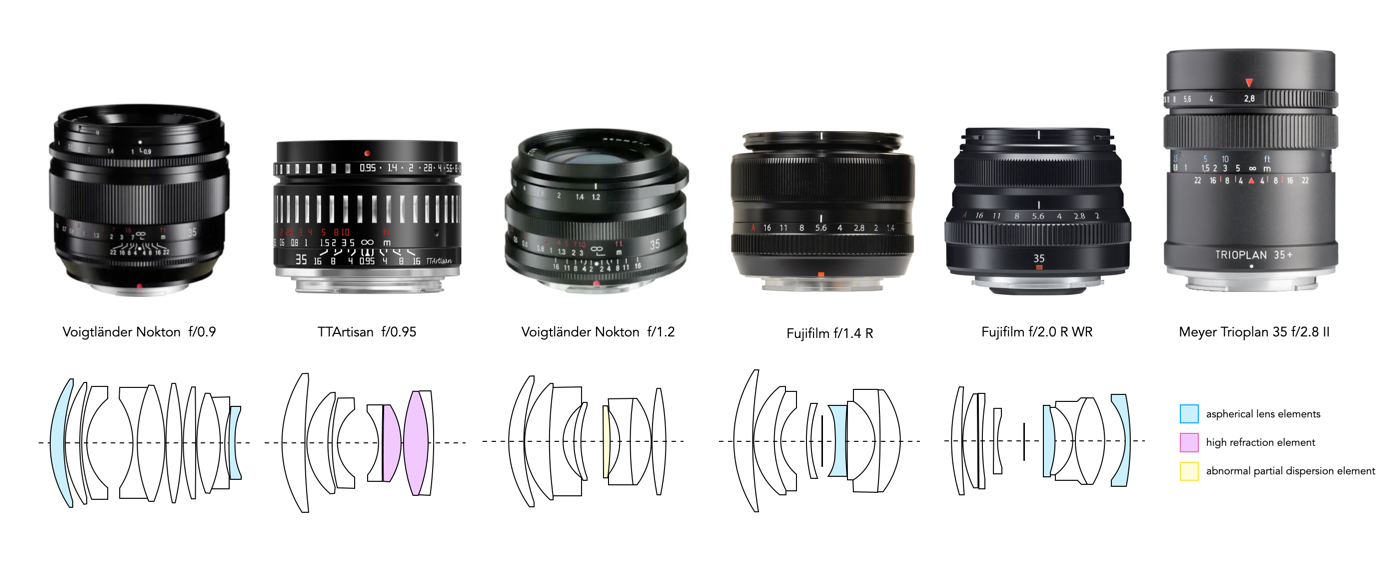
What I want to do in this post is provide some examples of how prime lenses differ (in the context of the Fuji-X system, although the same logic can be applied to any lens on any system). Let’s consider a series of lenses for the Fuji-X system with a focal length of 35mm, being the “normal” lens for APS-C size cameras, with a varied range of maximum-aperture values. The core characteristics are shown in Table 1, with the visual aspects such as lens design shown in Figure 1. Note that I have not included the sub-$100 category of cheap lenses, just because I don’t necessarily think they can be compared in the same manner (from the perspective of build-quality).

35mm (APS-C)Voigtländer Nokton f/0.9TTArtisan f/0.95Voigtländer Nokton f/1.2Fujifilm f/1.4 RFujifilm f/2.0 R WRMeyer Trioplan 35 f/2.8 II
aperturef/0.9f/0.95f/1.2f/1.5f/2.0f/2.8
aperture blades1210127912
weight492g250g196g187g170g270-300g
focusingmanualmanualmanualautomaticautomaticmanual
elements10/97/58/68/69/65
housingaluminummetalaluminumaluminumaluminumaluminum
country of originJapanChinaJapanJapanJapanGermany
priceC$2000C$300C$840C$800C$540€899
Table 1: Comparison of a series of Fuji-X compatible APS-C 35mm lenses

There are many things about these lenses that are very similar. The bodies are made of metal, they all weight roughly the same (except the Nokton f/0.9), the number of aperture blades is similar, and all bar the Fujifilm lenses use manual focus. Where they differentiate from a technical viewpoint is maximum aperture. From the perspective of design, most are based on some variant of the ubiquitous double-Gauss lens design. As shown in Figure 1, each lens is tailored to the specific “needs” of the manufacturer, augmented with specialized lens elements such as aspherical lenses.

The number one factor which differentiates lenses is usually price. Here native lenses are often more expensive than third-party ones, but not always. The most expensive lens comes from Voigtländer, the Nokton f/0.9, which is not surprising considering it has the largest maximum aperture, and is the most complex design, but also because Voigtländer is known for high precision optics. Voigtländer lenses are made by Cosina who make everything from scratch in its factories in Japan. For a slower lens there is the Nokton f/1.2 which is less than half the cost, but this is largely because of the lack of aspherical elements, and a simpler design.

Fig.1: Six types of 35mm lenses for Fuji-X

At the opposite end of the spectrum, is the TTArtisan f/0.95 lens which sells for C$300. Why the disparity? Likely less expensive manufacturing, or the lack of aspherical lenses. Many of these less expensive lenses seem to be based on older lens designs which have been improved in some manner. But the goal of Chinese lens manufacturers is to provide good quality optics at a reasonable price. Some of these cheaper lenses may also have some optical deficiencies, but this can be regarded as providing a “vintage” look in the way of creating images with character. For example sharpness at full aperture may not always be what one would expect. The TTArtisan 35mm f/0.95 has excellent bokeh, but does suffer from both vignetting on images with light corners, and lens flare at lower apertures.

Are these 35mm lenses created equal? Probably not, except perhaps in the context of providing the same angle-of-view. Their differences are varied, and can’t really be described in any meaningful way. We could compare them using 101 different tests, from measuring sharpness to the presence of optical artifacts such as chromatic aberration, but this is often a very qualitative endeavour. So which lens of this group is the best choice? Ultimately it comes down to budget, and personal preferences.

Note that this principle extrapolates out to most standard focal lengths.

The truth about digital cameras

Have you ever noticed how often camera companies release new camera bodies? There is always a lot of fanfare about the fantastic new things these cameras do – but here’s the thing, nothing much has changed with digital cameras in the past decade. In the era of film companies produced new camera bodies as well, but usually only when they heralded the addition of new technology such as the transition to 35mm SLR, or through-the-lens metering. For the most part, analog cameras are just simply a light box which has a lens attached and is loaded with film. The lens deals with the aperture, the camera controls the shutter, and film deals with the fixed ISO.

Camera manufacturers try and make people believe that they need a new camera by flaunting its bells and whistles, to which there are rarely many new ones. More megapixels? Been there, done that. What else is there? Better processing power, more AI? The reality is the things that matter – aperture, shutter-speed, ISO – don’t really change that much. As I have mentioned before there is a point where more megapixels produced diminishing returns.

What really matters in digital photography is lenses. Good quality optics will make the difference between good and mediocre pictures – and lens technology has vastly improved over the past decade. To the point where maybe lenses are a little too complex, but that’s just my personal opinion. There will likely never be a “perfect” lens, but then again neither should there be – from the sheer perspective of character. But even more important than the lens is the ability of the photographer. So if you have a good digital camera, there is no real need to buy a new one. A 24 megapixel camera will be more than adequate for the foreseeable future. Features are nice, but in all likelihood don’t really contribute a great deal to good pictures.

The pros and cons of third-party lenses

Once you have chosen a particular camera, (and manufacturer) it is time to think about lenses. Most people will buy a camera with some sort of kit lens attached, usually because it is cheaper. Others buy just the camera body, and outfit it accordingly, but it often a vast maw of choices. Lens choice is usually foremost about need, and ultimately focal length. What are you going to be shooting – portraits, landscapes, architecture? Then it becomes a balancing act of lens characteristics. If you choose, say a 35mm lens on an APS-C sensor, so 50mm equivalent, then it’s about things like size/weight (e.g. for travelling), weatherproofing, maximum aperture, build (metal/plastic), and of course cost.

This leads us to the question some people end up pondering – do you buy a lens from the camera manufacturer or a third-party? Firstly, let’s consider each type of lens. Lenses produced by the camera manufacturer are often considered the creme-de-la-creme. They are designed from the bottom up, as integral components of the system. Quality and compatibility are the reasons why professional photographers stick with first-party lenses. These particular lenses are made specifically for the camera brands that they carry, so they are not compatible with any other manufacturers or brands.

Third-party lenses on the other hand, are often designed by lens companies from the perspective of creating a variety of lenses that will fit cameras from multiple manufacturers with the simple change of a mount (and tweaking some other specs). For example Sigma produces a 28mm f/1.4 lens that is available in Canon (EF), Nikon (F), Sony (E), and Leica (L) mounts. As with many manufactured items there are different levels of third-party lens manufacturers, from precision, high-priced lenses to mass-produced budget-oriented lenses. Third-party lenses can also be differentiated into long-established ”old-school”, and newer lens manufacturers. Voigtländer and Zeiss are good examples of well-established 3rd party lens makers who produce higher-end “boutique” glass.

Manufacturer versus third-party lenses

So why choose a 3rd party lens? There are many reasons. I suspect most people go that route because of the general affordability of the lenses. This also makes sense if someone wants to experiment with a particular lens, but doesn’t want to pay a small fortune. Affordability is often perceived as a sign that the lenses are inferior from the viewpoint of capabilities or build, but this isn’t always the case. Sometimes the lower price is a factor of trades-offs: manual focus instead of auto-focus capabilities, polycarbonate lens body instead of metal, etc. Some third-party lenses offer functionalities such as large apertures, e.g. f/1.0, or a smaller, lighter build, or even a lens not offered by a camera manufacturer, e.g. fish-eye lenses. For example the shortest focal length produced by Fuji is 8mm f/3.5 (12mm eq.), however it is US$800. An alternative for the photographer wishing to experiment with fish-eye lenses is the Tokina SZ 8mm f/2.8 (US$300).

What about disadvantages? Well the flip-side of 3rd party lenses is the lower-cost is that the lenses are sometimes optimized for lower cost. There may be some manufacturers that sacrifice the quality of materials used in lens manufacturing, and hence lens durability for a lower price. There is also the chance that the lens will not be 100% compatible with every one of the cameras it fits on. This goes back to the materials/build sacrifices made in construction. Another “disadvantage” for some is that many third-party lenses is manual focus. This is partially because it is cheaper and easier to produce a lens without focusing mechanisms, and electronic connections to the camera. However manual focusing is not a huge issue, because of functions built-into many cameras these days which assist with manual focusing, e.g. focus-peaking.

Actually the main problem in choosing lenses from 3rd-party manufacturers is differentiating between them. Because apart from the price differential, the specs of many lenses look quite similar. Below are five third-party 12mm lenses for the Fuji-X system (Fuji does not make a 12mm, the closest is a 14mm f2.8).

Aperture rangeElements/groupWeightBarrel materialCost (US$)
Zeiss Touitf/2.8 − 2211/8260gmetal$999
Rokinsonf/2.0 − 2212/10260gmetal + plastic$399
Meikef/2.8 − 2212/10326gmetal$230
Pergearf/2.0 − 2212/9300gmetal$165
7Artisansf/2.8 − 168/10265gmetal$149
Table: The gamut of 12mm lenses for Fuji-X

So when you get to choosing a lens, you may be swayed by the extremely reasonable prices of some of the 3rd party lenses. So what to do? Well the first thing to do is to find a website that maintains an updated list of lenses for a particular system. I’ll give examples of Fuji-X, because that has become my core system. Here is a good list from Alik Griffin. Third party lens manufacturers can be separated based partially on the quality of optics (and let’s face it, cost). At the end of the day, the actual lens you choose will depend on budget and individual requirements. If you decide to buy a third-party lens, make sure you do a good amount of research into the lens. Check out independent reviews from photographers, both professional and hobbiest, that have used the lens.