The Eyes of Eagles (and why Zeiss used them to advertise its lenses)

It was Zeiss who came up with the “the eagle eye of your camera” slogan in the 1930s to advertise their lenses (or in German “Das Adlerauge Ihrer Kamera” – eagle eye being Adlerauge) [1]. Of course they were mostly talking about the Tessar series of lenses.

“The objective should be as the eagle’s eye, whose acuity is proverbial. Where its glance falls, every finest detail is laid bare. Just as the wonderful acuity of the eagle’s eye has its origin, partly in the sharpness of the image produced by its cornea and lens, and partly in the ability of the retina – far exceeding that of man’s vision – to resolve and comprehend the finest details of this delicate image, so, for efficiency, must the camera be provided on the one hand with a ‘retina’ (the plate or film) of the highest resolving power – a fine grain emulsion – and on the other hand with an objective which can produce the needle sharp picture of the eagle’s lens and cornea.”

The Eagle Eye of your Camera (1932)

Zeiss took great lengths to use this simile to describe their lenses. A lens must have the sharpness of an eagle’s eye, and the ability to admit a large amount of light – sharpness and rapidity over a wide field of view – the Zeiss Tessar. While Leica named their lenses to indicate their widest aperture, Zeiss instead opted to name their lenses for the design used. Indeed the Tessar came in numerous focal length/aperture combinations, from a 3¾cm f/2.8 to a 60cm f/6.3.

Zeiss “Eagle Eye” advertising in the 1930s

The Tessar is an unsymmetrical system of lenses : 7 different curvatures, 4 types of glass, 4 lens thicknesses, 2 air separations, i.e. 17 elements which can be varied. Zeiss went to great lengths to disseminate the message about Tessar lenses:

  • sharp, flare-free definition
  • great rapidity (allowing short instantaneous exposures)
  • exceptional freedom from distortion (obviating any objectionable curvature)
  • good colour correction
  • compact design (so that light falling off near the edge is reduced to a minimum)
  • sufficient separation of the components of the lens (to allow a between lens shutter)
  • the use of types of glass as free as possible of colour
  • reduction to the minimum of the number of lenses, and particularly of glass-air surfaces
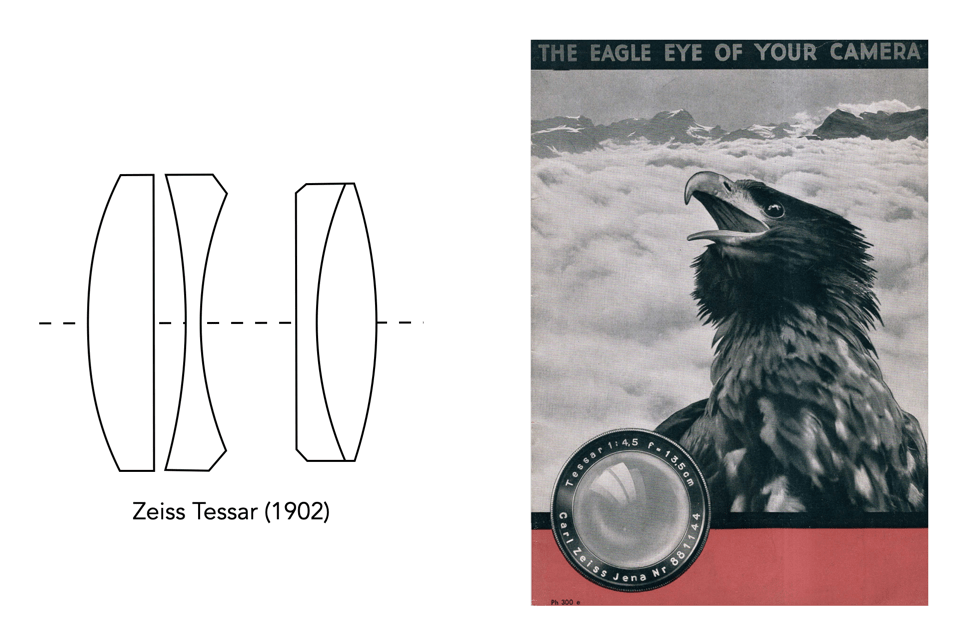
“It must have the sharpness of the eagle’s eye”

It is then not surprising that Zeiss choose to compare the lens to an eagle’s eye. The eagle is considered to be the pinnacle of visual evolution. They can see prey from a distance – it is said they can see a rabbit in a field while soaring at 10,000 feet (1.9 miles or 3km). It was Aristotle (in 350BCE) who in his manuscript “Aristotle, History of Animals” pointed out that “the eagle is very sharp-sighted”. The problem however is that it’s not really possible to compare a simple lens against the eye of a living organism. Zeiss was really comparing the lens of an eagle’s eye against the Tessar, or rather the Tessar and the human eye behind it, because the camera lens is just a part of the equation of analog picture taking. So how does an eagle eye compare to a human one?

It’s kind of hard to really compare eyes from different species because they are all designed to do different things. In all likelihood, human eyes have evolved over time as our environment changed. In birds, unlike humans, each eye looks outwards at a differing scene, and the overlap of the visual field of both eyes, i.e. the binocular region, is relatively small. This is typically less than 60° in birds, versus 120° in humans, and can be as narrow as 5-10° in some species. Because of this a birds total visual field is quite extensive, with just a narrow blind region behind the head. Eagle’s have a highly developed sense of sight which allows them to easily spot prey. They have 20/5 vision compared to the average human who has 20/20 vision. This means they can see things at 20’ away that humans only have the ability to see at 5’. They have fixed eye sockets, angled 30° from the mid-line of their face, giving them a 340° view. Many also have violet-sensitive visual systems, i.e. the ability to see ultraviolet light and detect more colours than human eyes can.
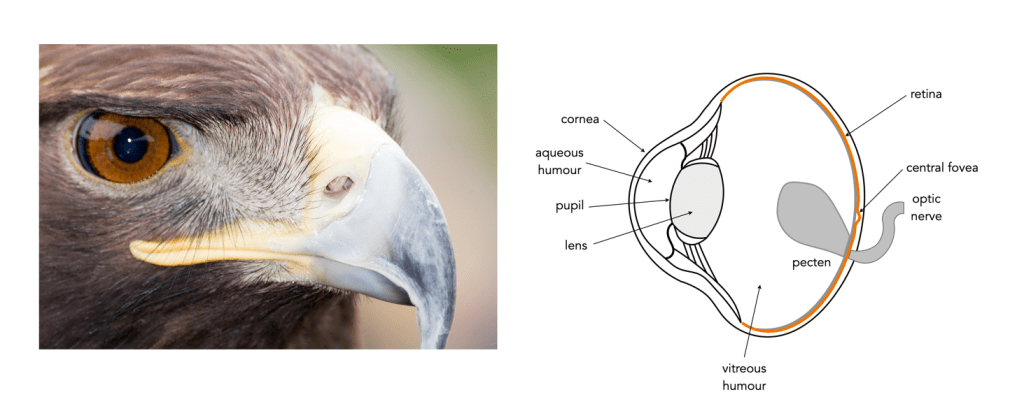
A Golden eagle, and a cross-section of an eagle’s eye

The first thing to consider may be the size of the eye. We will pick one eagle to compare against human vision, and the best option is the (European) Golden Eagle, because it is quite common in Germany. The average weight of a Golden Eagle is 6.1kg, versus the average weight of a European (human) at 70.8kg. If we work on the principle that an eagle’s eye is similar in weight to a human eye (ca. 7.5g) then an eagle’s eye would comprise 0.12% of its body weight, versus 0.01% of a human. So for the human’s eye to be equivalent in mass based on eye:body weight ration, it would need to be 85g. But this is really an anecdotal comparison, the bigger picture lies with the construction of the eye.

One of the reasons birds of prey have such incredible eye-sight is the fact that their deeper fovea allows them to accommodate a greater number of photoreceptors and cones. The central fovea in an eagle’s eye has 1 million cones per square millimetre, compared to 200,000 in a human eye. One way that eagles do this is by having increased resolution. This is achieved by have reduced space between their photoreceptors. Due to the physics of light, the absolute minimum separation between cones for an eye to function correctly is 2µm (0.002mm). As the space between the photoreceptors decreases, so too does the minimum size of the detail.
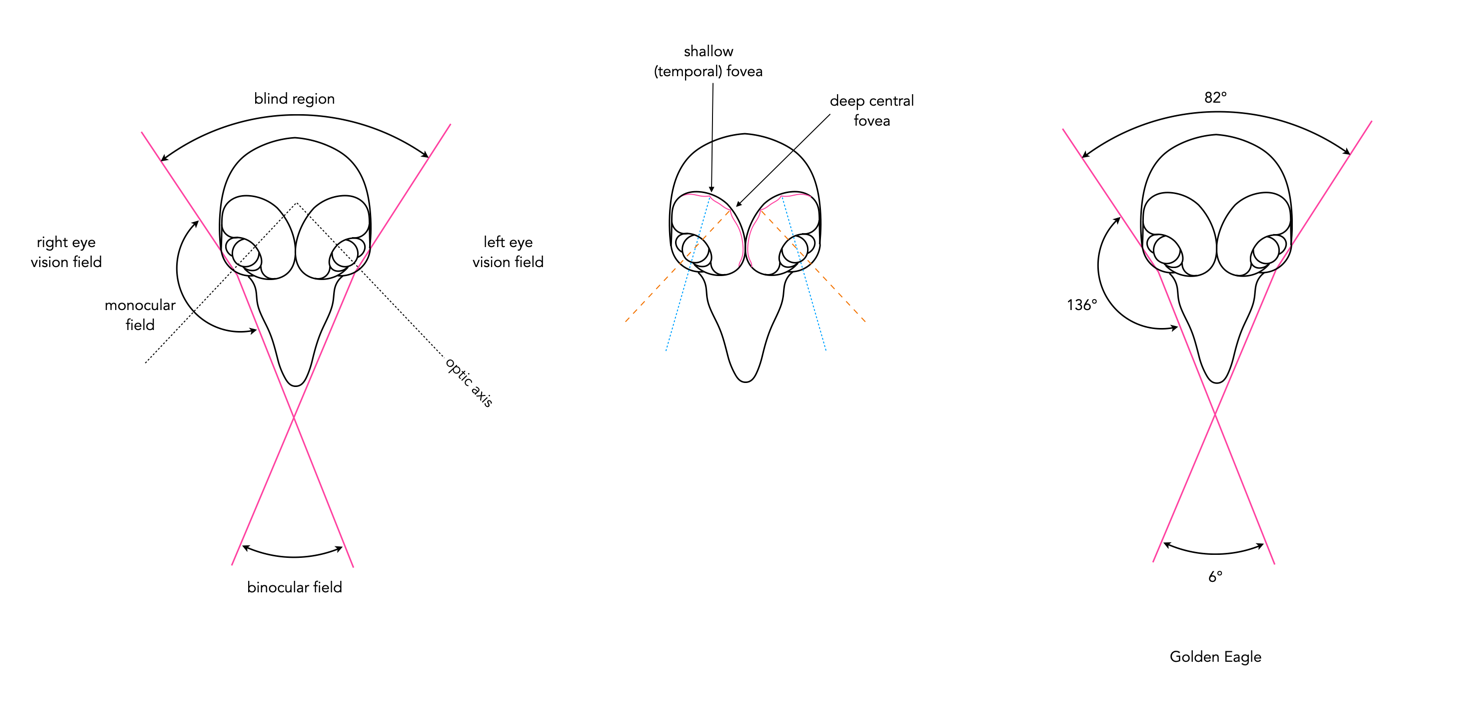
Parts of an eagle’s vision

The other thing of relevance is that while humans have one fovea, eagles generally have two – a central fovea used for hunting (cone separation 2µm, versus human cone separation of 3µm), and a secondary fovea which provides a high resolution field of view to the side of their head. So like a camera sensor, more cones means better resolution. In context Robert Shlaer [2] suggested that the resolution of a Golden eagle’s eye may be anywhere from 2.4 to 2.9 times that of a human, with the Martial Eagle somewhere between 3.0 and 3.6 times. The spatial resolution of a Wedge-Tailed eagle is between 138-142 cycles per degree [3], while that of a human is a mere 60. Their foveae are also distinctly shaped, deep and convex, as opposed to the rounded and shallow single fovea of human eyes. In a 1978 article for the scientific journal Nature, Snyder and Miller [4] proposed that the unique shape of foveae found in some birds of prey may act like a telephoto lens, magnifying their vision, which is perhaps why these feathered predators can spot food from so far in the sky. Like humans, eagles can change the shape of their lens, however in addition they can also change the shape of their corneas. This allows them more precise focusing and accommodation than humans.

But Zeiss themselves harked on the limitations of the simile: The fact that an eagle can quickly turn its head to allow for viewing in any direction; the fact that the retina is curved, not flat. From the perspective of resolution the ads were true to form, however the other aspects of the an eagle’s vision did not ring true. Yes, telephoto lenses based on the Tessar design could certainly see further than a human, and given the right lens and film could see into the violet spectrum, but Zeiss’s claim was really more about finding a way to describe it’s lenses in a provoking manner, one which would ultimately sell lenses.

Further reading:

  1. Zeiss Brochure: “The Eagle Eye of your Camera”, Carl Zeiss, Jena (1932)
  2. Robert Shlaer, “An Eagle’s Eye: Quality of the Retinal Image”, Science, 176, pp. 920-922 (1972)
  3. Reymond, L. (1985). Spatial visual acuity of the eagle Aquila audax: A behavioural, optical and anatomical investigation. Vision Research, 25(10), 1477–1491.
  4. Snyder, A.W., Miller, W.H., “Telephoto lens system of falconiform eyes”, Nature, 275, pp.127-129 (1978)

Vintage lens makers – Heinz Kilfitt (Germany)

If it were not for one particular point in time, Kilfitt may not be as well known a brand as it is. That event was the use of the Kilfitt Fern-Kilar f/5.6 400mm lens in Alfred Hitchcock’s 1954 movie “Rear Window”, where the lens, as well as the Exakta camera it was attached to, played a prominent role in the movie (in fact no other camera/lens combination likely ever had such a leading role).

Kilfitt was one of the most innovative lens makers of the 1950s. Born in Westphalia in 1898, Heinz Kilfitt had quite a pedigree for design. Before the war he had established his reputation designing the Robot I camera (24×24mm format), the first motorized camera, introduced in 1934. Rejected by Agfa and Kodak, Kilfitt partnered with Hans-Heinrich Berning to develop the camera. In 1939 Kilfitt sold his interests in the Robot to Berning. In Munich, Kilfitt acquired a small optical company, Werkstätte für Präzisionsoptik und Mechanik GmbH, where he began developing lenses for the like of 35mm systems.

The Kilfott lens used in Rear Window.

By the end of the war in 1945 Kilfitt had very little left, basically a run-down plant, and few workers. He started a camera repair shop for US army personnel, and by 1948 had started to manufacture precision lenses. Kilfitt devoted himself to what he considered an inherent problem with the photographic industry – the lack of lens mount universality. Every camera had to have its own set of lenses. This led him to introduce the “basic lens” system in 1949. In this system, each lens was supplied with a “short mount”, the rear of which had a male thread which accommodated a series of adapters [1]. Some for SLR, some for C-mount, or reflex housings.

Like many independent lens companies, Kilfitt produced a series of lenses which could be adapted to almost any camera by means of lens mounts. One of their core brands was Kilar.

While the company is famous for its telephoto lenses, it actually specialized in another area: macro. Early SLR lenses such as the Biotar 58mm f/2 were able to focus as close as 18 inches, which likely seemed quite amazing, considering the best a rangefinder could do was 60-100cm. Kilfitt thought he could do better, producing the world’s first 35mm macro lens, the 40mm f/2.8 Makro-Kilar in 1955 [3]. It would be what Norman Rothschild called the first “infinity-to-gnats’-eyeball” [2]. It was offered in two versions: one that focuses from ∞ to 10cm, with a reproduction of 1:2, and one that focused from ∞ to 5cm, with 1:1.

The early version of the Makro-Kilar, showing the Edixa-Reflex version.

Heinz Kilfitt also continued developing cameras. The Kilfitt-Reflex 6×6 appeared around 1952, a camera that had a new system for quickly changing lenses, a complex viewfinder and a swing-back mirror. It influenced the design of other 6×6 format cameras, e.g. Kowa 6. There was also the Mecaflex SLR, another 24×24mm camera produced from 1953-1958 (first by Metz Apparatefabrik, Fürth, Germany later by S.E.R.A.O. Monaco). It was constructed by Heinz Kilfitt, who also supplied the lenses (Kilfitt Kamerabau, Vaduz, Liechtenstein).

LensSmallest apertureAOVShortest focusWeight
40mm Makro-Kilar f/2.8f/2254°2-4″150g
90mm Makro-Kilar f/2.8f/2228°8″480g
135mm KILAR f/3.8f/3218°60″260g
150mm KILAR f/3.5f/2216°60″400g
300mm TELE-KILAR f/5.6f/32120″990g
300mm PAN-TELE-KILAR f/4f/3266″1930g
400mm FERN-KILAR f/4f/4530′1760g
400mm SPORT-FERN-KILAR f/4f/4516′2720g
600mm SPORT-FERN-KILAR f/5.6f/4535′4080g
The more commonly available Kilfitt lenses

When Heinz Kilfitt retired in 1968 he sold the company to Dr. Back, who operated it under the Zoomar name from its headquarters in Long Island, New York. Dr. Back designed the first production 35mm SLR zoom, the famous 36-82/2.8 Zoomar in 1959. The company eventually transitioned the brand to Zoomar-Kilfitt, and then merged it completely into Zoomar. By this stage the company was providing lenses for 12.84×17.12mm, 24×36mm and 56×56mm cameras. The most notable addition to the line-up was a Macro Zoomar 50-125mm f/4.

The lens selection provided by Zoomar-Kilfitt

Note that the Zoomar lenses are often cited as products of Kilfitt, however although some of them may have been produced in the Kilfitt factories, Zoomar was its own entity. Kilfitt was contracted to manufacture the groundbreaking 1960 Zoomar 36-82mm lens for Voigtländer.

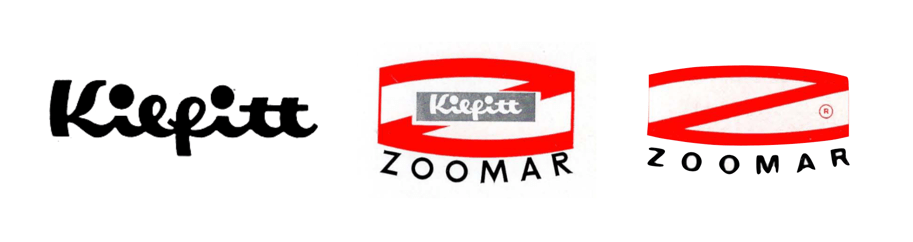
The evolution of the Kilfitt brand logos

Notable lenses: FERN-KILAR 400mm f/4, Makro-Kilar 40mm f/2.8

Further reading:

  1. Norman Rothschild, “An updated view of the Kilfitt system”, The Camera Craftsman, 10(2), pp.10-15 (1964)
  2. Norman Rothschild, “The revolution in SLR lenses”, Popular Photography, (60(6), pp.90-91,130-131 (1967)
  3. Berkowitz, G., “New.. Makro Kilar Lens”, Popular Photography, pp.86-87,106,108 (Mar, 1955)
  4. Kilfitt Optik, Photo But More
  5. ROBOT – Who came up with the idea? Kilfitt or Berning? Two genealogists come together to new discoveries…, fotosaurier (2021) article in German

Choosing a vintage lens – which brand?

In this post we’ll talk briefly about lens brands and manufacturers. When it comes to vintage analog lenses, people either choose a brand first, and then a focal length, or vice-versa. There are as many different brands as there are historic camera and lens manufacturers. Typically most vintage lenses come from East and West Germany, and Japan, largely because that is where the camera industry was focused. Choosing a brand can be a matter of personal interest, cost, or more often than not – popularity.

When looking at the type of vintage lens, you have to understand that there are different families of lenses, usually focused on a particular brand from a specific epoch. In order to choose a vintage lens it is important to obtain a basic understanding of the brand of interest – dates of manufacture, basic lens information (e.g. construction, materials, potential issues), and reviews. A particular 50mm lens from one manufacture may have evolved over many years, often with differing characteristics. For example the Asahi Super-Takumar 50mm f/1.4 appeared in 1964 as an 8-element lens, and evolved into a 7-element lens containing some elements which incorporated Thorium. It then became the Super-Multi-Coated Takumar, and finally the SMC Takumar. All have differing characteristics, although fundamentally they are all 50mm f/1.4 lenses.

These days there is quite a lot of digital material online, including scanned brochures, and lens reviews. The aim here is to just cover some of the more common manufacturers. Brands of lenses are generally divided into three major categories – (i) the core companies that produced cameras and lenses, (ii) companies with smaller 35mm impression, and (iii) independent companies that just produced lenses for many different manufacturers (not all camera makers produced lenses). To make it even more confusing, some camera companies rebranded lenses from other companies on their cameras. Many major manufacturers offered an extensive array of interchangeable lenses from extremely wide angle to mammoth telephoto lenses. In addition there were companies that specialize only in the development of lenses, including special purpose lenses.

Note that I have not included very small companies, e.g. Wrayflex, or companies who just produced cameras, and very few of their own lenses, e.g. ALPA (they used lenses from a number of manufacturers), Exakta (they only made/rebranded a couple of their lens as Exakta), or KW (makers of the Praktica line of cameras).

Landmark brand lenses

The first category involves milestone manufacturers who got into the 35mm game early, and focused heavily on SLRs. This means manufacturers like Asahi Pentax, Minolta, Yashica, Nikon, Canon, Leica, Zeiss Ikon, and Zeiss. These companies often may have started producing 35mm rangefinder cameras, and then transitioned to 35mm SLRs, and associated lenses (Asahi was the only one of these that did not produce a rangefinder camera). The exception here is Carl Zeiss, who did not make camera’s but was one of the largest optical lens manufacturers. They often designed a broad range of lenses to suit the needs of their cameras. These companies did not rely on 3rd party lens makers (although they did not prevent other companies making lenses for their cameras), and set the standard for many of the lens mounts used. Exakta, while manufacturing many cameras, and the bayonet-mount, designed few of their own lenses.

Second-tier brand lenses

Next are the companies that I consider second tier, i.e. they had a smaller footprint, made only SLRs or got into the game late. That’s not to say they didn’t make good lenses, but their lenses often don’t have the same character as the older lenses. They may have made cameras for other formats, or dabbled in the 35mm SLR market (because they thought they could compete), so the lenses available might just be an effect of short-lived cameras. This includes Konica, Fuji, Olympus, Topcon, Petri, Mamiya, Miranda, Ricoh, Rollei, Voigtländer. For example, Olympus did not introduce it’s first full-frame 35mm SLR, the Olympus OM-1 until 1972. Fuji first interchangeable lens SLR was the Fujica ST701 from 1970. Some of these manufacturers uses rebadged 3rd party lenses. For example Miranda initially used lenses from Zunow or Ofunar, and by the late 1950s had moved to Soligor.

Independent (i.e. 3rd party) brand lenses

The final level of brands are those companies who really just produced lenses. They essentially produced lenses for the cameras of other brands (or more commonly for specific camera mounts). They were 3rd party suppliers, and some were experts in lens design, having been in the business since the 19th century. This included a long list of German and Japanese companies, e.g. Meyer-Optik, Tokina, Soligor, Enna-Werk, Heinz Kilfitt, and Astro-Berlin. Some of these manufacturers produced a broad range of lenses for many different brands, while others produced specific types of lenses such a telephoto lenses. As they often focused solely on lenses, some of these manufacturers produced exceptionally good lenses.

Vintage lens makers – Tewe (Germany)

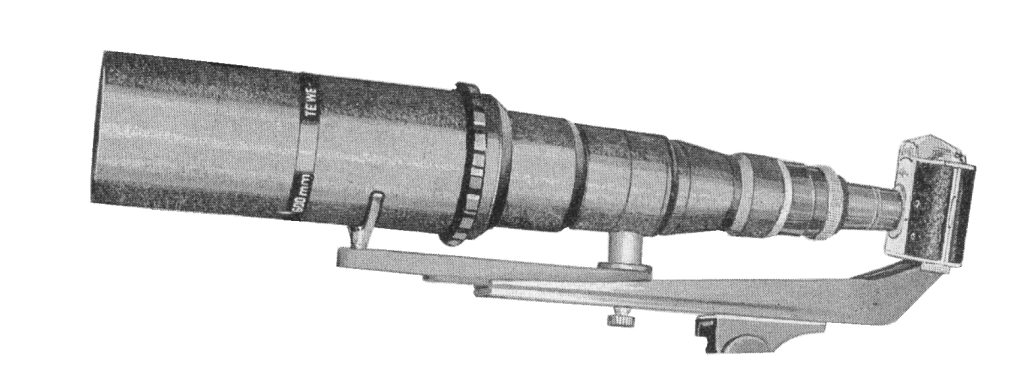
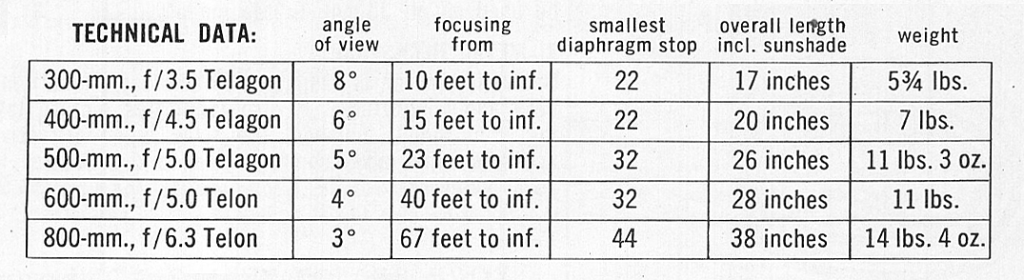
Tewe was a German company based in Berlin and well known for its long-distance lenses, up to 2000mm. Technische Werkstätten für Photo-Kinotechnik, Weiste & Co., TEWE OHG, was founded in 1935 in Schöneberg Berlin (in West Berlin during the Cold War period). The company initially developed long-focal length cinematic lenses, but by the 1950s and 60s they were producing long-focal length lenses for reflex cameras. Some of these lenses were designed in association with Astro-Berlin and Piesker. The company discontinued production in 1972.

Supposedly their lenses were used by astronomical observatories around the world, and lenses were well known for their “exceptional light intensity, unique brilliance, and needle-sharp, critical definition”. Their lenses were adapted for Exakta cameras, with lenses in the realm of 300-800mm.

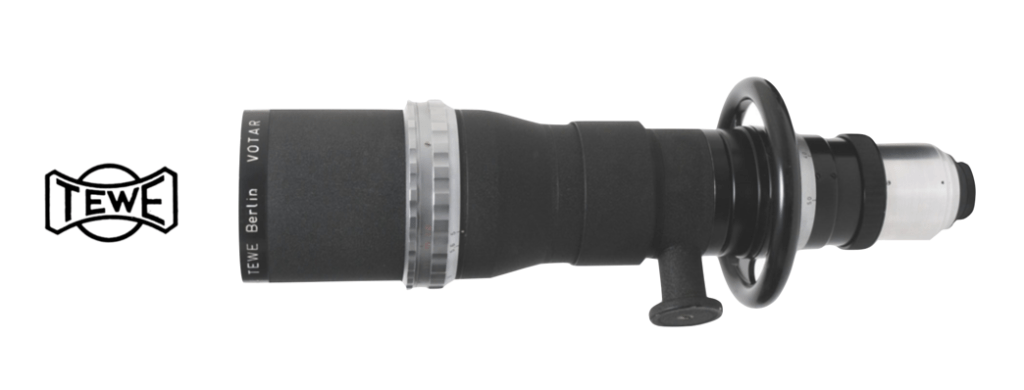
Tewe Berlin Votar 500mm f/5
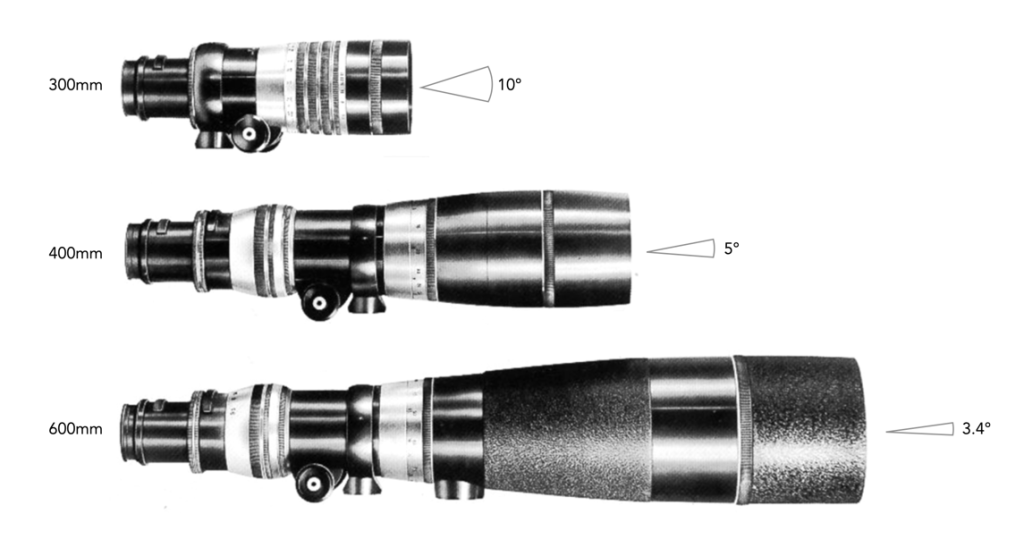
Some of the lenses produced by Tewe

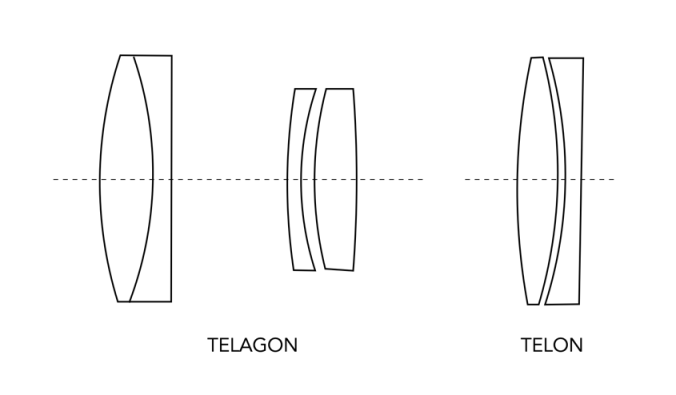
These lenses were sold in two lens configurations, Telagon, or Telon. The Telagon had 4 elements in 3 groups, whereas the Telon was 2 elements in 2 groups. The Telon lenses were available in 400mm, 500mm, 600mm, and 800mm for 35mm, and a 1000mm for 6×6 cameras. The Telagon was available in 300/400/500/600mm. These lenses were heavy – the Telon 800mm was 6.5kg!

Vintage lens makers – Astro-Berlin (Germany)

Astro-Optik is one of a number of German optical companies that flew under the radar, due to its speciality lenses. It was founded in 1922 as Astro-Gesellschaft Bielicke & Co and based in Neukölln, Berlin (which would become part of West-Berlin). The founders were William (Willy) F. Bielicke, Hugh Ivan Gramatzki and Otto (?). Gramatzki (1882-1957) was a successful amateur astronomer and astrophotographer who published in the journal Astronomische Nachrichten, and headed the local branch of “Berliner Astronomische Vereinigung” for a number of years. Gramatzki invented the Transfokator in 1928. Bielicke (1881-1945) a German-American optical designer was involved in the technical development of the lenses and was responsible for the “Tachar” and “Tachon” lenses.

The 1000mm lens

So it is then not surprising that Astro-Berlin’s product range included lenses suitable for astrophotography and astronomical photometry. After the war the company focused on its film technology (Astro-Kino, Astro-Kino Color) developing lenses that had long and extremely long focal lengths, sometimes called “optical heavy artillery”. The company ceased operations in 1991.

The company produced a multitude of lenses, many under the brand Astro-Berlin. Astro-Berlin is likely most famous for its long lenses for cinematography and photography. These lenses were very simple consisting of one (f/5, f/6.3) or two (f/2.3) achromatic doublets. The f/5 lenses for 35mm came in 300mm, 400mm, 500mm, and 640mm lengths. The 800mm f/5 lens was designed for medium 60×60mm format, and the 1000mm f/6.6 for 60×90mm format.

mm12515015020030030040050050064080010002000
f/2.32.31.83.53.5554.55556.310
Focal lengths (mm), and apertures of Astro lenses for 35mm/6×6 reflex mounts

In addition they produced quite fast lenses. In 1933 they introduced the Tachor f/0.95 which was available in various focal lengths. The 75mm version was suitable for an 18×24mm format (half-frame) but it was a large lens at 110mm in length with a frontal diameter of 81mm. The longest lens produced was possibly the 2000mm f/10 Astro Telastan. At times Astro also cooperated with the other Berlin optics manufacturers Piesker and Tewe.

Ads from Das Atelier des Photographen (1936)

These days, Astro-Berlin lenses are expensive on the secondhand market. For example the Astro Berlin Pan Tachar 100mm f/1.8 can sell for up to C$6000 depending on condition. However it is possible to find a 500mm f/5 lens for between C$900-1200.

Further reading:

Choosing a vintage lens – some tech FAQ

Not a definitive list, but one which covers a few of the “tech” issues. More will be added as I think of them.

Are all lenses built the same?

Most manufacturing companies provided a good, clean environment for constructing lenses. That’s not to say that there won’t be lousy copies of a particular lens, as well as outstanding copies, due to manufacturing tolerances. This is exacerbated in some lenses from the USSR, mostly because the same lens could be manufactured in a number of different factories, all with differing levels of quality (which during the period could be true of any company running multiple manufacturing locations).

Are vintage lenses radioactive?

There are some lenses that produce low-level radiation because they contain one or more optical elements made using Thorium. It was useful in lens design because it gave optical glass of the period a high refractive index, so fewer lens elements would be needed in a lens.

What sort of aberrations do vintage lenses produce?

No lens is perfect (not even modern ones). Lenses can suffer from soft edges, chromatic aberrations, and vignetting. But that’s not to say these things are negatives. Some vintage lenses can create the same sort of distortions that app filters do – using the lens aberrations.

Do vintage lens have coatings?

Lens coatings first appeared in the 1930s, yet many early vintage lenses only had a single layer coating and as such many lenses are susceptible to internal reflections and lens flare. Lens coatings were made from a variety of materials, including rare-earth elements. Lens coatings were primarily created to eliminate or reduce light reflections. Through the practical application of lens coatings, a significant reduction in the reflective index of the lens allowed for more complex optical designs to be constructed. The lack of coatings can add to a lenses’ character.

Are vintage lenses sharp?

Vintage lenses may not be as sharp as modern ones, but then again vintage lenses aren’t really about sharpness. Older lenses are often sharp in the centre, but decreasingly so as you move to the corners. Stopped down to f/8 many produce good results. The reduced sharpness is due to the use of fewer low-dispersion optics, fewer anti-reflective coatings, and the widespread use of spherical elements in lens construction. The use of low-dispersion glass and aspherical elements has lead to finer detail in modern lenses.

Does bokeh matter?

Does it? Look honestly, buying a lens just for its ability to produce “creamy” bokeh is fine, but you still have to have the right circumstances so the lens will produce bokeh. Bokeh certainly adds interest to a picture, but it’s not the be-all and end-all some people make it out to be.

Is faster better?

An f/1.2 lens is often (incorrectly) considered to be better than an f/1.4 lens, which is turn is better than a f/1.8 lens, while an f/3.5 lens is not even considered. This misconception is derived, in part, from the fact that large aperture lenses are more costly to design and manufacture. However a high cost is not necessarily associated with better quality when all aspects of lens performance are considered. Large aperture lenses do benefit from superior light-gathering power, good in low light situations – but how often is this needed? Large aperture settings also suffer from a very shallow depth-of-field.

Why do later lenses have so few aperture blades?

Lenses of the 1950s often had a lot of aperture blades, from a low of 8 to a high of 18-20. This means that the apertures produced in scenarios such as Bokeh are almost perfectly round. However with the introduction of fully automatic aperture in 1961, there was a need to reduce the operating resistence of the blades, hence many manufacturers chose to reduce the number of aperture blades to 6.

Can vintage lenses be stabilized?

Vintage lenses don’t come with built-in stabilization. This is not a problem with cameras that have in-body stabilization like Olympus, but can be an issue with those that rely on lens-based stabilization.

Do vintage lenses produce EXIF data?

Vintage lenses do not have an electronic connection, so that means the camera will only record metadata (EXIF) for images relative to camera settings like shutter speed, ISO, FPS, picture profiles, etc. However, no lens data will be included, such as f-stop, or focal length. The camera also won’t think there is a lens attached, so it is necessary to change the setting “Release without lens” to activate the shutter release. This can really hamper some people as it requires taking notes while out shooting, and it isn’t always practical – like when you are taking a few shots in sequence. With no lens specific information, the camera has little ability to correct for things like vignetting.

Vintage lenses – Why are telephoto lenses so cheap?

Go on to any vintage camera resellers website, and you will see that there are some lenses, notably telephoto lenses, that are inexpensive – I mean really cheap. Why? Doesn’t it require more material to make? Well, yes and no. They do have more metal (body), but the amount of glass is probably less than lenses with shorter focal lengths. Telephoto lenses generally have a very simple lens formulae, and so most of the added expense went into creating a large lens body. But that’s not really the problem.

Nearly all camera manufacturers provided an array of telephoto lenses. It’s a wonder they sold them all. For the reality is, then as now, telephoto lenses have a very narrow scope of use. The amateur photographer was likely only interested in the moderate telephotos, up until 135mm. The remaining lenses were the purvey of the professional photographer, and cinematographer. Who really needed a 300mm or 500mm lens, let alone 800mm? For example, in 1971, Asahi-Pentax sold 12 different Super-Takumar telephoto lenses:

  • Moderate : 85mm f/1.9 105mm f/2.8, 135mm f/2.5, 135mm f/3.5, 150mm f/4
  • Standard : 200mm f/5.6, 200mm f/4, 300mm f/6.3, 300mm f/4
  • Super : 400mm f/5.6, 500mm f/4.5, 1000mm f/8

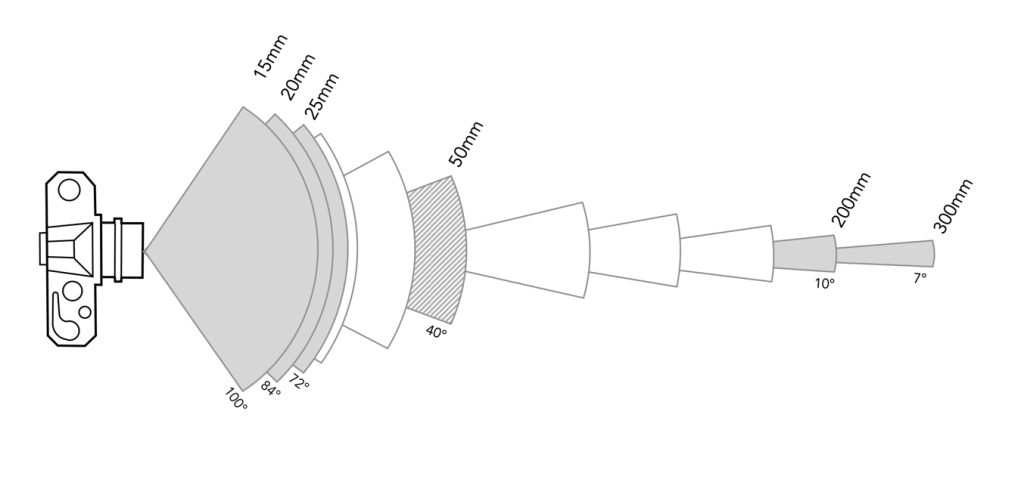
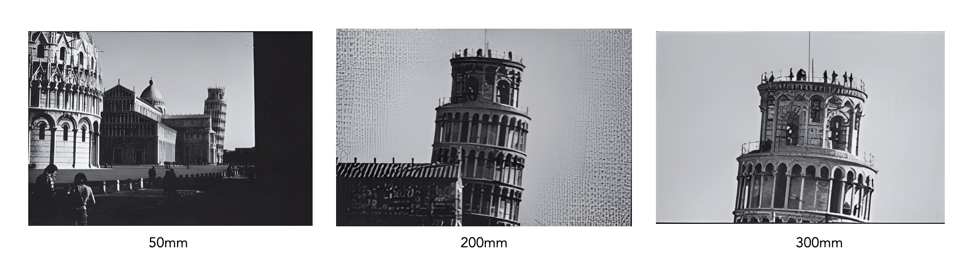
The problem is that these telephoto lenses were only used for a narrow scope of use. Even a 300mm lens only has a horizontal AOV of only 10°. By the time you get down to 400mm it’s only 5°. Both are very low angles.

For the purpose of this discussion, let’s consider telephoto lenses above 120mm. That leaves three core categories: (i) the moderate telephoto’s around 135mm, (ii) the upper-end standards 200mm and 300mm, and the super-telephoto range > 300mm. Of the telephotos below 120mm, the most common are the 80-90mm lenses may be the most expensive of all telephotos, due to their popularity in portraiture work. Note that the prices quoted are for lenses in average to good condition, meaning that they are functional, yet may have minor optical issues, that won’t impact the quality of the image.

135mm

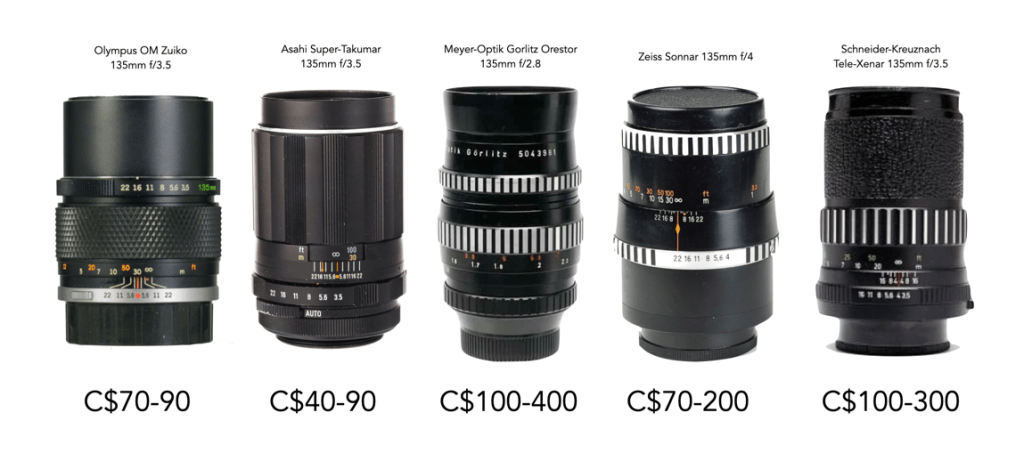
The most common lens in the moderate telephoto category is the 135mm, and there are a lot of them. Almost every lens manufacturer produced the 135mm as a “standard” telephoto lens. This may have been a legacy of rangefinder 25mm cameras which maxed out at 135mm (without the use of specialized devices). As such they are cheap because they are plentiful. The price only varies depending on manufacturer, lens speed, and mount (obscure mounts will reduce the price). If you search Kamerastore, you will find hundreds of 135mm lenses. A Soligor 135mm f/3.5 Tele-Auto (M42) can cost as little as C$60, whereas a Schneider-Kreuznach 135mm f/3.5 (M42) will only cost C$155. The rare exceptions seem to be lenses like the KMZ 135mm f/2.8 Tair-11, which sporting 20 aperture blades sells at about C$338.

Prices are also low because their use in as lenses on digital cameras is just not that popular, largely because once adapted to crop-sensors, a 135mm becomes a 200mm (APS-C) or 270mm (MFT) lens. Other reasons they aren’t popular include being slow, with an average aperture of f/2.8-4.0, and some lenses like the Meyer-Optik Görlitz Orestor 135mm f/2.8 are heavy, i.e. over 500g.

200/300mm

The “standard” telephoto range is often even cheaper relative to it’s size. A 200mm Asahi Super-Takumar f/4 usually sells for around C$200, the Jupiter 21M for C$175. Once you move higher than 200mm, prices seem to stabilize at around C$1 per mm of focal length. Here the higher prices indicate some historically significant lens. For example both a Meyer-Optik Görlitz 300mm f/4.5 Telemegor, or an early Pentax 300mm f/4 Takumar might be priced around C$400.

Super-telephoto

Again, these lenses can be cheap, even though they are not as abundant as smaller telephoto lenses. You can get an Asahi Super-Multi-Coated Takumar 400mm f/5.6 for around C$400. A Meyer-Optik Görlitz 400mm f5.5 Telemegor on the other hand might only cost C$200. The expensive 400mm lenses are often those with some history. For example a Kilfitt Fern-Kilar 400mm f/5.6 normally costs upwards for C$600-800 because it is a rarer lens, and due to its association with the film Rear Window.

The verdict? Telephoto lenses above 120mm can be fun to play with, but most people won’t use them that often. I think that is partially the reason why 135mm lenses are so cheap (and often in such good condition). People bought them to broaden their focal length choices, found they weren’t very practical, and relegated them to a cupboard somewhere. They weren’t that useful for everyday shots, and certainly too bulky to travel with. Eventually the market for them likely waned due to the growth of the zoom lens market. I would honestly avoid telephotos above 200mm unless you have a good use for the lens (and you choose a lens with good reviews). Longer lenses are fun to play around with, but may not exactly be that practical. Super telephotos are for the birds (literally).

P.S. There are also a lot of third-party lenses suppliers that produced telephoto lenses that are even cheaper than camera brands. For example Chinon, Sigma, Soligor, Tokina, Hanimex and Vivitar.

Choosing a vintage lens – more specialized focal lengths

While the standard focal lengths (28-150mm) are of most interest to the amateur vintage lens user, there are also more specialized options. These are for the photographer who wants to broaden the type of lens they use. Ironically the super-wide-angle and standard telephotos are at opposite ends of the spectrum, both from the perspective of focal-length, AOV, and cost. The shorter the focal length, the more expensive the lens, whereas the longer focal lengths are quite plentiful, and cheap.

Note that I have not included sub-15mm lenses because they nearly all verge on the specialized fisheye realm, and I’ll be covering that in another series of posts. Over 300mm, lenses tend to become very specialized, and not much use unless you are doing surveillance, or wildlife photography.

Super wide-angle lenses (15−25mm)

These are in the special lenses category, sometimes referred to as extreme wide-angle lenses. These lenses have a horizontal AOV of between 70-100°. Their primary function is to allow the inclusion of a broad subject area from a relatively close vantage point – this includes landscape with broad vistas, city scenes, and build interiors. Lenses in this category are corrected for curvilinear distortion (i.e. they reproduce straight lines), they reproduce parallel lines in the scene with greatly enhanced angles of convergence. The lower the focal length, generally the fewer the options available. Note that many of the lenses in this category did not appear until the mid-to-late 1960s.

24/25mm (74/72°)

Some consider 24mm to be where the “real” wide angles begin. There is a perceivable change in perspective from 28mm, although the horizontal AOV only changes from 65° to 74/72°. The biggest problem here is that there aren’t many options, in this focal length.

  • Examples Asahi Super-Multi-Coated Takumar 24mm f/3.5, Olympus Zuiko 24mm f/2.8; Isco-Gottingen Westrogon 24mm f/4;
  • Crop-sensors − 36/38mm (APS-C), 48/50mm (MFT)

20/21mm (84/81°)

These lenses obviously offer even a wider AOV than their 24/25mm counterparts. For some manufacturers this was the lower limit of the lenses they offered, partially because of the expense involved in designing them. The maximum aperture was at most f/2.8, with most of these lenses being f/4. The wider you go, the more aberrations like field curvature that exist.

  • Examples Carl Zeiss Jena Flektogon 20mm f/2.8 and f/2.4; Asahi Super-Multi-Coated Takumar 20mm f/4.5; Minolta MD 20mm f/2.8
  • Crop-sensors − 30/32mm (APS-C), 40/42mm (MFT)

15−18mm (100−90°)

These lenses didn’t really appear in great quantities until the 1970s. These uber-wide/(rectilinear) fisheyes performed well in the centre of the images, but the edges suffered from some field curvature and barrel distortion, but maybe that’s part of their appeal. Apertures were generally around f/3.5. Some of the lenses were fisheye’s others rectilinear wide’s. More Japanese lenses, and fewer German lenses.

  • Examples Asahi SMC Takumar 15mm f/3.5; Asahi Super-Multi-Coated Fish-Eye-Takumar 17mm f/4; Nikon Nikkor 15mm f/3.5; Asahi Fish-eye Takumar 18mm f/11.
  • Crop-sensors − 22-27mm (APS-C), 30-26mm (MFT)
Specialized focal lengths, and their associated AOV (horizontal).

Standard telephoto lenses (180−300mm)

Telephoto lenses larger then 135mm were the purvey of the SLR, with rangefinder cameras requiring the use of a boxy reflex box. Still as with many prime telephotos, they were often sidelined by zoom telephotos.

180−200mm (11−10°)

There were a number of good 200mm lenses with fast apertures in the range f/2 to f/1.8 available in the tail end of the manual focus era. The core 200mm lenses were the f/3.5 to f/4.5 models offering a good balance of size, weight, and performance.

  • Examples Meyer-Optik Orestegor 200mm f/4; Asahi Super-Multi-Coated Takumar 200mm f/4; CZJ Sonnar 200mm f/2.8;
  • Crop-sensors − 270-300mm (APS-C), 360-400mm (MFT)

250−300mm (8−7°)

Most manufacturers offered a 300mm lens or two. Early models can be bulky, and rare. Only for those who are really serious about seeing things close-up.

  • Examples Kilfitt Tele-Kilar 300mm f/5.6; Meyer-Optik Telemegor 300mm f/4.5;
  • Crop-sensors − 375-450mm (APS-C), 500-600mm (MFT)

Did Darth Vader use a Zeiss lens?

In a galaxy, far, far away, they used cameras with lenses from Carl Zeiss Jena. It’s true, Vader was into photography, he had a dark-room and everything. Actually I never saw anyone with a still camera of any sort in the Star Wars universe, but I guess they must have existed – they did use “holocams”. So how did a reference to a sci-fi classic get associated with the design of a lens?

In some of the early SLR lenses from CZJ, especially lens series like the Pancolar, many people describe them as being “Star Wars” lenses. What does this really mean? These lenses often have another moniker – “zebra” lenses, because of their striped design. Does the zebra somehow associated them with Star Wars? Most of the talk of Star Wars revolves around the Carl Zeiss Jena Pancolar lenses, and in particular the 50mm f/2 (and in odd cases the f/1.8).

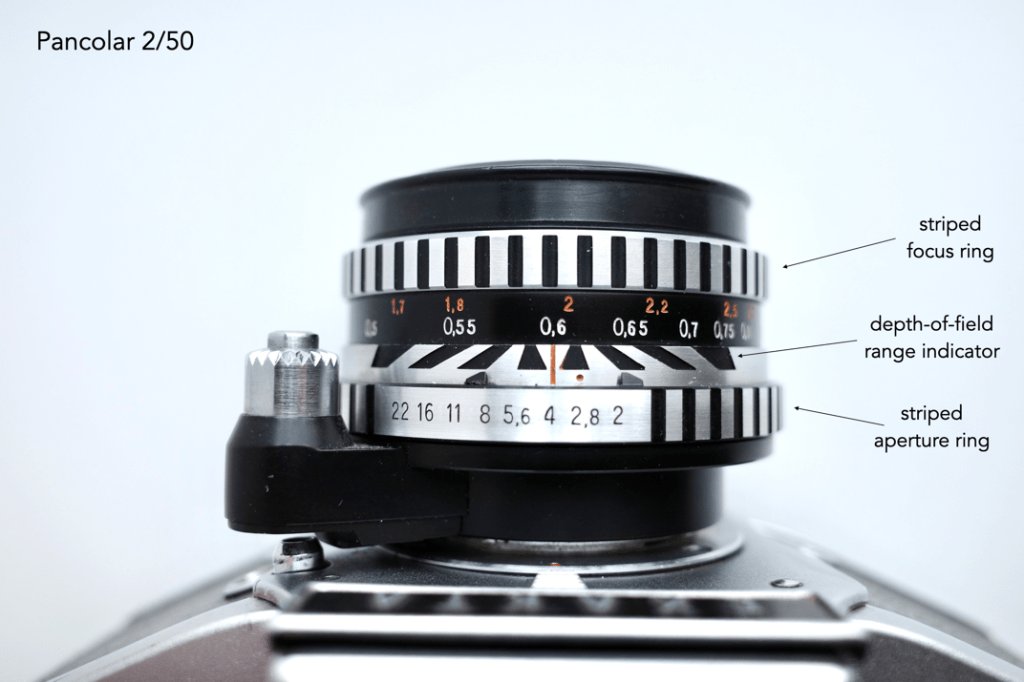
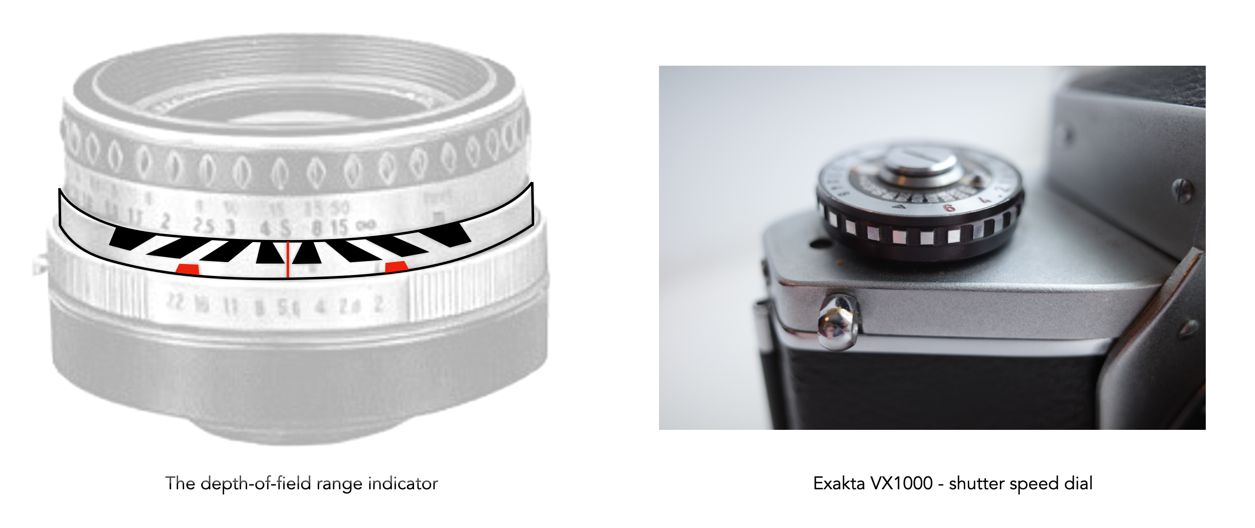
The Pancolar 50mm f/2, which first appeared as the Flexon 50mm f/2, was produced from 1959-69 (made mostly for Exakta mount), and had a number of differing aesthetic looks. Most differed by a change in the grip ring in the front of the lens, from a leather to plastic knobs, and finally to the stripped aluminum ring. Except for the earliest version of these lenses, they all sported the “converging” look of the “depth-of-field range indicator” (DoFRI), which appeared around 1962. Basically when the aperture was altered, the indicators (early models in red as shown, later models in black) would move in and out appropriately, so at f/2 they would converge at the red central line. A Zeiss brochure from 1962 which contained four lenses: Flektogon 4/50mm, Flektogon 2.8/35mm, Tessar 2.8/50mm and Pancolar 2/50mm. Strangely enough, the Pancolar was the only one with this converging distance design.

The “zebra design” is the colloquial term for lenses with grip rings that are aluminum – with vertical straight knurling that alternate black and bare aluminum. Supposedly this striped design evolved from the Exakta VX1000 which when released in 1966 had a shutter-speed selection knob of a similar design. The Pancolar 50mm f/2 also adopted the zebra design circa 1966, while still retaining the converging depth scale. The zebra looks was eventually replaced by the black-look lenses in the early 1970s.

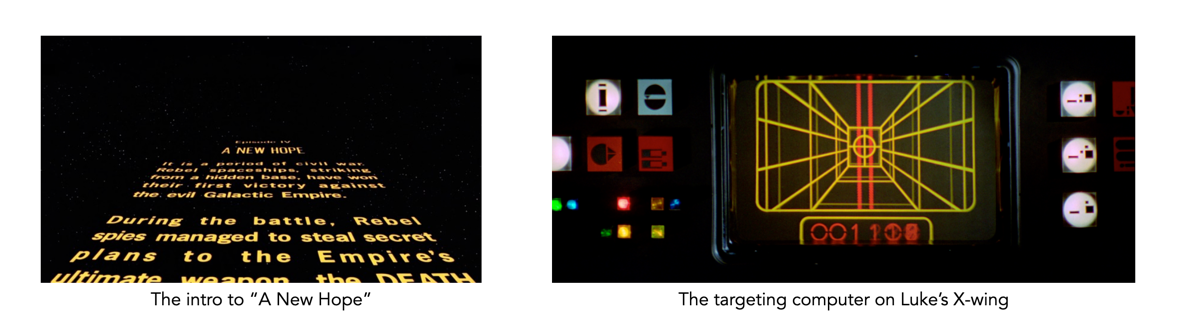
Some suggest the Star Wars moniker it is named for the characteristic look of the DoFRI, reminiscent of those very yellow credits at the beginning of the film. If anything, I think the range indicator could be better attributed to the targeting computer in Luke’s X-wing used on the trench run on the Death Star (Episode IV). It shows the same converging lines, and deals with a similar concept, i.e. distances of a sort. On later models of the 50mm f/2, the strips existed on the tandem with the DoFRI, but when the Pancolar 50mm f/1.8 appeared, it maintained the striped appearance, but lost the converging look DoFRI, opting instead for a more traditional one.

It seems then that the use of strips to describe the “Star Wars” look has no real basis. There were other Zeiss lenses that took on the zebra design, as well as other manufacturers, e.g. Meyer-Optik, Asahi (e.g. the Auto-Takumar 55mm f/1.9), using the design well into the 1970s, and no one ever talks about “Star Wars Takumars”.

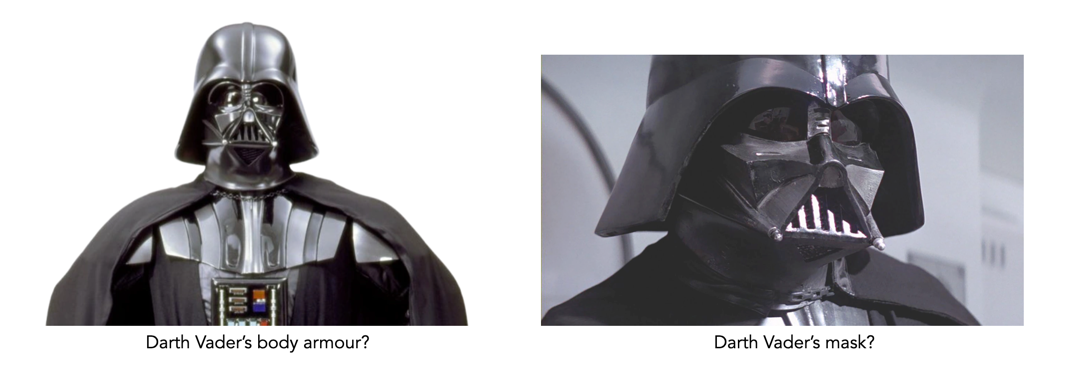
The reality is, no one really knows where the term originated or why it came into use. Were these lenses associated with Star Wars because of the striped design? Or perhaps it was a play on the “good” versus “evil” of West versus East Germany? If you look at a lens in isolation, it does have an association, but a dark one – it does share some characteristics with Darth Vader. It’s cloaked in blackness, and perhaps the striped design is associated with the strips on Vader’s armour? Or perhaps the strips were reminiscent of the mouth grill on Vader’s mask?

Maybe it just has a Star Wars feel about it, and you know, the more I look at it, the more I feel that way – maybe I’m being drawn in by the Force… must buy more…

Choosing a vintage lens – classic focal lengths

The number one choice when selecting a vintage lens is usually focal length. This post will look at the classic types of focal lengths, to provide some insight into choosing one to suits your needs. For each lens focal length, I have included some of the more popular examples of lenses. I have not included cost estimates, because they can be so varied, and dependent on a number of factors.

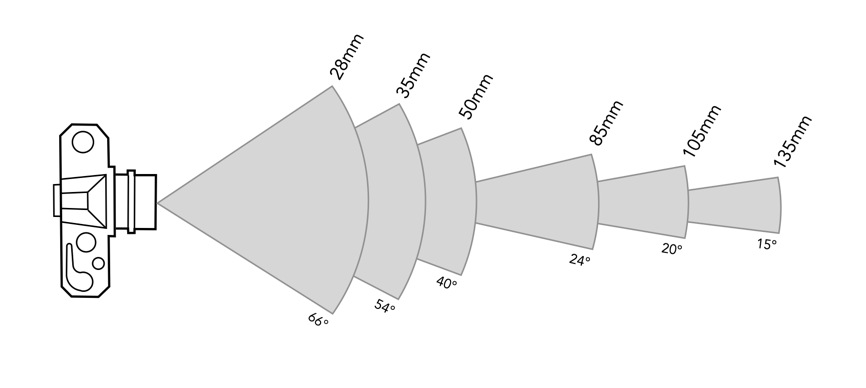
The values provided for the “crop sensor” denote the full0-frame equivalents when the lenses are used on crop-sensor bodies. For example a vintage 50mm lens on an APS-C sensor will behave the equivalent of a 75mm lens on an SLR. That means a 24mm super wide angle lenses on a DSLR will behave like a wide on an APS-C sensor, and a normal lens on a MFT sensor. Crop sensor focal lengths are simply calculated by multiplying the focal length of a lens by the appropriate crop factor: 1.5 (APS-C), 2.0 (MFT). Note that angles shown represent the angle-of-view (AOV) of the lens and are always horizontal. The AOV for the crop-factors are calculated in the same way as for the focal lengths.

Standard lenses (40−58mm)

Normal lenses tend to produce natural-looking pictures. There is a broad range of lenses in this category, both from the perspective of cost, weight, and aperture (speed). Wide apertures in the range f/1.2-1.4 are ideal for talking available light pictures indoors and out. Average aperture lenses are f/1.7 or f/1.8. Generally lens prices increase as apertures increase, hence why slow lenses are often inexpensive (and plentiful).

50mm (40°)

The 50mm lens is the most ubiquitous of all vintage lenses. Just about every camera came standard with a 50mm lens. 50mm lenses can generally be categorized into “fast” and “slow” lenses. Fast lenses are generally those with apertures of f/1.5 and larger, whereas slow 50’s were f/1.7 to f/2.8. Slow lenses are typical of the standard kit lenses found on cameras of the period, in part to reduce the cost of the basic system. Some higher end models were given an f/1.4 lens, and some like Canon advertised their Canon 7 rangefinder with the “dream lens”, the 50mm f/0.95. The super-fast lenses were designed for low-light situations, and really don’t make a lot of sense for the average photographer.

  • Examples Asahi Takumar 50mm f/1.8; CZJ Pancolar 50mm f/1.8; CZJ Tessar 50mm f/2.8; Meyer-Optik Görlitz Oreston 50mm f/1.8; Mamiya Sekor 50mm f/2; Carl Zeiss Planar 50mm f/1.8;
  • Crop-sensors − 75mm (APS-C), 100mm (MFT)

55mm (36°) and 57/58mm (35/34°)

Some cameras came standard with the “other” normals, 55mm and 57/58mm, depending on the manufacturer. Many of these lenses are from the period when SLR first appeared. Some suggest this was because of mechanical limitations imposed on producing fast 50mm lenses (impeded by the existence of a mirror), others suggest it is because photographers preferred the longer focal length because it was more portrait-focused. So the late 50’s to early 60’s saw a number of these lenses appear. 58mm lenses were generally f/1.4 to f/2, and 55mm were f/1.7 to 2.

  • Examples Helios-44 58mm f/2.0; Konica Hexanon AR 57mm f/1.2; Minolta Rokkor MC 58mm f/1.4; CZJ Biotar 58mm f/2; Mamiya Sekor 55mm f/1.4; Asahi Super-Takumar 55mm f/1.8;
  • Crop-sensors − 83/87mm (APS-C), 110/116mm (MFT)

40mm (48°) and 45mm (44°)

These focal lengths are not that common, usually appearing in the guise of “pancake” style lenses. These lenses are more likely to be found on fixed-lens cameras, for example the point-and-shoot Olympus Trip 35 (Zuiko 40mm f/2.8). These lenses are ideal for people who work outdoors, as they are light, and compact. They fit very discretely on any camera, but like many compacts look almost comical on larger cameras. These are the focal lengths closest to the diagonal of 36×24mm film, with 40mm offering 48.46° horizontal AOV. Generally they had apertures in the f/2 to f/2.8 range. Within the mainstream of lenses, these intermediary lenses are somewhat inconspicuous, possibly because there aren’t that many examples.

  • Examples Konica Hexanon AR 40mm f/1.8; Asahi SMC Pentax-M 40mm f/2.8; Minolta Rokkor MD 45mm f/2 (pancake)
  • Crop-sensors − 60/68mm (APS-C), 80/90mm (MFT)
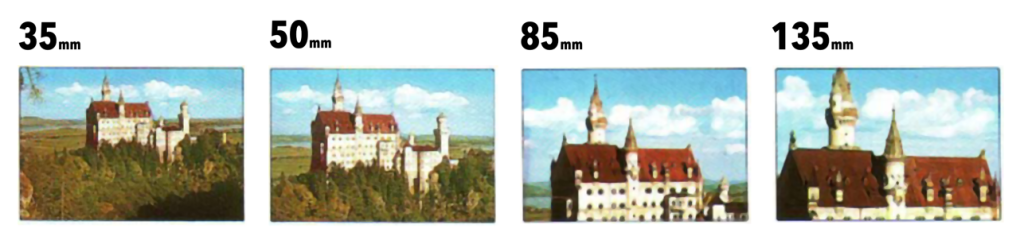
Classic focal lengths, and their associated AOV (horizontal).

Wide-angle lenses (28−35mm)

Any lens shorter than a normal focal length qualifies as a wide-angle. They range from extreme fish-eye to the more moderate, and useful 24-35mm category. We have divided these into the “normal” wides, described here, and the super-wides. As the focal length decreases, the wide-angle characteristics increase – greater angle-of-view, greater depth of field, and greater apparent distortion.

35mm (54°)

Before the 1970s, the 35mm was the “standard” wide angle produced by many manufacturers. As such it was often the workhorse of wide-angle shots from the days of the rangefinders up to the 1970s, when wider lenses started to appear. Due to the increase in AOV, many photographers preferred its perspective and as a result was often carried as a secondary lens. It has a horizontal AOV of 54°, and was usually available is a wide range of apertures, from f/1.4 to f/4, and therefore there is no shortage of these wide-angle workhorses, and therefore can be quite inexpensive.

  • Examples CZJ Flektogon 35mm f/2.8; Enna München Lithagon 35mm f/3.5; Konica Hexanon AR 35mm f/2; Asahi Super-Takumar 35mm f/3.5
  • Crop-sensors − 52mm (APS-C), 70mm (MFT)

28mm (65°)

The 28mm has become the “standard” in wide angle lenses since the 1970s. Like the 35mm, there are copious lenses with many differing characteristics out there.

  • Examples Asahi Takumar 28mm f/3.5; Minolta Rokkor MC/MD 28mm f/3.5; Asahi Super-Takumar 28mm f/3.5;
  • Crop-sensors − 42mm (APS-C), 56mm (MFT)

29/30mm (64/62°)

Quite a rare option, it provides a small variation on the 28mm.

  • Examples Meyer-Optik Görlitz Lydith 30mm f/3.5 (also Pentacon 30mm); Pentacon 29mm f/2.8, and its predecessor the Meyer-Optik Görlitz Orestegon 29mm f/2.8
  • Crop-sensors − 44/45mm (APS-C), 58/60mm (MFT)

Moderate telephoto lenses (80−150mm)

These are likely the most common telephoto lenses, the moderate telephotos are often considered “portrait” lenses. Often reasonably fast and lightweight, they are easy to hold by hand they provide at least twice the magnification of normal lenses. Angle-of-view is generally 14-25°.

80−90mm (25-23°)

These focal lengths were common in rangefinder lenses, and are sought after for taking portraits, likely due to their limited compression effects. Apertures range from f/1.8 to f/3.5.

  • Examples Jupiter 9 85mm f/2.0; Asahi Super-Multi-Coated Takumar 85mm f/1.8; CZJ Pancolar 80mm f/1.8; Helios 85mm f/1.5
  • Crop-sensors − 127-135mm (APS-C), 170-180mm (MFT)

105mm (19°)

Sometimes overlooked, but just slightly narrower field (19°) than the more popular 85mm (24°).

  • Examples Asahi Super-Multi-Coated Takumar 105mm f/2.4; Meyer-Görlitz Trioplan 105mm f/2.8
  • Crop-sensors − 157mm (APS-C), 210mm (MFT)

120−150mm (17-14°)

The ubiquitous 135mm is the most common lens in this range, and there are a lot of them. The 135 was likely the “standard” telephoto until telephoto-zooms started to make inroads in the 1970s. Available in a wide assortment of apertures, f/2.8 and f/3.5 were the most common.

  • Examples − Hard to pick one 135mm, there are SO many. CZJ Sonnar 135mm f/1.5; Meyer-Optik Görlitz Orestor 135mm f/2.8; Asahi Super-Multi-Coated Takumar 135mm f/3.5
  • Crop-sensors − 180-225mm (APS-C), 240-300mm (MFT)