The 1950s heralded the golden age of travel photography. There was an abundance of camera options due initially to the emergence of East Germany as a powerhouse of inexpensive 35mm cameras, followed shortly afterwards by Japan, but also non-SLR cameras – and the travel revolution had begun. That’s not to say film was necessarily cheap – in 1955 you could buy three rolls of 20 exp. 35mm Kodachrome for about US$5.50 (usually this cheaper price was without processing). To put this into context, a loaf of bread was about US$0.12. Yet when people travelled, for example to Europe, the average length of a trip was about 50 days, at a cost of $1300 (1950), so in all likelihood for those who could afford it, film was a minor expense.
Anyone who knows someone who was an amateur photographer during the heyday of 35mm knows that they often took a lot of photos when travelling. Photos of people, photos of places, and things they saw along the way. Some turned out, others not so much. Why? Because you may never be able to retake a given situation, and because the situation of the travel photographer usually finds themselves in – a very limited time to shoot. You may never come back to the same place (and regardless it will have changed). However travel photography was still limited for the amateur photographer due to inexperience – this often resulted in photos that were out-of-focus, or had parts cut off (maybe sometimes made worse by camera manufacturers who made automatic cameras seem flawless). You never knew exactly what you were going to get until the film had been processed.
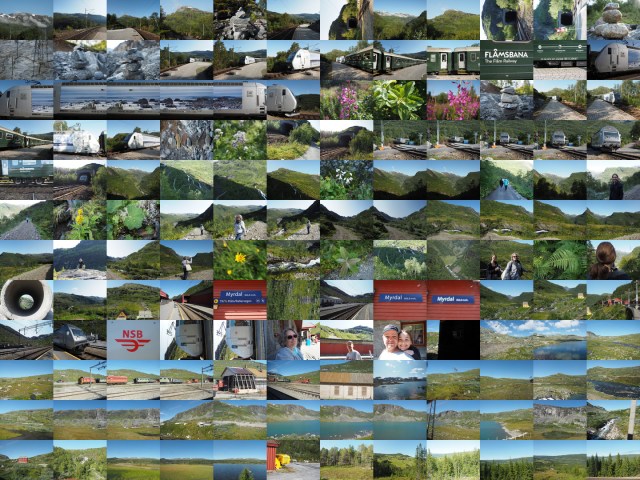
With digital photography we have another dilemma – you can take hundreds (or even thousands) of photographs, because it is possible. There is no material limit beyond the capacity of a memory card, and that can easily be augmented with other cards. With the proliferation of intelligent cameras, the amateur photographer can focus more on content, and perhaps a little less on the technicalities of taking a photo. Travel photography has become a “shoot now, discard later” venture. But is quantity bad? This may be less about producing a safety net of good photographs, and more about shooting all you want to.
Well known Japanese street photographer Daido Moriyama is the type of photographer that has always believed that quality only comes with quantity. He is known to take 36 exposures in less than 100m of street photography.
“As I’ve said countless times before, my photography is all about quantity. I take lots of shots. Digital cameras are just so amazingly convenient. There’s no film to keep changing, and you just point the camera where you like… Of course, the batteries are a bit of a bother, but relatively speaking…”
Moriyama, How I Take Photographs (2019, p.78)
In the glory days of film, professional photographers would take roll after roll of film, from which only five or ten shots may be used to complete a story. This wasn’t really possible for the amateur film photographer, due to inexperience, cost, and equipment limitations. With digital many of these limitations have disappeared. For some people it is sometimes hard to take a large number of photographs. Sometimes it just doesn’t feel right, but things change over time when you realize that the photo you are looking for was one you never shot. Shooting copious frames in digital costs nothing from a storage perspective. Sometimes it is just finding the balance between quantity and art.
 Crafting Pixels