The internet is full of articles suggesting smartphone cameras are better than actual digital cameras. Sure the smartphone market is booming, and they do take good pictures, but it’s really not possible to accurately compare them to digital cameras. It’s like saying to an astronomer that they could get the same quality astronomical image using a full-frame or medium format camera?
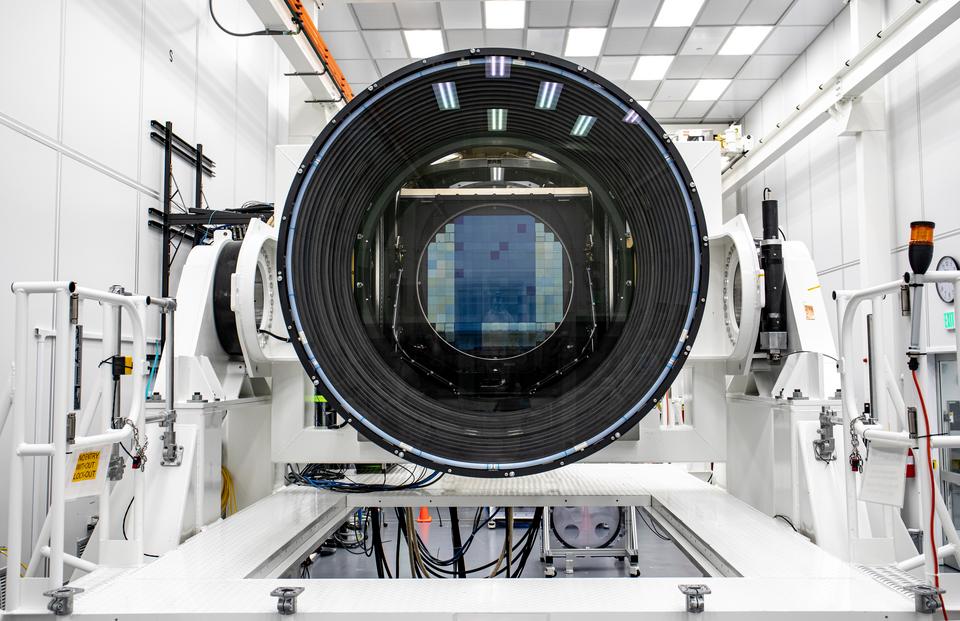
In late 2022 the worlds largest digital camera was unveiled at SLAC National Accelerator Laboratory in California. By the end of 2024 it will be installed at the Vera C. Rubin Observatory in Chile, and will be used in a 10-year project called the Legacy Survey of Space and Time to help unlock the mysteries of the universe. The composite sensor is comprised of 189 individual 16MP sensors, each 42mm2 in size, for a total resolution of 3.2 gigapixels. It’s largest lens has a diameter of 1.57m. Overall the focal length is 10.31m, with a speed of f/1.23. The camera will take 200,000 pictures per year.
This camera is massive. The individual photosites are 10×10μm in size – and large photosites mean that an abundance of light can be captured in such a ultra-low light environment (the sensors will be able to spot objects 100 million times dimmer than those visible to the naked eye). You could never achieve this with any sort of medium format 100MP 44×33mm camera… it’s just not possible. So why then do people still harp on about 12MP smartphone cameras being able to produce the same quality image as a 46MP DSLR?
✽ Note that the size of the effective aperture on a smartphone lens such as the wide-angle 6.86mm (f/1.78) on the iPhone 14 Pro Max is 3.85mm. From a full-frame equivalency point-of-view, this is a 24mm lens with a speed of f/6.3. No one produces 24mm FF lenses with such a slow speed, but as an example, a Sony 24mm f/2.8 has an effective aperture of 8.57mm. Small lenses just aren’t as effective at capturing light – it’s basic physics. Of course the other big issue with smartphone cameras is that the lens elements are mostly constructed of moulded plastic (as opposed to glass).
 Crafting Pixels