I recently read an article on photographing a safari in Kenya, in which the author, Sarfaraz Niazi, made an interesting statement. While describing the process of taking 8000 photos on the trip he made a remark about post-processing, and said his father taught him a lesson when he was aged 5 – that “every picture is carved out in perpetuity as soon as you push the shutter“. There is so much truth in this statement. Photographs are snapshots of life, and the world around us is rarely perfect, so why should a photograph be any different? It is not necessary to vastly process images – there are of course ways to adjust the contrast, maybe improve the sharpness, or adjust the exposure somewhat, but beyond that, what is necessary? Add a filter? Sure that’s fun on Instagram, but shouldn’t be necessary on camera-based photographs.
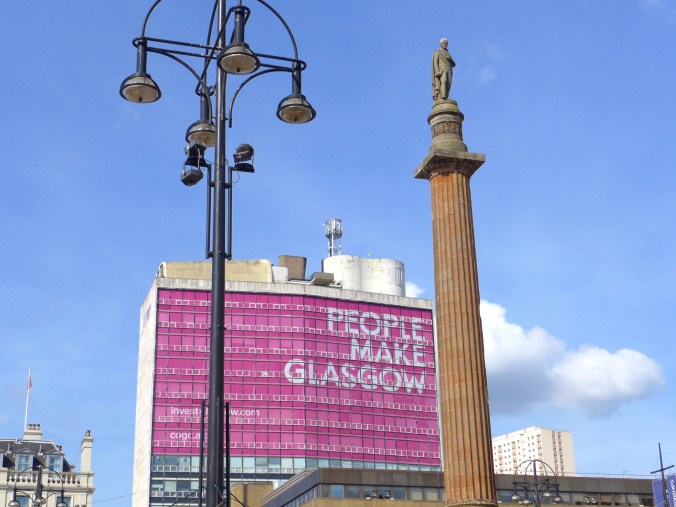
Many years of attempting to derive algorithms to improve images have taught me that there are no generic one-fits-all algorithms. Each photograph must be modified in a manner that suits the ultimate aesthetic appeal of the image. An algorithm manipulates through quantitative evaluation, having no insight into the content, or qualitative aspects of the photograph. No AI algorithm will ever be able to replicate the human eyes ability to determine aesthetic value – and every persons aesthetic interpretation will be different. Add too much computational photography into a digital camera, and you end up with too much of a machine-driven photograph. Photography is a craft as much as an art and should not be controlled solely by algorithms. Consider the following photograph, taken in Glasgow, Scotland. The photograph suffers from being taken on quite a hot day in the summer, when the sky was somewhat hazy. The hazy sky is one factor which causes a reduction in colour intensity in the photograph.

Original photograph
In every likelihood, this photograph represents the true scene quite accurately. An increase in saturation, and modification of exposure will produce a more vivid photograph, shown below. Likely one of the Instagram filters would also have done a nice job in “improving” the image. Was the enhancement necessary? Maybe, maybe not. The enhancement does improve the colours within the image, and the contrast between objects.
Post-processed photograph
 Crafting Pixels